SKU: IOWC-0940
📋 GST Invoice Available

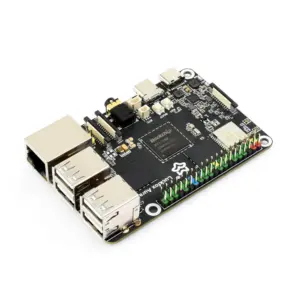
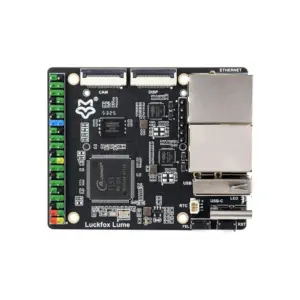
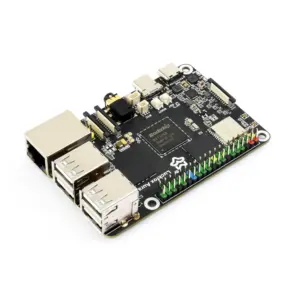
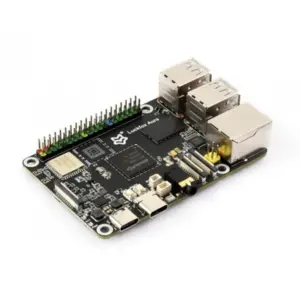
Luckfox Aura RV1126 Linux Dev Board 2GB RAM Wi-Fi 6 BLE 5.4

₹9,439.00 (Inclusive of all taxes)
Out of Stock

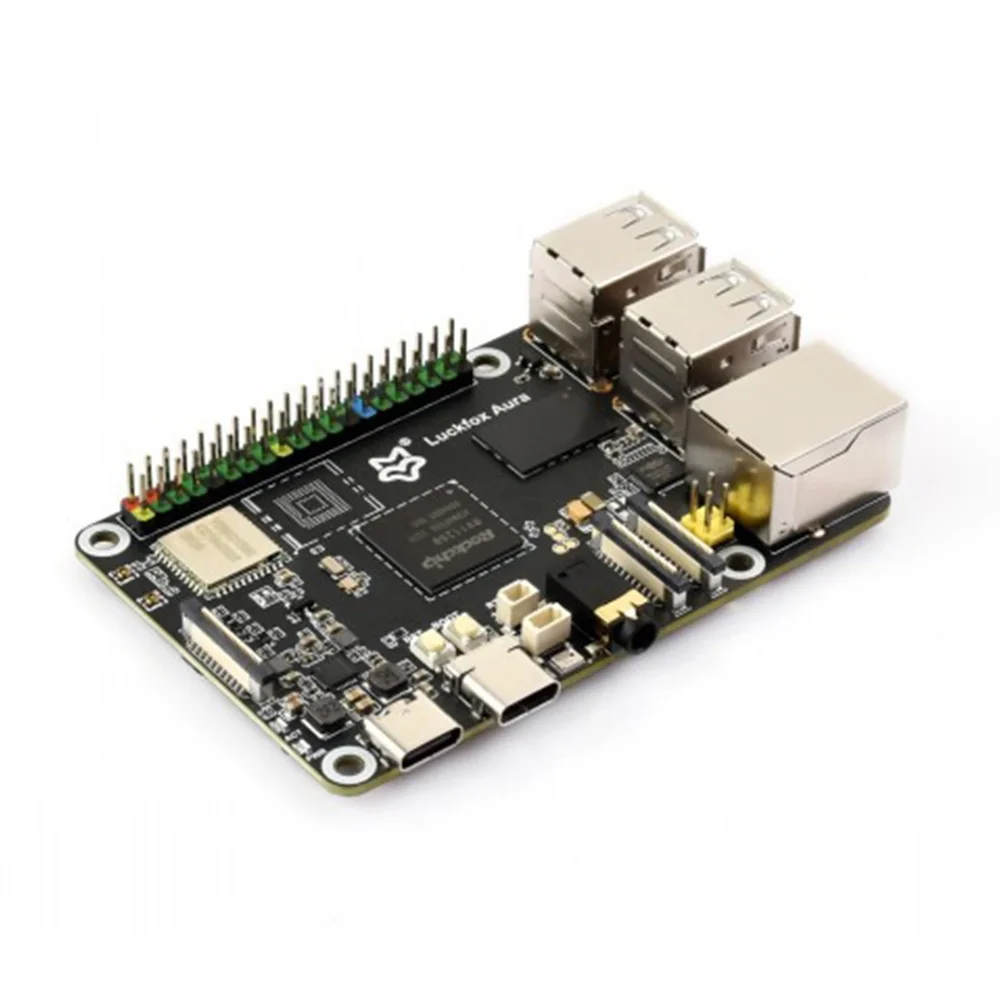
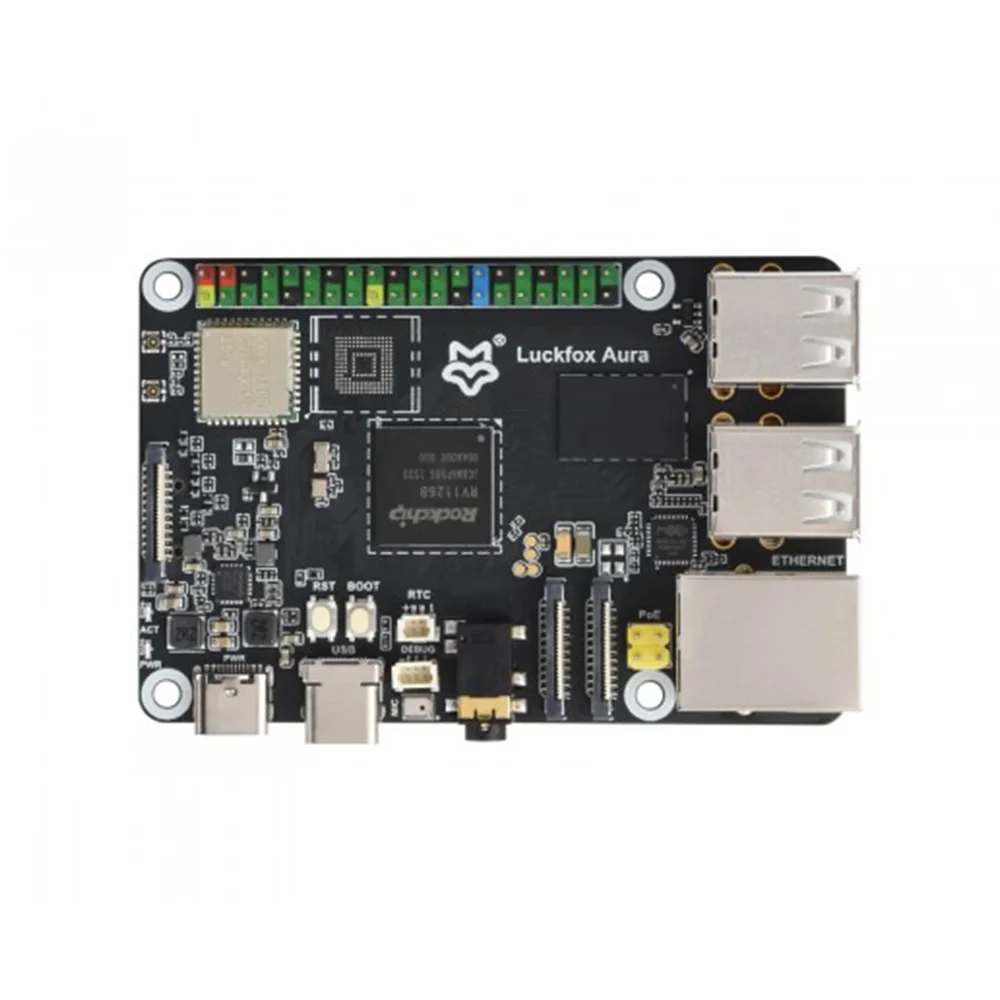
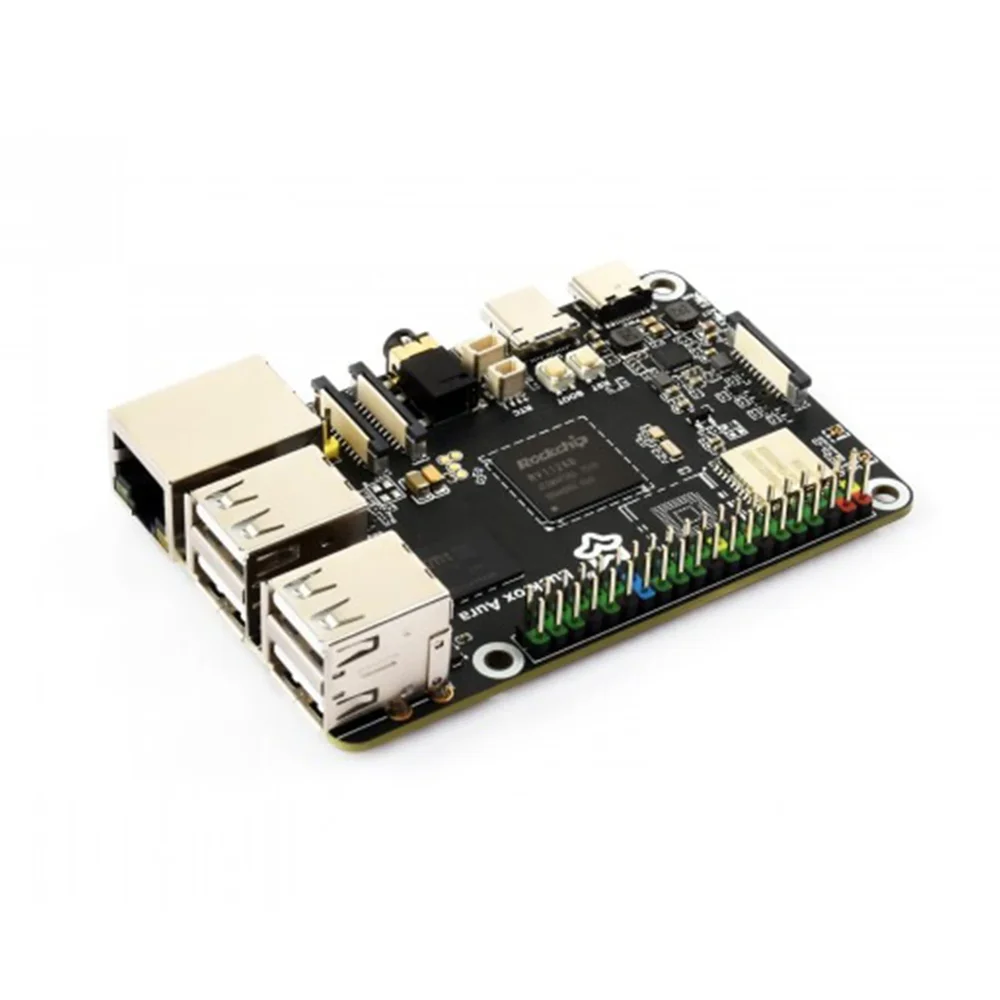
The Luckfox Aura RV1126 is a high-performance Linux development board powered by a Rockchip RV1126B quad-core Cortex-A53 processor with 3 TOPS NPU, Wi-Fi 6, Bluetooth 5.4, and Gigabit Ethernet. It runs Debian/Buildroot and is designed for embedded AI vision, multimedia, and edge computing applications.

Features

  • Rockchip RV1126B Quad-Core Cortex-A53 processor @ 1.6GHz with integrated 3 TOPS NPU for edge AI inference.
  • Dual 4-lane MIPI CSI camera interfaces and 4-lane MIPI DSI display output for advanced computer vision projects.
  • Integrated Wi-Fi 6 and Bluetooth 5.4 BLE for high-throughput, low-latency wireless connectivity.
  • Gigabit Ethernet port with PoE header support for reliable, powered network connectivity.
  • Runs full Linux distributions (Debian, Buildroot) on 2GB LPDDR4X RAM with storage via microSD card.

Out of stock

Description

The Luckfox Aura RV1126 Development Board is a compact, feature-rich AIoT platform engineered for demanding embedded vision and intelligent edge applications. Its Rockchip RV1126B SoC combines a 1.6GHz quad-core Arm Cortex-A53 CPU with a dedicated 3 TOPS Neural Processing Unit (NPU), enabling real-time machine learning inference directly on-device. The board supports 4K H.264/H.265 video encode and decode, making it suitable for high-resolution multimedia processing.

Connectivity is comprehensive, featuring dual MIPI CSI-2 interfaces for stereo camera setups, a MIPI DSI display port, Gigabit Ethernet with Power-over-Ethernet capability, USB 3.0 OTG, and multiple USB 2.0 host ports. The integrated Wi-Fi 6 and Bluetooth 5.4 module provides modern wireless communication for IoT deployments. Power is supplied via a 5V DC input, and the extensive 40-pin GPIO header offers flexible integration with sensors, actuators, and other peripherals for system prototyping and integration.

Key Features

  • High-performance AI edge computing with a dedicated 3 TOPS NPU for accelerated machine learning workloads.
  • Professional-grade multimedia support for 4K video encoding/decoding and dual-camera vision pipelines.
  • Modern wireless suite with Wi-Fi 6 for efficient, high-bandwidth data transfer and Bluetooth 5.4 for low-energy peripheral connectivity.
  • Robust wired networking via Gigabit Ethernet with an optional PoE header for simplified power and data delivery.
  • Full-featured Linux development environment compatible with Debian and Buildroot for flexible software deployment.
  • Extensive I/O expansion through a 40-pin GPIO header, USB 3.0 OTG, and multiple USB 2.0 host ports.
  • Compact form factor (85x56mm) designed for integration into space-constrained embedded systems and prototypes.

Applications

  • AI-powered embedded vision systems for object detection, recognition, and tracking.
  • Smart edge gateways for industrial IoT (IIoT) data aggregation and preprocessing.
  • High-definition video intercoms, security cameras, and NVR systems.
  • Multimedia and digital signage applications requiring 4K video playback.
  • Robotics and autonomous platforms needing on-device sensor fusion and decision-making.
  • Prototyping and development for Linux-based IoT products with advanced connectivity.

Technical Specifications

Processor / SoCRockchip RV1126B Quad-Core Cortex-A53 @ 1.6GHz
AI Performance3 TOPS NPU
Wireless ProtocolsWi-Fi 6, Bluetooth 5.4 BLE
RAM2GB LPDDR4X
Storage0GB eMMC, microSD Card Support
EthernetGigabit Ethernet with PoE Header
Video Codec4K@30fps H.264/H.265 Encode & Decode
Camera InterfaceDual 4-Lane MIPI CSI
Display Interface4-Lane MIPI DSI (up to 1080p)
USB Ports1x USB 3.0 OTG Type-C, 4x USB 2.0 HOST
AudioOnboard Microphone, 3.5mm Audio Jack
GPIO40-Pin Header (1.8V/3.3V)
OS SupportDebian, Buildroot
Supply Voltage5V DC
Dimensions85 x 56 mm
Weight0.115 kg

Frequently Asked Questions

What operating systems are supported by the Luckfox Aura RV1126 board?

The board is officially supported by Debian and Buildroot Linux distributions. You can download pre-built images from the manufacturer's wiki, flash them to a microSD card, and boot the system. The Debian image provides a full desktop-like environment with package management, while Buildroot offers a lightweight, customizable embedded system ideal for production.

How do I connect cameras and displays to this development board?

Use the dual 4-lane MIPI CSI-2 interfaces for connecting compatible cameras, such as IMX sensors, for stereo vision projects. For display output, the 4-lane MIPI DSI port supports panels with up to 1080p resolution. You will need appropriate FPC cables and may need to configure the device tree or media pipeline in Linux to enable the video interfaces.

Can I power the board via Ethernet (PoE)?

Yes, the board includes a header for PoE (Power over Ethernet). You will need to solder a compatible PoE module (like the IEEE 802.3af/at compliant SPoE module) onto the designated header pins. Once installed, you can supply both power and data through a single Gigabit Ethernet cable connected to a PoE switch or injector.

What is the procedure for flashing a new OS image?

First, download the desired OS image file (e.g., .img.gz) from the Luckfox wiki. Use a tool like BalenaEtcher or the dd command to write the image to a microSD card. Insert the card into the board's slot, ensure the boot switch is set to SD card mode, and apply 5V power via the Type-C port. The board will boot from the microSD card.

How do I access the GPIO pins and what voltage levels are supported?

The 40-pin GPIO header provides access to multiple digital I/O, UART, I2C, SPI, and PWM signals. The header supports both 1.8V and 3.3V logic levels; specific pins are assigned to each voltage rail as per the pinout diagram. Always refer to the official schematic to avoid damaging the SoC. You can control GPIOs using standard Linux sysfs interface or libraries like libgpiod.

Package Includes

  • 1 x Luckfox Aura RV1126 Linux Development Board
  • 2 x SH1.0 3PIN Cable (~100mm)
  • 2 x IPEX 4 to SMA Cable
  • 2 x 6dBi Antenna (~17cm)
  • 1 x USB Type-A to Type-C Cable (~1m)

Additional Information

Weight 0.12 kg
Dimensions 6 × 9 × 4 cm