SKU: SBCD-1540
📋 GST Invoice Available

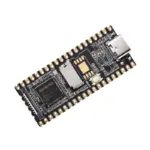
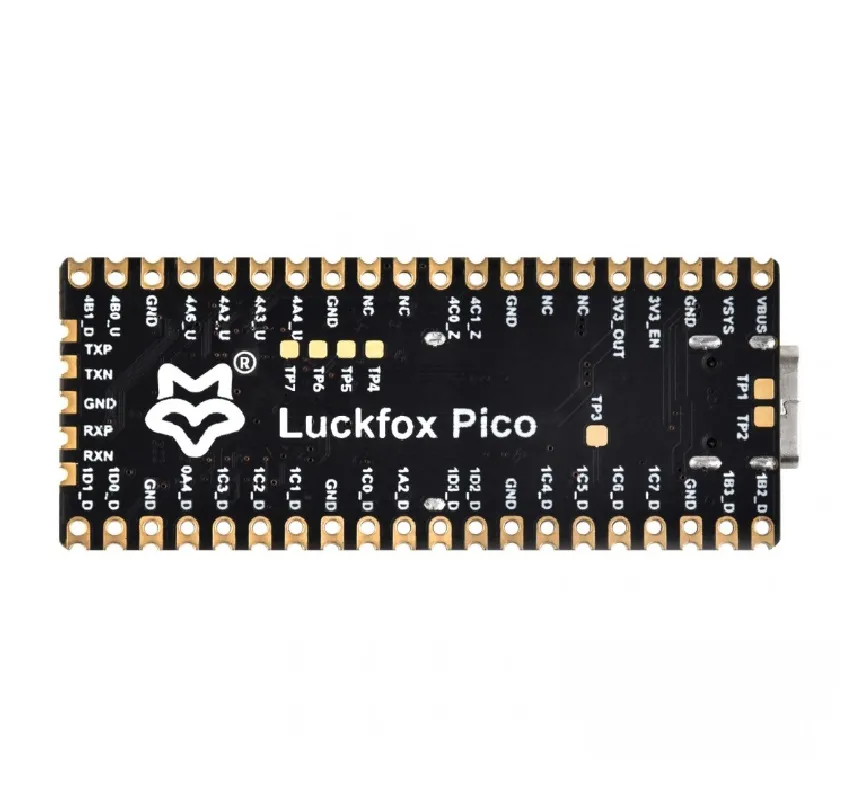
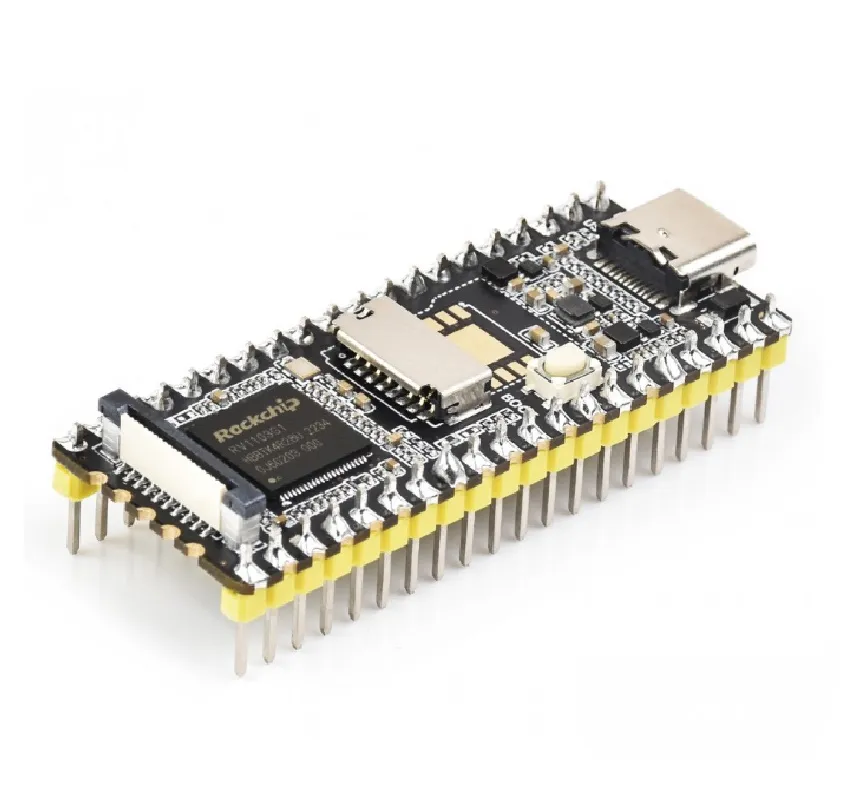
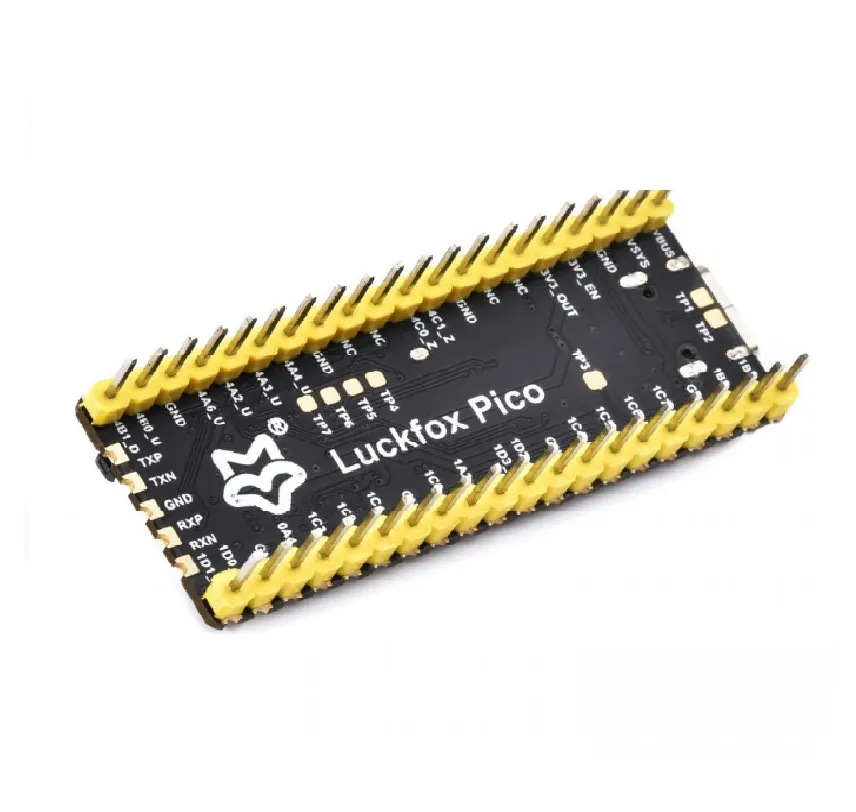
LuckFox Pico RV1103 Linux Micro Development Board

₹1,739.00 (Inclusive of all taxes)
Out of Stock

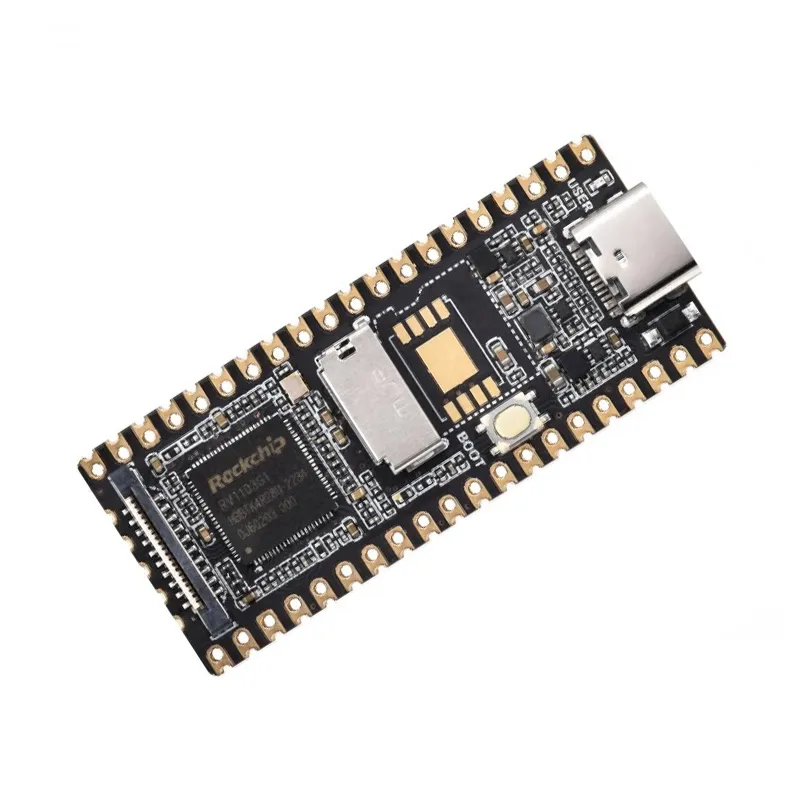
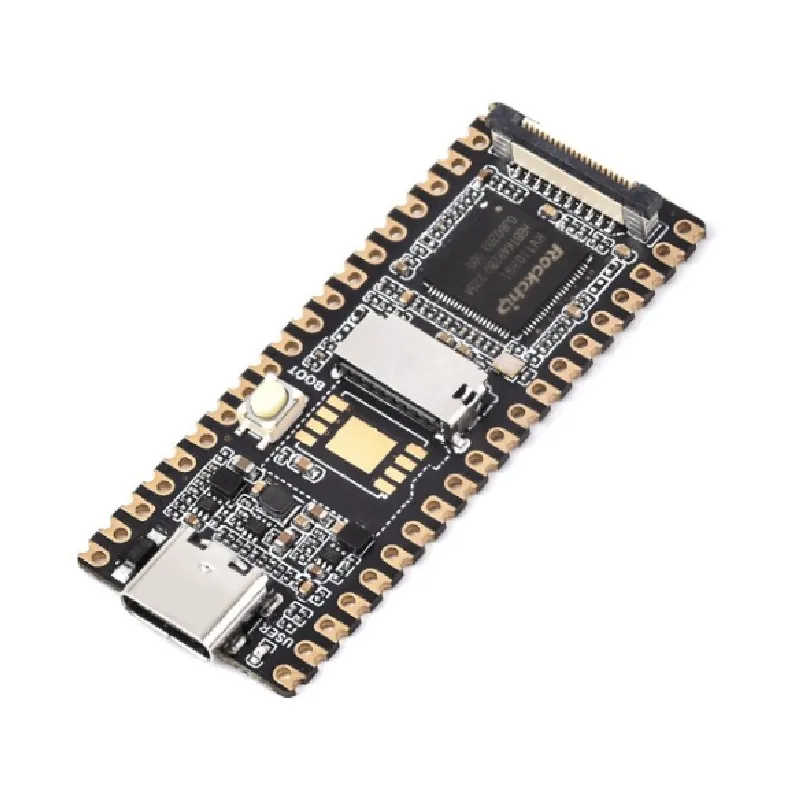
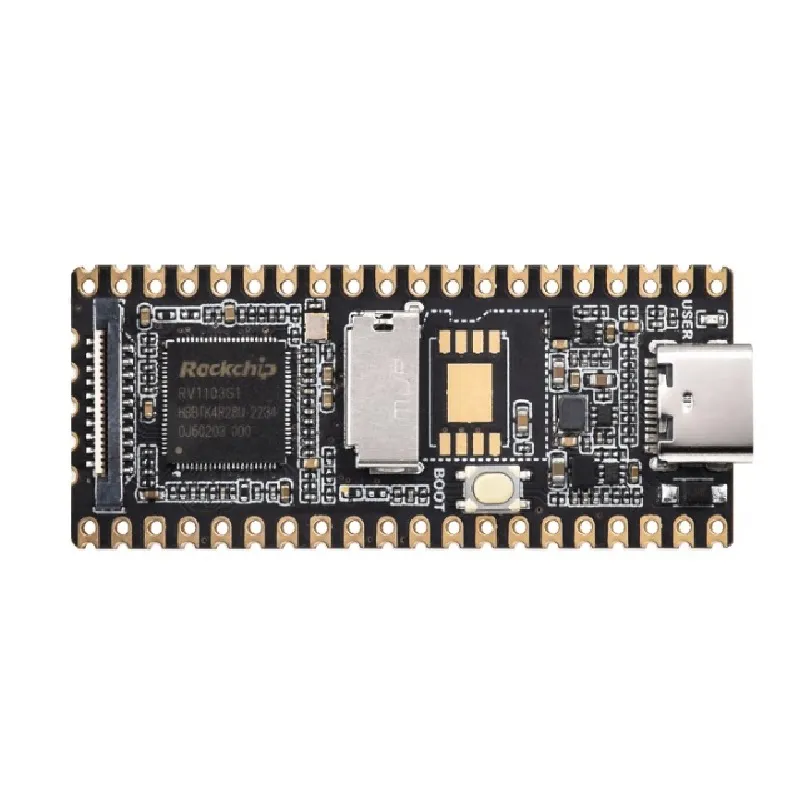
The LuckFox Pico RV1103 is a compact Linux micro development board integrating ARM Cortex-A7 and RISC-V processors, a 0.5 TOPS NPU for AI, and a MIPI CSI 2-lane camera interface. Featuring 64MB DDR2, it is ideal for embedded AI and vision-centric applications requiring efficient processing.

Features

  • Integrated ARM Cortex-A7 and RISC-V processors for versatile embedded computing.
  • Dedicated 0.5 TOPS NPU for efficient AI inference supporting INT4/INT8/INT16.
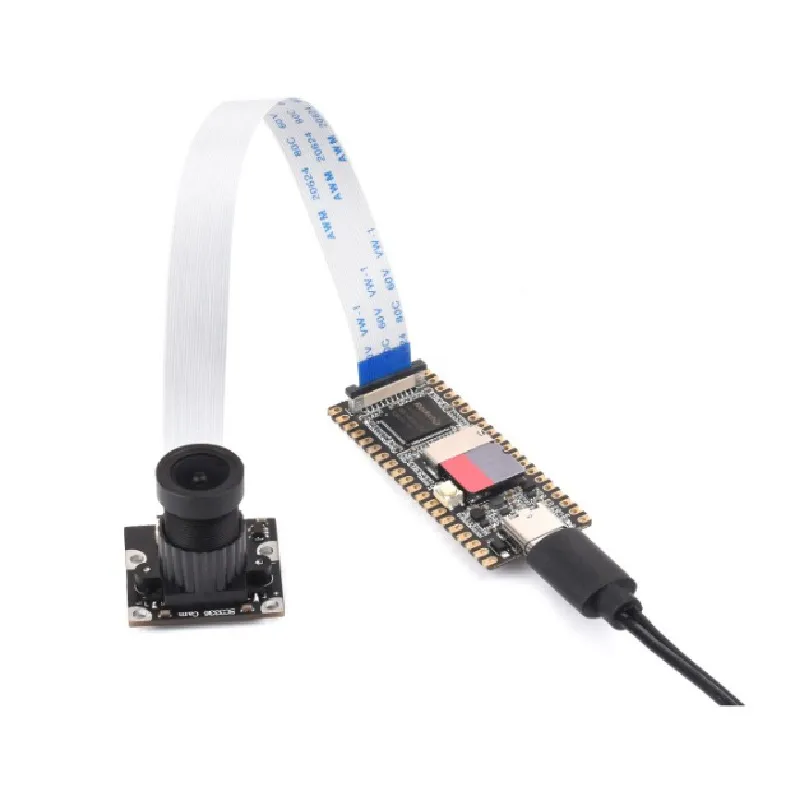
  • Features 64MB DDR2 RAM and a MIPI CSI 2-lane camera interface.
  • Onboard 10/100M Ethernet and 24 GPIO pins for extensive connectivity.
  • Compact Linux development board suitable for embedded vision and AI projects.

Out of stock

Description

The LuckFox Pico RV1103 is a compact Linux micro development board engineered for demanding embedded applications. It integrates a sophisticated multi-core architecture featuring an ARM Cortex-A7 processor clocked at 1.2GHz, a RISC-V microcontroller, a dedicated Neural Processing Unit (NPU) delivering 0.5 TOPS for AI acceleration, and an Image Signal Processor (ISP) for advanced camera pipeline management. This powerful combination allows for robust computation, real-time machine learning inference, and high-quality image processing directly at the edge.

Designed for versatility, the board includes 64MB DDR2 memory, a USB 2.0 Host/Device interface, a 2-lane MIPI CSI for camera integration, and a 10/100M Ethernet controller for reliable network connectivity. With 24 GPIO pins, developers can interface with a wide array of sensors and actuators, making the LuckFox Pico RV1103 an ideal platform for projects ranging from smart surveillance and industrial automation to AI-powered robotics and edge vision systems.

Key Features

  • Integrated ARM Cortex-A7 @ 1.2GHz for high-performance application processing.
  • Embedded RISC-V microcontroller for real-time tasks and system control.
  • Dedicated Neural Processing Unit (NPU) with 0.5 TOPS (INT4/INT8/INT16) for accelerated AI inference.
  • Built-in Image Signal Processor (ISP) for advanced camera functions and image enhancement.
  • Equipped with 64MB DDR2 system memory for efficient operation.
  • MIPI CSI 2-lane interface supports direct camera sensor integration.
  • Onboard 10/100M Ethernet controller with embedded PHY for robust network connectivity.
  • Provides 24 GPIO pins for flexible peripheral expansion and sensor integration.
  • Compact form factor, ideal for space-constrained embedded Linux applications.

Applications

  • Edge AI inference and machine vision systems
  • Smart surveillance and security cameras
  • Industrial automation and control systems
  • Robotics and drone vision
  • IoT gateways with local processing
  • Embedded Linux development projects

Technical Specifications

Item TypeDevelopment Board
ProcessorCortex A7@1.2GHz + RISC-V
Memory Capacity64MB DDR2
USBUSB 2.0 Host/Device
Camera DetailsMIPI CSI 2-lane
GPIO24 × GPIO pins
Ethernet10/100M Ethernet controller and embedded PHY

Frequently Asked Questions

What operating system does the LuckFox Pico RV1103 run?

The LuckFox Pico RV1103 supports a lightweight Linux distribution, making it suitable for various embedded applications. Developers can leverage standard Linux tools and frameworks for their projects, enabling flexible software development and deployment on the device, utilizing its multi-core architecture.

What AI capabilities does the RV1103's NPU offer?

The integrated NPU provides 0.5 TOPS of AI computing power, supporting INT4, INT8, and INT16 precision. This allows for efficient execution of machine learning models for tasks like object detection, facial recognition, and image classification directly on the device, minimizing latency for edge AI.

How can external peripherals be connected to the LuckFox Pico RV1103?

The board offers 24 GPIO pins for general-purpose I/O, a USB 2.0 Host/Device port, and a 2-lane MIPI CSI for camera modules. Additionally, a 10/100M Ethernet controller provides reliable network connectivity, enabling integration with various sensors, actuators, and network infrastructures for diverse applications.

What development environments are supported for the LuckFox Pico RV1103?

Given its Linux foundation, developers can use standard ARM-Linux cross-compilation toolchains. Rockchip provides SDKs and documentation for the RV1103 (the underlying SoC), allowing for deep customization and development of applications utilizing the ARM, RISC-V, NPU, and ISP cores effectively.

Package Includes

  • 1 x LuckFox Pico RV1103 Linux Micro Development Board

Additional Information

Weight 0.005 kg
Dimensions 9 × 7 × 1 cm