SKU: IOWC-1054
📋 GST Invoice Available

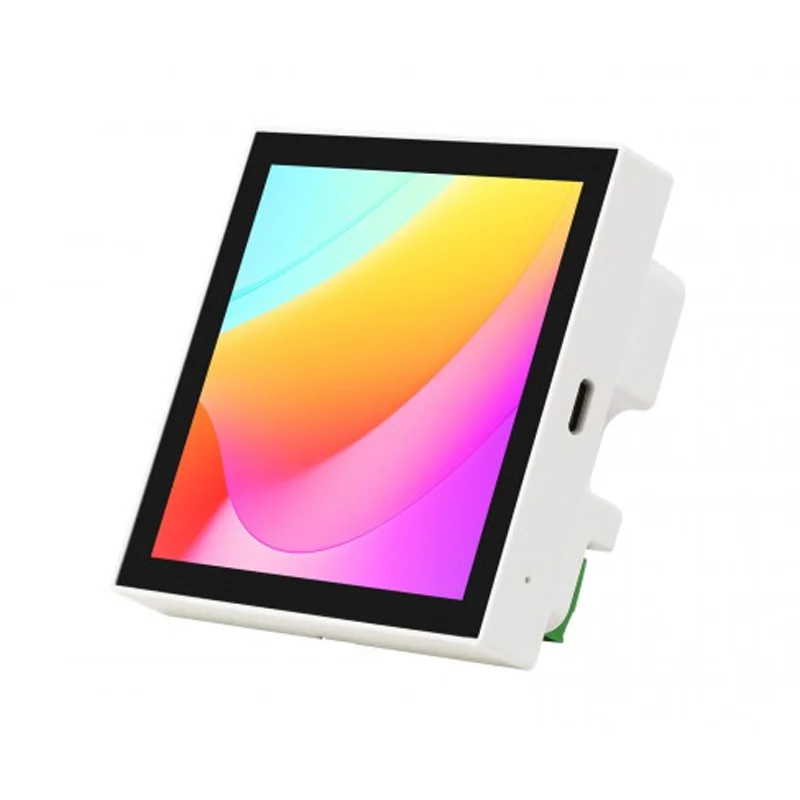
Luckfox Core1106 RV1106G2 Smart 86 Box Development Board w/o WiFi

₹5,059.00 (Inclusive of all taxes)
Out of Stock

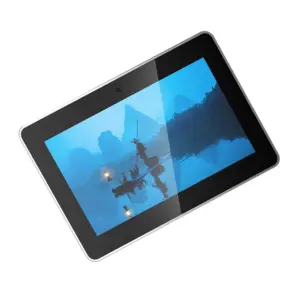
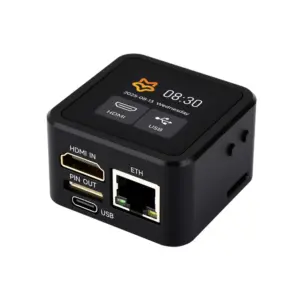
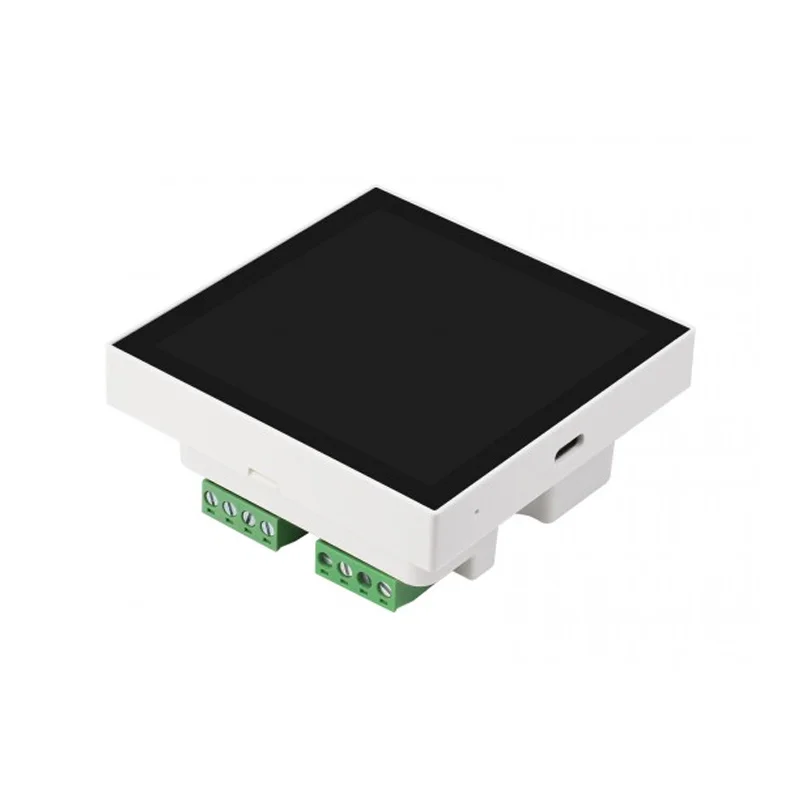
The Luckfox Core1106 Smart 86 Box is an embedded Linux development board based on the Rockchip RV1106G2 ARM Cortex-A7 processor, designed for local HMI and control applications. It features a 4-inch IPS touchscreen, isolated RS485 interface, dual relay outputs, and 10/100M Ethernet, making it ideal for wired industrial automation and smart home interfaces without wireless connectivity.

Features

  • Rockchip RV1106G2 SoC: Features a single-core ARM Cortex-A7 processor running at 1.2GHz with an integrated NPU (0.5 TOPS) for efficient edge AI inference in a compact, fanless design.
  • 4-Inch IPS Touchscreen Interface: Equipped with a high-resolution 720×720 capacitive touchscreen (5-point) offering a 170° wide viewing angle for intuitive local control and status monitoring.
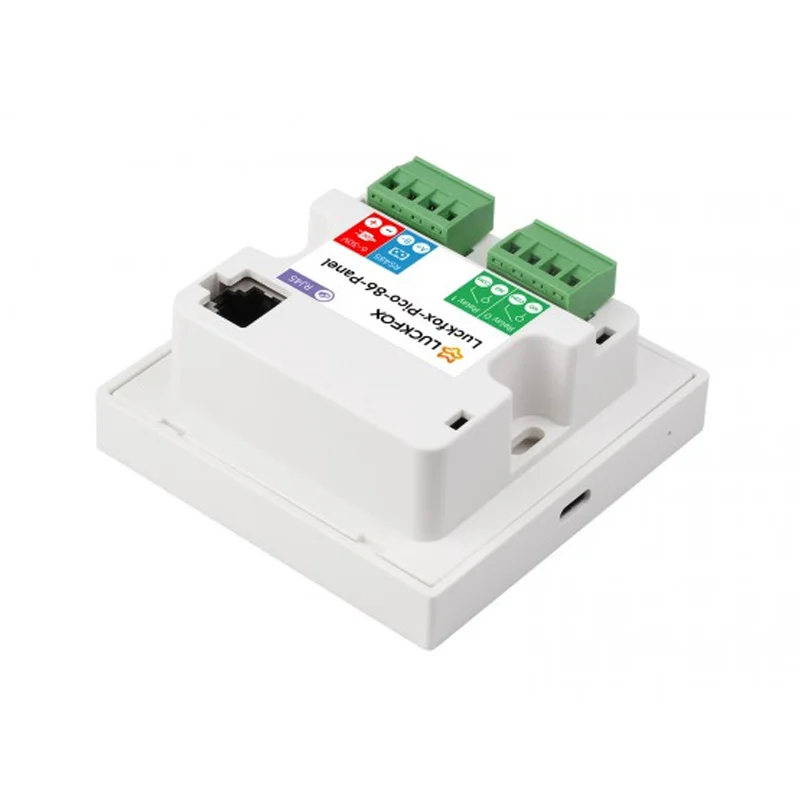
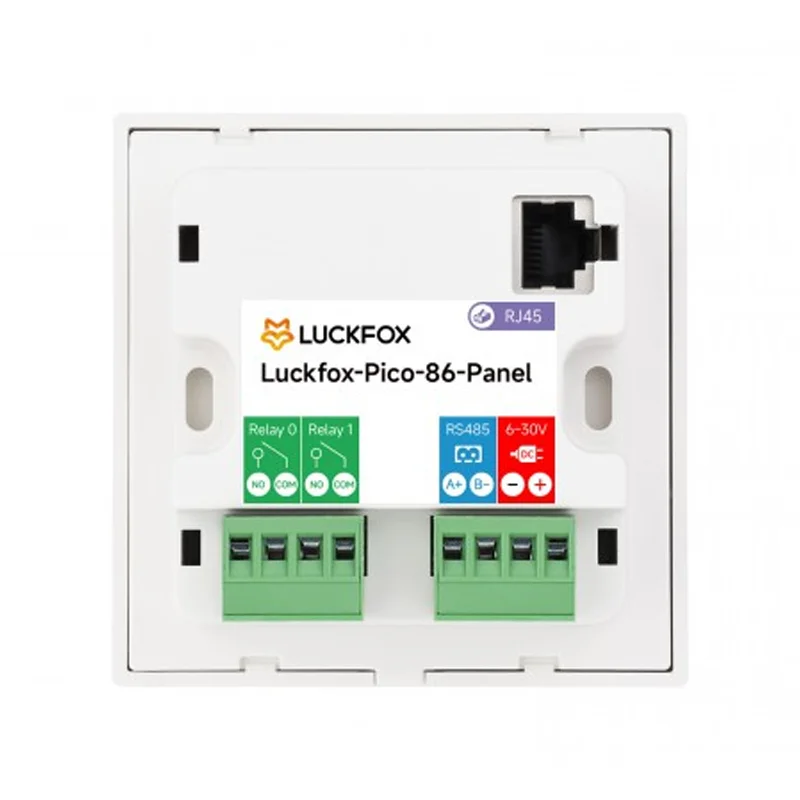
  • Industrial I/O & Relay Control: Provides a built-in, isolated RS485 interface for robust serial communication and two optocoupler-isolated relay channels for direct control of AC/DC loads.
  • Wired-Only Connectivity: Relies on a stable 10/100M Ethernet port for network communication, ensuring reliability in electrically noisy environments where WiFi is unsuitable.
  • Modular 86-Box Form Factor: Designed to fit standard wall switch enclosures (86x86mm), enabling seamless integration into smart switch panels, industrial control boxes, and building automation systems.

Out of stock

Description

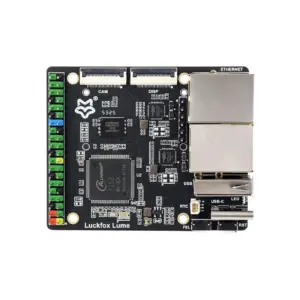
The Luckfox Core1106 Smart 86 Box Development Board is a purpose-built embedded platform for developers and system integrators requiring a reliable, local human-machine interface (HMI) with direct control capabilities. Centered on the Rockchip RV1106G2 system-on-chip, it combines a 1.2GHz ARM Cortex-A7 CPU with a neural processing unit (NPU) capable of 0.5 TOPS, enabling basic on-device vision or sensor data processing without relying on cloud connectivity.

Its core design philosophy emphasizes stability and isolation in electrically harsh environments. The board includes a galvanically isolated RS485 transceiver, critical for long-distance communication in industrial settings prone to ground loops and surges. The two relay outputs are also optically isolated, protecting the sensitive logic circuitry from inductive load transients. Power is supplied via a USB Type-C port, with the system drawing between 500-700mA under typical operation, making it suitable for PoE or adapter-based installations.

Key Features

  • Edge AI Capable: Integrated NPU (0.5 TOPS) supports running lightweight neural networks for local object detection, classification, or anomaly detection without external compute.
  • Isolated Industrial Communication: Built-in RS485 interface with isolation enhances noise immunity and protects the main board, ideal for Modbus RTU networks in factory automation.
  • Direct Load Switching: Two onboard relays with optocoupler isolation allow for safe, direct control of lights, motors, or other appliances up to the relay's current rating.
  • High-Quality Local Display: The 4-inch IPS capacitive touchscreen provides a responsive and clear interface for configuration, data visualization, and manual override controls.
  • Wired Network Reliability: 10/100M Ethernet ensures a stable, low-latency connection for data logging, remote management via SSH, or integration into local networks, avoiding WiFi interference.
  • Compact, Install-Ready Form Factor: The 86mm x 86mm board dimensions conform to standard electrical wall box sizes, facilitating clean professional installations in control panels.
  • Audio I/O Support: Onboard microphone input and speaker amplifier enable voice feedback, alarm annunciation, or simple intercom functionality for interactive projects.
  • Linux Development Environment: Runs a full Linux distribution (Buildroot), providing access to a vast ecosystem of libraries and tools for custom application development in C/C++ or Python.

Applications

  • Smart Home Control Panels: Acts as a central wired touchscreen interface for lighting control, HVAC management, and security system status in residential automation.
  • Industrial HMI & Telemetry: Serves as a local operator panel for machine control, process monitoring, and data display in factories, utilizing its isolated RS485 for sensor networks.
  • Building Automation Gateways: Integrates into commercial building systems for controlling relays (lights, fans) and communicating with room sensors via Modbus over RS485.
  • Edge Vision Appliances: Powers standalone vision-based devices like local people counters or simple quality inspection stations using its onboard NPU and display.
  • Retail & Hospitality Kiosks: Provides a compact, reliable touch interface for information displays, order points, or room control panels in public spaces.

Technical Specifications

Processor / SoCRockchip RV1106G2 (ARM Cortex-A7)
NPU Performance0.5 TOPS
CPU Clock Frequency1200 MHz
Memory128MB DDR3L
Display4-inch IPS, 720x720, Capacitive Touch (5-point)
Network Connectivity10/100M Ethernet RJ45 (No WiFi/Bluetooth)
Industrial InterfaceIsolated RS485
Control Outputs2-Channel Relay (Optocoupler Isolated)
AudioOnboard Microphone, 1W Speaker Output
USB ConnectorUSB Type-C (Power & Data)
Supply Voltage5V
Typical Operating Current500-700 mA
Operating Temperature-10°C to 60°C
Dimensions (Board)85 mm x 85 mm
Weight190 g

Frequently Asked Questions

What operating system does the Luckfox Core1106 board run, and how do I develop for it?

The board runs a custom Buildroot Linux distribution provided by Luckfox. Development typically involves setting up a cross-compilation toolchain on your host PC. You write applications in C, C++, or Python, cross-compile them, and then transfer the binaries to the board via SCP over Ethernet. The official Luckfox Wiki provides SDKs, kernel source, and documentation for flashing the system image and building custom applications. You can also access the board via SSH for command-line management and debugging.

How do I connect and use the isolated RS485 interface on this board?

The RS485 interface is accessed via a dedicated terminal block on the board, typically labeled A and B. You must enable the corresponding UART device (e.g., /dev/ttyS2) in the device tree or software configuration. For communication, use a standard Linux serial library (like PySerial in Python) to open the port, set the correct baud rate (common rates are 9600, 19200, 115200), parity, and stop bits to match your slave devices (e.g., Modbus RTU sensors). The built-in isolation protects the board, but you should still use twisted-pair cabling and proper termination for reliable long-distance communication.

Can I control the onboard relays programmatically, and what is the switching capacity?

Yes, the relays are controlled via GPIO lines exposed to the Linux userspace. You control them by writing to specific files in the /sys/class/gpio directory (e.g., echo out > direction, echo 1 > value). The exact GPIO numbers are defined in the board's documentation. The relays are optocoupler-isolated, separating the low-voltage logic from the switched load. While the exact current rating should be verified in the datasheet, typical relays on such boards handle 5-10A at 250VAC or 30VDC. Always ensure your load does not exceed these ratings and consider using an external contactor for higher-power devices.

What power supply is required, and how do I connect it to the board?

The board requires a stable 5V DC power supply, delivered via the USB Type-C port. The typical operating current ranges from 500mA to 700mA, so your power adapter should provide at least 2A (10W) to ensure stable operation, especially when driving the display, relays, and connected peripherals. Use a high-quality USB-C cable capable of carrying sufficient current. For permanent installations, a reliable 5V wall adapter or a Power-over-Ethernet (PoE) splitter that outputs 5V can be used, as the board itself does not have built-in PoE.

Package Includes

  • 1 x Luckfox Core1106 RV1106G2 Smart 86 Box Development Board (without WiFi)

Additional Information

Weight 0.19 kg
Dimensions 8.5 × 8.5 cm