SKU: IOWC-0950
📋 GST Invoice Available

Luckfox Lume Linux Development Board, Allwinner T153, Dual GbE, PoE

₹3,579.00 (Inclusive of all taxes)
Out of Stock

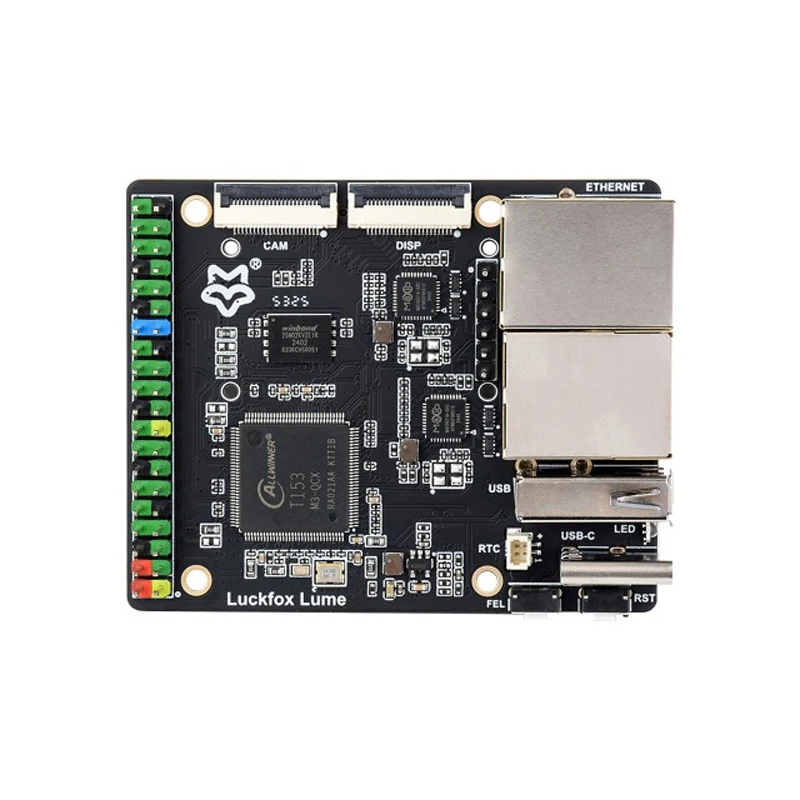
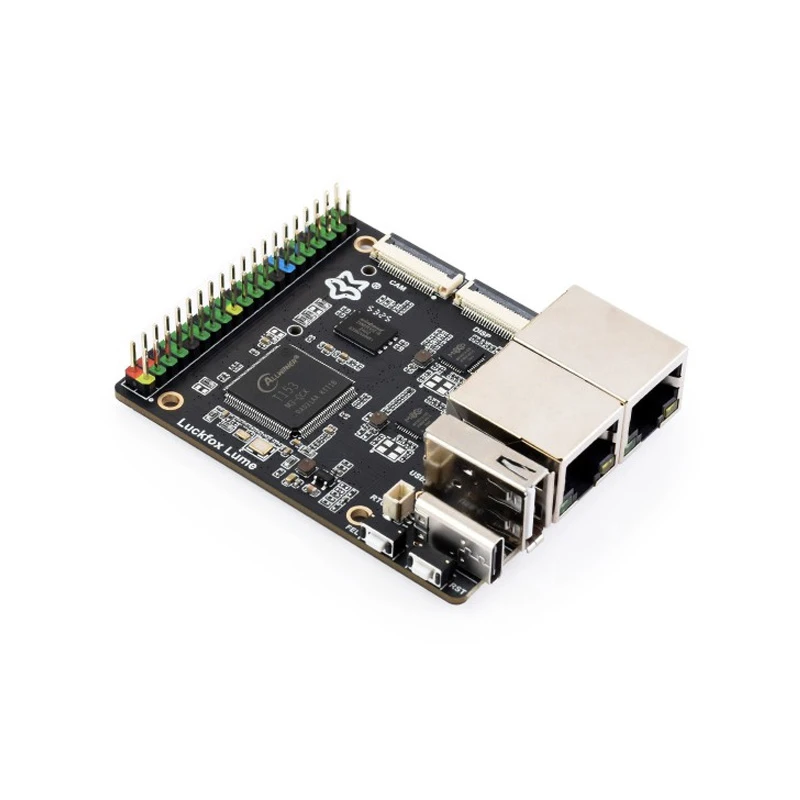
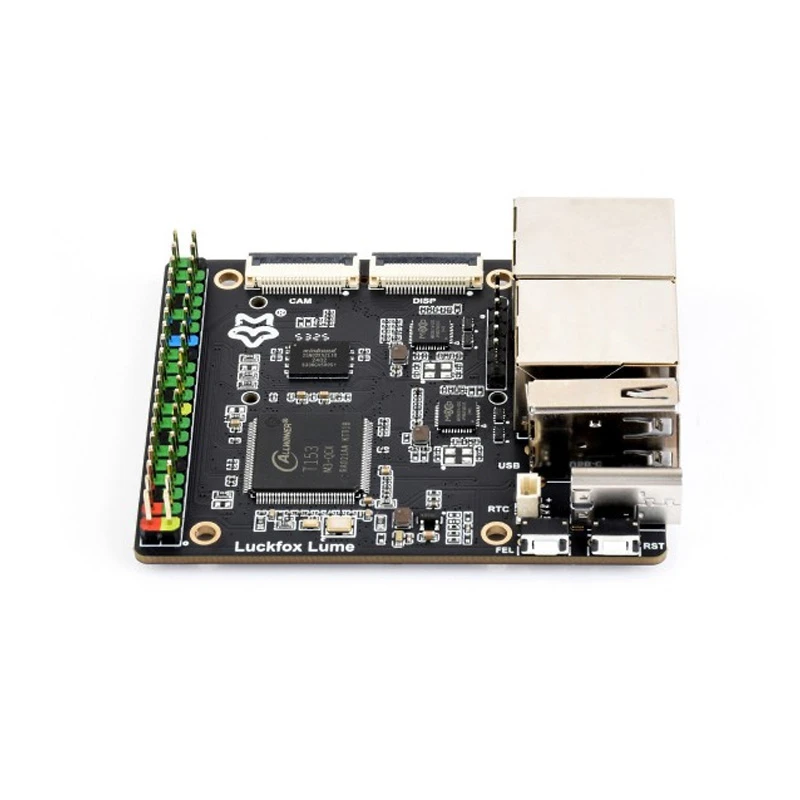
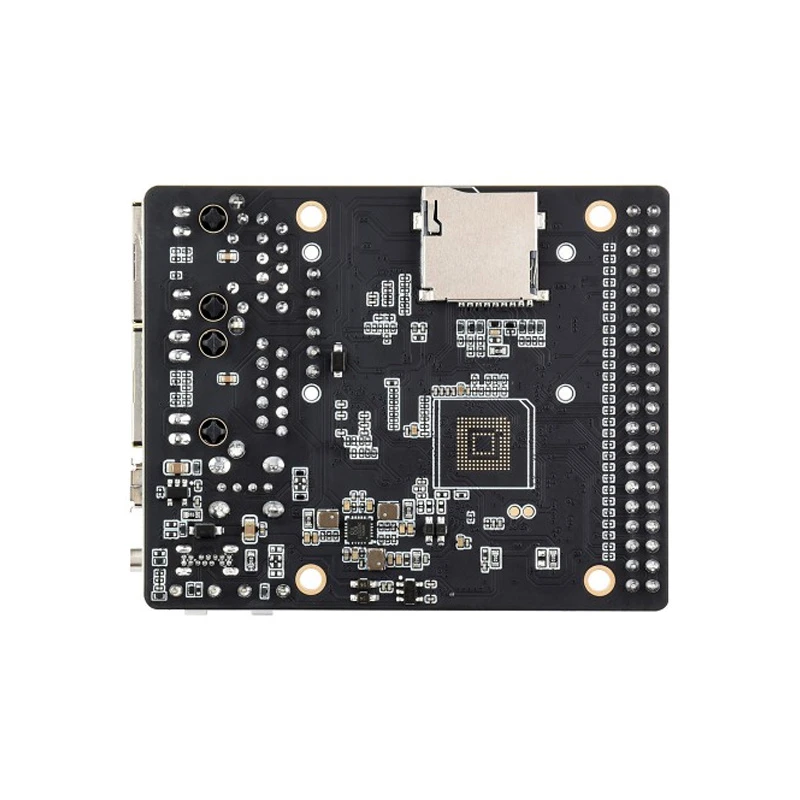
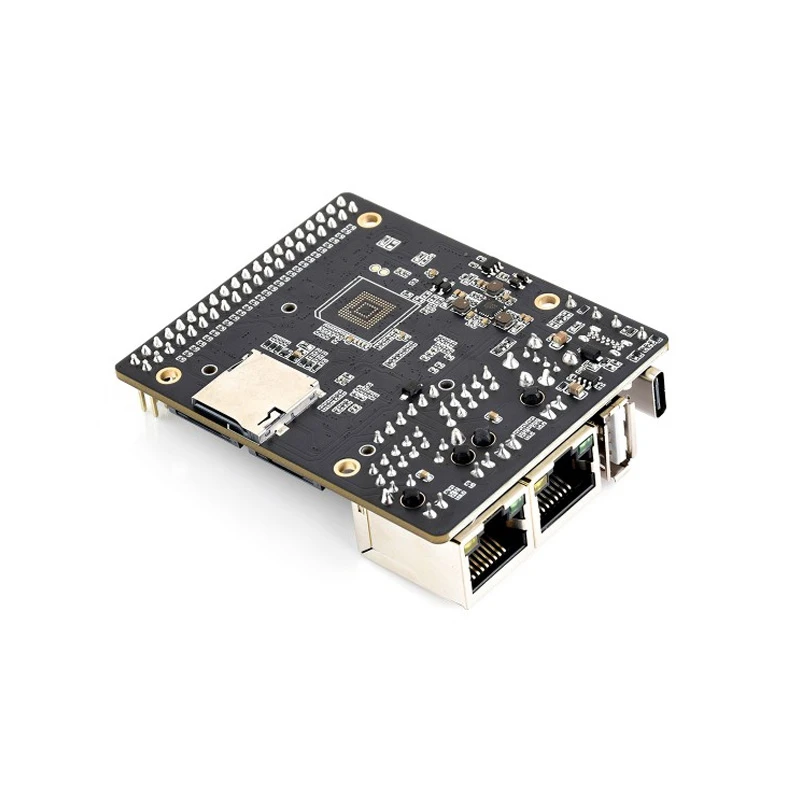
The Luckfox Lume is a compact, high-performance Linux development board powered by an Allwinner T153 heterogeneous processor (Quad-core Arm Cortex-A7 + RISC-V E907). Featuring dual Gigabit Ethernet ports, 128MB DDR3, 256MB SPI NAND flash, and an included PoE module, it’s engineered for industrial edge computing, networking gateways, and embedded vision applications.

Features

  • Multi-Core Heterogeneous Processor: Combines a quad-core Arm Cortex-A7 with a RISC-V E907 core for efficient task distribution between Linux applications and real-time control.
  • Dual Gigabit Ethernet Ports: Enables robust network routing, bridging, and high-bandwidth edge computing tasks with included Power-over-Ethernet (PoE) capability.
  • Industrial-Grade Memory & Storage: 128MB DDR3 RAM and 256MB SPI NAND flash provide stable performance for embedded Linux (Buildroot) deployments.
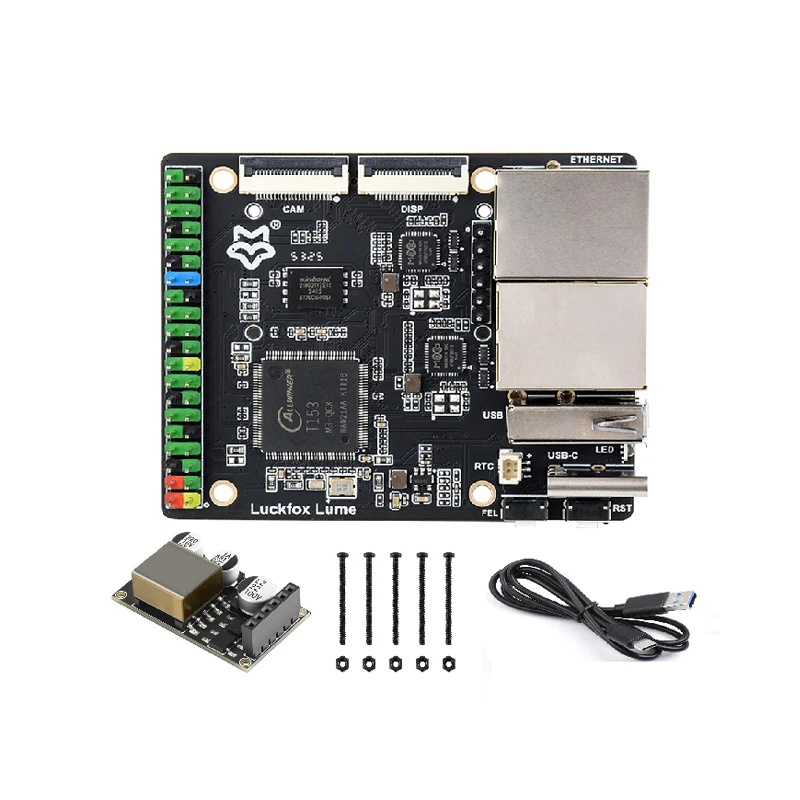
  • Rich Expansion Interfaces: 40-pin GPIO header, MIPI DSI (4-lane) for displays, MIPI CSI (2-lane) for cameras, USB Type-C/A, and a microSD slot for flexible system integration.
  • Compact & Power-Efficient Design: Operates on 5V DC input with a small 70x55mm footprint, making it suitable for space-constrained industrial and IoT gateway installations.

Out of stock

Description

The Luckfox Lume Development Board is built around the Allwinner T153 industrial-grade SoC, which integrates a powerful quad-core Arm Cortex-A7 application processor with a dedicated RISC-V E907 core for real-time subsystem management. This heterogeneous architecture allows developers to run a full-featured Linux distribution (typically Buildroot) on the A7 cores while offloading low-latency I/O or control tasks to the efficient RISC-V core, optimizing performance for complex embedded systems.

With dual independent Gigabit Ethernet controllers and an included PoE module, the board is primed for networking-intensive applications such as industrial routers, firewalls, VPN gateways, or multi-sensor data aggregation nodes. The onboard 128MB DDR3 memory and 256MB SPI NAND flash ensure reliable operation for embedded Linux workloads. The comprehensive I/O set, including MIPI interfaces for displays and cameras, USB ports, and a 40-pin GPIO header, provides extensive connectivity for peripheral expansion, making it a versatile platform for prototyping and deployment in automation, vision, and telemetry systems.

Key Features

  • Heterogeneous Computing: Leverage the Quad-core Arm Cortex-A7 for main application processing and the RISC-V E907 core for deterministic, real-time task handling.
  • High-Speed Network Fabric: Dual Gigabit Ethernet ports support link aggregation, failover, or segregated network segments, enhanced by integrated Power-over-Ethernet.
  • Embedded Vision Ready: Direct connectivity for MIPI CSI-2 cameras and MIPI DSI displays enables computer vision, HMI, and monitoring applications without adapters.
  • Robust Expansion: A 40-pin GPIO header (compatible with Raspberry Pi HATs), USB 2.0 Host/OTG ports, and a microSD card slot allow for extensive hardware add-ons.
  • Industrial Reliability: The board's design emphasizes stable 5V operation with SPI NAND flash for data integrity, suited for 24/7 operation in edge environments.
  • Compact Form Factor: The small PCB dimensions (70x55mm) and low weight facilitate integration into enclosures for final product designs.

Applications

  • Industrial Networking Gateways: Deploy as a router, firewall, Modbus TCP gateway, or protocol converter with dual Ethernet and PoE.
  • Edge Computing & AIoT: Run lightweight machine learning inference, data preprocessing, or analytics at the network edge.
  • Embedded Vision Systems: Power smart cameras, vision-based quality inspection, or interactive kiosks with MIPI camera/display interfaces.
  • IoT Aggregation Hub: Collect and process data from multiple sensors (via GPIO/UART) and transmit over wired/wireless networks.
  • Educational & Prototyping: A capable platform for learning embedded Linux, real-time systems, and network programming.

Technical Specifications

Processor (SoC)Allwinner T153 (Quad-core Arm Cortex-A7 + Single-core RISC-V E907)
Memory128MB DDR3
Storage256MB SPI NAND Flash + microSD Card Slot
Ethernet2 x 10/100/1000 Mbps RJ45 Ports (with included PoE Module)
Display InterfaceMIPI DSI 4-lane
Camera InterfaceMIPI CSI 2-lane
USB1 x USB Type-C (OTG/Power), 1 x USB Type-A (Host)
GPIO Expansion40-pin Header (UART, I2C, SPI, PWM, ADC)
Power Input5V DC via USB-C or PoE
Operating SystemLinux (Buildroot)
Dimensions70 x 55 x 20 mm
Weight35 g (board only)

Frequently Asked Questions

What operating system does the Luckfox Lume board run, and how do I flash it?

The board typically runs a custom Buildroot Linux distribution provided by Luckfox. You flash the system image to the SPI NAND flash using the USB Type-C port in FEL (bootloader) mode. Connect the board via USB-C to your host PC, use a tool like 'sunxi-fel' to enter FEL mode, and then write the pre-compiled image. Detailed instructions and image files are available in the official Luckfox GitHub repository or documentation wiki.

How do I enable and use Power-over-Ethernet (PoE) on this board?

Power-over-Ethernet is enabled by connecting the included PoE module between your standard PoE switch/injector and the board's primary Ethernet port. The module handles the power negotiation (802.3af/at) and delivers regulated 5V to the board. Ensure your switch provides sufficient PoE power budget. The secondary Ethernet port remains a standard data port. You can power the board solely via PoE, eliminating the need for a separate 5V USB power adapter in deployed installations.

Can I connect a camera and display simultaneously using the MIPI interfaces?

Yes, the board provides independent MIPI CSI (2-lane) and MIPI DSI (4-lane) interfaces, allowing simultaneous connection of a camera module and a display. This is ideal for building standalone vision systems with a local user interface. You will need compatible MIPI CSI-2 camera modules (with appropriate drivers in the Linux kernel) and MIPI DSI displays. Check the Luckfox documentation for a list of tested peripherals and wiring diagrams for the FPC connectors.

What is the purpose of the RISC-V E907 core alongside the Arm Cortex-A7 cores?

The RISC-V E907 core serves as a real-time co-processor within the Allwinner T153 SoC. It is designed to handle time-critical, low-latency tasks independently of the main Linux OS running on the Arm cores. Developers can offload functions like GPIO bit-banging, precise PWM control, sensor polling, or real-time communication protocols to the RISC-V core, ensuring deterministic timing while the Arm cores manage higher-level application logic and networking, resulting in a more responsive and efficient system.

Package Includes

  • 1 x Luckfox Lume Development Board
  • 1 x Power-over-Ethernet (PoE) Module
  • 1 x Screws Pack
  • 1 x USB Type-A to Type-C Cable (92cm)

Additional Information

Weight 0.088 kg
Dimensions 8 × 10.5 × 2.5 cm