SKU: IOWC-0939
📋 GST Invoice Available

Luckfox Aura Linux Dev Board w/ 4GB RAM, 64GB eMMC, NPU

₹22,299.00 (Inclusive of all taxes)
Out of Stock

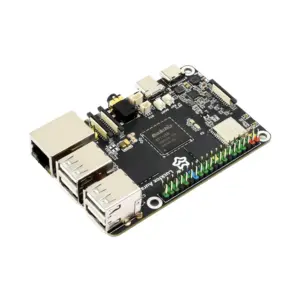
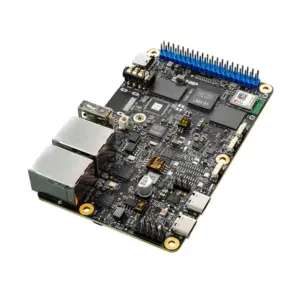
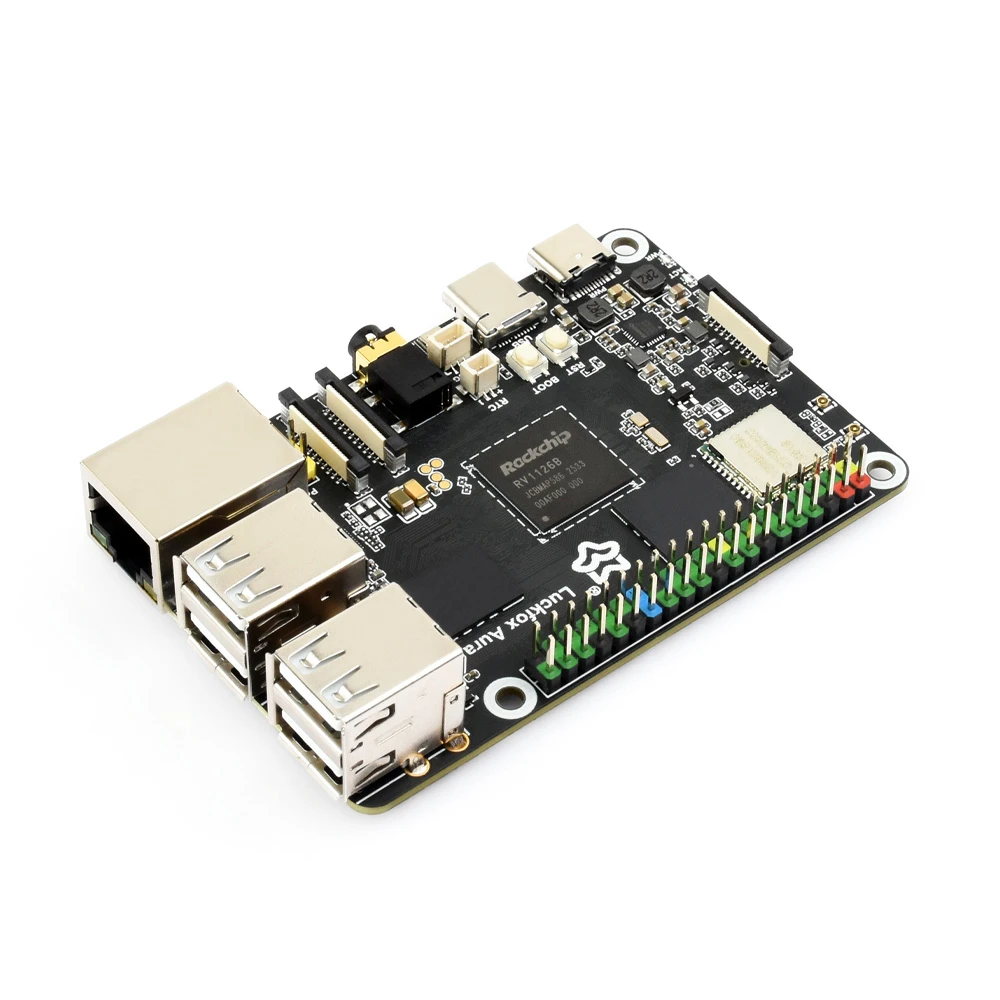
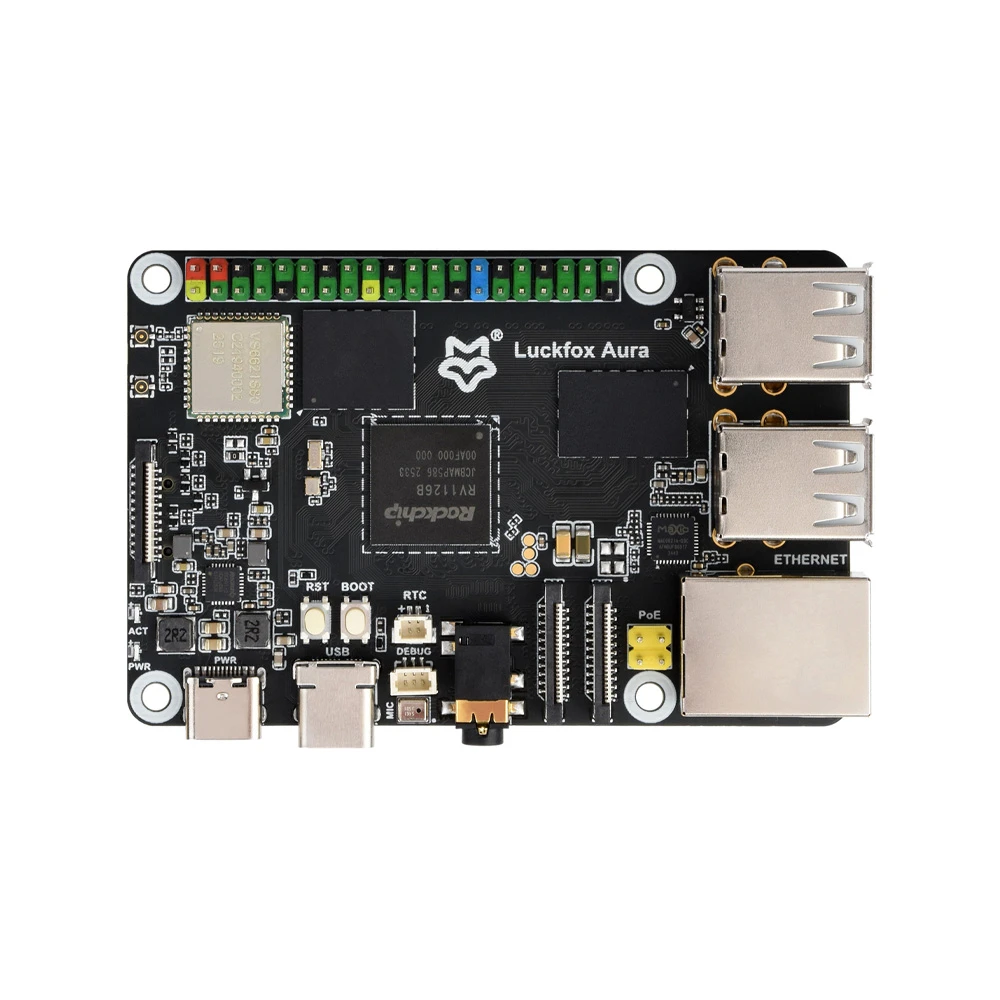
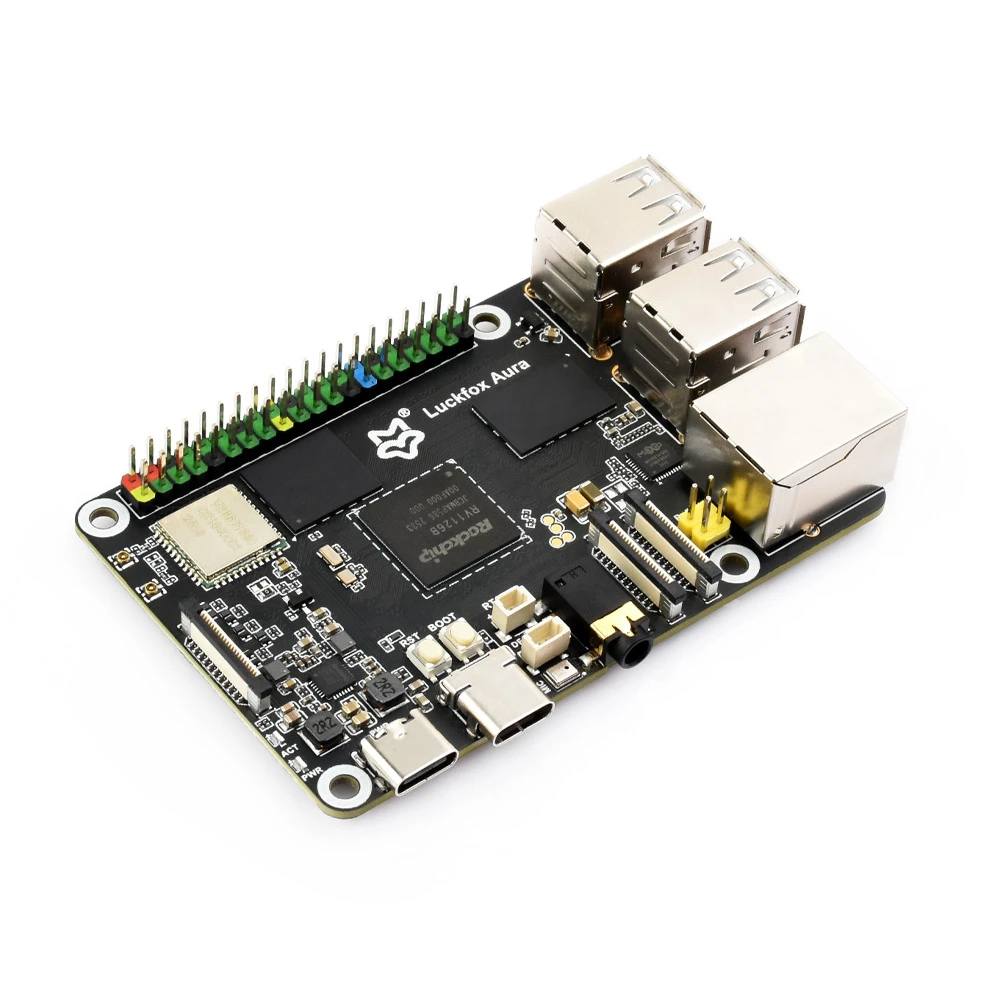
The Luckfox Aura is a compact Linux development board powered by a quad-core Cortex-A53 processor, 4GB LPDDR4X RAM, and 64GB eMMC, featuring a 3 TOPS NPU for AIoT and embedded vision applications. It runs Buildroot or Debian and offers comprehensive connectivity including Wi-Fi 6, Bluetooth 5.4, Gigabit Ethernet with PoE, and dual MIPI CSI camera interfaces.

Features

  • Quad-Core AIoT Processor: Arm Cortex-A53 CPU @ 1.6GHz paired with 4GB LPDDR4X RAM and 64GB eMMC for robust embedded Linux performance.
  • 3 TOPS Neural Processing Unit (NPU): Dedicated AI accelerator efficiently handles on-device image recognition, object detection, and smart vision tasks.
  • Rich Multimedia & Vision Interfaces: Supports dual 4-lane MIPI CSI camera inputs and 4K@30fps H.264/H.265 video encode/decode for advanced imaging projects.
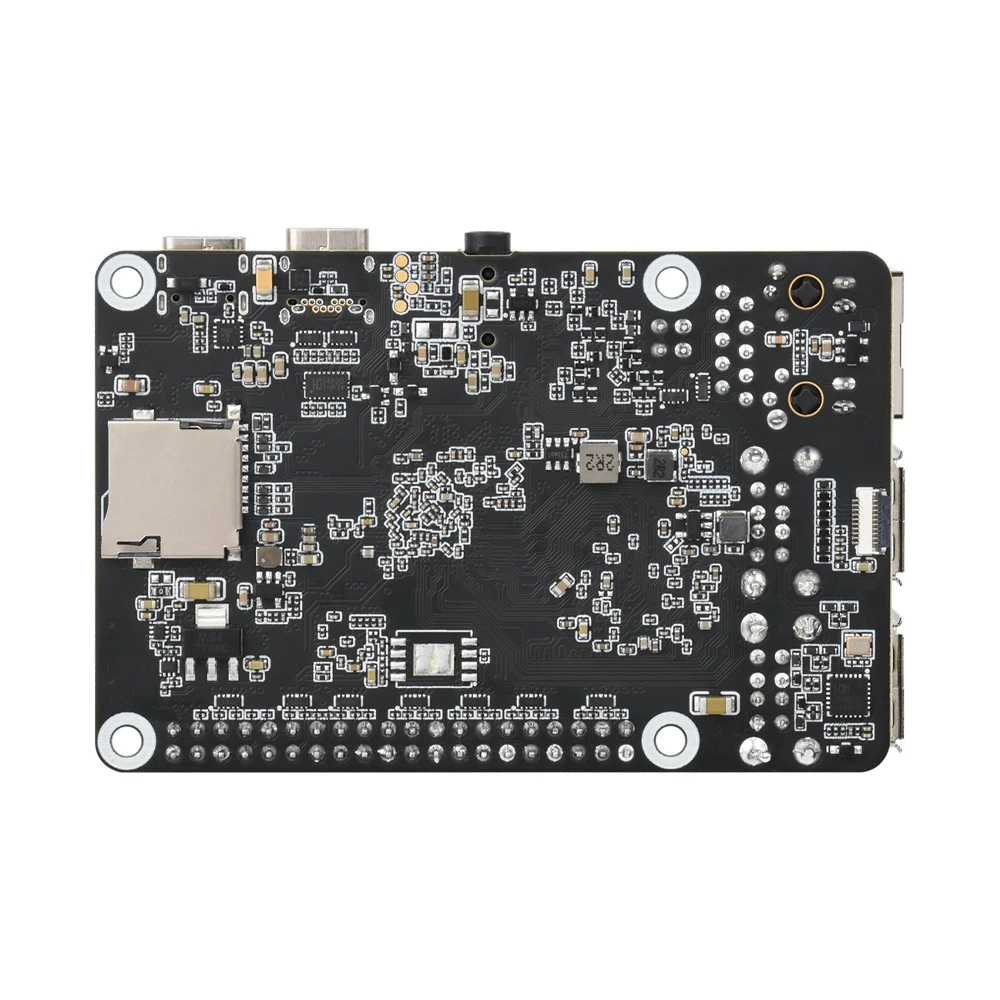
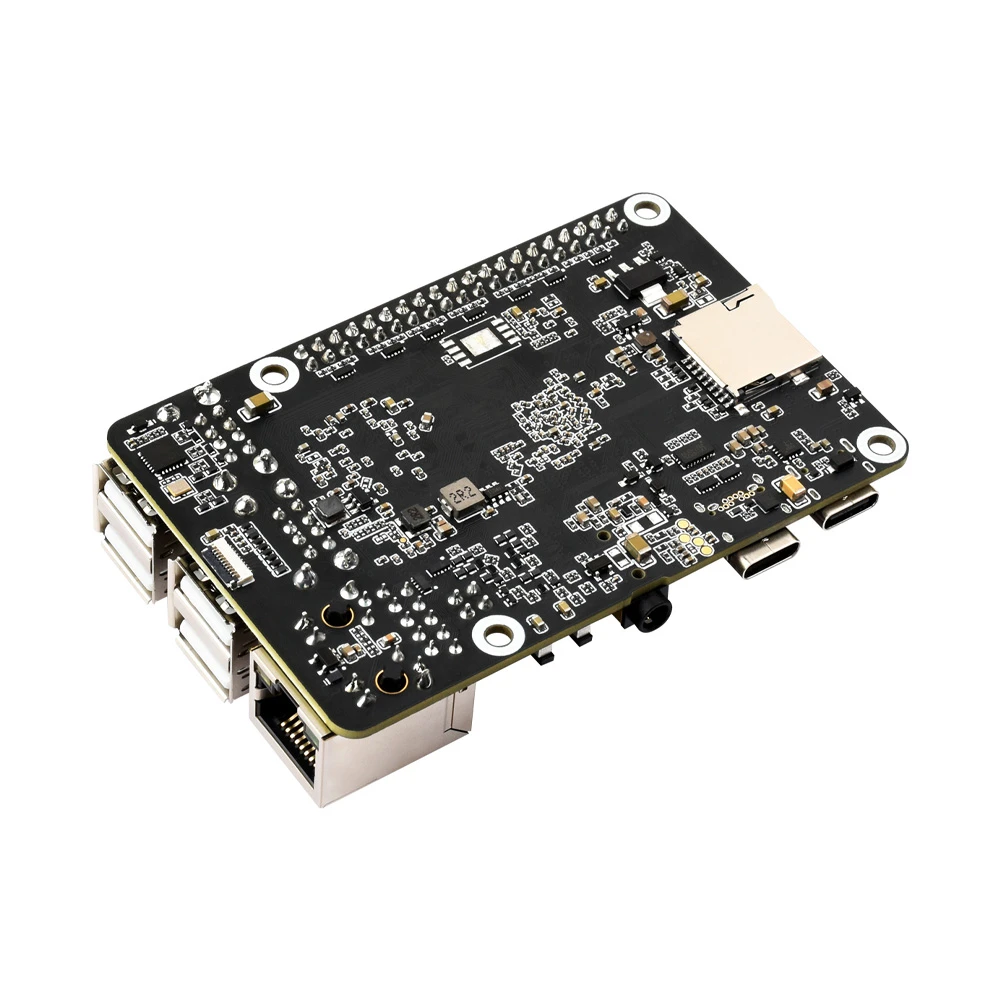
  • High-Speed Connectivity Suite: Integrated Wi-Fi 6, Bluetooth 5.4/BLE, Gigabit Ethernet with PoE support, USB 3.0 Type-C, and four USB 2.0 ports.
  • Maker & Industrial Expansion: Features a 40-pin Raspberry Pi-compatible GPIO header, MIPI DSI display output, and TF card slot for versatile system integration.

Out of stock

Description

The Luckfox Aura Development Board is engineered for demanding edge AI and embedded Linux applications, combining substantial compute resources with specialized acceleration. Its quad-core Cortex-A53 SoC manages general-purpose tasks, while the integrated 3 TOPS NPU offloads intensive AI inference workloads, making it ideal for real-time computer vision pipelines. The board’s 4GB LPDDR4X memory ensures smooth multitasking for complex applications.

Connectivity is comprehensive, featuring Wi-Fi 6 and Bluetooth 5.4 for wireless communication, a Gigabit Ethernet port with Power-over-Ethernet (PoE) capability for reliable network-powered deployments, and multiple USB host ports. The dual MIPI CSI-2 interfaces allow for stereo camera setups or high-resolution sensor input, supported by an advanced ISP. Its compact form factor and extensive I/O, including a 40-pin GPIO header, provide a flexible foundation for robotics, industrial automation, and smart device prototyping.

Key Features

  • AI-Optimized Edge Computing: Combines a 1.6GHz quad-core CPU with a dedicated 3 TOPS NPU for efficient local AI processing without cloud dependency.
  • Ample Memory & Storage: 4GB of high-bandwidth LPDDR4X RAM and 64GB of soldered eMMC flash provide headroom for complex applications and data logging.
  • Professional-Grade Multimedia: Hardware-accelerated 4K video encoding/decoding and dual MIPI CSI camera inputs enable advanced vision-based IoT solutions.
  • Versatile Industrial Connectivity: Gigabit Ethernet with PoE support ensures stable, powered network connections in fixed installations, complemented by Wi-Fi 6 and Bluetooth 5.4.
  • Expansive Developer I/O: 40-pin GPIO header (Raspberry Pi compatible), USB 3.0 Type-C, four USB 2.0 Type-A ports, MIPI DSI display output, and a TF card slot offer maximum flexibility.
  • Robust Embedded OS Support: Officially supports Buildroot and Debian Linux distributions, providing a stable environment for custom firmware and application development.

Applications

  • Edge AI Vision Systems: Deploy for smart surveillance, retail analytics, or quality inspection using the NPU for on-device object detection and classification.
  • Industrial IoT Gateways: Serve as a powerful hub for data aggregation, protocol conversion, and local processing in automation and telemetry networks.
  • Robotics & Autonomous Platforms: Power navigation, sensor fusion, and real-time decision-making in robotic and drone applications.
  • Multimedia IoT Devices: Build digital signage, video intercoms, or streaming appliances with 4K video encode/decode capabilities.
  • Smart Home Hubs: Create a central controller with local processing for voice assistants, security cameras, and home automation, leveraging Wi-Fi 6 and Bluetooth connectivity.

Technical Specifications

ProcessorQuad-core Arm Cortex-A53 @ 1.6GHz
RAM4GB LPDDR4X
Onboard Storage64GB eMMC
NPU Performance3 TOPS @ INT8
Video Processing4K@30fps H.264/H.265 Encode & Decode
Camera InterfacesDual 4-lane MIPI CSI
Display InterfaceMIPI DSI 4-lane (1080p@60fps)
WirelessWi-Fi 6, Bluetooth 5.4 / BLE
Wired NetworkGigabit Ethernet RJ45 (PoE Supported)
USB Ports1x USB 3.0 Type-C, 4x USB 2.0 Type-A
Expansion40-pin GPIO Header, TF Card Slot
Operating SystemBuildroot, Debian
Power Input5V DC
Dimensions87 x 56 mm
Weight115 g

Frequently Asked Questions

What operating systems are supported by the Luckfox Aura board?

The Luckfox Aura officially supports Buildroot and Debian Linux distributions. You can download pre-built images or build your own custom system using the vendor's SDK and toolchain. The board boots from the onboard eMMC, and the OS can be flashed via a USB Type-C connection using the provided flashing tools. This provides a familiar environment for embedded development and deploying Python, C++, or AI inference applications.

How do I connect cameras to the board for vision projects?

The board features two independent 4-lane MIPI CSI-2 interfaces. You can connect compatible MIPI camera modules directly using FPC cables. The integrated Image Signal Processor (ISP) supports features like HDR and noise reduction. Configuration typically involves enabling the camera interface in the device tree and using V4L2 drivers in your application. The NPU can then process the video stream for real-time object detection or classification tasks.

Can the board be powered via the Ethernet port?

Yes, the Gigabit Ethernet port supports IEEE 802.3af/at Power-over-Ethernet (PoE). You will need an external PoE injector or a PoE-enabled switch to deliver both power and data over the single Ethernet cable. This is ideal for clean, single-cable installations in fixed locations like ceiling mounts for cameras or wall-mounted control panels, eliminating the need for a separate power adapter.

What is the procedure for flashing new firmware or the OS?

Firmware is flashed via the USB Type-C port using a dedicated tool like `rkdeveloptool`. You must place the board into MaskROM or loader mode, usually by holding a boot button while powering on. Then, connect it to a host PC, and the flashing software can write the new system image to the eMMC storage. Always backup any important data from the eMMC before starting this process, as it will overwrite the existing content.

How do I access the GPIO pins for hardware interfacing?

The 40-pin header is Raspberry Pi compatible, meaning many HATs and accessories can be used directly. GPIOs are accessed through the standard Linux sysfs interface or libraries like libgpiod. You can configure pins for digital I/O, PWM, I2C, SPI, or UART communication. Pinout diagrams are provided in the board's documentation to help you correctly wire sensors, actuators, or other peripherals for your project.

Package Includes

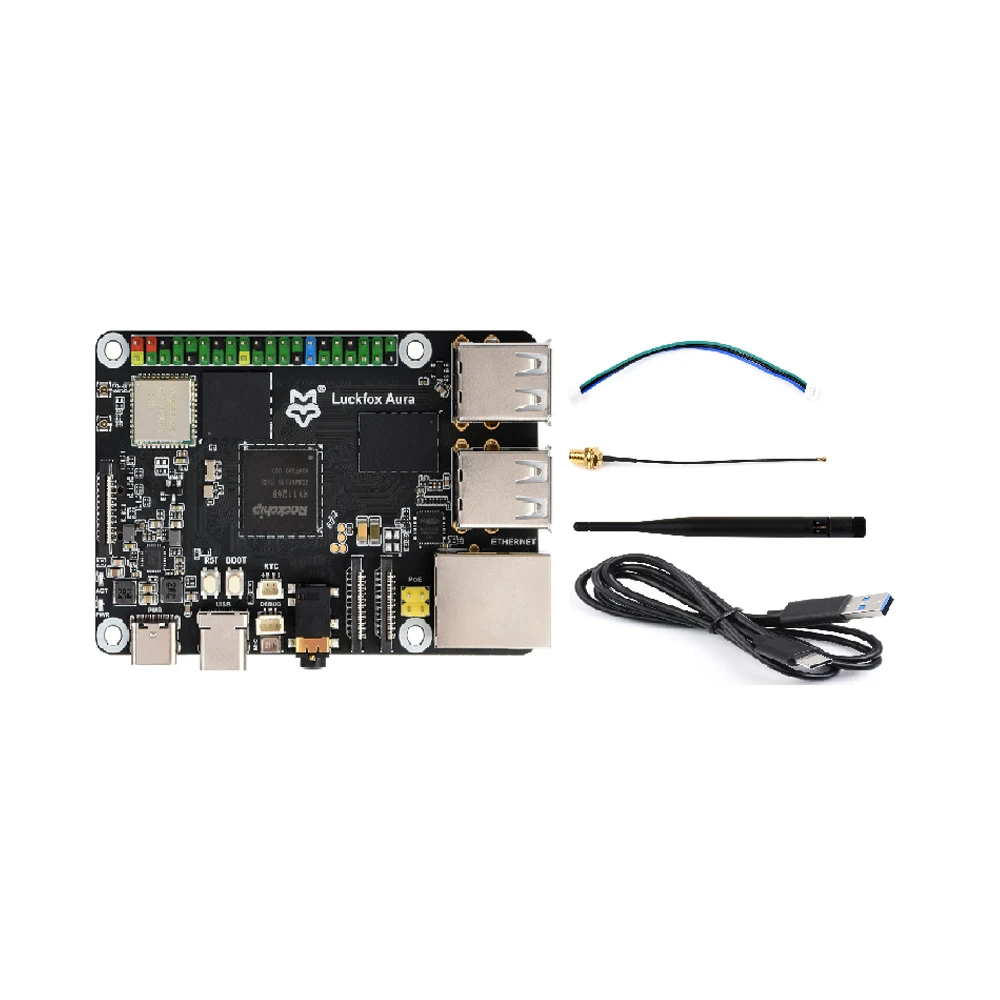
  • 1 x Luckfox Aura High-Performance Linux Development Board
  • 2 x SH1.0 3PIN Cable (~100mm)
  • 2 x IPEX 4 to SMA Cable
  • 2 x 6dBi Antenna (~17cm)
  • 1 x USB Type-A to Type-C Cable (~1m)

Additional Information

Weight 0.115 kg
Dimensions 5.6 × 8.7 cm