SKU: IOWC-1162
📋 GST Invoice Available

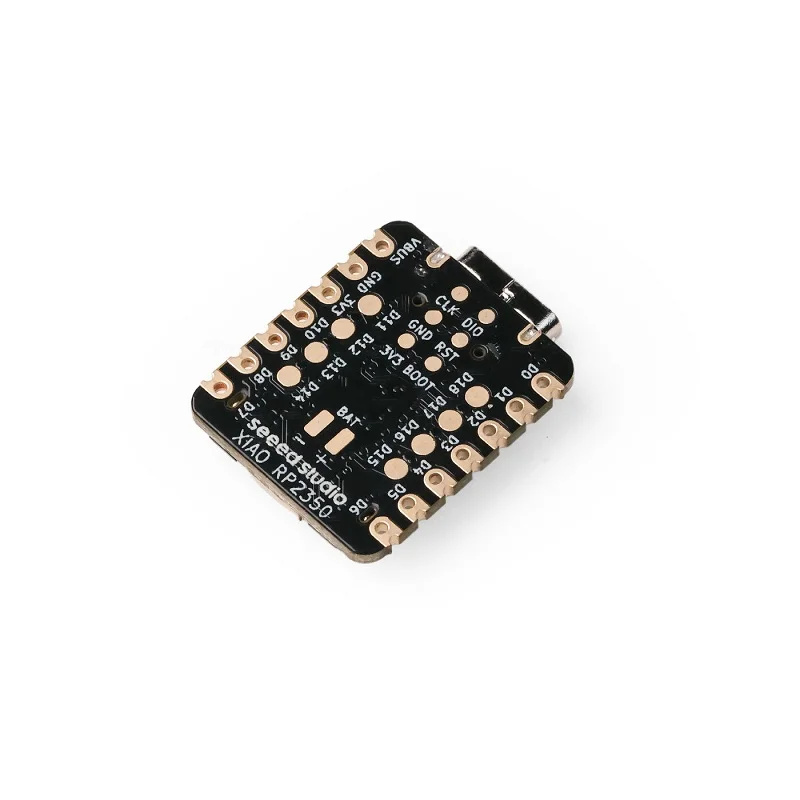
Seeed Studio Studio XIAO RP2350 - Raspberry Pi RP2350 Dual-Core MCU Board

₹829.00 (Inclusive of all taxes)
Out of Stock

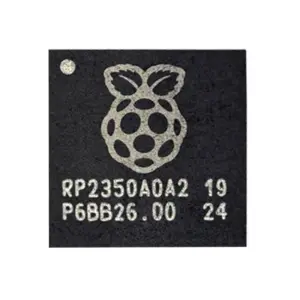
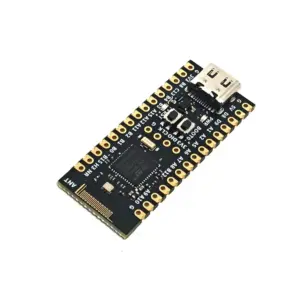
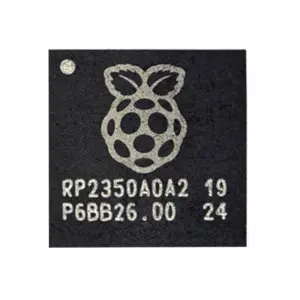
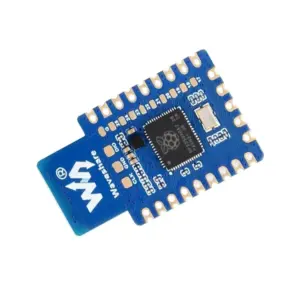
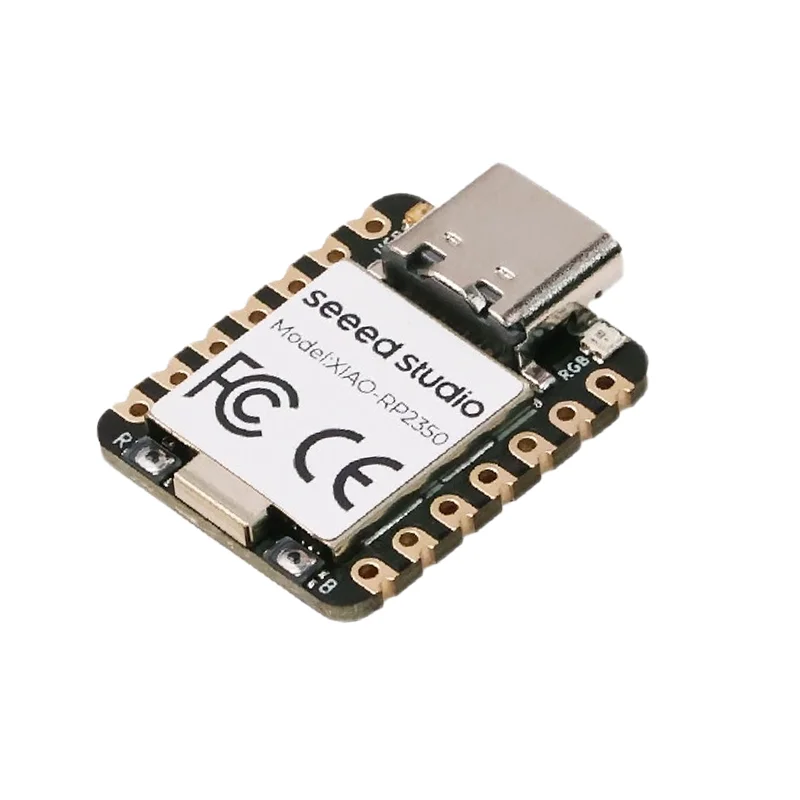
The Seeed Studio Studio XIAO RP2350 is a thumb-sized, high-performance microcontroller board based on the Raspberry Pi RP2350 chip, featuring dual Arm Cortex-M33 cores at 150MHz with FPU. Preloaded with MicroPython and supporting C/C++, it’s designed for compact IoT, wearables, robotics, and HID projects with ultra-low power consumption.

Features

  • Dual-core Arm Cortex-M33 processor @ 150MHz with FPU for responsive embedded computing.
  • Ultra-compact 21mm x 17.8mm form factor ideal for space-constrained and wearable designs.
  • 19 multifunction GPIOs supporting analog, digital, I2C, UART, SPI, and PWM interfaces.
  • Preloaded MicroPython support and C/C++ compatibility for rapid prototyping and development.
  • Ultra-low 27μA sleep current enables long-lasting battery-powered IoT applications.

Out of stock

Description

The Seeed Studio Studio XIAO RP2350 is a powerful, production-ready microcontroller development board built around the Raspberry Pi RP2350 chip. Its dual-core Arm Cortex-M33 architecture, running at 150MHz with integrated FPU, delivers robust processing for complex embedded logic, sensor fusion, and control algorithms while maintaining energy efficiency. The board includes secure boot and Arm TrustZone for enhanced application security in connected devices.

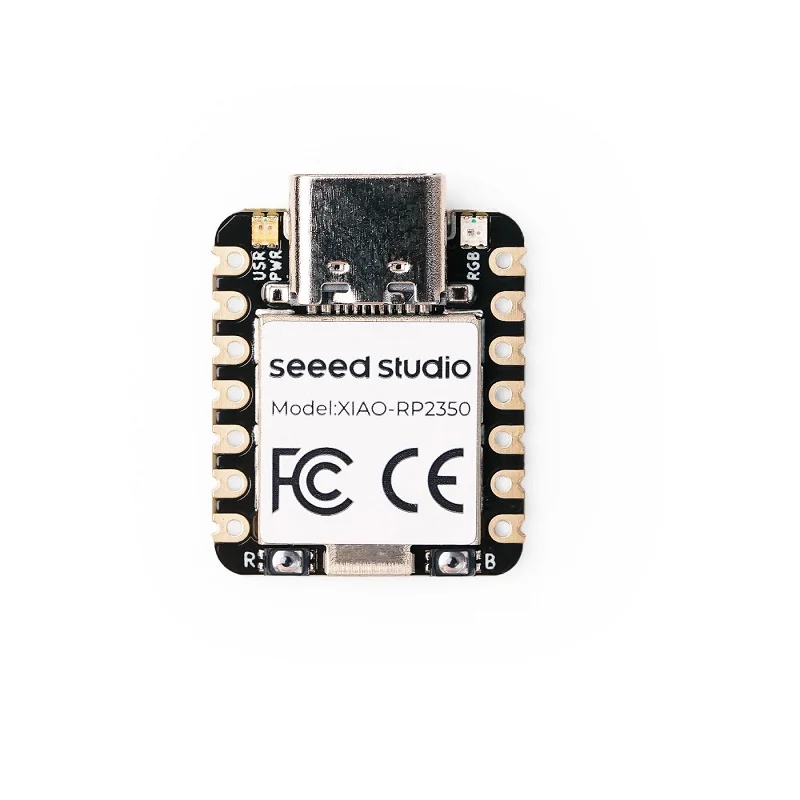
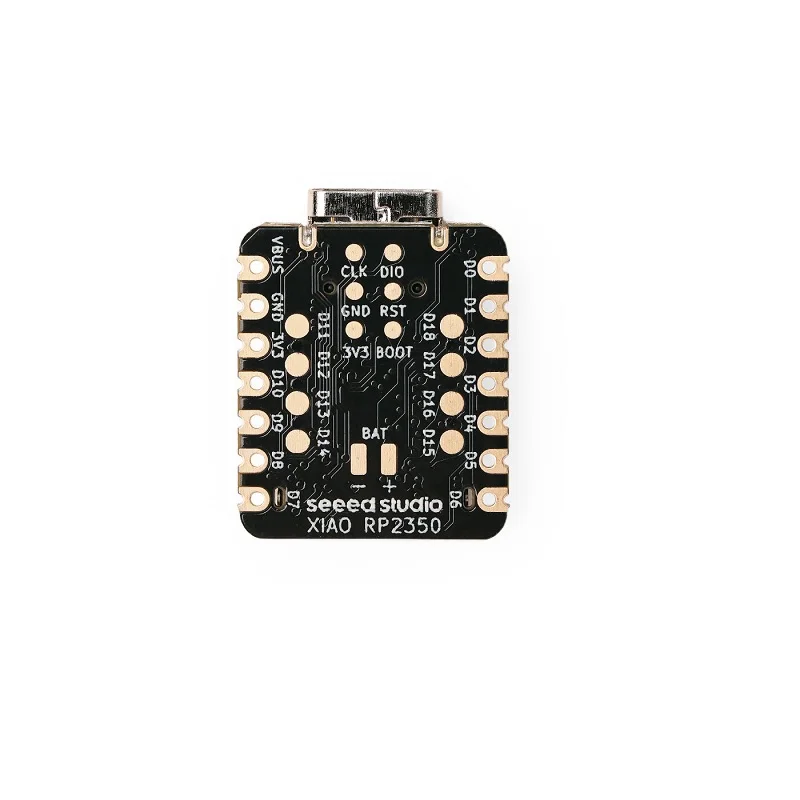
Designed with Seeed Studio’s signature XIAO footprint, the board features 2MB of flash, 520kB SRAM, and an expanded set of 19 GPIO pins—including 3 analog inputs and multiple serial interfaces—on a front-side SMD layout with rear stamp holes. The integrated RGB LED provides visual status feedback, and the USB-C interface ensures reliable programming and power delivery. This combination of performance, security, and a tiny form factor makes it a premier choice for professional makers and system integrators developing next-generation compact IoT nodes.

Key Features

  • Dual-core Arm Cortex-M33 processor with FPU for high-performance, energy-efficient computing.
  • Enhanced security with secure boot, encrypted bootloader, and Arm TrustZone technology.
  • Broad software ecosystem support for MicroPython and C/C++ via Arduino IDE or other frameworks.
  • Rich I/O set with 19 multifunction GPIOs supporting analog, digital, I2C, UART, SPI, and PWM.
  • Ultra-low power design achieving just 27μA in sleep mode for battery-operated applications.
  • Compact, thumb-sized form factor (21x17.8mm) perfect for wearable and space-constrained designs.
  • Production-friendly SMD design with all components on the front and stamp holes for automated assembly.
  • Onboard RGB LED and user buttons for easy prototyping and system status indication.

Applications

  • Compact IoT sensor nodes and edge computing devices.
  • Wearable technology and smart accessory development.
  • Human Interface Devices (HID) like DIY keyboards, mice, and game controllers.
  • Educational robotics and embedded systems training.
  • Low-power, battery-operated environmental monitoring systems.

Technical Specifications

Microcontroller/SoCRaspberry Pi RP2350 (Dual Arm Cortex-M33 @ 150MHz)
RAM520kB SRAM
Flash Memory2 MB
GPIO Interfaces19 Pins: 3x Analog, 19x Digital, 2x I²C, 2x UART, 2x SPI, All PWM
Onboard Indicators1 User LED, 1 Power LED, 1 RGB LED
Buttons1 RESET, 1 BOOT
Security FeaturesOTP, Secure Boot, Arm TrustZone
Sleep Current27μA
Programming SupportMicroPython, C/C++
Operating Temperature-20°C to 70°C
Dimensions (L x W)21 mm x 17.8 mm

Frequently Asked Questions

How do I program the XIAO RP2350 with MicroPython?

Connect the board via USB-C to your computer. It may come pre-flashed with MicroPython. If not, download the latest MicroPython firmware for the RP2350 from Seeed Studio's wiki. Use a tool like rp2040flash or the Thonny IDE to flash the .uf2 file. Once flashed, you can write and run Python scripts directly on the board through a serial REPL or by uploading files via the Thonny file manager. The onboard RGB LED can be controlled via the 'machine' module for quick testing.

What is the power supply requirement and how do I measure battery voltage?

The board is powered via the USB-C port at 5V. For battery operation, you can connect a LiPo battery (typically 3.7V) to the VBAT pin. The ultra-low sleep current of 27μA enables long battery life. A key feature is the internal ADC on a specific GPIO pin that allows direct battery voltage measurement without an external divider, simplifying your Battery Management System (BMS) design. Consult the pinout diagram to identify the correct analog-capable pin for this measurement.

Can I use the XIAO RP2350 with the Arduino IDE?

Yes, the XIAO RP2350 is compatible with the Arduino IDE. You need to add the Seeed Studio Studio board support package. Open Arduino IDE, go to File > Preferences, and add the Seeed Studio Studio board manager URL. Then, navigate to Tools > Board > Boards Manager, search for 'Seeed Studio Studio RP2350', and install the package. Select 'Seeed Studio Studio XIAO RP2350' as your board from the Tools menu. You can now write, compile, and upload standard Arduino sketches, leveraging libraries for I2C sensors, SPI displays, and PWM servos.

What are the key differences between the XIAO RP2350 and other XIAO series boards?

The XIAO RP2350 distinguishes itself with the Raspberry Pi RP2350 dual-core Cortex-M33 processor, offering higher performance than earlier ARM M0+ based XIAOs. It features enhanced security with secure boot and TrustZone. It provides an expanded I/O count with 19 GPIOs, including 8 additional pins on the back compared to some predecessors. The power design includes a dedicated internal ADC path for battery monitoring. While it lacks built-in wireless connectivity like Wi-Fi or BLE (found in XIAO ESP32 variants), it excels in raw processing power and security for wired or local compute applications.

Package Includes

  • 1 x Seeed Studio Studio XIAO RP2350 Board
  • 2 x 7-Pin Header

Additional Information

Weight 0.005 kg
Dimensions 2.1 × 1.7 cm