SKU: SENS-2842
📋 GST Invoice Available

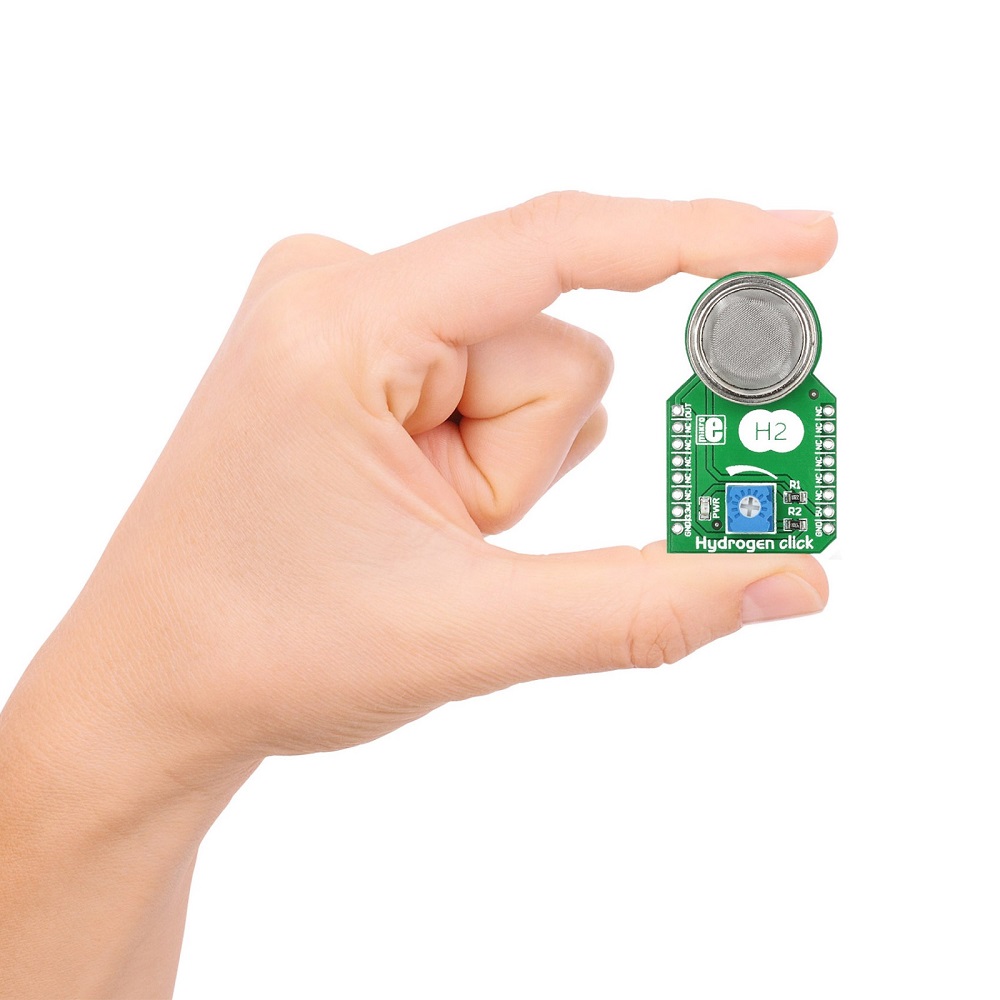
Mikroe HYDROGEN Click (Mikroe‑1629) – MQ‑8 Hydrogen Gas Sensor Board, Analog, mikroBUS

₹1,129.00 (Inclusive of all taxes)
Out of Stock

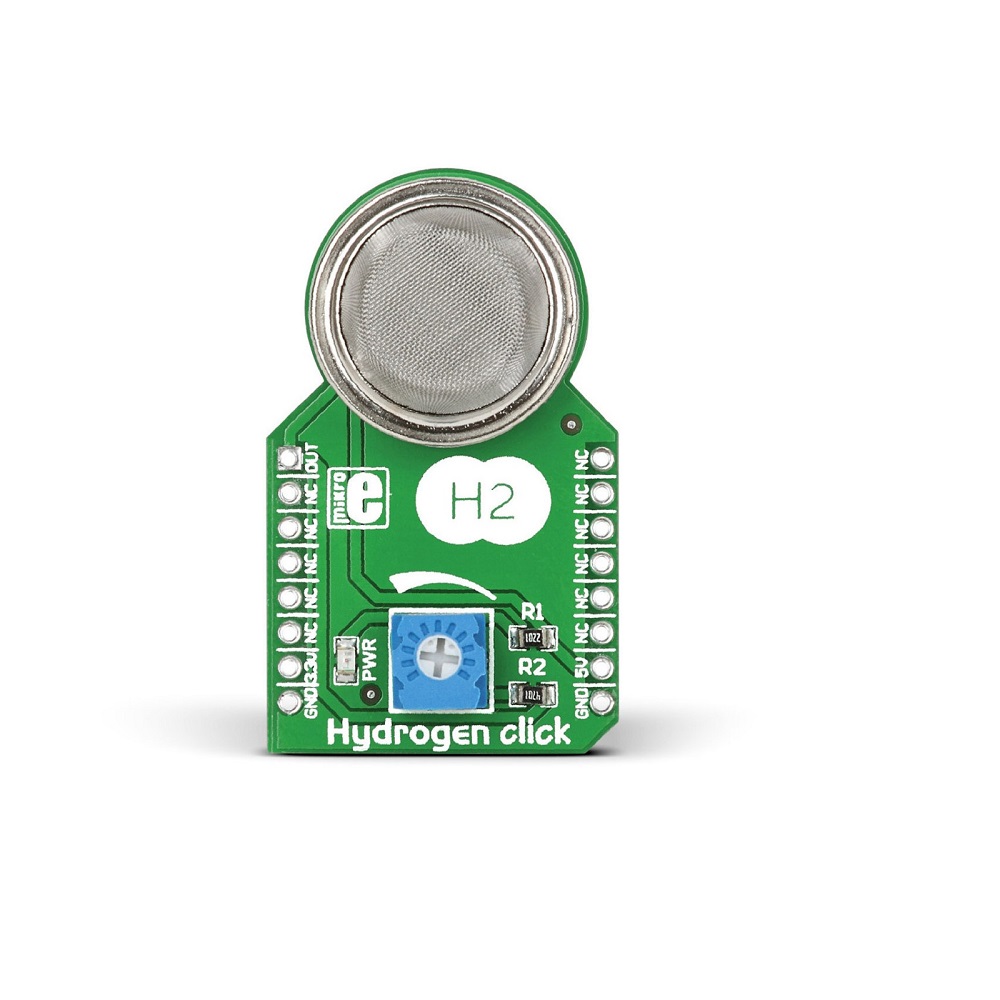
The Mikroe HYDROGEN Click (Mikroe‑1629) is a mikroBUS-compatible sensor board featuring an MQ-8 tin dioxide (SnO2) sensor for detecting hydrogen gas concentrations from 100 to 10,000 ppm. It provides an analog output signal for easy integration with microcontrollers like Arduino, Raspberry Pi, and STM32 development boards.

Features

  • MQ-8 Hydrogen Gas Sensor with 100-10,000 ppm detection range
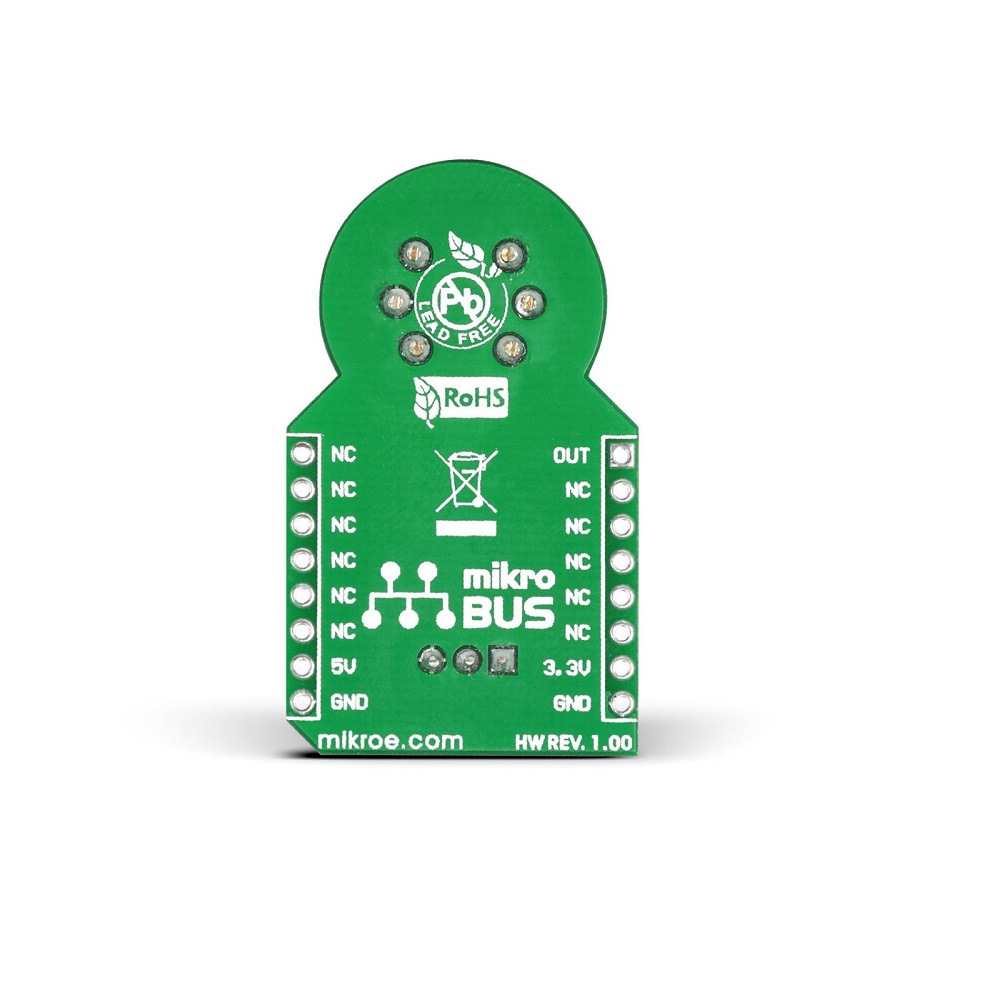
  • Analog output interface via mikroBUS AN (OUT) line
  • On-board potentiometer for environmental calibration and load resistance adjustment
  • Wide 3.3V to 5V DC operating voltage range
  • Standard mikroBUS form factor (42.9 x 25.4 mm) for modular prototyping

Out of stock

Description

The HYDROGEN Click utilizes an MQ-8 semiconductor gas sensor with a tin dioxide (SnO2) sensing layer. In clean air, the sensor’s conductivity is low; it increases proportionally with rising hydrogen gas concentration. The board includes a potentiometer to adjust the sensor circuit’s load resistance, allowing calibration for specific environmental conditions and ensuring accurate ppm readings.

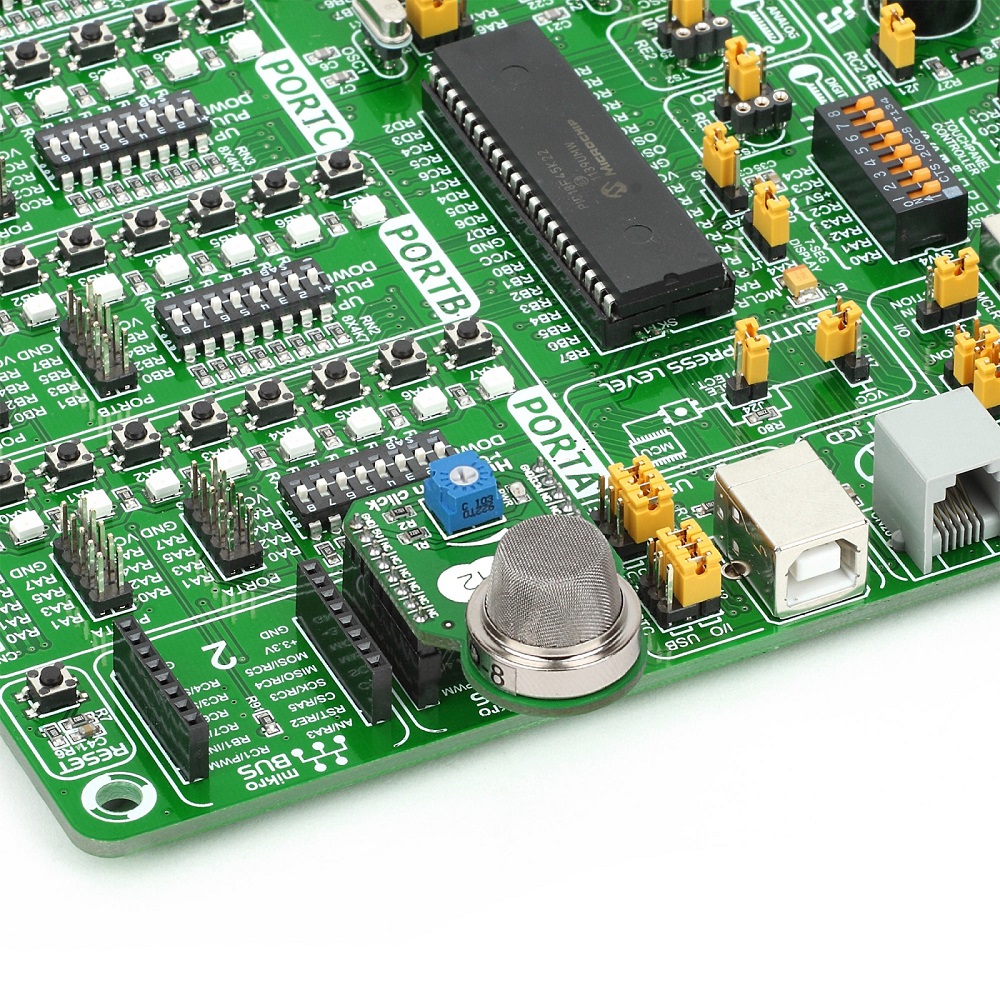
Designed for the mikroBUS standard, this Click board provides a plug-and-play solution for rapid prototyping on compatible host boards. It requires a 5V power supply for optimal sensor heater operation, though the logic is compatible with 3.3V systems. The sensor requires an initial 24-hour preheat period for stabilization before precise measurements can be taken.

Key Features

  • High-sensitivity MQ-8 semiconductor hydrogen gas sensor
  • Analog voltage output proportional to gas concentration
  • Integrated calibration potentiometer for field adjustment
  • Robust mikroBUS form factor ensures reliable mechanical and electrical connection
  • Wide operating voltage range supports 3.3V and 5V logic systems
  • Optimized performance-to-cost ratio for prototyping and educational use
  • Tin dioxide (SnO2) sensing element provides stable long-term performance

Applications

  • Hydrogen gas leak detection in laboratory safety systems
  • Prototyping and monitoring for hydrogen fuel cell applications
  • Industrial process control where hydrogen is a byproduct
  • Educational projects for gas sensing and environmental monitoring

Technical Specifications

Manufacturer Part NumberMikroe‑1629
Sensor TypeMQ-8 Hydrogen Gas Sensor
Sensing PrincipleTin Dioxide (SnO2) Semiconductor
Detection Range100 - 10,000 ppm H2
Output InterfaceAnalog
Operating Voltage3.3V to 5V DC
Board InterfacemikroBUS
Board Dimensions42.9 x 25.4 mm
CalibrationOn-board Potentiometer
Preheat Time>24 hours (for stabilization)

Frequently Asked Questions

What is the output signal type of the HYDROGEN Click board?

The HYDROGEN Click provides an analog voltage output via the AN (OUT) line on the mikroBUS connector. The output voltage varies proportionally with the detected hydrogen gas concentration, allowing it to be read directly by an MCU's ADC pin for ppm calculation.

How do I calibrate the sensor for my environment?

Use the on-board potentiometer to adjust the sensor circuit's load resistance. For precise calibration, expose the sensor to a known hydrogen concentration or clean air baseline after a mandatory 24-hour preheat period. The potentiometer fine-tunes the sensor's sensitivity and output range.

What power supply does this Click board require?

The board is designed for a 5V DC supply to properly power the MQ-8 sensor's internal heater. While the logic levels are compatible with 3.3V systems, the power input must be 5V for the sensor to operate correctly and achieve its specified detection range and sensitivity.

Is this sensor compatible with Arduino or Raspberry Pi?

Yes, but it requires a host board with a mikroBUS socket or a compatible adapter. You can connect its analog output to any microcontroller ADC pin (e.g., on an Arduino). Ensure your host board provides the required 5V power supply via the mikroBUS VCC line.

Package Includes

  • 1 x Mikroe HYDROGEN Click (Mikroe‑1629) Board

Additional Information

Weight 0.04 kg
Dimensions 6 × 4 × 2 cm