SKU: SENS-2835
📋 GST Invoice Available

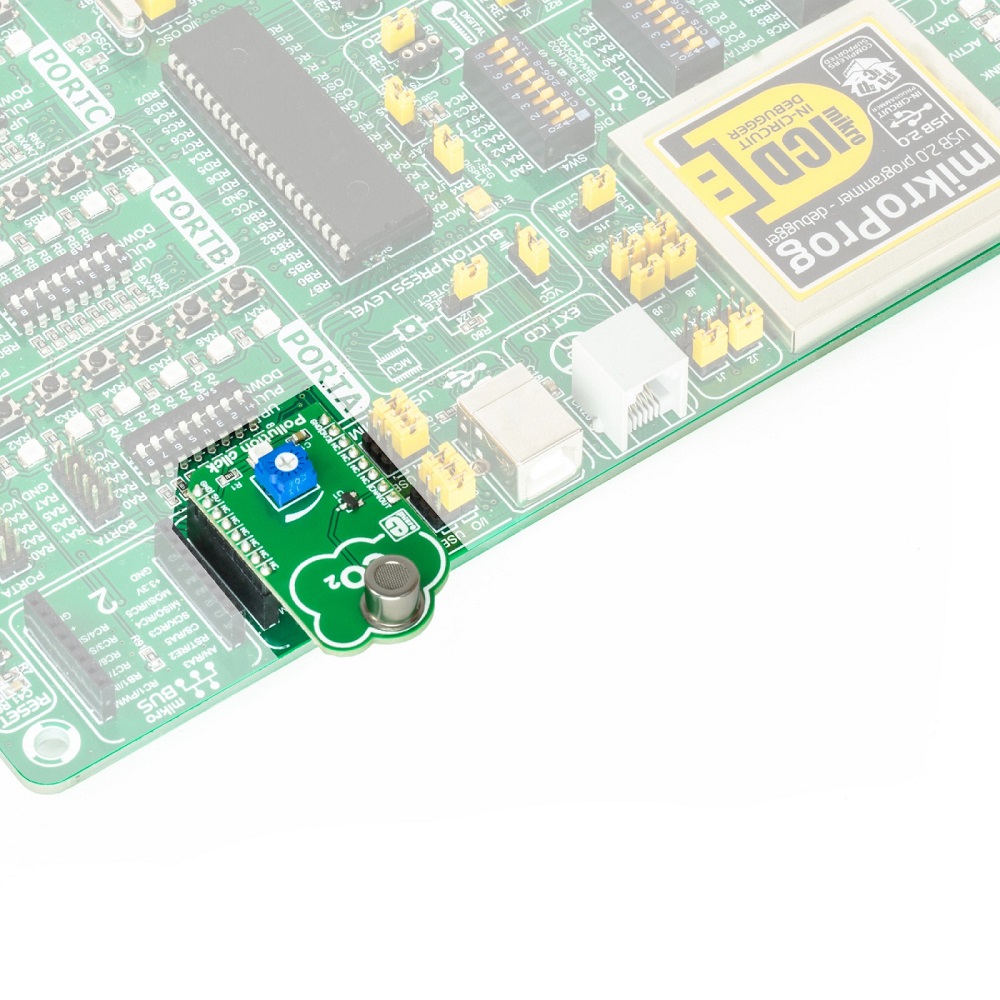
Mikroe POLLUTION CLICK (Mikroe‑2516) – WSP2110 VOC Gas Sensor Board, Analog, mikroBUS, Detection Range: 1~50 ppm

₹3,669.00 (Inclusive of all taxes)
Out of Stock

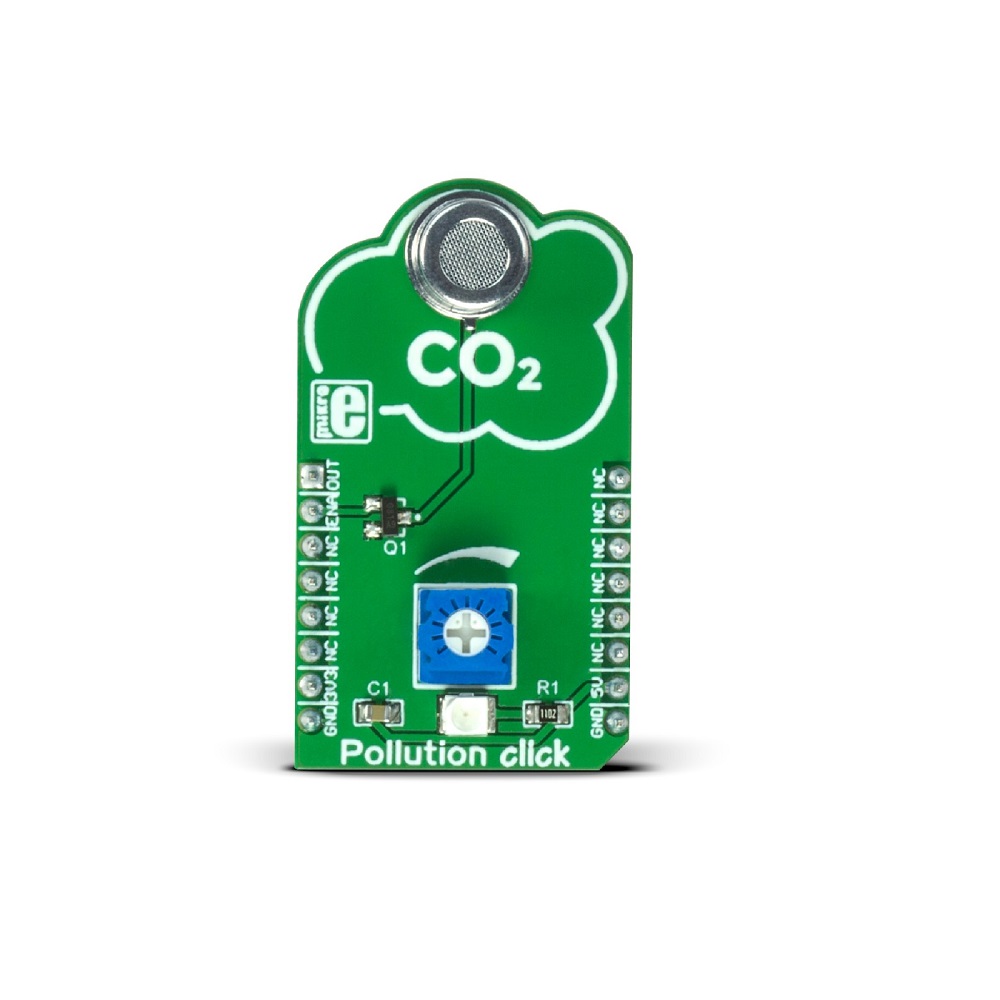
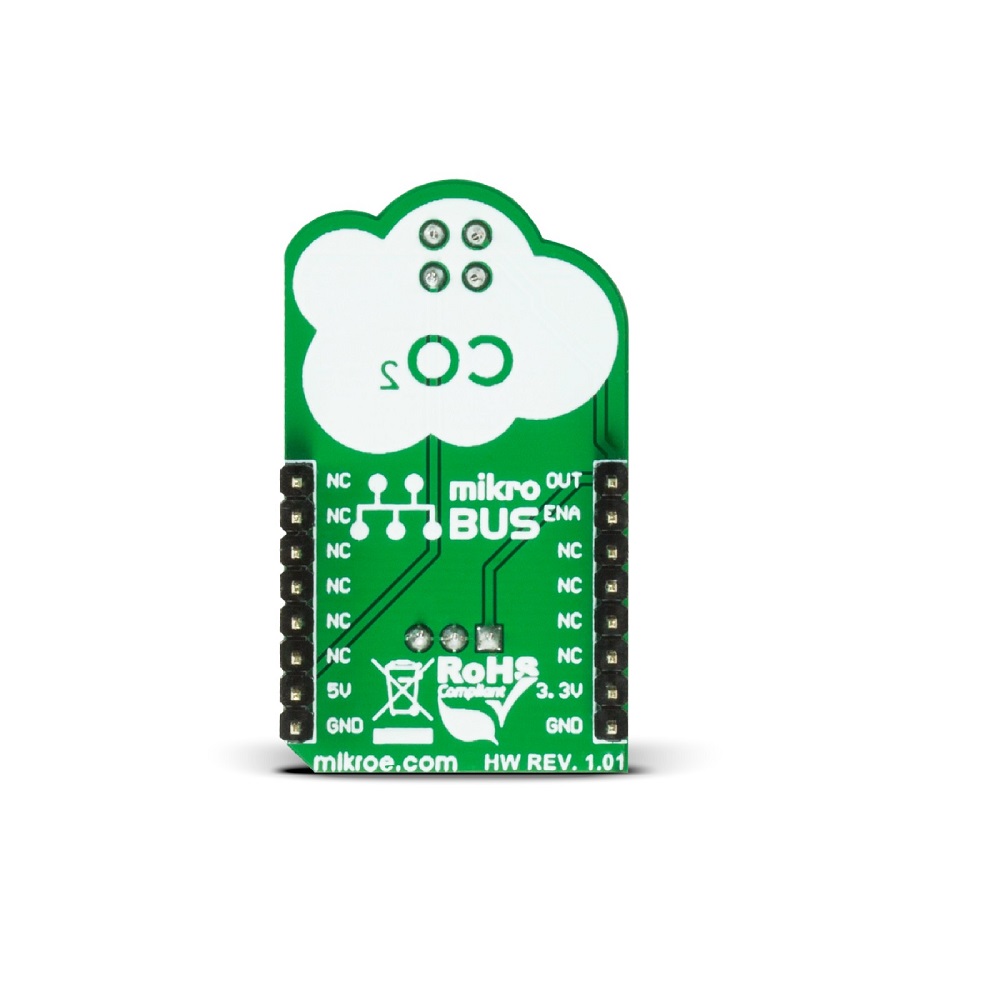
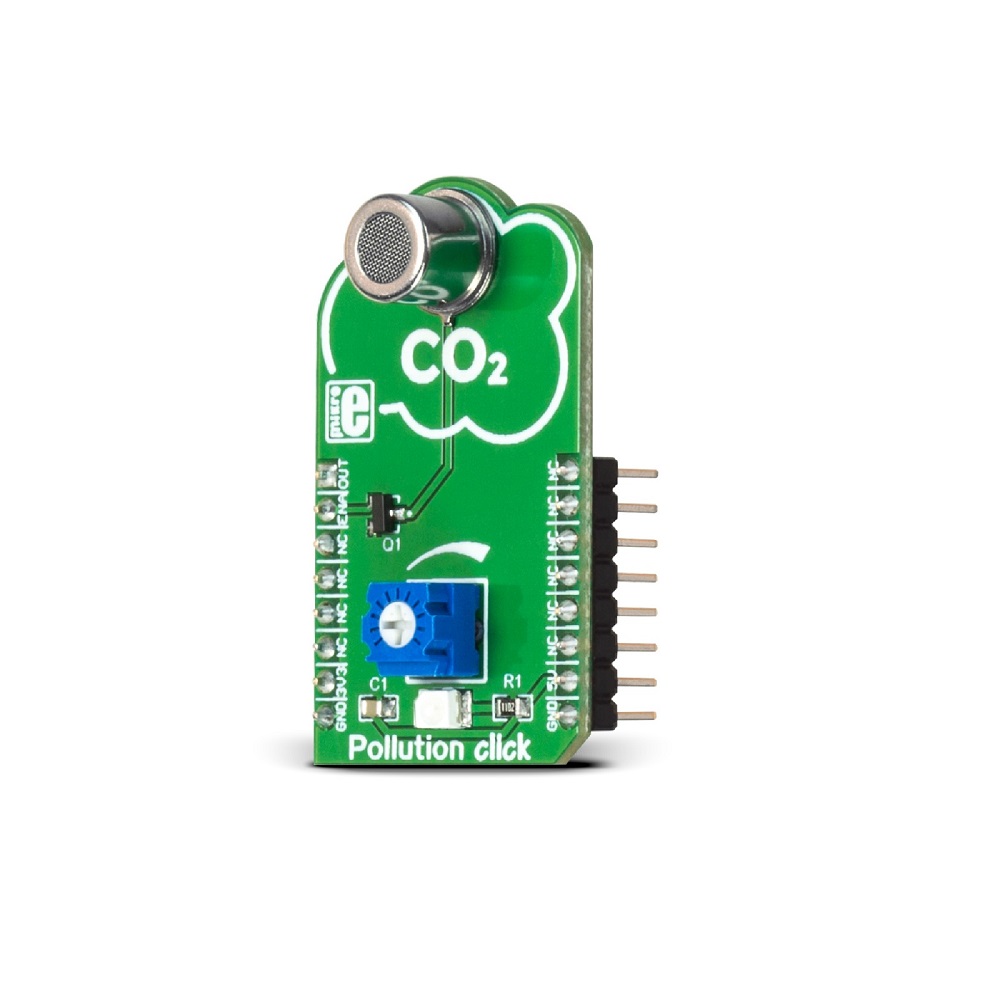
The Mikroe POLLUTION CLICK (Mikroe‑2516) is a mikroBUS-compatible VOC gas sensor board featuring the WSP2110 metal oxide semiconductor (MOS) sensor. It provides an analog output for detecting volatile organic compounds (VOCs) like formaldehyde, benzene, and toluene, making it suitable for integration with 5V MCU platforms including Arduino, Raspberry Pi, and STM32.

Features

  • Integrates WSP2110 MOS-type VOC gas sensor for detecting formaldehyde, benzene, alcohol, and toluene.
  • Provides analog voltage output via mikroBUS AN pin for direct MCU ADC interfacing.
  • Features onboard potentiometer (P1) for precise sensitivity trimming and adjustment.
  • Operates on a 5V DC supply with a low-power MOSFET switch for heater control.
  • Standard mikroBUS form factor (42.9 x 25.4 mm) for plug-and-play compatibility with hundreds of host boards.

Out of stock

Description

The POLLUTION CLICK utilizes a WSP2110 metal oxide semiconductor (MOS) sensor element whose conductivity changes proportionally with the concentration of target volatile organic compounds. The board conditions this signal, providing a stable analog voltage output corresponding to VOC levels between 1 and 50 ppm. It includes a heater control circuit managed via a GPIO pin to reduce power consumption during idle periods.

Designed for the mikroBUS ecosystem, this click board requires a 120-hour preheating period for initial sensor stabilization and calibration. Its compact, standardized footprint allows for rapid prototyping and integration into air quality monitoring systems, industrial safety devices, and smart environmental controls.

Key Features

  • WSP2110 MOS VOC Sensor: Detects a wide range of harmful organic gases including formaldehyde (methanal), benzene, and toluene with a sensitivity ratio Rs(air)/Rs(10ppm toluene) ≥ 3.
  • Analog Output Interface: Delivers a conditioned voltage signal via the mikroBUS AN pin for straightforward ADC connection and data acquisition.
  • Onboard Sensitivity Trimmer: Includes a precision potentiometer (P1) for fine-tuning the sensor's response to match specific application requirements.
  • Integrated Power Management: Features a MOSFET switch controlled by a GPIO (RST) pin to enable/disable the sensor heater, optimizing system power consumption.
  • mikroBUS Standard Compliance: Guarantees mechanical and electrical compatibility with a vast range of development boards from Mikroe and other manufacturers.
  • 5V Operation: Simplified power supply design, drawing from the standard mikroBUS 5V rail.

Applications

  • Indoor Air Quality (IAQ) monitors and smart HVAC control systems for homes and offices.
  • Portable or fixed harmful gas detection devices for industrial safety and environmental monitoring.
  • Integration into air purifiers and automatic exhaust fan controllers for automated ventilation.
  • Prototyping and educational setups for environmental sensing with Arduino, Raspberry Pi, or PIC MCUs.

Technical Specifications

Manufacturer Part NumberMikroe‑2516
Sensor ModelWSP2110 VOC Gas Sensor (MOS Type)
Detection Range1 – 50 ppm (parts per million)
Target GasesFormaldehyde, Benzene, Alcohol, Toluene, VOCs
Output InterfaceAnalog (via mikroBUS AN pin), GPIO Control
Primary Interface StandardmikroBUS
Operating Voltage5 V DC
Board Dimensions42.9 mm x 25.4 mm
Key Onboard ComponentSensitivity Trimming Potentiometer (P1)
Preheat/Stabilization TimeApprox. 120 hours

Frequently Asked Questions

What is the operating voltage for the POLLUTION CLICK board?

The POLLUTION CLICK is designed to operate strictly on a 5V DC power supply, which it draws from the mikroBUS socket's VCC pin. Do not apply voltages outside this specification, as it may damage the onboard WSP2110 sensor and conditioning circuitry.

How do I interface with the sensor's output?

The board provides an analog voltage output on the mikroBUS AN (Analog) pin. Connect this pin to your MCU's ADC input channel. The voltage level correlates with VOC concentration. A GPIO pin (RST on mikroBUS) is also used to control the MOSFET that switches the sensor's heater for power saving.

What does the 120-hour preheat time mean?

The WSP2110 MOS sensor requires an extended initial stabilization period of approximately 120 hours (5 days) after first power-up to reach its optimal operating temperature and stable baseline resistance. For accurate measurements, this preheating period is necessary before performing final calibration or relying on readings.

Can I adjust the sensor's sensitivity?

Yes, the board includes a potentiometer labeled P1 specifically for trimming the sensor's sensitivity. Adjusting this pot allows you to calibrate the analog output range to better match your expected VOC concentration levels and ADC reference voltage.

Is this board compatible with my Raspberry Pi or Arduino?

Yes, but you need a host board with a mikroBUS socket. You can use Mikroe's development boards (like Clicker 2) or adapter shields that provide a mikroBUS interface for Arduino or Raspberry Pi. The board itself is not directly pluggable into standard Arduino headers or Raspberry Pi GPIO without such an adapter.

Package Includes

  • 1 x Mikroe POLLUTION CLICK (Mikroe‑2516) VOC Gas Sensor Board

Additional Information

Weight 0.05 kg
Dimensions 7 × 5 × 2 cm