SKU: IOWC-1383
📋 GST Invoice Available

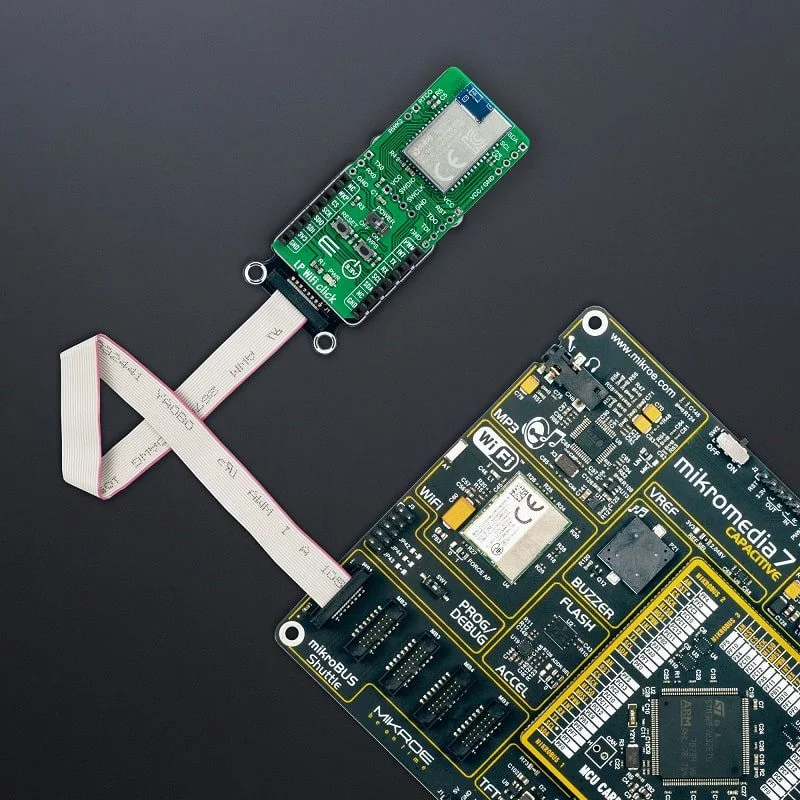
Mikroe LP WIFI CLICK (Mikroe-4836) Ultra-Low-Power Wi-Fi Module

₹1,689.00 (Inclusive of all taxes)
Out of Stock

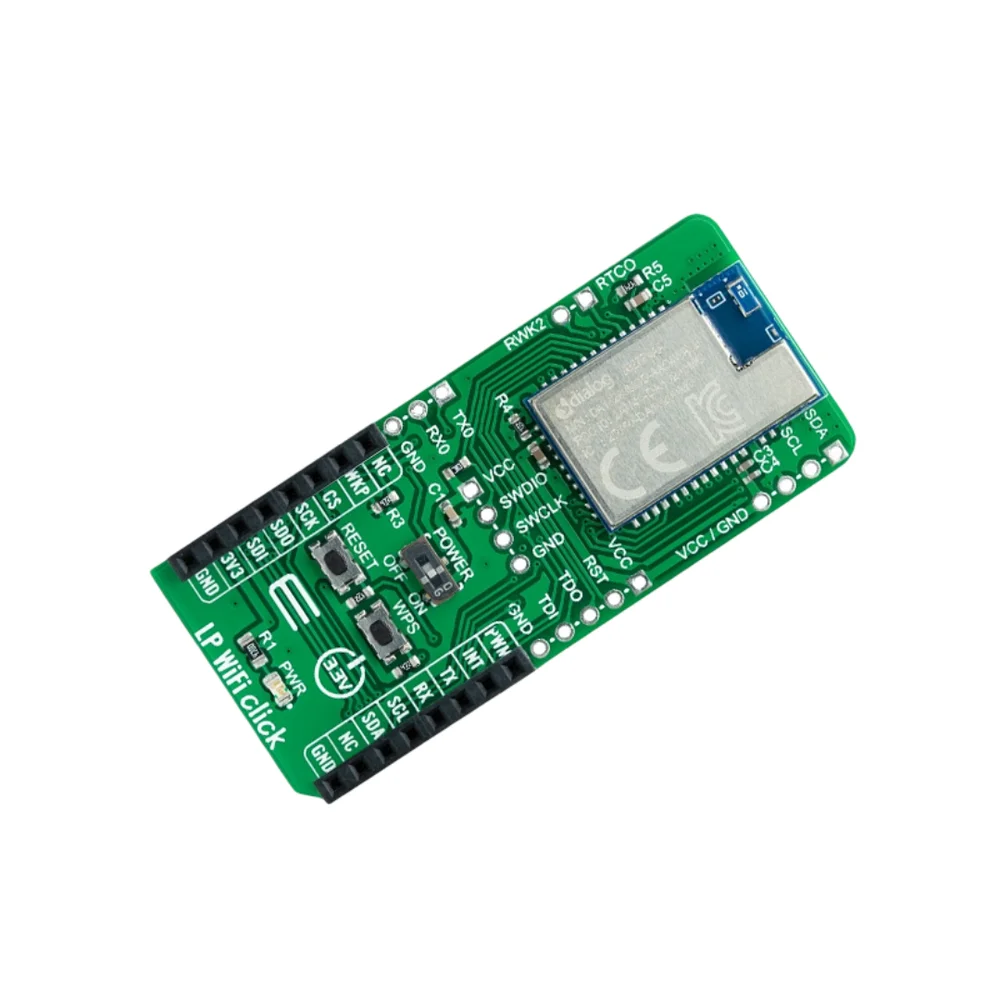
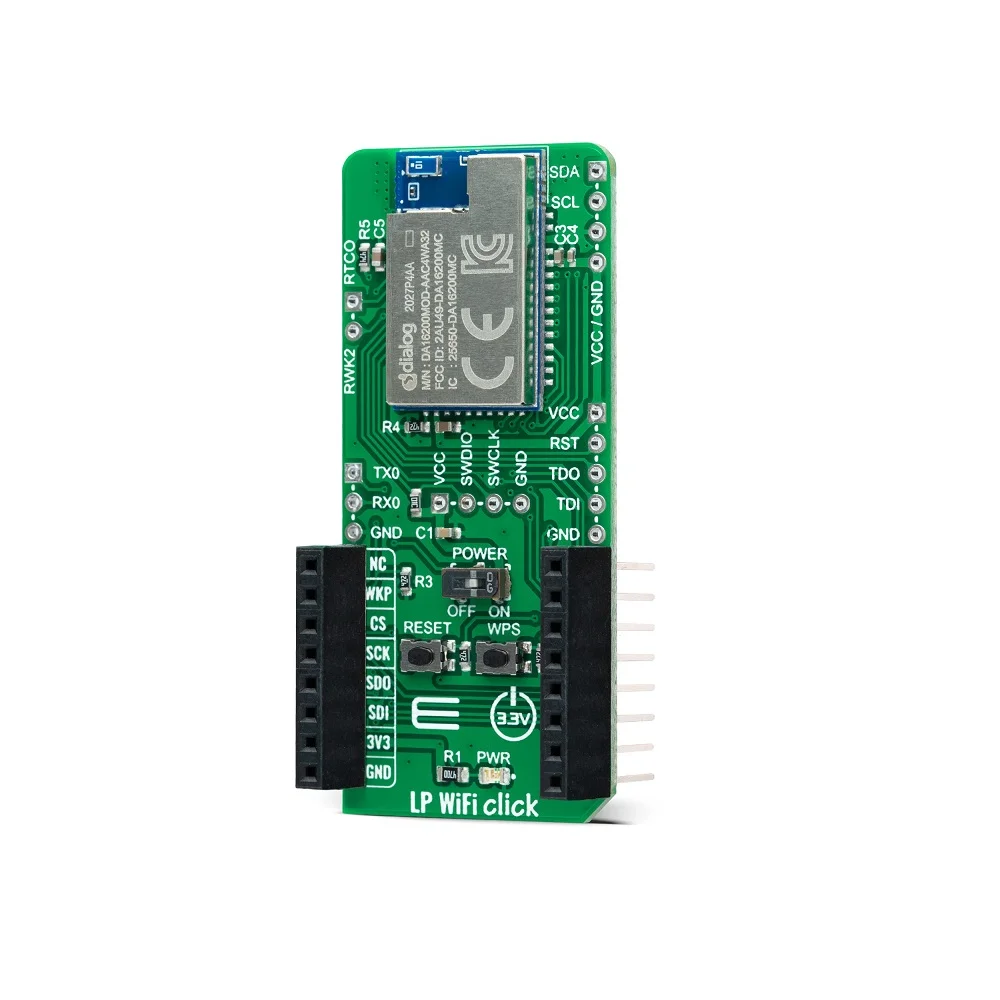
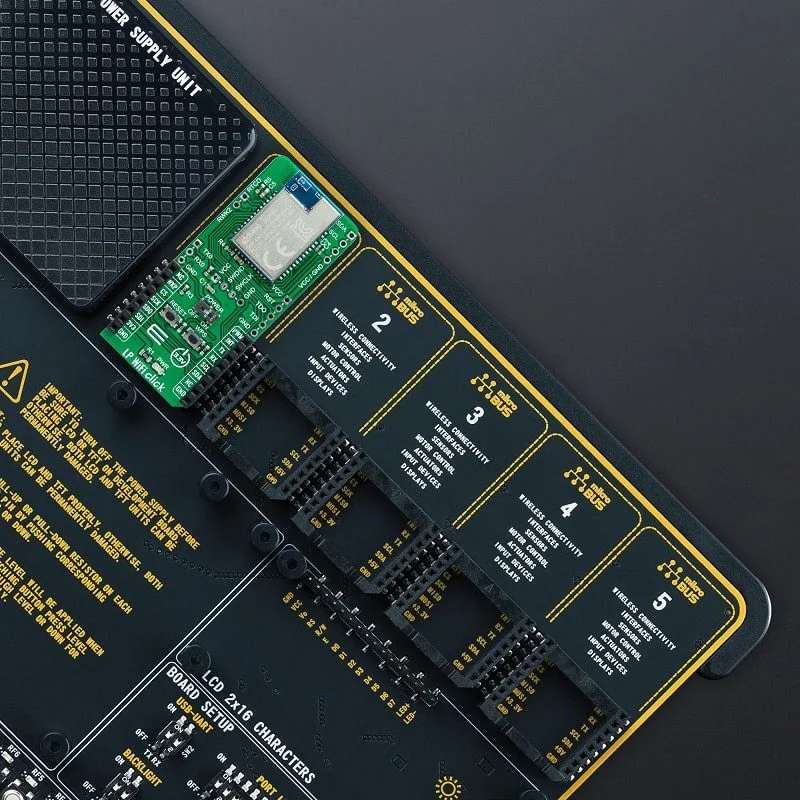
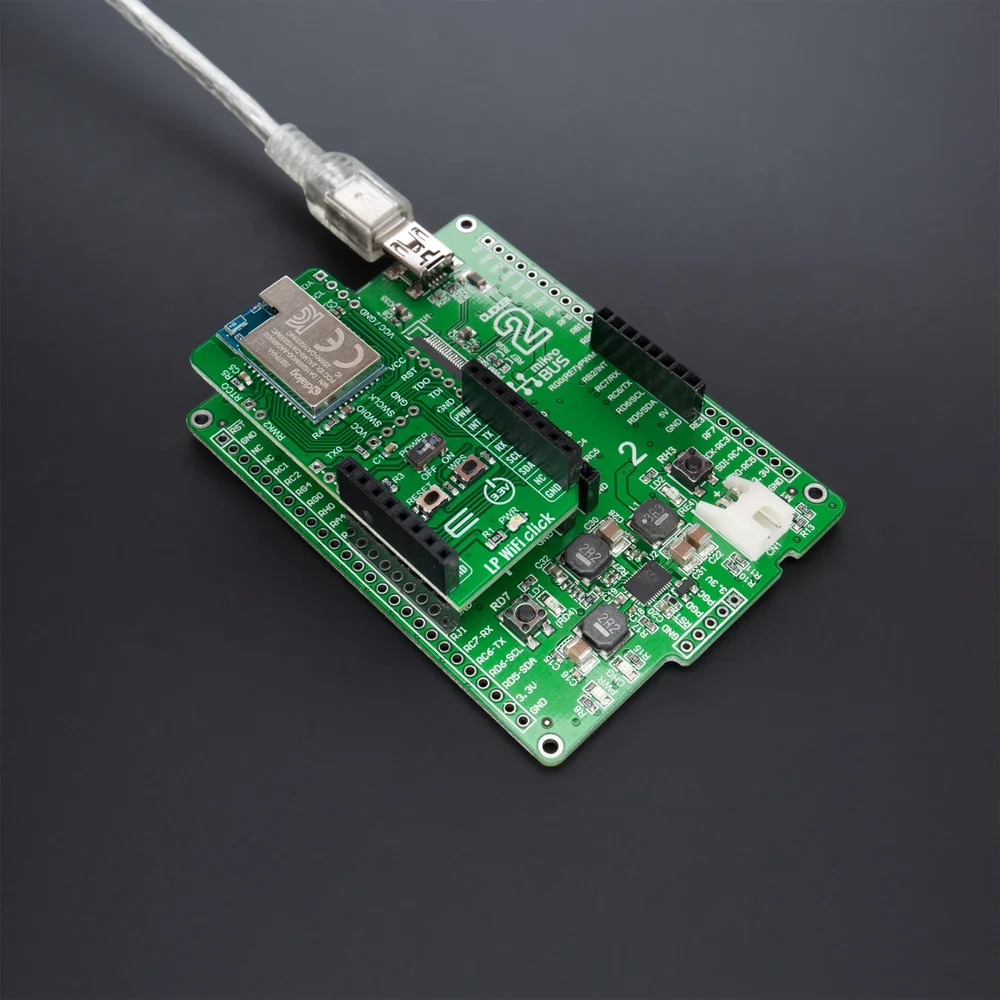
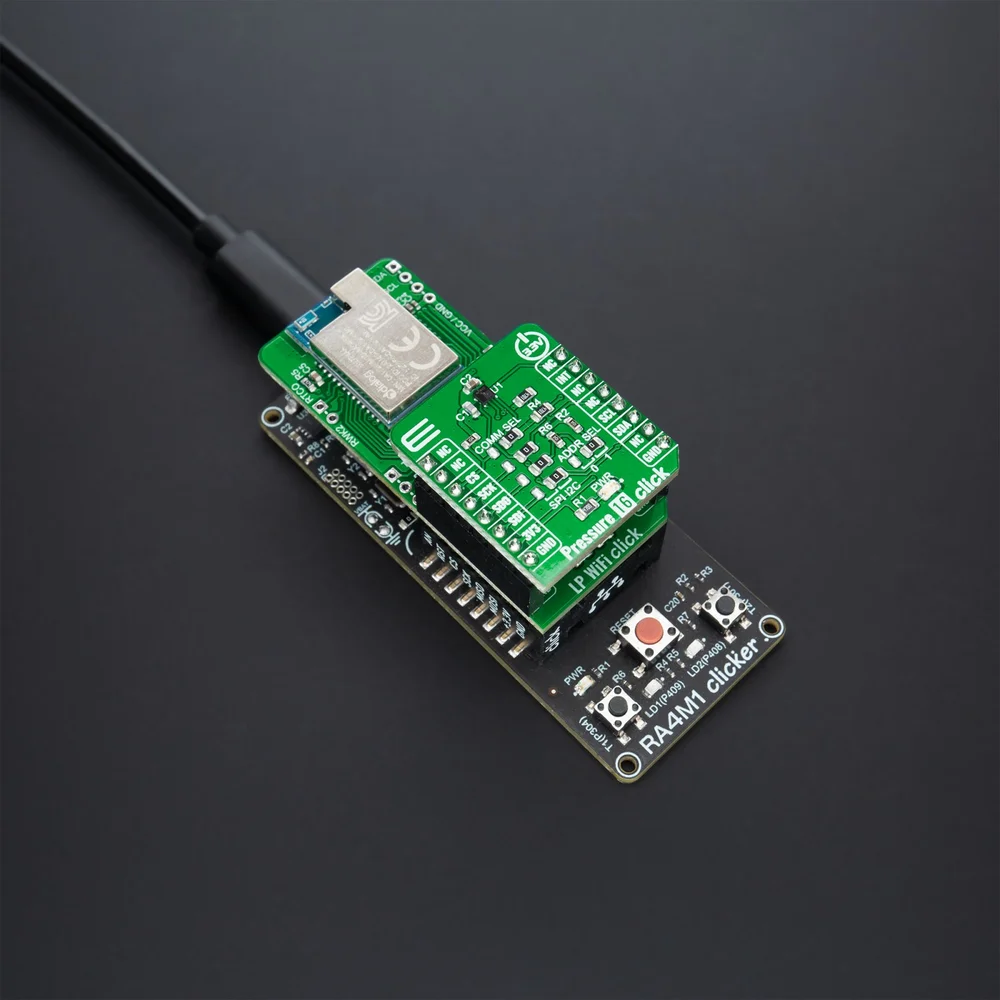
The Mikroe LP WIFI CLICK is an ultra-low-power 2.4 GHz Wi-Fi IoT module board featuring the Dialog DA16200 SoC. It connects to any host MCU via the mikroBUS socket using GPIO, I2C, SPI, or UART interfaces, enabling extended battery life for connected IoT applications.

Features

  • Ultra-low-power Dialog DA16200 Wi-Fi SoC enables multi-year battery life on a single charge.
  • Fully integrated solution includes 4MB flash, chip antenna, and crystal oscillators for simplified design.
  • Standard mikroBUS form factor (57.15 x 25.4 mm) ensures plug-and-play compatibility with hundreds of host boards.
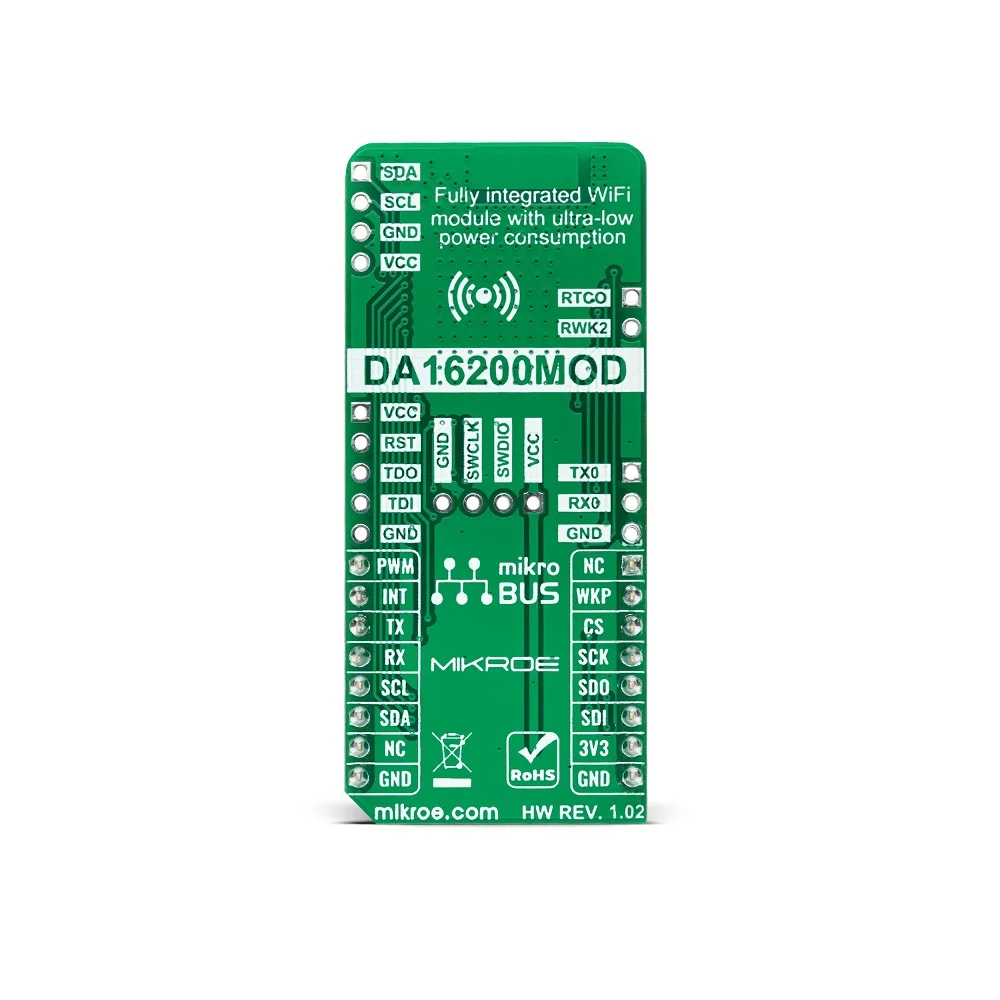
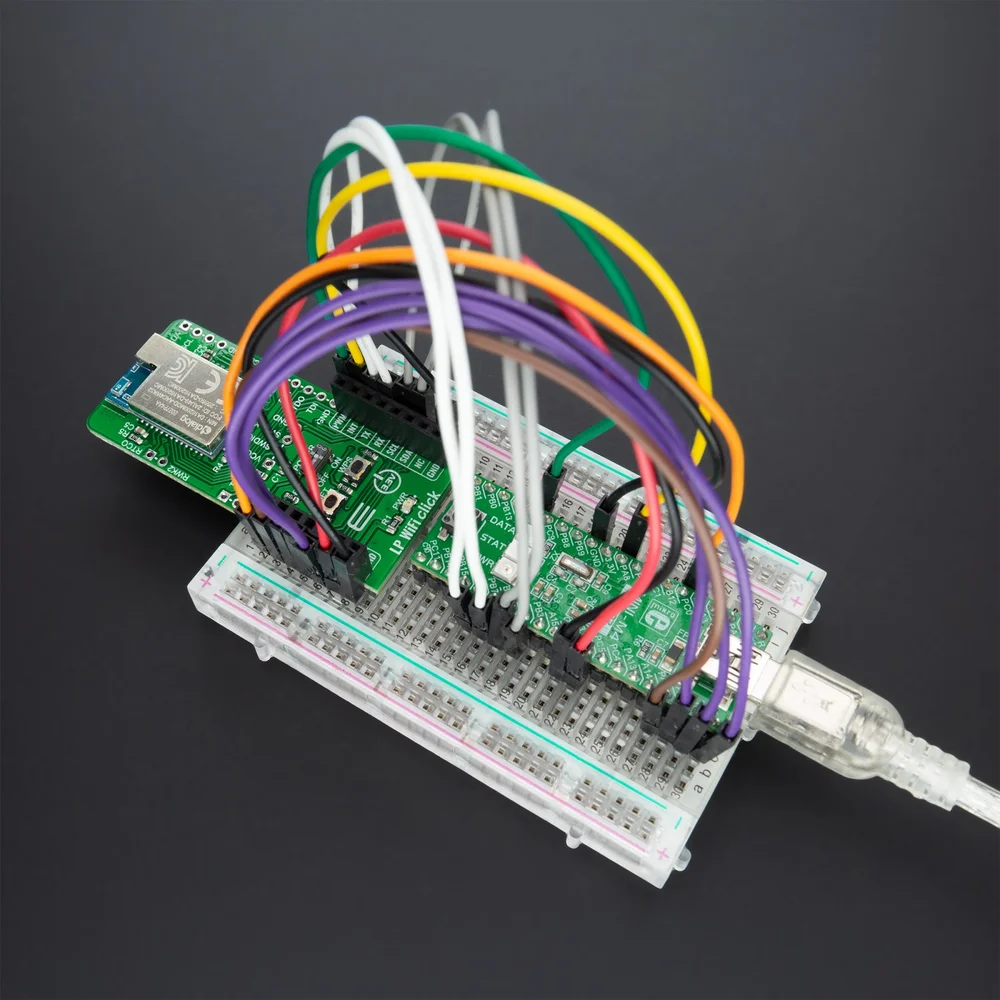
  • Supports multiple host interfaces including GPIO, I2C, SPI, and UART for flexible system integration.
  • Wi-Fi Alliance certified module with advanced security features for robust IoT deployments.

Out of stock

Description

The Mikroe LP WIFI CLICK (Mikroe-4836) is a compact, certified add-on board designed for developers requiring extreme power efficiency in Wi-Fi connected devices. Its core is the DA16200MOD module from Dialog Semiconductor, a fully integrated SoC that handles the entire Wi-Fi stack and network protocols, offloading these tasks from the host microcontroller. This architecture, combined with deep sleep modes, dramatically reduces the system’s average current consumption.

The board includes all necessary peripherals: a 40 MHz system clock, a 32.768 kHz RTC for timing, 4 MB of flash memory for firmware, and an integrated chip antenna. It is delivered as a pre-tested, certified module, requiring only a 3.3V power supply and connection via the standard mikroBUS socket to instantly add robust, secure Wi-Fi connectivity to any project.

Key Features

  • Ultra-low-power Wi-Fi connectivity based on the Dialog DA16200 System-on-Chip.
  • Full TCP/IP network stack offload to maximize host MCU efficiency and battery life.
  • Integrated chip antenna, 4MB flash, and dual crystal oscillators in a compact form factor.
  • Plug-and-play compatibility with the extensive mikroBUS ecosystem for rapid prototyping.
  • Wi-Fi Alliance certified for interoperability and includes advanced WPA3 security support.
  • Communicates with host processor via flexible GPIO, I2C, SPI, or UART interfaces.
  • Ideal for battery-powered IoT endpoints like smart locks, sensors, trackers, and wearables.

Applications

  • Battery-powered security systems and smart door locks.
  • Pet, asset, and personal tracking devices.
  • Wireless environmental sensors and smart agriculture monitors.
  • Connected lighting controls and smart home automation.
  • Wearable health and fitness monitors.
  • Industrial IoT (IIoT) telemetry and sprinkler control systems.

Technical Specifications

Wireless SoC / ModuleDialog DA16200MOD-AAC4WA32
Wireless ProtocolWi-Fi 4 (802.11 b/g/n)
Frequency Range2.4 GHz
AntennaIntegrated Chip Antenna
Host InterfacesGPIO, I2C, SPI, UART (via mikroBUS)
Supply Voltage3.3V
On-board Memory4 MB Flash
Form FactormikroBUS Click Boardâ„¢ Size L
Dimensions57.15 x 25.4 mm

Frequently Asked Questions

How do I connect and power the LP WIFI CLICK board?

The board connects via the standard mikroBUS socket on a compatible host development board. Supply 3.3V DC power through the mikroBUS VCC pin. The board's integrated DA16200 module handles all Wi-Fi operations, communicating with your host MCU through the configured interface (UART, SPI, I2C, or GPIO) selected via the mikroBUS socket. No external antenna or additional components are required for basic operation.

What software support and libraries are available for development?

Mikroe provides a mikroSDK compliant library for the LP WIFI CLICK, which includes high-level functions for Wi-Fi connection, socket management, and data transfer. You can develop using Mikroe's compilers or integrate the module using Dialog's AT command set or full SDK. Example code is available for connecting to networks, enabling deep sleep modes, and transmitting data via TCP/IP protocols to minimize development time.

What is the expected battery life when using this module?

Battery life is application-dependent but can extend to multiple years. The DA16200 SoC features extreme low-power deep sleep modes (sub-microamp current) and fast wake-up times. By maximizing sleep duration and using the module's built-in RTC for timed wake-ups, average system current can be reduced dramatically. Life spans of over a year are achievable with a moderate-sized Li-ion battery for periodic sensor reporting applications.

Package Includes

  • 1 x Mikroe LP WIFI CLICK (Mikroe-4836) Board

Additional Information

Weight 0.06 kg
Dimensions 7 × 5 × 3 cm