SKU: IOWC-1711
📋 GST Invoice Available

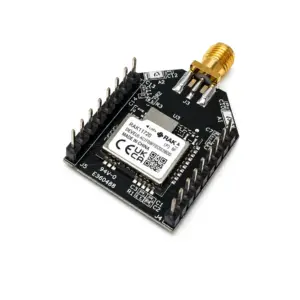
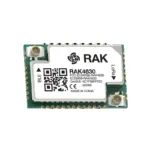
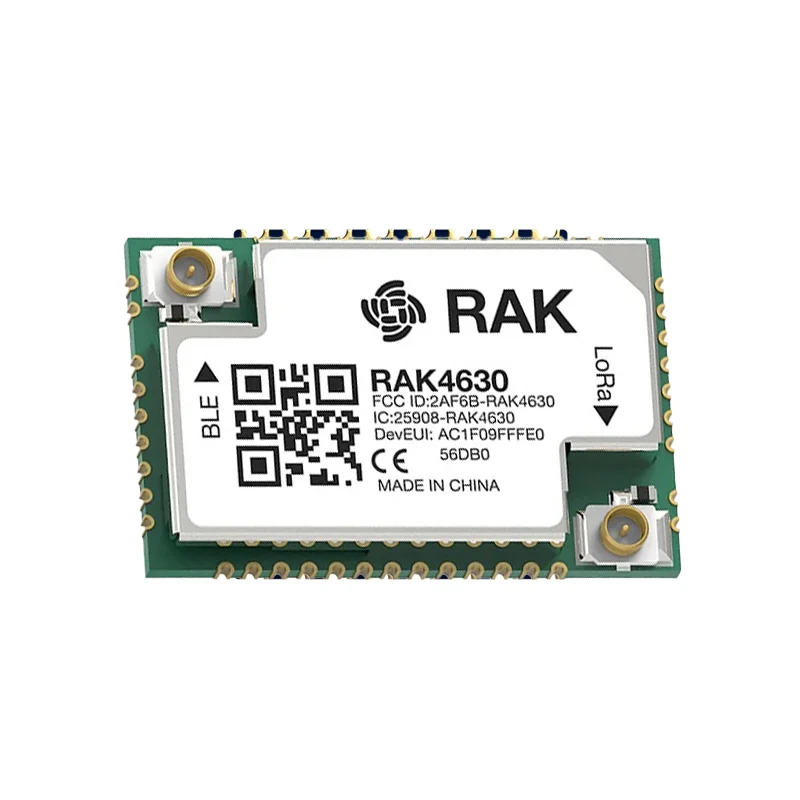
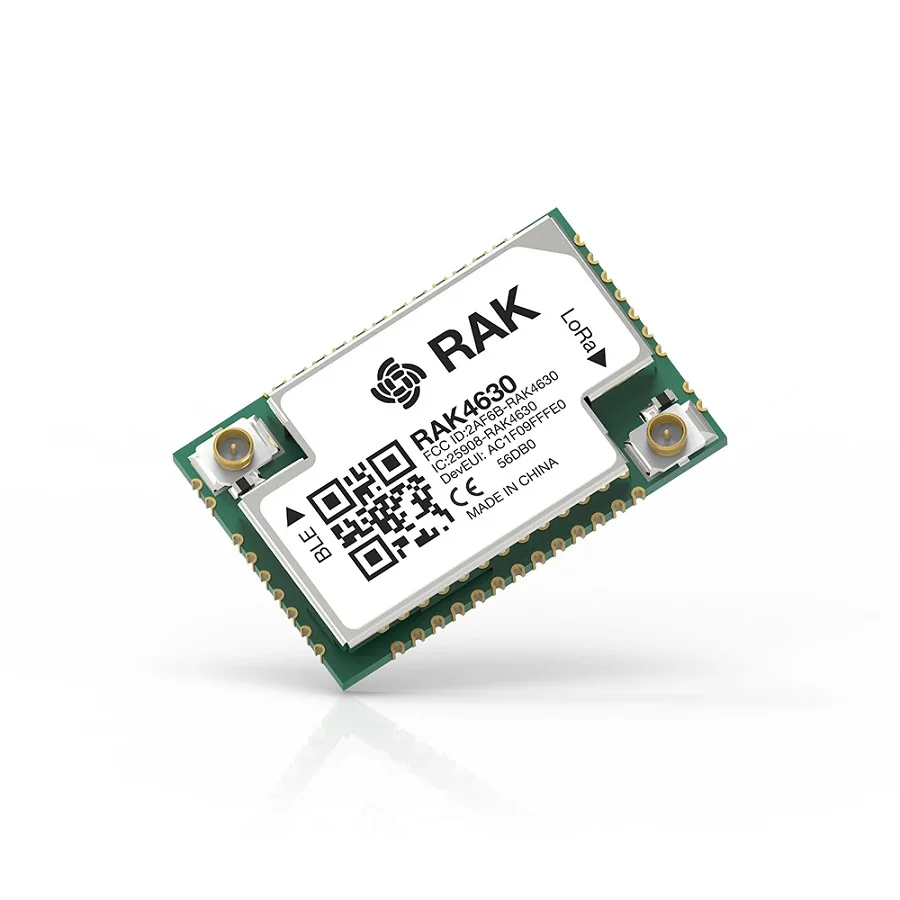
RAKwireless RAK4630 WisDuo LoRaWAN & BLE 5.0 Module w/ IPEX (EU868/RU864/IN865)

₹2,499.00 (Inclusive of all taxes)
Out of Stock

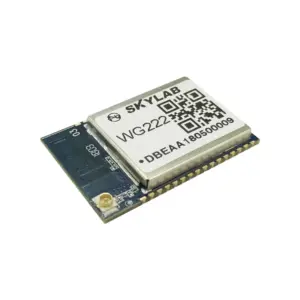
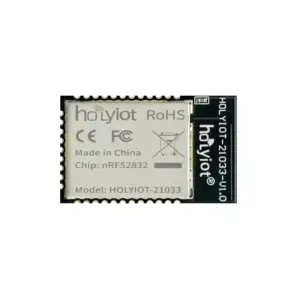
The RAKwireless RAK4630 WisDuo LPWAN module integrates a LoRaWAN 1.0.3 transceiver and Bluetooth Low Energy 5.0 stack, powered by a 64MHz ARM Cortex-M4F processor. It is pre-certified for EU868, RU864, and IN865 frequency bands and features an IPEX connector for external antenna attachment, ideal for long-range, battery-powered IoT sensor nodes.

Features

  • Dual RF Connectivity: Combines a Semtech SX1262 LoRa transceiver for long-range, low-power LoRaWAN (Class A/B/C) communication with a Nordic Semiconductor nRF52840 SoC for Bluetooth 5.0 (BLE) connectivity and local device management.
  • Regional Compliance: Pre-configured and certified for 800MHz LoRaWAN operation in key regions including EU868, RU864, and IN865, simplifying deployment for global IoT networks.
  • RUI3 Framework Ready: Built-in support for the RAKwireless Unified Interface v3 (RUI3), enabling rapid application development via Arduino IDE or PlatformIO with a simplified API for LoRaWAN and BLE.
  • Low-Power Architecture: Engineered for extended battery life in remote sensing applications, featuring multiple sleep modes and controlled via the efficient ARM Cortex-M4F MCU.
  • Flexible Antenna Option: Equipped with an IPEX (U.FL) connector for attaching external, high-gain antennas to maximize communication range and signal reliability.

Out of stock

Description

The RAK4630 WisDuo is a compact, system-on-module designed for developers building robust, long-range IoT endpoints. It merges the long-distance capabilities of LoRaWAN with the short-range convenience of Bluetooth 5.0, allowing for both wide-area telemetry and local configuration or data offload. The module’s core is a powerful 32-bit ARM Cortex-M4F microcontroller running at 64MHz, coupled with 1MB of flash and 256KB of RAM, providing ample resources for complex sensor data processing and secure protocol stacks.

Its RF section is architected for low power consumption, critical for solar or battery-powered deployments in smart agriculture, environmental monitoring, and asset tracking. The inclusion of an IPEX connector offers integrators the flexibility to select an antenna optimized for their specific enclosure and deployment environment, ensuring optimal RF performance. The RUI3 software abstraction layer significantly reduces development time by handling low-level radio drivers and providing a straightforward C/C++ API for LoRaWAN join procedures, data transmission, and BLE service management.

Key Features

  • Dual-Radio IoT Module: Integrates Semtech SX1262 LoRa chip and Nordic Semiconductor nRF52840 BLE SoC on a single compact board.
  • LoRaWAN 1.0.3 Protocol Stack: Full support for Class A, B, and C end-device operation, enabling flexible downlink communication strategies.
  • RUI3 Development Ecosystem: Streamlines firmware development with a unified API, over-the-air updates (OTA), and compatibility with popular IDEs.
  • External Antenna Ready: IPEX (U.FL) connector allows for the attachment of specialized LoRa antennas to improve range and penetration.
  • Secure Element & Flash Storage: Hardware-based security features and sufficient onboard memory for application code, credentials, and data logging.
  • Regional Frequency Versions: Specifically tuned and certified for the 800MHz bands used across Europe, Russia, and India.
  • Industrial Temperature Range: Rated for reliable operation in challenging outdoor and industrial environments.

Applications

  • Smart Agriculture: Soil moisture, temperature, and humidity monitoring across large fields.
  • Environmental Sensing: Air quality, water level, and weather station networks in remote areas.
  • Industrial IoT (IIoT): Wireless telemetry for tank levels, equipment status, and energy monitoring.
  • Asset & Logistics Tracking: Monitoring the location and condition of pallets, containers, and vehicles.
  • Smart City Infrastructure: Parking space detection, waste bin level monitoring, and streetlight control.

Technical Specifications

Microcontroller/SoC32-bit ARM® Cortex-M4F (nRF52840)
Wireless ProtocolsLoRaWAN 1.0.3, Bluetooth Low Energy 5.0
Frequency Range~800 MHz (EU868, RU864, IN865 regions)
RF Transmit PowerUp to +22 dBm (LoRa), +8 dBm (BLE)
Supply Voltage1.8V - 3.6V (Typical 3.3V)
Operating Current~10-120 mA (Active, varies with radio mode), ~2.5 µA (Sleep with RTC)
InterfacesUART, SPI, I2C, I2S, GPIO, ADC, PWM
Antenna ConnectorIPEX (U.FL) for LoRa (External antenna not included)
Operating Temperature-40°C to +85°C
DimensionsApprox. 20 x 17 mm (Module size)

Frequently Asked Questions

How do I program the RAK4630 module and set up LoRaWAN connectivity?

You can develop firmware using the RUI3 framework within the Arduino IDE or PlatformIO. After installing the RAKwireless board package, select the RAK4630 as your target. Use the built-in RUI3 APIs like 'api.lorawan.join()' and 'api.lorawan.send()' to handle LoRaWAN operations. For OTAA activation, you will need to input the DevEUI, AppEUI, and AppKey from your LoRaWAN network server (like TTN or ChirpStack) into your code. Compile and upload via a Segger Segger or compatible SWD programmer connected to the module's debug pins.

What antenna should I use with the IPEX connector, and how is it attached?

You need a LoRa antenna tuned for your specific frequency band (e.g., 868MHz for EU). The antenna must have a matching IPEX (U.FL) male connector. Carefully align the connector on the antenna cable with the port on the module and press down firmly until it clicks into place. Avoid bending the cable sharply near the connector. For optimal performance, ensure the antenna is positioned vertically and away from large metal objects or enclosures that could shield the signal.

What is the typical power consumption and how can I optimize it for battery life?

Active current during LoRa transmission at max power can reach ~120mA, while receiving is around ~10mA. The key to battery life is maximizing deep sleep. Using RUI3, call 'api.system.sleep.all()' to put the MCU and radios into lowest-power mode, drawing only a few microamps. Schedule transmissions infrequently (e.g., every 10 minutes). Power the module from a 3.3V regulated source; a direct LiPo battery with a low-quiescent current LDO is suitable. Measure your specific sleep current with a multimeter to validate power budget.

Package Includes

  • 1 x RAKwireless WisDuo RAK4630 LPWAN Module

Additional Information

Weight 0.04 kg
Dimensions 8 × 10 × 3 cm