SKU: IOWC-1196
📋 GST Invoice Available

RAKwireless WisDuo Breakout Board RAK11721 800MHz (EU868/RU864/IN865)

₹2,849.00 (Inclusive of all taxes)
Out of Stock

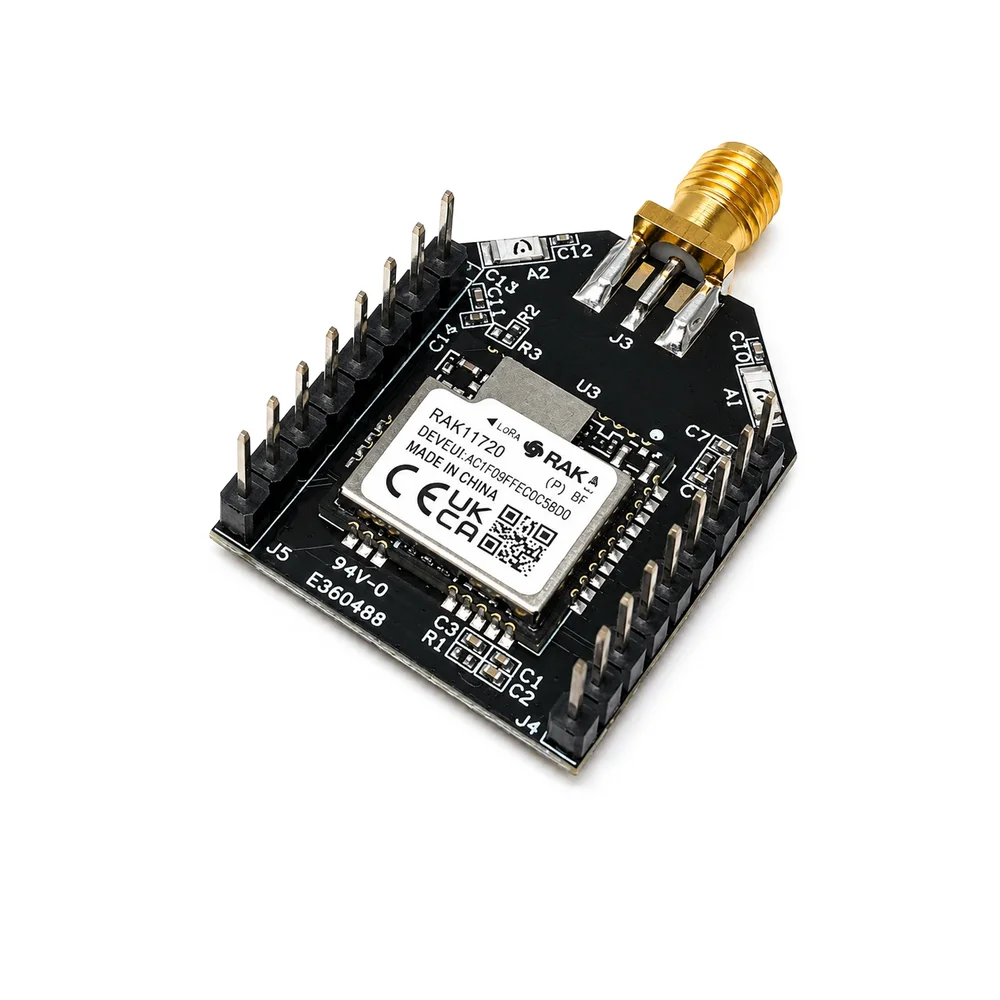
The RAK11721 WisDuo Breakout Board is a LoRaWAN and BLE development platform featuring an ARM Cortex-M4F MCU and SX1262 LoRa transceiver, designed for EU868, RU864, and IN865 frequency bands. It’s programmable via RUI3 API or AT commands and operates from 1.8V to 3.6V for low-power IoT sensor nodes.

Features

  • LoRaWAN & BLE Combo: Integrates the SX1262 LoRa transceiver for long-range communication and a BLE chip antenna for short-range device configuration and data transfer.
  • Multi-Region Frequency Support: Pre-configured for EU868, RU864, and IN865 LoRaWAN bands, ensuring compliance and flexibility for global IoT deployments.
  • ARM Cortex-M4F Core: Powered by the AMA3B1KK-KBR-B0 microcontroller with 1MB Flash and 348KB SRAM for robust firmware and sensor data processing.
  • Ultra-Low Power Operation: Achieves a deep sleep current of just 2.37 µA, enabling battery-powered applications that can last for years.
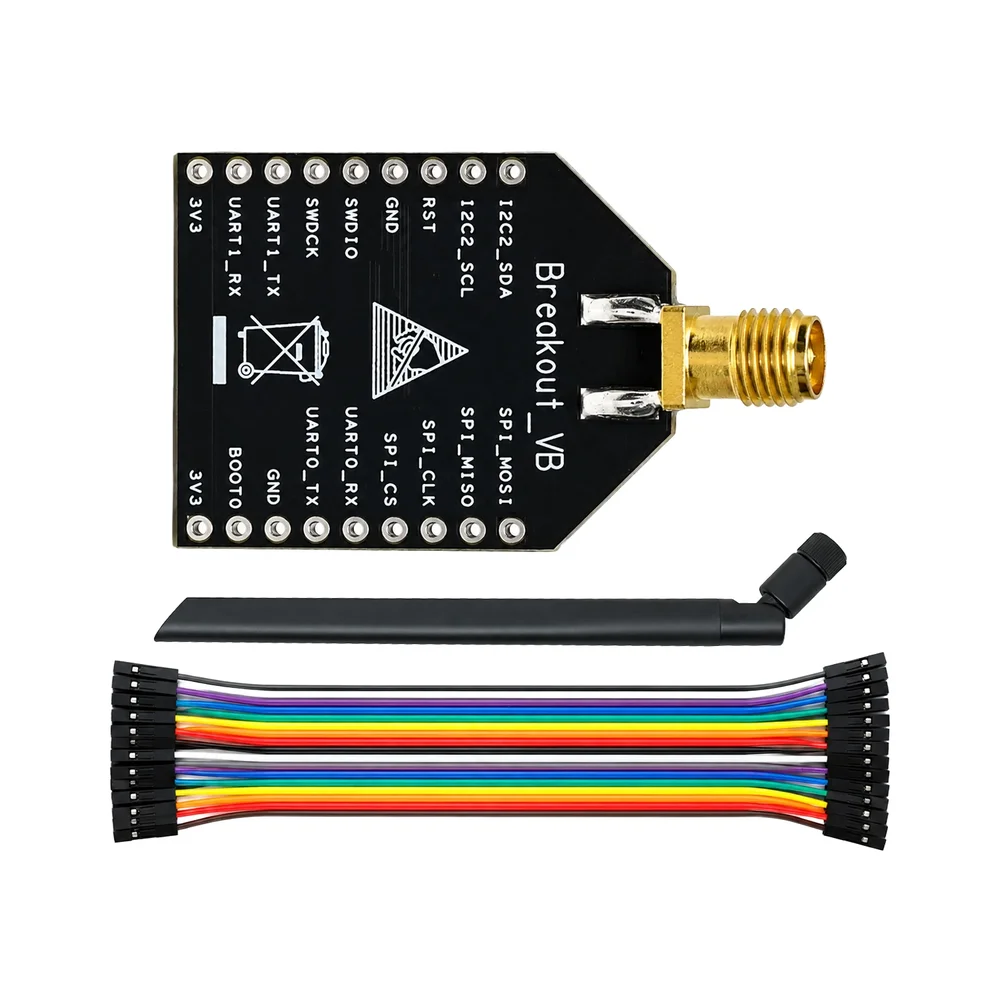
  • Developer-Friendly Interfaces: Exposes UART, I2C, SPI, ADC, and GPIO pins for easy sensor integration and peripheral expansion.

Out of stock

Description

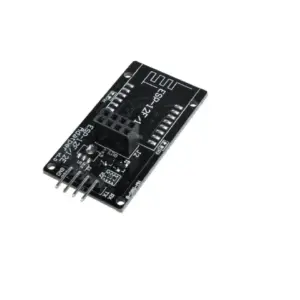
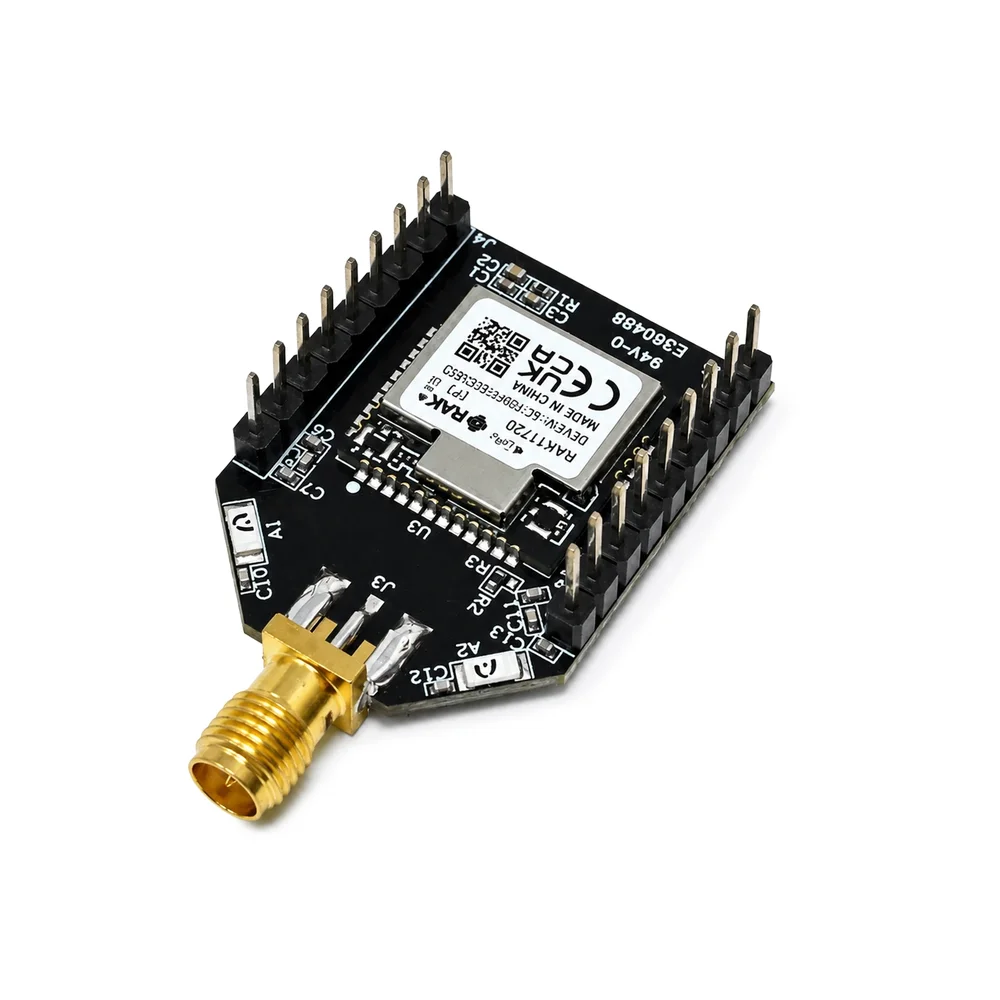
The RAKwireless RAK11721 WisDuo Breakout Board serves as an evaluation and development platform for the integrated RAK11720 module. It combines a high-performance ARM Cortex-M4F microcontroller with Semtech’s SX1262 LoRa transceiver, providing a complete wireless node solution for LPWAN applications. The board includes an SMA connector for an external LoRa antenna to maximize range and a chip antenna for integrated Bluetooth Low Energy connectivity.

Engineered for extreme environments, the board operates across a wide temperature range from -40°C to 85°C, making it suitable for outdoor industrial telemetry, smart agriculture, and remote environmental monitoring. Its flexible power supply range (1.8V to 3.6V) accommodates various battery types, including single-cell Li-ion, while its ultra-low sleep current ensures extended operational life. The platform is fully supported by RAK’s RUI3 development framework and standard AT commands, streamlining firmware development for custom IoT solutions.

Key Features

  • Dual wireless connectivity with long-range LoRaWAN and short-range Bluetooth Low Energy (BLE).
  • Regional compliance out-of-the-box for EU868, RU864, and IN865 LoRaWAN frequency plans.
  • Comprehensive development support via the RUI3 API and standard AT command set for rapid prototyping.
  • Robust industrial-grade design capable of operating in harsh environmental conditions.
  • Extensive I/O breakout including digital interfaces (UART, I2C, SPI, GPIO) and analog inputs (ADC).
  • Optimized for ultra-low-power operation with advanced sleep modes to conserve battery life.
  • SMA antenna connector for high-gain external LoRa antennas to achieve ranges over 15km.

Applications

  • Remote environmental sensor nodes for agriculture (soil moisture, weather stations).
  • Industrial IoT (IIoT) telemetry for asset monitoring and predictive maintenance.
  • Smart city applications like waste management, parking sensors, and streetlight control.
  • Long-range asset tracking and logistics management across wide areas.
  • Battery-powered wireless sensor networks for scientific research and conservation.

Technical Specifications

Microcontroller / SoCAMA3B1KK-KBR-B0 (ARM Cortex-M4F)
Wireless ProtocolsLoRa (SX1262), Bluetooth Low Energy (BLE)
Frequency RangeEU868, RU864, IN865 LoRaWAN bands
Antenna ConnectorSMA (LoRa), Chip Antenna (BLE)
Supply Voltage1.8 V to 3.6 V
Operating Current (Sleep)2.37 µA (typical)
InterfacesUART, I2C, SPI, ADC, GPIO
Memory1 MB Flash, 348 KB SRAM
Operating Temperature-40°C to 85°C
Dimensions (Shipping)22 x 10 x 4 cm

Frequently Asked Questions

How do I program the RAK11721 WisDuo Breakout Board?

You can program the board using the RUI3 API within the Arduino IDE framework or via serial AT commands. Connect the board's UART pins to a USB-to-serial adapter, set the correct baud rate (typically 115200), and use the RAKduino board support package. For AT command mode, power the board and send commands like "AT+NWM=1" to set the LoRaWAN mode. Always ensure you have the latest RUI3 SDK from the RAKwireless GitHub repository for full feature support.

What antenna should I use with the SMA connector for maximum LoRa range?

For optimal range, use a LoRa-specific antenna tuned to your region's frequency (e.g., 868MHz for EU). A 3dBi or 5dBi gain dipole antenna with an SMA male connector is recommended. Ensure the antenna's impedance is 50 ohms to match the SX1262 transceiver's output. The onboard chip antenna is for BLE only and should not be used for LoRa communications. Proper antenna selection and placement are critical for achieving the advertised >15km line-of-sight range.

What is the power supply requirement and how do I minimize current consumption?

The board requires a supply voltage between 1.8V and 3.6V, ideal for a single 3.3V regulator or a 3.7V Li-ion battery. To minimize consumption, utilize the deep sleep modes available via RUI3 APIs, such as `api.system.sleep.all()`, which can reduce current to ~2.37µA. Ensure unused GPIOs are configured correctly and disconnect peripheral sensors when not in use. Measure your specific sleep current with a multimeter in series with the power supply for accurate battery life calculations.

Package Includes

  • 1 x RAKwireless WisDuo Breakout Board RAK11721

Additional Information

Weight 0.082 kg
Dimensions 22 × 10 × 4 cm