SKU: SENS-2022
📋 GST Invoice Available

OULD CP-100 Pressure Sensor Module (0-200 Bar) - 4-20mA Output, Ceramic Diaphragm

₹319.00 (Inclusive of all taxes)
Out of Stock

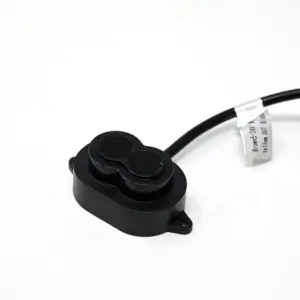
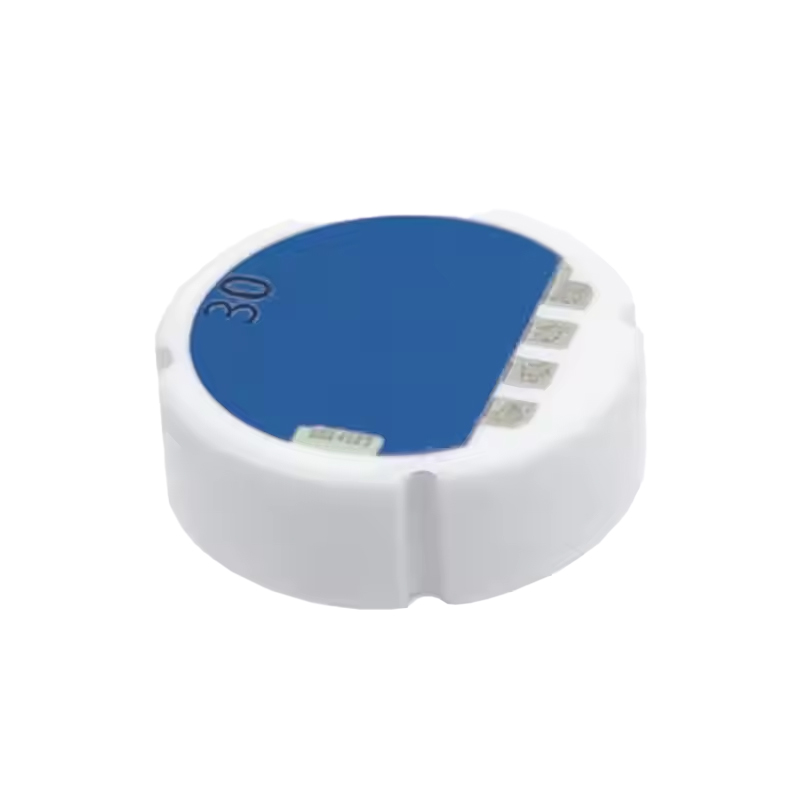
The OULD CP-100 is a piezoresistive pressure transmitter module delivering a 4-20mA analog current output for direct integration with industrial PLCs, data loggers, and process control systems. Featuring a robust ceramic diaphragm for direct media contact, it provides reliable 0-200 Bar gauge pressure measurement with ±0.5% FS accuracy.

Features

  • High-Stability Ceramic Sensor: Utilizes a 96% alumina ceramic (Alâ‚‚O₃) diaphragm with thick-film printed Wheatstone bridge for direct media contact, offering excellent chemical resistance and durability.
  • Industrial 4-20mA Current Output: Standard two-wire loop-powered signal compatible with industrial control panels, SCADA systems, and remote monitoring setups.
  • Wide Operating Voltage Range: Supports 9-36V DC supply, accommodating typical 12V or 24V industrial power rails.
  • High Overpressure & Temperature Tolerance: Engineered for reliable performance in harsh environments with a wide temperature compensation range and high burst pressure rating.
  • Compact, Sealed Module: Space-saving design with integrated waterproof sealing ring for straightforward installation into hydraulic ports or custom housings.

Out of stock

Description

The CP-100 pressure sensor module employs a piezoresistive sensing principle, where a thick-film resistor network is printed directly onto a high-purity alumina ceramic diaphragm. This construction allows the sensing element to be in direct contact with the measured medium—such as hydraulic fluid, water, or compressed air—without requiring an isolating oil fill, enhancing response speed and eliminating potential failure points. The ceramic material provides inherent resistance to corrosion, abrasion, and water hammer effects common in dynamic fluid systems.

Internally, the module incorporates precision signal conditioning circuitry that linearizes the raw bridge output, applies temperature compensation, and converts it to a robust 4-20mA current signal proportional to the applied pressure. This two-wire output simplifies wiring, as the same pair carries both power and signal, and is inherently noise-resistant for long-distance transmission in industrial environments. The module’s design prioritizes long-term stability and minimal hysteresis, ensuring consistent measurement accuracy over its operational lifespan.

Key Features

  • Ceramic Piezoresistive Sensing Core: Delivers high linearity, low hysteresis, and excellent long-term stability due to the inert alumina substrate and automated laser-trimmed resistors.
  • Wide 9-36V DC Supply Range: Compatible with standard industrial 12V, 24V, and 36V power supplies, offering flexible integration.
  • ±0.5% Full-Scale Accuracy: Provides precise pressure monitoring for critical process control, hydraulic system monitoring, and compressor management.
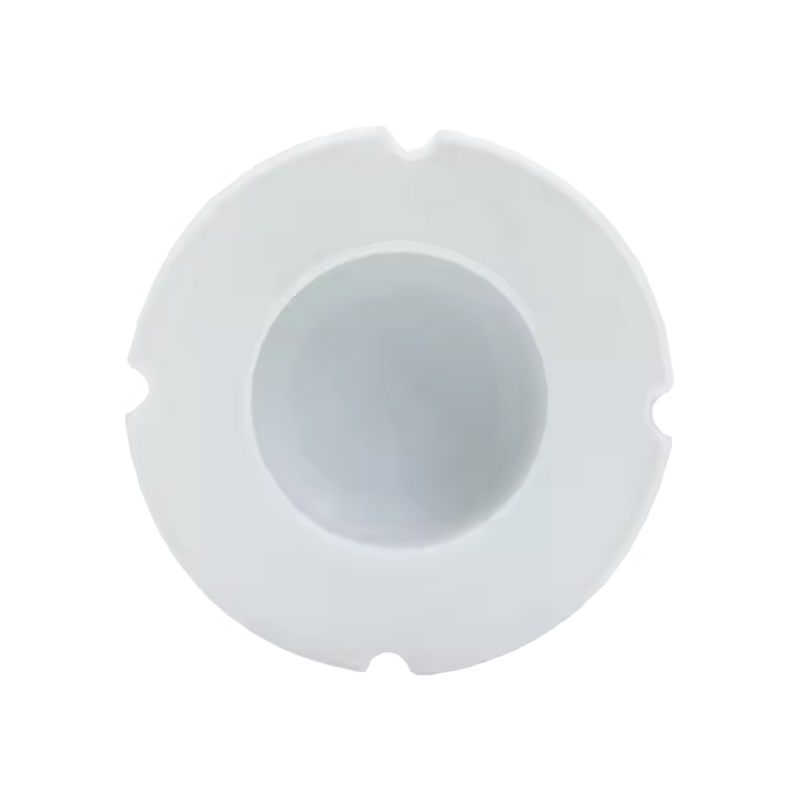
  • Direct Media Contact Design: Eliminates the need for isolation diaphragms or gel fills, improving thermal response and reducing potential drift sources.
  • Robust Environmental Durability: The ceramic diaphragm and sealed housing resist chemical attack and are suitable for use with a variety of non-aggressive gases and liquids.
  • Compact Form Factor: Measures approximately 18mm x 18mm, enabling installation in space-constrained applications.
  • Standard Gauge Pressure Reference: Measures pressure relative to ambient atmospheric pressure, ideal for most industrial pressure monitoring tasks.
  • High-Value Build: Optimized performance-to-cost ratio for demanding OEM and system integration projects.

Applications

  • Industrial Hydraulic System Pressure Monitoring: Real-time pressure feedback in presses, injection molding machines, and mobile equipment.
  • Process Control Loop Integration: Serves as the primary sensing element for PID-controlled pumps, valves, and compressors in chemical and water treatment plants.
  • Compressed Air System Management: Monitoring receiver tank pressure and compressor discharge in manufacturing facilities.
  • Water Pump and Irrigation System Protection: Preventing dry running and monitoring system pressure in agricultural and municipal water networks.
  • Test Bench and Calibration Stands: Providing a reliable pressure reference for calibrating other gauges or sensors in laboratory settings.

Technical Specifications

Pressure TypeGauge
Pressure Range0 to 200 Bar
Sensor TechnologyCeramic Piezoresistive (Thick-Film)
Output Signal4-20mA Analog Current (2-Wire)
Supply Voltage9 - 36 V DC
Accuracy±0.5% of Full Scale (F.S.)
Diaphragm Material96% Alumina Ceramic (Al₂O₃)
Electrical ConnectionLead Wires (Typical)
Primary ApplicationsHydraulic Systems, Process Control, Water Pumps, Air Compressors
Width1.8 cm
Length1.8 cm
Weight0.005 kg

Frequently Asked Questions

What is the wiring diagram for the CP-100's 4-20mA output?

The CP-100 uses a standard two-wire 4-20mA loop. Connect the positive (V+) supply wire (9-36V DC) to the module's positive terminal, and the negative (V-) terminal to your PLC or receiver's analog input. The same wire pair carries both power and the signal current. Ensure your data acquisition device includes a precision shunt resistor (e.g., 250Ω) to convert the current loop signal back to a voltage for measurement.

Can the CP-100 sensor measure aggressive media like acids or solvents?

The 96% alumina ceramic diaphragm offers good resistance to many non-aggressive liquids and gases, including water, oils, and mild chemicals. However, for highly corrosive acids, strong solvents, or media containing particulates, it is recommended to consult the manufacturer's chemical compatibility chart or consider an additional isolation seal. The direct-contact design means the sensing element is exposed to the medium.

What is the difference between gauge pressure and absolute pressure for this module?

The CP-100 is specified as a gauge pressure sensor. This means it measures pressure relative to the ambient atmospheric pressure at its location (effectively zeroing out atmospheric pressure). It is ideal for applications like tank pressure, hydraulic line pressure, or compressor output. For applications requiring measurement relative to a perfect vacuum (e.g., barometric pressure, vacuum systems), an absolute pressure sensor variant would be required.

How do I mount and seal the CP-100 sensor in my application?

The module features a compact body designed for integration into a custom housing or port. It typically includes a sealing ring groove for an O-ring. For installation, create a port with a flat sealing surface, place an appropriate O-ring (not always included), and secure the sensor using a threaded clamp or adapter that applies even pressure around the sealing perimeter without over-torquing, which could damage the ceramic diaphragm.

Does the module require calibration, and how is it performed?

The module is factory calibrated for its specified range (0-200 Bar). Field calibration is generally not required but can be verified. To calibrate, you need a precision pressure source (deadweight tester or calibrated reference gauge) and a stable DC power supply. Apply known pressures (e.g., 0%, 50%, 100% of range) and measure the corresponding output current (4mA, 12mA, 20mA). If adjustment is needed, some variants may have internal potentiometers; otherwise, scaling can be done in your PLC or controller software.

Package Includes

  • 1 x OULD CP-100 Pressure Sensor Module

Additional Information

Weight 0.005 kg
Dimensions 1.8 × 1.8 cm