SKU: IOWC-1242
📋 GST Invoice Available

LilyGO T7 S3 ESP32-S3 Development Board w/ 16MB Flash & 8MB PSRAM

₹1,419.00 (Inclusive of all taxes)
Out of Stock

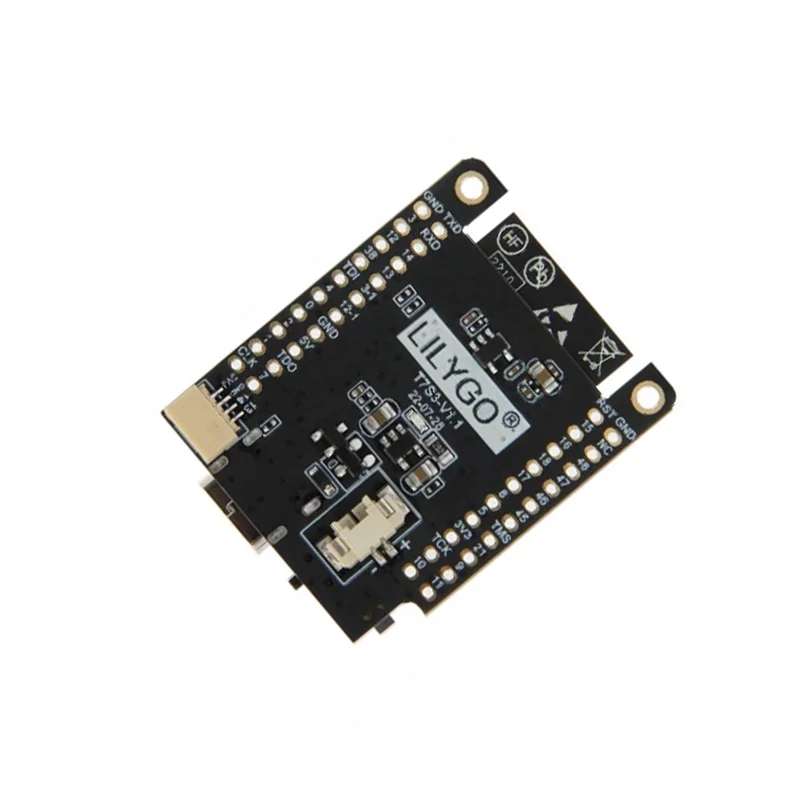
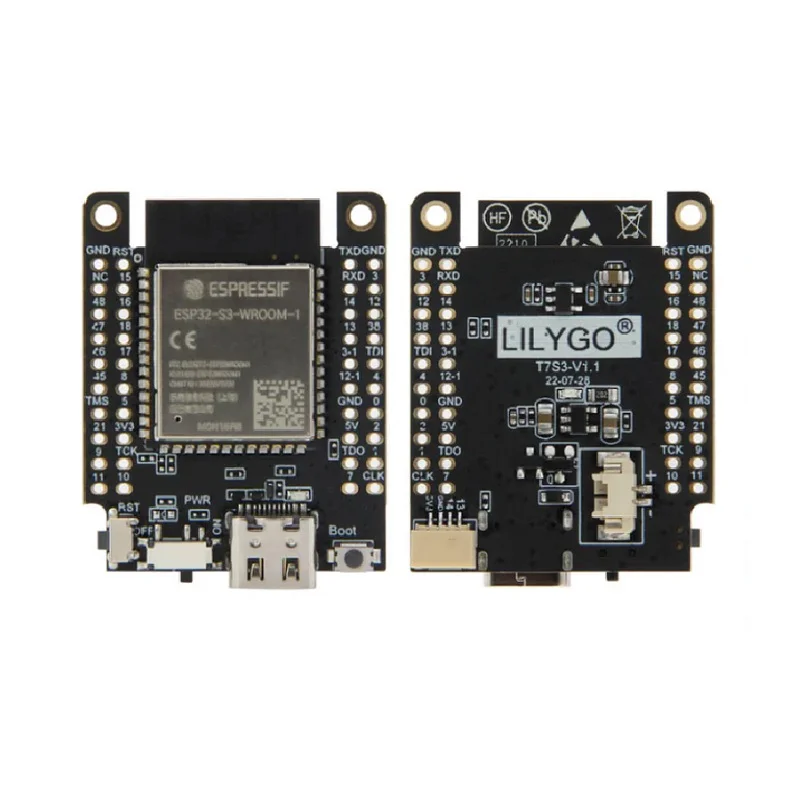
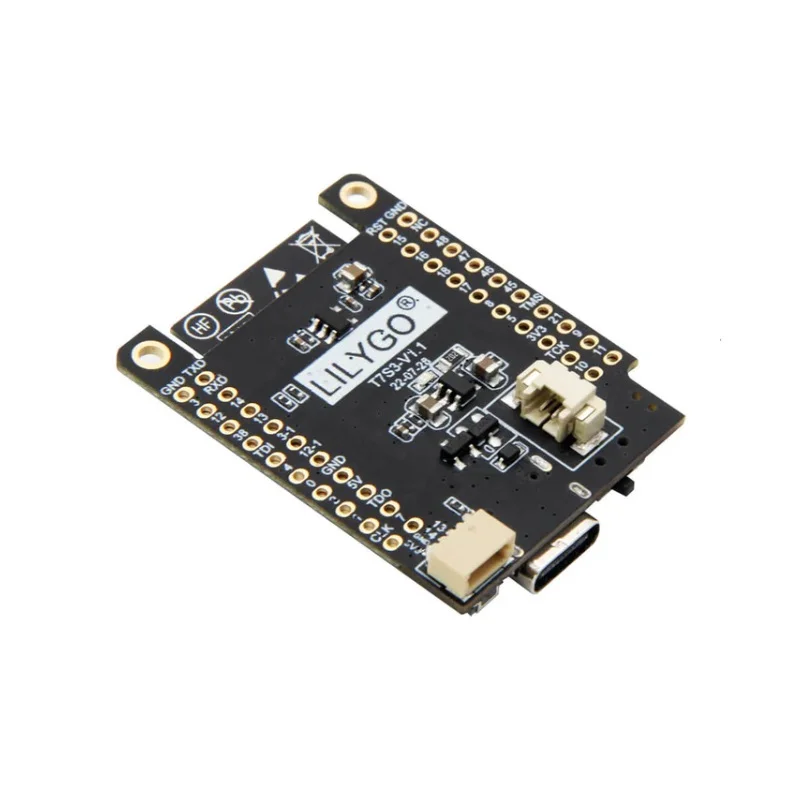
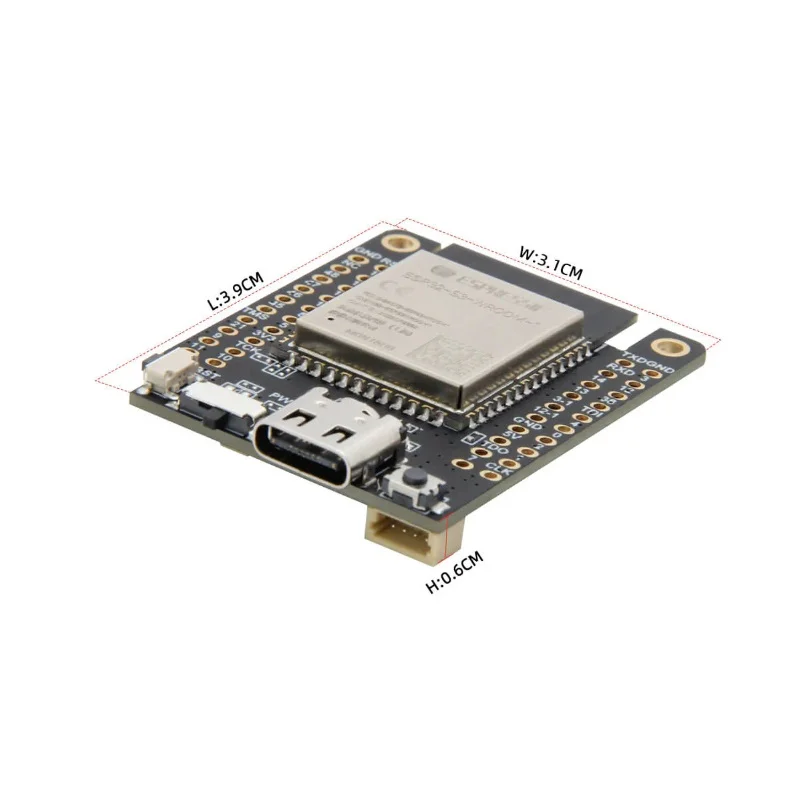
The LilyGO T7 S3 is a feature-rich ESP32-S3 development board built around the ESP32-S3-WROOM-1 module, offering dual-core LX7 processing, 16MB Flash, 8MB PSRAM, and Wi-Fi/Bluetooth 5.0 connectivity for advanced IoT and edge computing projects.

Features

  • Powered by the ESP32-S3-WROOM-1 dual-core LX7 RISC-V processor for high-performance IoT applications.
  • Integrates 16MB of Flash and 8MB of PSRAM for handling complex firmware and data-intensive tasks.
  • Features native USB 3.0 for fast data transfer and includes a convenient power (PWR) and reset switch.
  • Equipped with a STEMMA QT / Qwiic-compatible JST SH 1.0mm connector for easy plug-and-play sensor expansion.
  • Fully programmable via Arduino IDE, ESP-IDF, or MicroPython, supporting both Wi-Fi and Bluetooth 5.0 with Mesh.

Out of stock

Description

The LilyGO T7 S3 Development Board provides a robust platform for developers leveraging the Espressif ESP32-S3 SoC. Its architecture combines a dual-core 32-bit RISC-V processor with substantial 8MB PSRAM and 16MB Flash memory, enabling the execution of complex algorithms, machine learning models, and data buffering without external memory.

Connectivity is centered on the integrated ESP32-S3-WROOM-1 module, delivering 2.4 GHz Wi-Fi and Bluetooth 5.0 Low Energy (BLE) with support for Bluetooth Mesh networking protocols. The board’s physical design includes a USB 3.0 interface for high-speed programming and communication, alongside a dedicated power switch for deep sleep current management and a reset button for rapid development cycles.

Key Features

  • High-performance ESP32-S3-WROOM-1 microcontroller with dual-core 32-bit LX7 RISC-V CPU.
  • Ample 16MB SPI Flash and 8MB Octal PSRAM for advanced applications and data storage.
  • Comprehensive wireless suite: 2.4 GHz Wi-Fi 4 (802.11 b/g/n) and Bluetooth 5.0 with BLE & Mesh support.
  • Onboard USB 3.0 Type-C connector for fast data transfer and firmware flashing.
  • Integrated power (PWR) management switch to completely cut power for ultra-low sleep currents.
  • STEMMA QT / Qwiic (JST SH 1.0mm) connector enables rapid I2C sensor and display attachment.
  • Full GPIO breakout via provided pin headers for extensive peripheral interfacing.
  • Wide compatibility with popular development frameworks: Arduino Core, ESP-IDF, and MicroPython.

Applications

  • Advanced IoT sensor hubs and wireless data loggers with local processing.
  • Prototyping for smart home automation controllers and BLE Mesh networks.
  • Edge computing and TinyML projects requiring significant RAM and flash.
  • Rapid prototyping with plug-and-play I2C sensors via the Qwiic ecosystem.
  • Wireless multimedia and display applications leveraging high-speed USB.

Technical Specifications

Microcontroller / SoCESP32-S3-WROOM-1 (Dual-core 32-bit LX7 RISC-V)
Wireless ProtocolsWi-Fi 802.11 b/g/n, Bluetooth 5.0 (BLE & Mesh)
Frequency Range2.4 GHz ISM Band
Flash Memory16 MB
PSRAM8 MB
Supply Voltage5V via USB-C
Programming InterfacesUSB 3.0 Type-C, UART
Expansion ConnectorSTEMMA QT / Qwiic (JST SH 1.0mm 4-pin)
Operating Temperature-40°C to +85°C (Typical for ESP32-S3)
Dimensions (approx.)80mm x 50mm x 40mm (from shipping info)

Frequently Asked Questions

How do I program the LilyGO T7 S3 board using the Arduino IDE?

First, install the ESP32 board support via the Arduino Boards Manager using the ESP32 Arduino Core GitHub repository URL. Select 'ESP32S3 Dev Module' as your board. Ensure the 'Flash Size' is set to '16MB (128Mb)' and 'PSRAM' is enabled to 'opiPSRAM'. Connect the board via the USB-C port, choose the correct COM port, and upload your sketch. The onboard USB 3.0 provides reliable serial communication for programming and debugging.

What is the purpose of the STEMMA QT / Qwiic connector on this board?

The 4-pin JST SH 1.0mm connector is a STEMMA QT and Qwiic-compatible I2C port. It provides power (3.3V), ground, SDA, and SCL lines, allowing you to daisy-chain a wide array of sensors, displays, and actuators without soldering. Simply use a Qwiic cable to connect compatible modules for rapid prototyping and building complex sensor networks with minimal wiring effort.

Can I use MicroPython on the T7 S3, and how do I flash it?

Yes, the T7 S3 is fully compatible with MicroPython. You need to first erase the flash and then flash the latest ESP32-S3 MicroPython firmware using a tool like esptool.py. The command sequence typically involves erasing flash with 'esptool.py --chip esp32s3 erase_flash', followed by writing the firmware with 'esptool.py --chip esp32s3 --port COMx write_flash -z 0x0 firmware.bin'. After flashing, you can connect with a serial terminal or use the mpremote tool to transfer and run Python scripts.

How does the power (PWR) switch help with battery-powered projects?

The physical PWR switch disconnects the main power rail from the USB 5V input and the onboard voltage regulators. When switched off, it prevents any quiescent current draw from the power management ICs, allowing for true zero-power consumption during storage or extended sleep periods in battery-operated deployments. For deep sleep, you would typically use software commands, but this hardware switch offers a complete power cut for the ultimate in energy savings.

Package Includes

  • 1 x LilyGO T7 S3 V1.1 Development Board
  • 2 x 2.54mm 1x10 Male Pin Headers
  • 2 x 2.54mm 1x10 Long Female Pin Headers
  • 2 x 2.54mm 1x10 Short Female Pin Headers
  • 1 x JST 1.25mm 2-Pin Connector

Additional Information

Weight 0.015 kg
Dimensions 5 × 8 × 4 cm