SKU: SBCD-0081
📋 GST Invoice Available

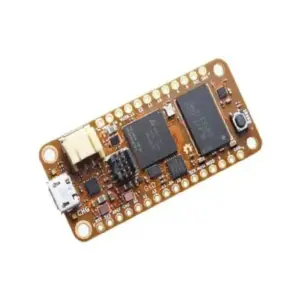
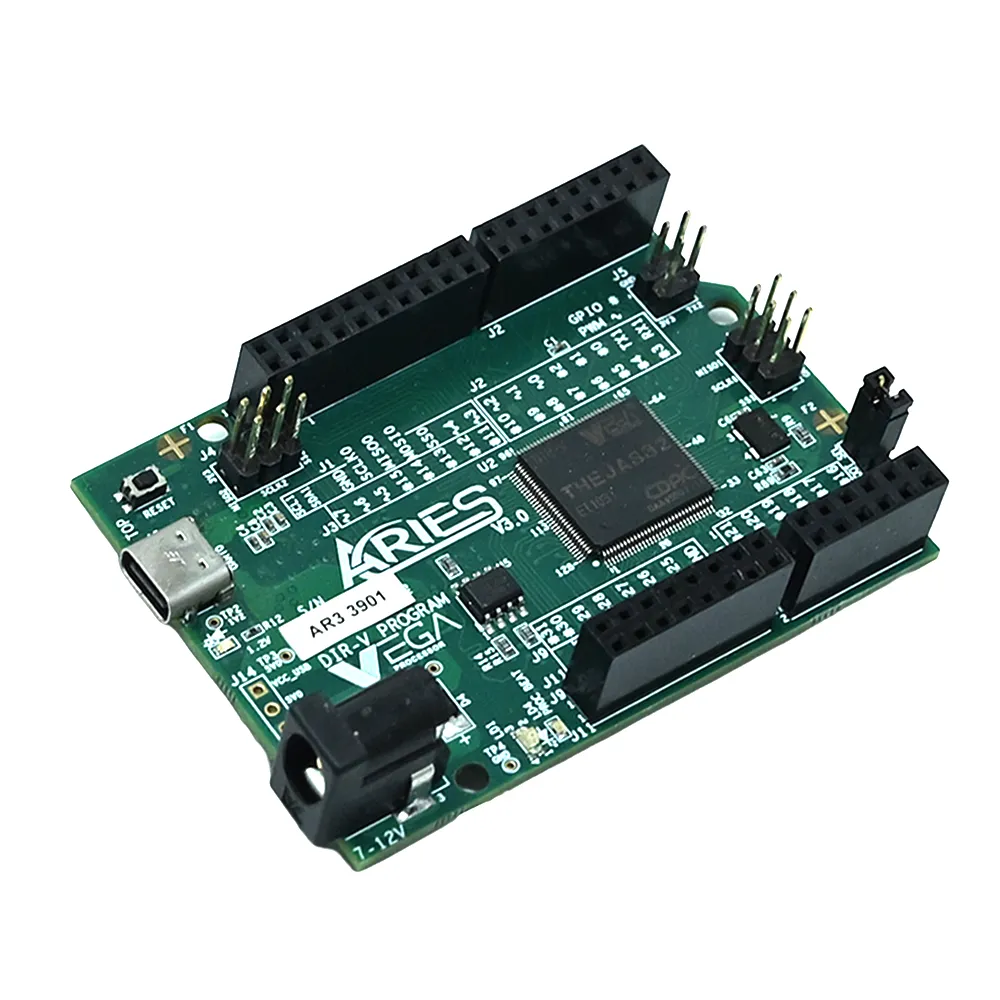
ARIES v3.0 RISC-V Development Board

₹1,369.00 (Inclusive of all taxes)
Out of Stock

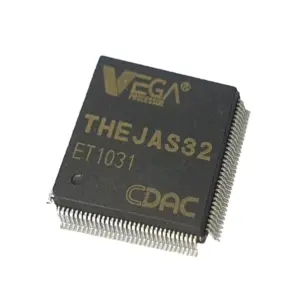
The ARIES v3.0 Development Board, powered by the THEJAS32 ASIC with a VEGA ET1031 RISC-V microprocessor, offers a versatile platform for embedded systems. Featuring 256KB SRAM and 2MB Flash, it provides robust capabilities for IoT, sensor fusion, and industrial control applications.

Features

  • Powered by the THEJAS32 ASIC featuring a VEGA ET1031 RISC-V microprocessor, operating at 100MHz.
  • Equipped with 256KB SRAM and 2MB Flash memory for efficient program execution and data storage.
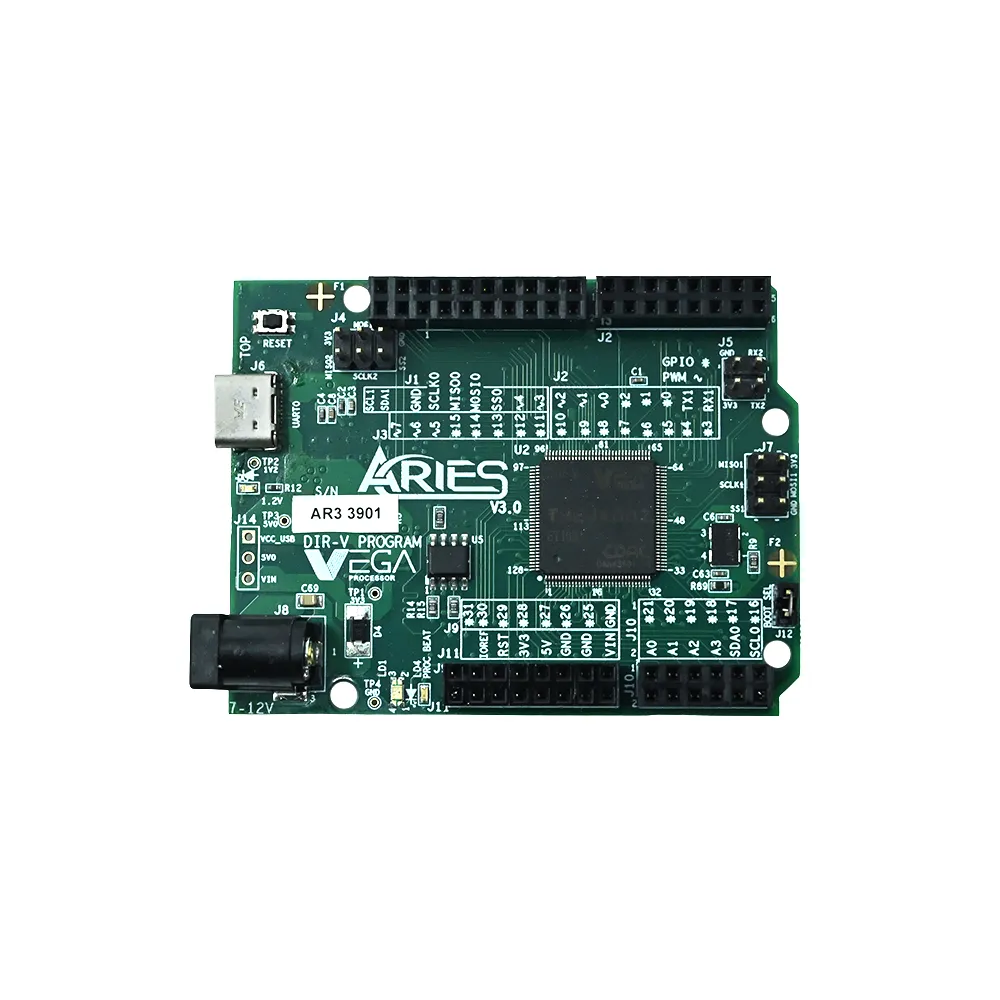
  • Provides 32 versatile GPIOs, 8 PWM pins, 4 analog input pins, and multiple UART, SPI, and I2C interfaces.
  • Designed for standalone operation with flexible 7-12V input voltage, ideal for various embedded applications.

Out of stock

Description

The ARIES v3.0 is a comprehensive development platform built around the THEJAS32 Application-Specific Integrated Circuit (ASIC), which operates at a core frequency of 100MHz. Central to its architecture is the VEGA ET1031 Microprocessor, complemented by 256KB of internal SRAM and a suite of essential peripherals including three UARTs, four SPIs, three hardware TIMERS, eight PWM outputs, three I2C interfaces, and 32 general-purpose input/output (GPIO) pins. This robust integration ensures the board can support standalone operation, requiring only a USB connection to a computer for initial setup or an AC/DC adapter/battery for deployment.

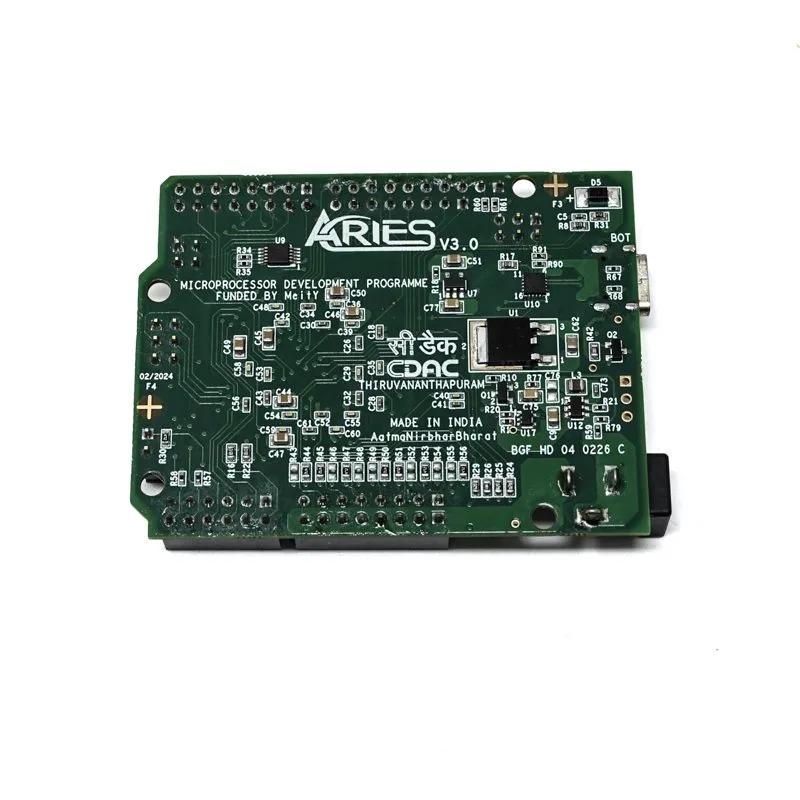
Developed by the Centre for Development of Advanced Computing (C-DAC) under the Digital India RISC-V (DIR-V) Program, this board is a strategic initiative funded by the Ministry of Electronics and Information Technology, Government of India. The ARIES v3.0 is engineered for a diverse range of applications, spanning low-power IoT solutions, sophisticated sensor fusion systems, smart metering, remote sensing, wearable technology, educational electronics, and critical industrial networking, making it a versatile choice for modern embedded projects.

Key Features

  • Integrated THEJAS32 ASIC with VEGA ET1031 RISC-V Microprocessor, clocked at 100 MHz.
  • On-board 256KB internal SRAM for high-speed data access.
  • Features 32 versatile General Purpose Input/Output (GPIO) pins.
  • Supports a 3.3V I/O voltage, with a DC current capability of 12 mA per I/O pin.
  • Includes 8 Pulse Width Modulation (PWM) pins for motor control and dimming.
  • Provides 4 dedicated Analog Input pins for sensor integration.
  • Equipped with three UART, four SPI, and three I2C interfaces for diverse peripheral connectivity.
  • Designed for standalone operation, compatible with USB, AC/DC adapter, or battery power sources.

Applications

  • Low-power IoT gateways and endpoints.
  • Sensor fusion and data acquisition systems.
  • Smart metering and utility monitoring.
  • Embedded system supervision and control.
  • Remote sensing and environmental monitoring.
  • Wearable technology development.
  • Educational electronics and prototyping.
  • Industrial networking and automation.

Technical Specifications

ControllerTHEJAS32 ASIC
MicroprocessorVEGA ET1031 RISC-V
Clock Speed100 MHz
SRAM256 KB
Flash Memory2 MB
GPIO Pins32
Analog Input Pins4
PWM Pins8
UART Interfaces3
SPI Interfaces4
I2C Interfaces3
Input Voltage (DC)7-12 V
I/O Voltage3.3 V
DC Current per I/O Pin12 mA

Frequently Asked Questions

What is the core processor and architecture of the ARIES v3.0 Development Board?

The ARIES v3.0 features the THEJAS32 ASIC, which integrates a VEGA ET1031 microprocessor. This core operates on the RISC-V instruction set architecture at 100MHz. It's designed by C-DAC as part of the Digital India RISC-V program, offering a powerful platform for various embedded applications.

What are the memory specifications on the ARIES v3.0 board?

The ARIES v3.0 board is equipped with 256KB of internal SRAM for high-speed data processing and a substantial 2MB of Flash memory for program storage. This configuration allows for the development of complex applications requiring significant code and temporary data space.

How is the ARIES v3.0 board powered and what are its I/O voltage levels?

The ARIES v3.0 board can be powered via a USB cable, an AC/DC adapter, or a battery, accepting an input voltage range of 7-12V DC. Its general-purpose input/output (GPIO) pins operate at a 3.3V logic level, providing compatibility with standard embedded peripherals.

What development tools and SDKs are typically used with the ARIES v3.0 RISC-V board?

As a RISC-V platform, the ARIES v3.0 typically supports development using standard GNU toolchains for RISC-V, along with custom SDKs provided by C-DAC for the THEJAS32 ASIC. Developers can likely utilize open-source IDEs or command-line tools for firmware compilation and flashing.

Package Includes

  • 1 × ARIES v3.0 Development Board

Additional Information

Weight 0.033 kg
Dimensions 7.5 × 5.5 × 2.5 cm