SKU: IOWC-1030
📋 GST Invoice Available

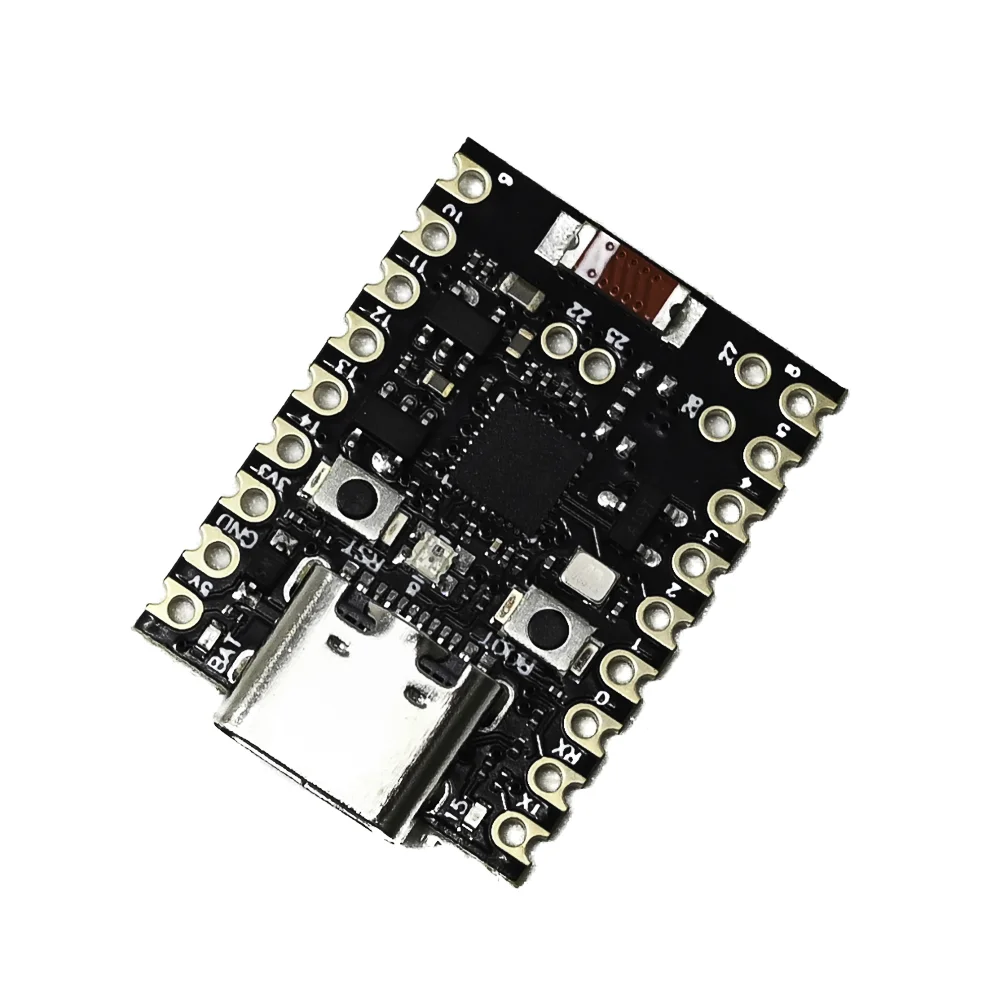
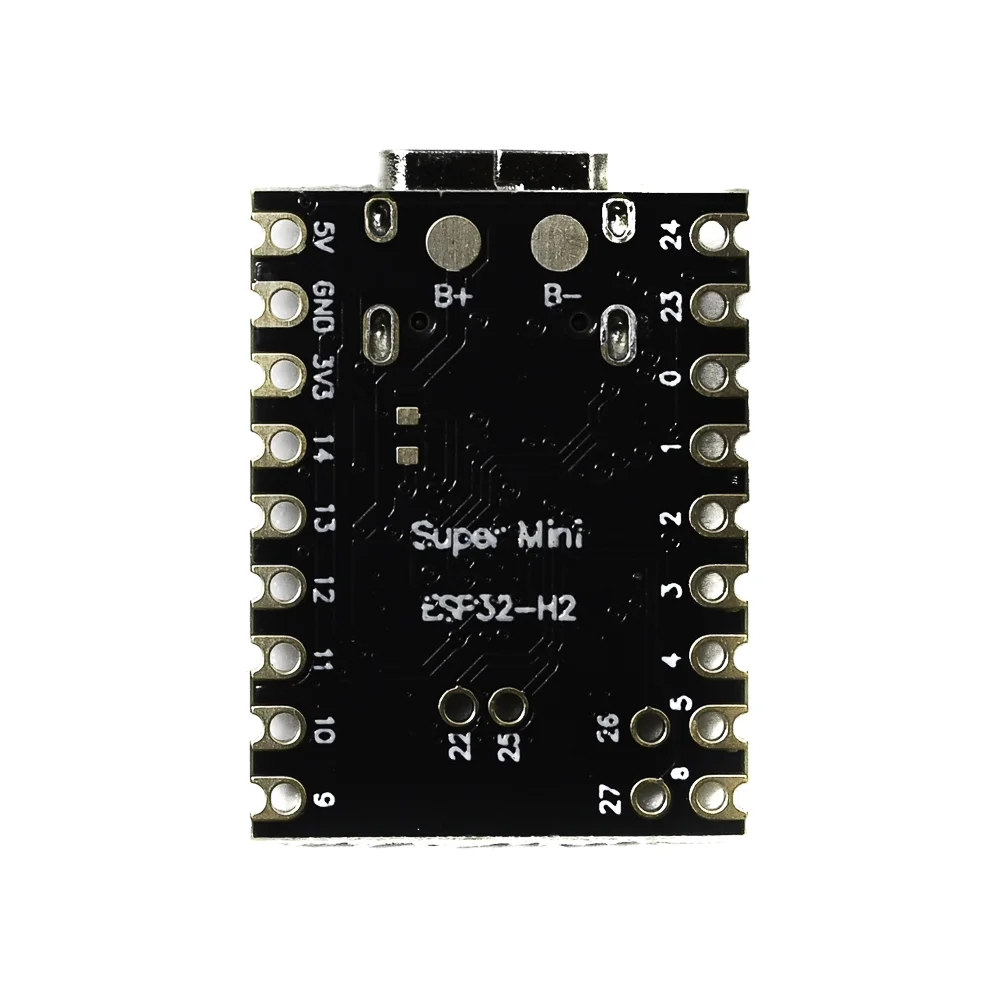
ESP32-H2 SuperMini Development Board

₹449.00 (Inclusive of all taxes)
Out of Stock

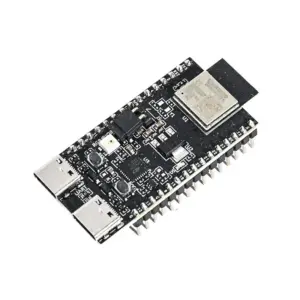
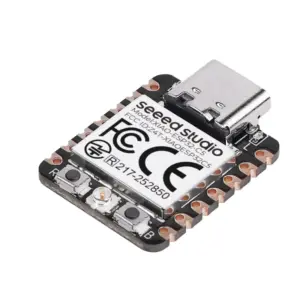
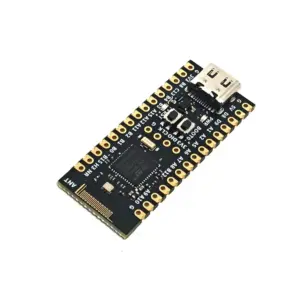
The ESP32-H2 SuperMini Development Board is a compact, USB-C powered core board for MCU learning and IoT prototyping, featuring the ESP32-H2 chipset with support for PWM, ADC, SPI, UART, and JTAG interfaces.

Features

  • Powered by the ESP32-H2 chipset for reliable IoT and embedded applications.
  • Ultra-compact footprint (approx. 26mm x 20mm) with integrated USB-C for programming and power.
  • Comprehensive GPIO support includes PWM, ADC, SPI, UART, I2C, and JTAG debugging.
  • Onboard RGB LED and dedicated BOOT/RESET buttons for rapid prototyping and testing.
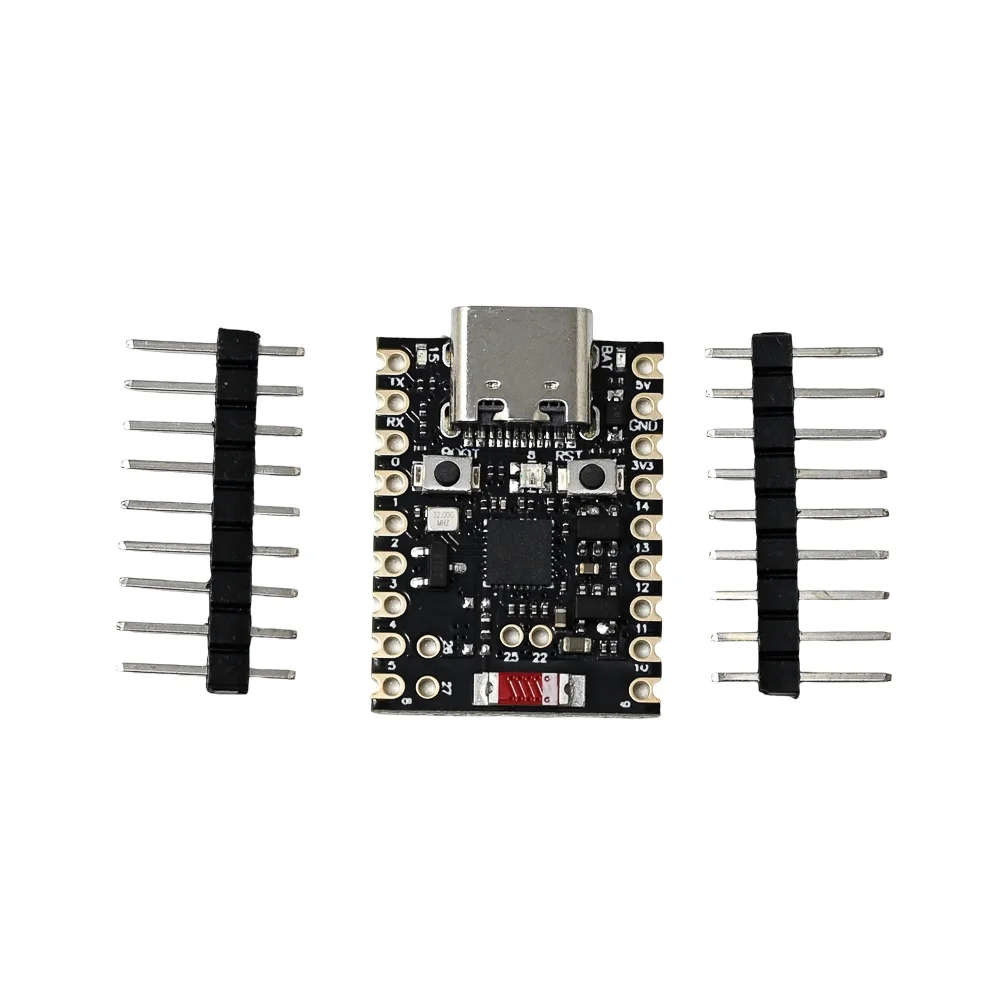
  • Lightweight design with pre-soldered pin headers, ideal for space-constrained projects.

Out of stock

Description

The ESP32-H2 SuperMini Development Board condenses the capabilities of the ESP32-H2 microcontroller into a minimal, developer-friendly form factor. Designed for embedded systems engineers and makers, it provides direct access to the chip’s core peripherals via exposed pin headers, enabling rapid prototyping of wireless IoT nodes, sensor interfaces, and custom control systems.

Its integrated USB-C interface simplifies firmware development and power delivery, supporting programming via standard toolchains like ESP-IDF or Arduino IDE. The board’s architecture prioritizes GPIO flexibility and low-power operation, making it suitable for battery-powered edge devices requiring SPI, I2C, UART, or analog sensor connectivity.

Key Features

  • ESP32-H2 microcontroller core for efficient IoT edge processing and wireless connectivity.
  • USB-C interface provides 5V power input and serial communication for programming and debugging.
  • Multi-protocol GPIO supports PWM, ADC (up to 5 channels), SPI, I2C, UART, and JTAG.
  • Onboard user-addressable RGB LED and tactile BOOT/RESET buttons for interactive development.
  • Ultra-lightweight PCB design with pre-soldered male headers for immediate integration.
  • Compact dimensions ideal for embedding into final products or portable prototypes.

Applications

  • Wireless IoT sensor nodes and edge computing prototypes.
  • MCU programming and embedded systems education.
  • Smart home automation controllers and wireless switches.
  • Prototyping for Zigbee, Thread, or Bluetooth Mesh networks.
  • Compact data loggers and portable instrumentation.

Technical Specifications

Microcontroller/SoCESP32-H2
Wireless ProtocolsIEEE 802.15.4, Bluetooth 5 (LE), Zigbee, Thread (Chip-dependent)
Supply Voltage5V via USB-C
InterfacesUSB-C, UART, SPI, I2C, JTAG, PWM, ADC
ADC ChannelsUp to 5
Onboard Indicators1x RGB LED, 1x Power/Battery LED
ButtonsBOOT, RESET
Dimensions (LxW)Approx. 26mm x 20mm
Weight (with headers)Approx. 2g

Frequently Asked Questions

How do I program the ESP32-H2 SuperMini board?

Program the board using the ESP-IDF framework or Arduino IDE with ESP32-H2 support. Connect via the onboard USB-C port, which provides both power and a serial COM port. Select the correct board target (e.g., 'ESP32-H2') and COM port in your IDE. Use the BOOT button to enter download mode if automatic reset fails. The board typically appears as a USB CDC device for serial communication.

What wireless protocols does the ESP32-H2 chip support?

The ESP32-H2 SoC supports IEEE 802.15.4 (for Zigbee and Thread), Bluetooth Low Energy 5.0, and Bluetooth Mesh. It is designed for low-power, short-range wireless IoT networks. You must flash the appropriate firmware stack (e.g., Zigbee, Thread) via ESP-IDF to utilize these protocols. The chip does not support Wi-Fi. Check Espressif's official documentation for the latest supported protocol versions and example projects.

What is the power supply requirement and typical operating current?

The board is powered via the USB-C port at 5V. The operating current depends on the active wireless mode and CPU load. In active RF transmission, expect currents in the tens of milliamps. The ESP32-H2 features deep sleep modes for battery operation, where current can drop to microamp levels. For precise measurements, refer to the ESP32-H2 datasheet's electrical characteristics section and monitor the VCC line with a multimeter.

Can I use the ADC pins for sensor readings, and what is their resolution?

Yes, the board provides access to the ESP32-H2's ADC pins, supporting up to 5 channels. The ADC is a 12-bit SAR type, offering a resolution of 0-4095 counts. Ensure your analog sensor output matches the ADC's input voltage range (typically 0V to Vref). For accurate readings, implement noise filtering in software and consider the non-linear characteristics at the extremes of the range as noted in Espressif's technical reference manual.

Package Includes

  • 1 x ESP32-H2 SuperMini Development Board
  • 1 x Set of Header Pins

Additional Information

Weight 0.002 kg
Dimensions 2.6 × 2 cm