SKU: IOWC-1027
📋 GST Invoice Available

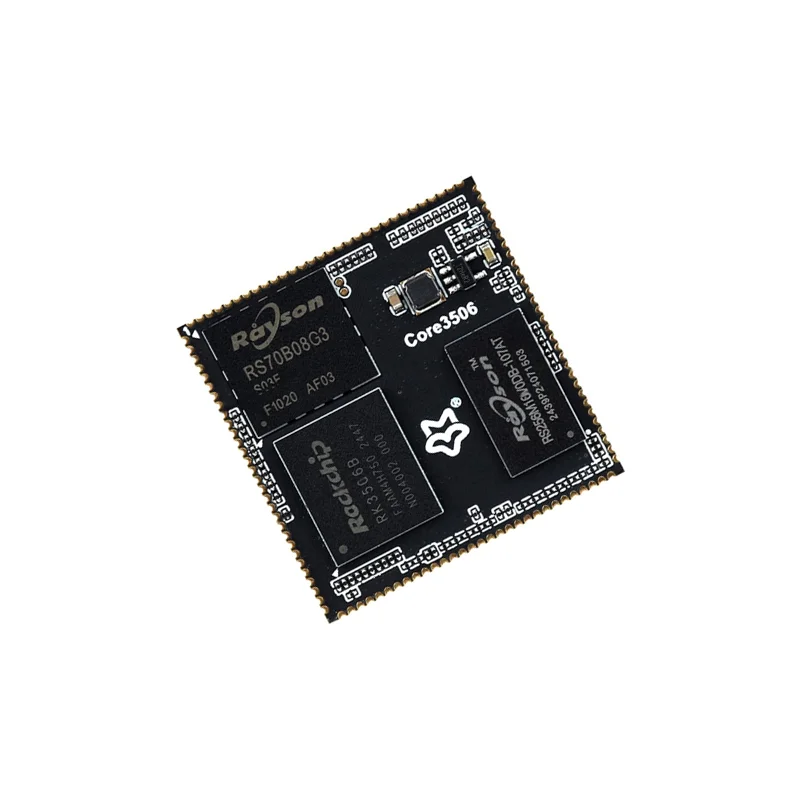
Luckfox Core3506 Core Board w/ RK3506B, 512MB DDR3L, 8GB eMMC

₹1,909.00 (Inclusive of all taxes)
Out of Stock

The Luckfox Core3506 is a compact ARM Cortex-A7/M0 core board for embedded AIoT applications, featuring onboard 512MB DDR3L RAM, 8GB eMMC storage, MIPI DSI display output, and extensive multiplexed I/O via Rockchip Matrix IO for rapid prototyping.

Features

  • Rockchip RK3506B SoC: Combines a tri-core ARM Cortex-A7 (1.2GHz) with a Cortex-M0 MCU for efficient main processing and real-time control.
  • Integrated Memory & Storage: Features onboard 512MB DDR3L RAM and 8GB eMMC flash, eliminating the need for external memory modules.
  • Rich I/O & Display Interface: Offers 120 castellated holes with 98 multiplexed signals (UART, SPI, I2C, PWM, I2S) and supports MIPI DSI displays up to 1280×1280 @60fps.
  • Dual Connectivity Ports: Includes two USB OTG 2.0 ports and dual 10/100M RMII Ethernet interfaces for versatile network and peripheral connections.
  • Ultra-Compact Form Factor: Measures just 32mm x 32mm, making it ideal for space-constrained embedded systems and product integration.

Out of stock

Description

The Luckfox Core3506 Core Board is a highly integrated embedded computing module centered on the Rockchip RK3506B processor. Its hybrid architecture pairs a tri-core ARM Cortex-A7 application processor with a dedicated Cortex-M0 microcontroller, enabling complex Linux-based applications alongside low-power, real-time task handling. This design is optimized for AIoT edge devices requiring substantial local processing and responsive I/O control.

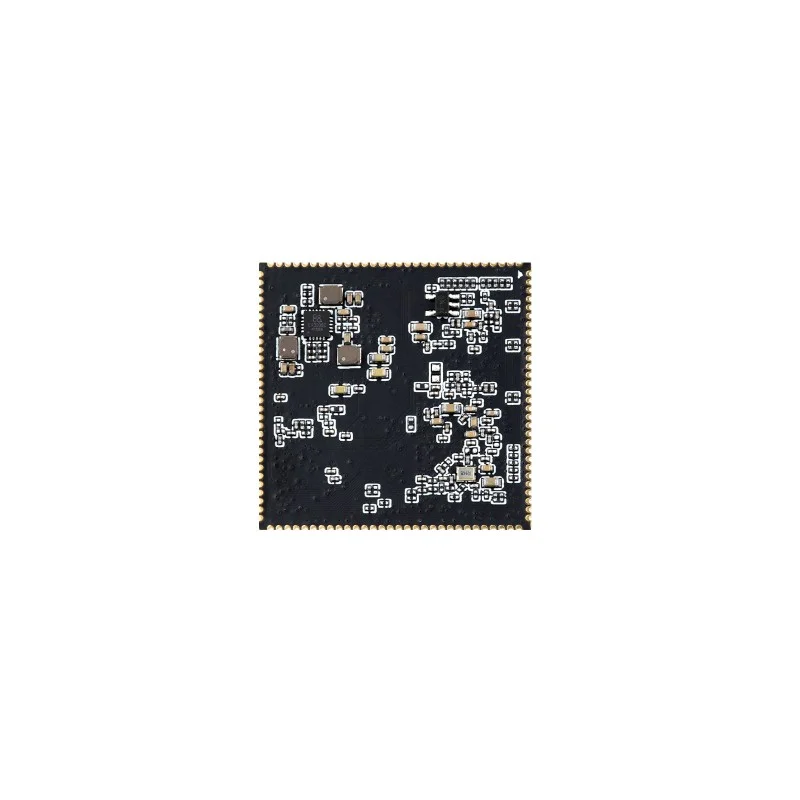
Built with a dense 32x32mm footprint and 120 castellated holes, the board provides direct access to Rockchip’s Matrix IO system, which multiplexes 98 configurable signals for UART, SPI, I2C, PWM, I2S, and GPIO. This flexibility allows developers to interface with a vast array of sensors, actuators, and communication modules without requiring additional signal conditioning hardware. The inclusion of dual RMII Ethernet and USB OTG ports further expands connectivity options for networked or peripheral-heavy deployments.

Key Features

  • Hybrid Processing Core: Tri-core ARM Cortex-A7 handles main OS and applications, while the integrated Cortex-M0 manages real-time, low-power tasks.
  • Onboard Memory Solution: 512MB DDR3L RAM and 8GB eMMC provide ample memory and reliable embedded storage, speeding up boot times and data access.
  • High-Resolution Display Support: MIPI DSI 2-lane interface drives displays up to 1280x1280 resolution at 60 frames per second for interactive HMI projects.
  • Extensive Peripheral Connectivity: Rockchip Matrix IO delivers 98 multiplexed low-speed interfaces, simplifying hardware design for UART, SPI, I2C, PWM, and I2S.
  • Dual Network Interfaces: Two independent 10/100M RMII Ethernet ports enable network redundancy, gateway functionality, or segregated data streams.
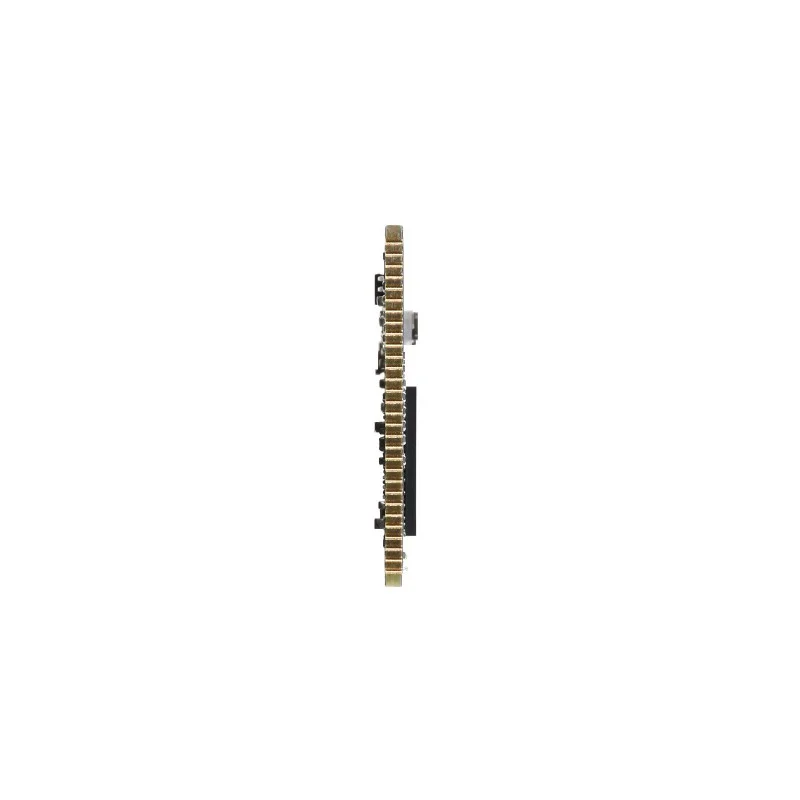
  • Compact, Castellated Design: The 32mm x 32mm core module with castellated holes allows for direct soldering onto carrier boards, minimizing final product size.
  • Audio Input Capability: Includes an analog differential microphone interface for integrating voice capture and audio processing features.
  • Developer-Friendly Form Factor: Ideal for rapid prototyping, product integration, and reducing R&D cycles for industrial control, smart displays, and edge AI gateways.

Applications

  • Interactive Edge AIoT Devices: Powers smart displays, digital signage, and kiosks with high-resolution MIPI DSI output and local AI inference.
  • Industrial Control & Automation: Serves as a compact controller for HMIs, PLCs, and data acquisition systems using its extensive I/O and dual Ethernet.
  • Embedded Network Gateways: Functions as a Linux-based gateway aggregating data from multiple sensors via SPI/I2C/UART and forwarding over Ethernet.
  • Prototyping & Product Development: Accelerates R&D for embedded products requiring substantial processing, memory, and flexible peripheral connectivity.
  • Multimedia & Audio Applications: Suitable for voice-controlled interfaces and audio processing projects utilizing the integrated microphone input and I2S interface.

Technical Specifications

Core ProcessorRockchip RK3506B
CPU ArchitectureTri-Core ARM Cortex-A7 (1.2GHz) + ARM Cortex-M0
Memory512MB DDR3L (Onboard)
Storage8GB eMMC (Onboard)
Display InterfaceMIPI DSI 2-lane, up to 1280 × 1280 @60fps
USBUSB OTG 2.0 × 2
Ethernet2 x 10M / 100M RMII interface
Audio Input1x Analog differential MIC interface
I/O SystemRockchip Matrix IO (98 multiplexed signals)
Board Dimensions32mm (L) × 32mm (W)
Weight6g
Form FactorCore Board with 120 Castellated Holes

Frequently Asked Questions

What operating systems are supported by the Luckfox Core3506 core board?

The Luckfox Core3506 is designed to run embedded Linux distributions, typically provided by Luckfox or the Rockchip community. Developers can build their system using the Rockchip Linux SDK, which supports the RK3506B's hybrid Cortex-A7 and Cortex-M0 architecture. The onboard 8GB eMMC and 512MB DDR3L provide sufficient storage and memory for a full Linux environment, drivers for the Matrix I/O, MIPI DSI, and Ethernet interfaces.

How do I access the multiplexed I/O (Matrix IO) signals on the Core3506?

The 98 multiplexed I/O signals are accessible via the 120 castellated holes around the board's perimeter. You must configure the desired function (UART, SPI, I2C, PWM, GPIO) in the device tree or via software using the Rockchip Matrix IO subsystem in the Linux kernel. A carrier board or custom PCB is required to breakout these signals, and you should consult the Luckfox pinout documentation to map the castellated holes to specific I/O functions and power rails for your project.

Can I connect a display directly to the MIPI DSI interface?

Yes, you can connect a compatible MIPI DSI display directly to the board's 2-lane interface, supporting resolutions up to 1280x1280 at 60Hz. You will need a physical FPC connector on your carrier board that matches the display's cable. The Linux display driver (typically Rockchip's DRM driver) must be enabled and configured in the kernel. Ensure your display's specifications (timings, voltage) are compatible and that you provide appropriate backlight power and control through other GPIOs or PWM pins on the Matrix IO.

What is the power supply requirement for the Core3506 module?

The module requires a stable 3.3V DC power supply, which should be provided through the designated power pins on the castellated edge. The total current draw depends on active peripherals and CPU load but should be sourced from a capable regulator. Avoid using noisy or unregulated supplies, as they can cause instability. For power-sensitive applications, consult the RK3506B datasheet for details on sleep modes and power management features accessible through the Cortex-M0 core.

Package Includes

  • 1 x Luckfox Core3506 Core Board

Additional Information

Weight 0.006 kg
Dimensions 3.2 × 3.2 cm