SKU: IOWC-0526
📋 GST Invoice Available

Waveshare IMX219-83 Stereo Camera Module, 8MP Binocular Depth Vision

₹6,279.00 (Inclusive of all taxes)
Out of Stock

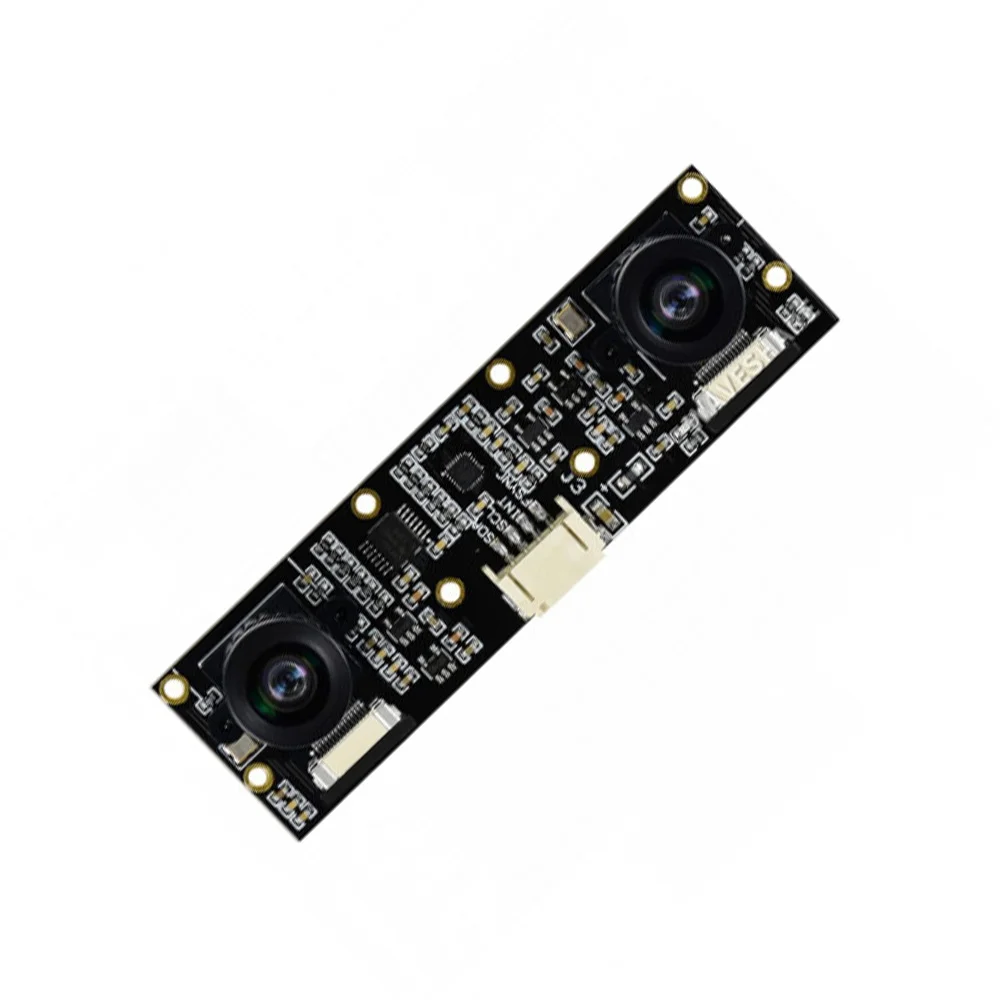
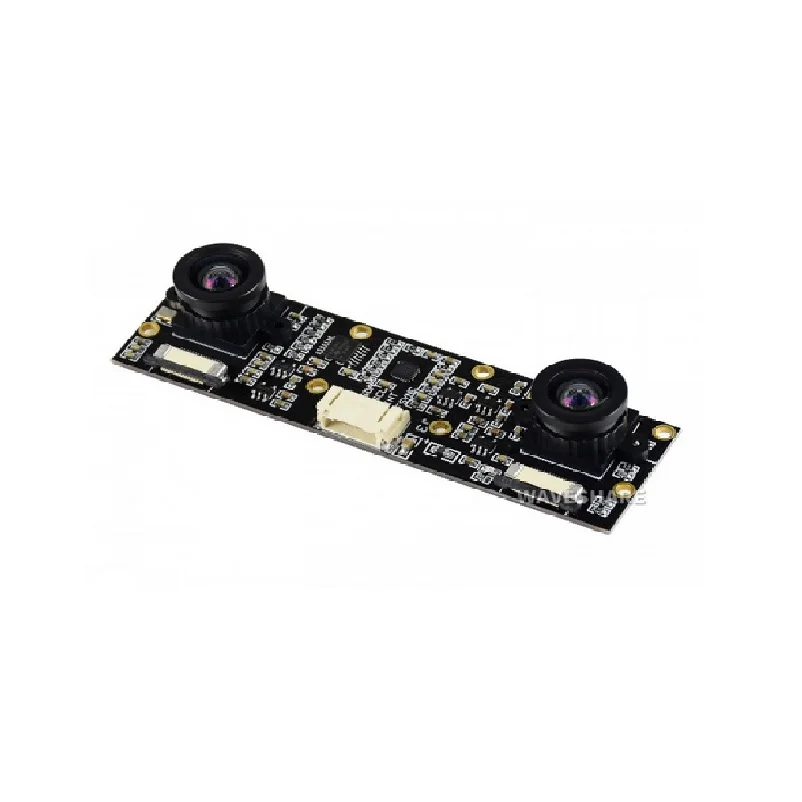
The Waveshare IMX219-83 Stereo Camera Module is an 8MP binocular vision sensor based on dual Sony IMX219 CMOS sensors, designed for AI and depth perception applications on platforms like the NVIDIA Jetson Nano/Xavier NX and Raspberry Pi Compute Module.

Features

  • Dual 8MP Sony IMX219 sensors deliver 3280 x 2464 resolution per camera for high-fidelity stereo imaging.
  • Designed for AI vision tasks including depth mapping, facial recognition, and object detection on embedded platforms.
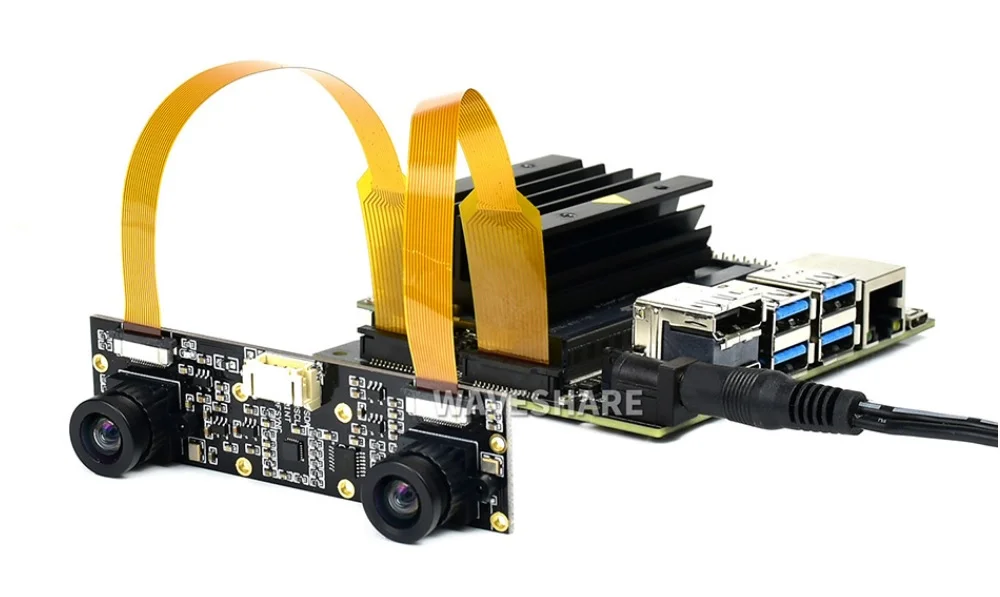
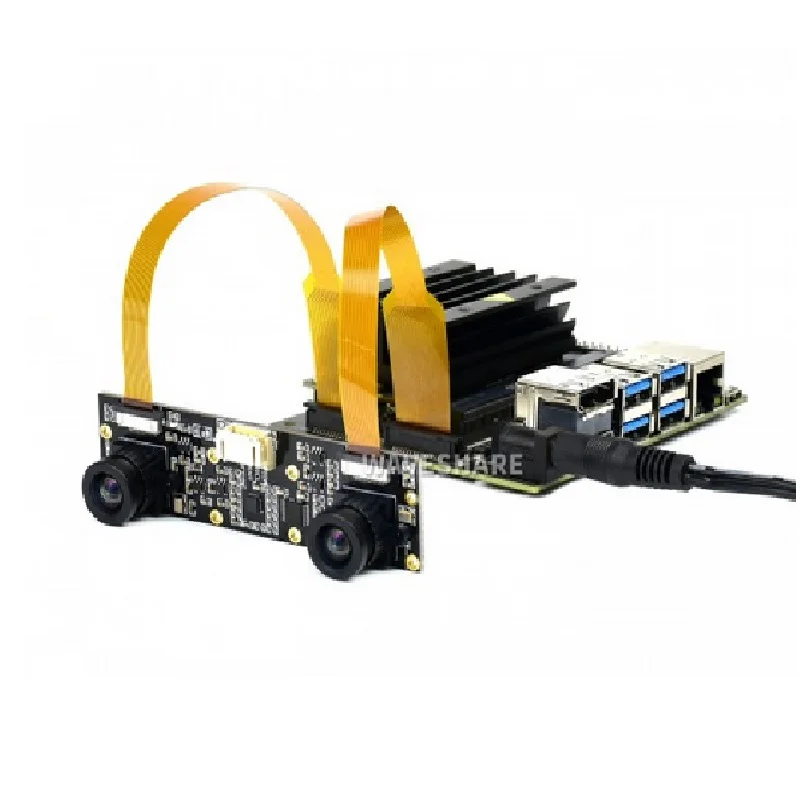
  • Direct hardware compatibility with NVIDIA Jetson Nano B01, Jetson Xavier NX, and Raspberry Pi CM3/CM3+ expansion boards.
  • Integrated 60mm baseline length optimizes depth calculation accuracy for stereo vision algorithms.
  • Low-power operation suitable for portable and edge AIoT applications.

Out of stock

Description

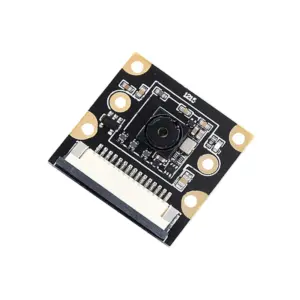
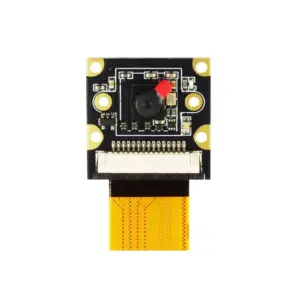
The Waveshare IMX219-83 Stereo Camera Module integrates two independent Sony IMX219 CMOS image sensors on a single rigid PCB, creating a calibrated binocular vision system. The 60mm fixed baseline between the lenses provides the essential parallax data required for accurate depth perception and 3D scene reconstruction. This module outputs synchronized high-resolution image streams, enabling real-time stereo matching and computer vision processing directly on the host SoC.

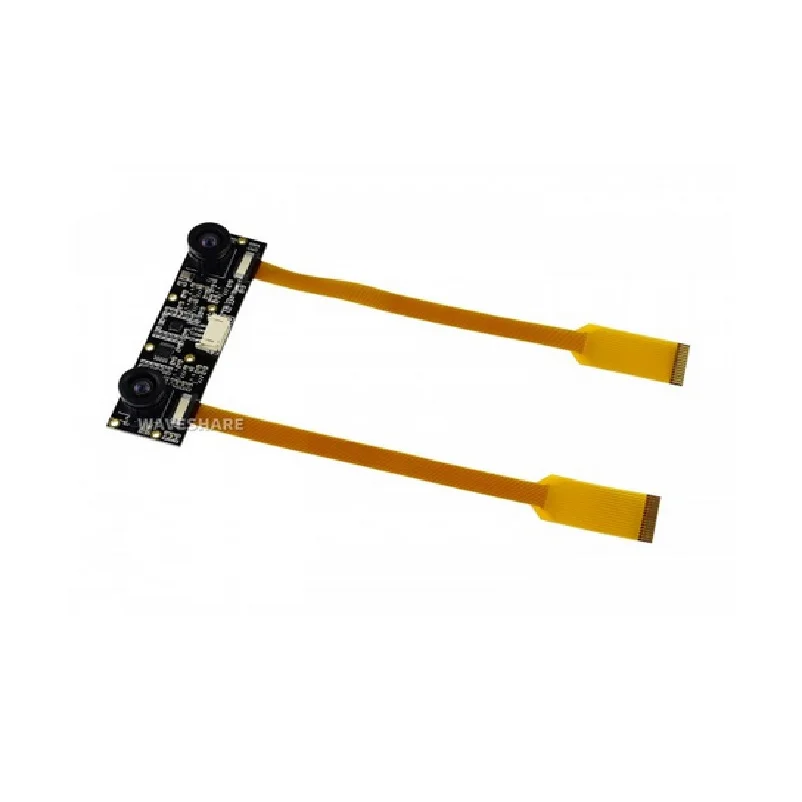
Engineered for embedded AI platforms, it connects via dual 15-pin FPC cables to compatible carrier boards, drawing 3.3V power. The compact form factor and included adapter cables facilitate integration into robotics, drones, and automated inspection systems where spatial awareness is critical.

Key Features

  • Binocular camera module with dual Sony IMX219 8-megapixel CMOS sensors.
  • Delivers synchronized image streams for accurate depth vision and stereo matching algorithms.
  • Hardware-optimized for NVIDIA Jetson series and Raspberry Pi Compute Module ecosystems.
  • Fixed 60mm baseline length ensures consistent depth calculation parameters.
  • Wide 83-degree diagonal field of view per lens captures expansive scenes.
  • Includes necessary FPC cables and adapter for flexible system integration.
  • Low distortion lenses (<1%) preserve geometric accuracy for measurement applications.

Applications

  • Robotic navigation and obstacle avoidance using real-time depth maps.
  • AI-powered facial recognition and people counting systems.
  • Automated inspection and quality control with 3D dimensional analysis.
  • Augmented Reality (AR) and Simultaneous Localization and Mapping (SLAM) applications.
  • Autonomous vehicle and drone perception for environmental modeling.

Technical Specifications

SensorDual Sony IMX219 CMOS
Resolution (per camera)8 MP (3280 x 2464)
Lens Focal Length2.6mm
Field of View (Diag/Horz/Vert)83°/73°/50°
Lens Distortion<1%
Baseline Length60mm
Supply Voltage3.3V
Supported PlatformsNVIDIA Jetson Nano B01, Jetson Xavier NX, Raspberry Pi CM3/CM3+
Dimensions24mm x 85mm

Frequently Asked Questions

Which development platforms is the IMX219-83 Stereo Camera compatible with?

The module is directly compatible with the NVIDIA Jetson Nano Developer Kit (B01 version) and Jetson Xavier NX via its camera connectors. It also works with Raspberry Pi Compute Module 3/3+ expansion boards like the Compute Module IO Board Plus. Standard Raspberry Pi boards with a 15-pin camera port are not directly supported without an adapter for the dual FPC cables.

How do I connect and power the stereo camera module?

Connect the two 15-pin FPC cables from the camera module to the dual MIPI CSI-2 camera interfaces on your carrier board (e.g., Jetson carrier). Use the included PH2.0 4-pin wire to supply 3.3V DC power. Ensure the host system's camera software stack (like JetPack for NVIDIA or Raspberry Pi OS with libcamera) is configured to recognize and synchronize the dual camera streams.

What software or SDK is needed to process the stereo images for depth mapping?

On NVIDIA Jetson platforms, use the JetPack SDK with libraries like OpenCV, CUDA, and NVIDIA's VisionWorks for stereo processing. For Raspberry Pi Compute Module, OpenCV with Python or C++ is standard. You will need to implement or use stereo vision algorithms (like Semi-Global Block Matching) to calculate disparity maps from the left and right image pairs for depth perception.

What is the significance of the 60mm baseline length?

The fixed 60mm baseline (distance between the two camera lenses) is a critical geometric parameter for stereo vision. A longer baseline increases depth resolution for distant objects but reduces the overlapping field of view. This 60mm value is a balanced choice for medium-range applications and must be input into your depth calculation algorithms for accurate real-world distance measurements.

Package Includes

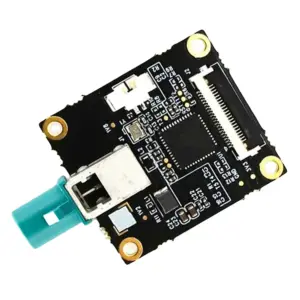
  • 1 x IMX219-83 Stereo Camera Module
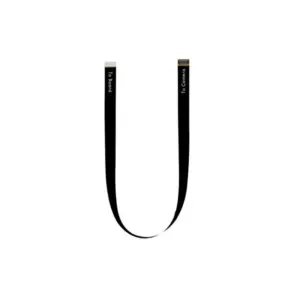
  • 2 x FPC 15-pin Cable
  • 2 x FPC 15-pin to 20-pin Adapter Cable
  • 1 x PH2.0 4-pin Wire

Additional Information

Weight 0.023 kg
Dimensions 3 × 9 × 0.3 cm