SKU: IOWC-1287
📋 GST Invoice Available

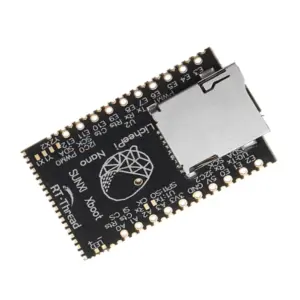
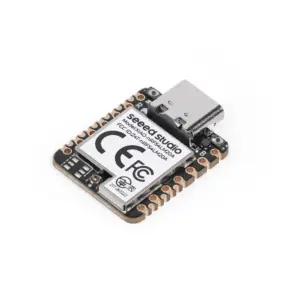
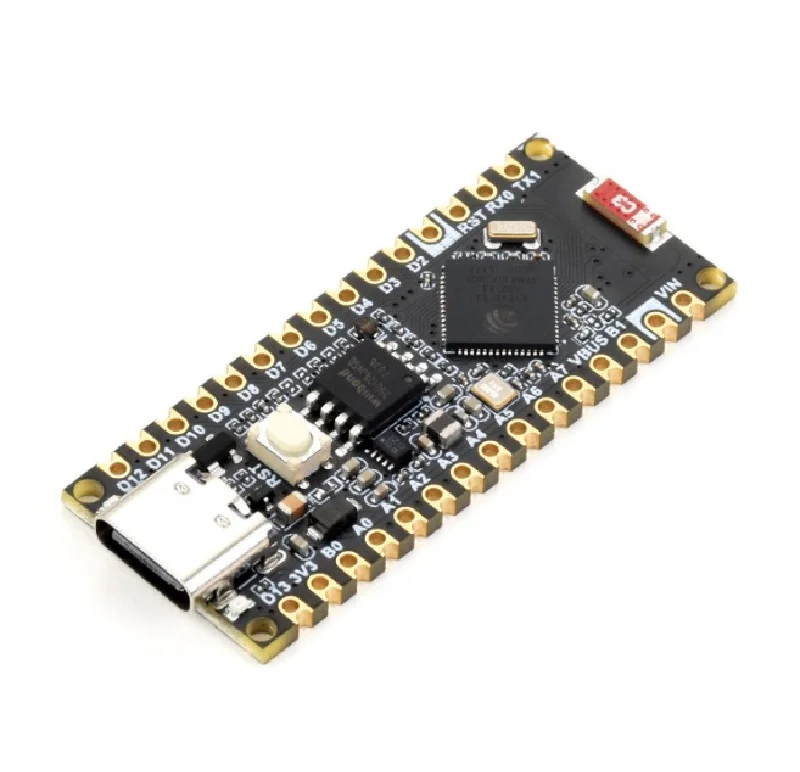
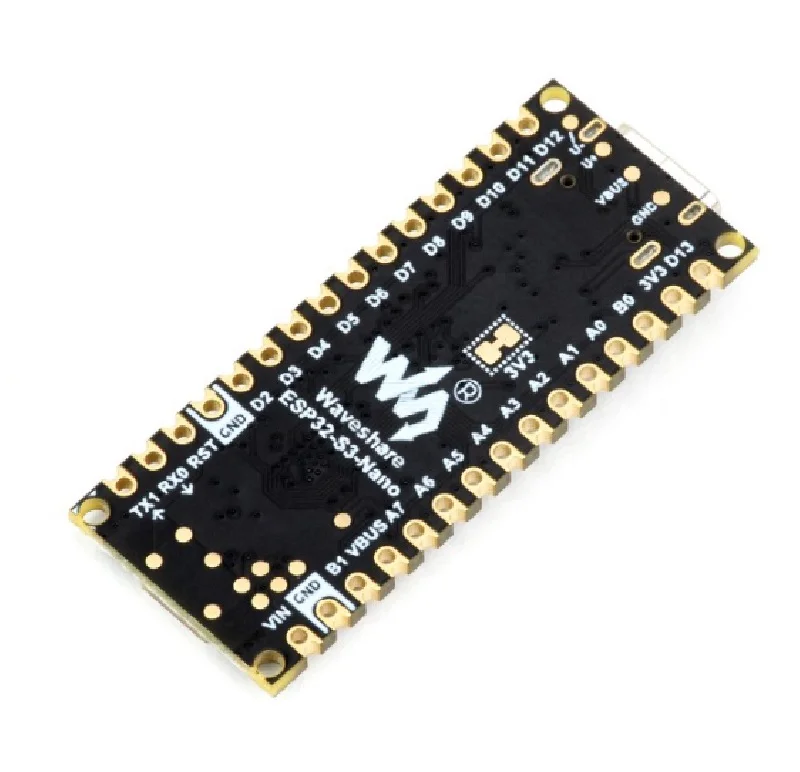
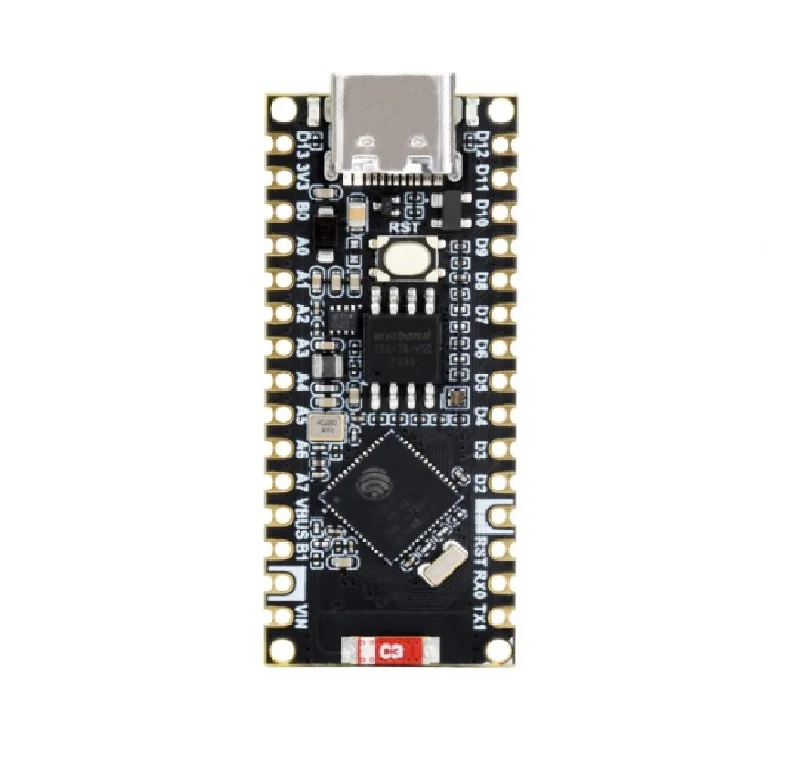
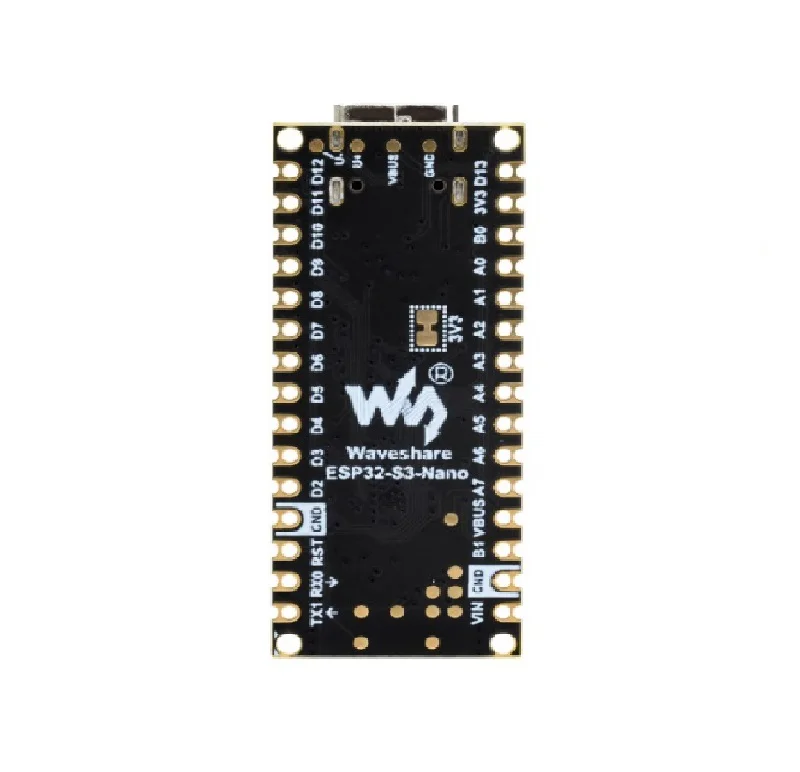
Waveshare ESP32-S3-Nano Development Board w/o Headers

₹1,129.00 (Inclusive of all taxes)
Out of Stock

The Waveshare ESP32-S3-Nano is a compact development board featuring the ESP32-S3R8 dual-core processor, 2.4GHz Wi-Fi, and Bluetooth LE. It supports Arduino IDE, MicroPython, and Arduino IoT Cloud for rapid IoT prototyping and embedded applications.

Features

  • Powered by ESP32-S3R8 dual-core Xtensa LX7 processor running at 240 MHz for responsive IoT edge computing.
  • Integrated 2.4GHz Wi-Fi and Bluetooth LE 5.0 for robust wireless connectivity in smart home and sensor networks.
  • Generous 16MB Flash and 8MB PSRAM for complex firmware, OTA updates, and data buffering.
  • Arduino Nano form factor compatibility simplifies integration into existing shields and breadboard projects.
  • Supports Arduino IDE, MicroPython, and Arduino IoT Cloud for flexible, cloud-enabled development workflows.

Out of stock

Description

The Waveshare ESP32-S3-Nano Development Board provides a powerful, compact foundation for IoT and embedded projects. Based on the Espressif ESP32-S3R8 chip, it combines a dual-core 240MHz Xtensa LX7 processor with integrated 2.4GHz Wi-Fi and Bluetooth LE 5.0 radios, delivering strong RF performance and low-power connectivity options.

With 16MB of flash memory and 8MB of PSRAM, the board accommodates feature-rich firmware, Over-the-Air (OTA) updates, and data-intensive applications. Its Arduino Nano-compatible pinout and 3.3V operating voltage ensure easy integration with a vast ecosystem of shields, sensors, and peripherals, streamlining prototype development.

Key Features

  • ESP32-S3R8 dual-core processor enables efficient multitasking and real-time IoT data processing.
  • Integrated Wi-Fi 4 (802.11 b/g/n) and Bluetooth LE 5.0 support dual-mode wireless communication.
  • Large 16MB Flash memory supports complex applications and multiple OTA firmware images.
  • 8MB external PSRAM expands data handling capabilities for graphics, audio, or network buffers.
  • Full Arduino Nano pinout compatibility allows direct use with existing accessory shields and breadboards.
  • USB-C interface provides reliable power and data connectivity for programming and HID device emulation.
  • Supports development in Arduino IDE, ESP-IDF, and MicroPython for flexible firmware deployment.
  • Arduino IoT Cloud integration enables remote monitoring and control of connected devices via a web dashboard.

Applications

  • Smart home automation nodes for lighting, climate, and security control.
  • Wireless sensor gateways collecting data from BLE or serial sensors via Wi-Fi.
  • Prototyping compact IoT devices for wearables, remote monitoring, and telemetry.
  • Educational tools for learning embedded systems, wireless networking, and Arduino programming.
  • USB HID projects such as custom keyboards, macro pads, or PC peripherals.

Technical Specifications

Microcontroller / SoCESP32-S3R8 (Dual-core Xtensa LX7)
Wireless Protocols2.4GHz Wi-Fi 802.11 b/g/n, Bluetooth LE 5.0
CPU Clock Frequency240 MHz
Supply Voltage3.3V (via USB-C)
Operating CurrentApprox. 200-500mA (active, Wi-Fi TX)
Memory512KB SRAM, 384KB ROM, 8MB PSRAM, 16MB Flash
Digital I/O Pins14
Analog Input Pins8
Interfaces2x UART, 1x I2C, 1x SPI, 5x PWM
USB InterfaceUSB Type-C (Power, Programming, HID)
Reset ButtonYes (Vertical)
Dimensions (approx.)45mm x 18mm (Nano form factor)

Frequently Asked Questions

How do I program the Waveshare ESP32-S3-Nano using the Arduino IDE?

First, install the ESP32 board support via the Arduino Boards Manager using the Espressif repository URL. Select 'ESP32S3 Dev Module' as your board. Configure the Flash Mode to 'QIO', Flash Size to '16MB', and PSRAM to 'Enabled'. Connect the board via USB-C, choose the correct COM port, and upload your sketch. The board supports standard Arduino functions and ESP32-specific libraries for Wi-Fi and BLE.

What is the power supply requirement, and can I power it via the GPIO pins?

The board is designed to be powered via the USB Type-C port at 5V, which is regulated onboard to 3.3V. Do not apply external 5V or 3.3V directly to the GPIO pins, as this can damage the regulator. For permanent installations, power via the USB port using a regulated 5V supply. The operating current varies from ~50mA in deep sleep to over 500mA during Wi-Fi transmission.

Does this board support MicroPython, and how do I flash the firmware?

Yes, it fully supports MicroPython. Download the ESP32-S3 Generic MicroPython firmware (.bin file) from the official site. Use a tool like esptool.py to erase the flash and write the new firmware. The command typically is: `esptool.py --chip esp32s3 --port COMx erase_flash` followed by `esptool.py --chip esp32s3 --port COMx write_flash -z 0x0 firmware.bin`. After flashing, use a serial terminal like PuTTY to access the REPL.

How do I use the Arduino IoT Cloud with this ESP32-S3-Nano board?

Install the Arduino IoT Cloud agent and create a new 'Arduino Nano ESP32' thing in the cloud dashboard. Define your variables (e.g., sensors, switches). The IDE will generate a sketch template. Modify it to map your variables to the correct GPIO pins on the Nano-compatible pinout. Compile and upload the sketch. The board will connect to your Wi-Fi and sync with the cloud, allowing remote monitoring and control via the Arduino IoT Cloud app or web interface.

Package Includes

  • 1 x Waveshare ESP32-S3-Nano Development Board (without pre-soldered headers)
  • 1 x 40-pin male pin header (black)

Additional Information

Weight 0.01 kg
Dimensions 11 × 11 × 1 cm