SKU: SBCD-0107
📋 GST Invoice Available

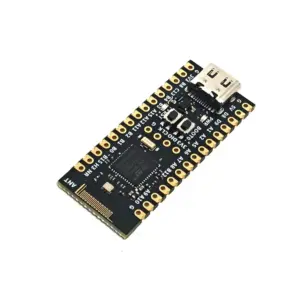
Sipeed Lichee Nano ARM9 SBC with 16MB SPI Flash

₹839.00 (Inclusive of all taxes)
Out of Stock

The Sipeed Lichee Nano is a compact, SD card-sized Linux development board powered by the Allwinner F1C100s ARM926EJS processor, offering up to 900MHz performance and a 16MB SPI Flash. It provides robust capabilities for embedded Linux applications, supporting various display and video decoding functionalities.

Features

  • Allwinner F1C100s ARM926EJS processor up to 900MHz.
  • Integrated 32MB DDR memory and 16MB SPI Flash for Linux boot.
  • Supports 40-pin RGB LCD via FPC and 720P video output.
  • Ultra-compact 2.54cm x 3.3cm footprint, ideal for space-constrained projects.
  • Rich I/O including CSI camera, USB OTG, SPI, TWI, and UART interfaces.

Out of stock

Description

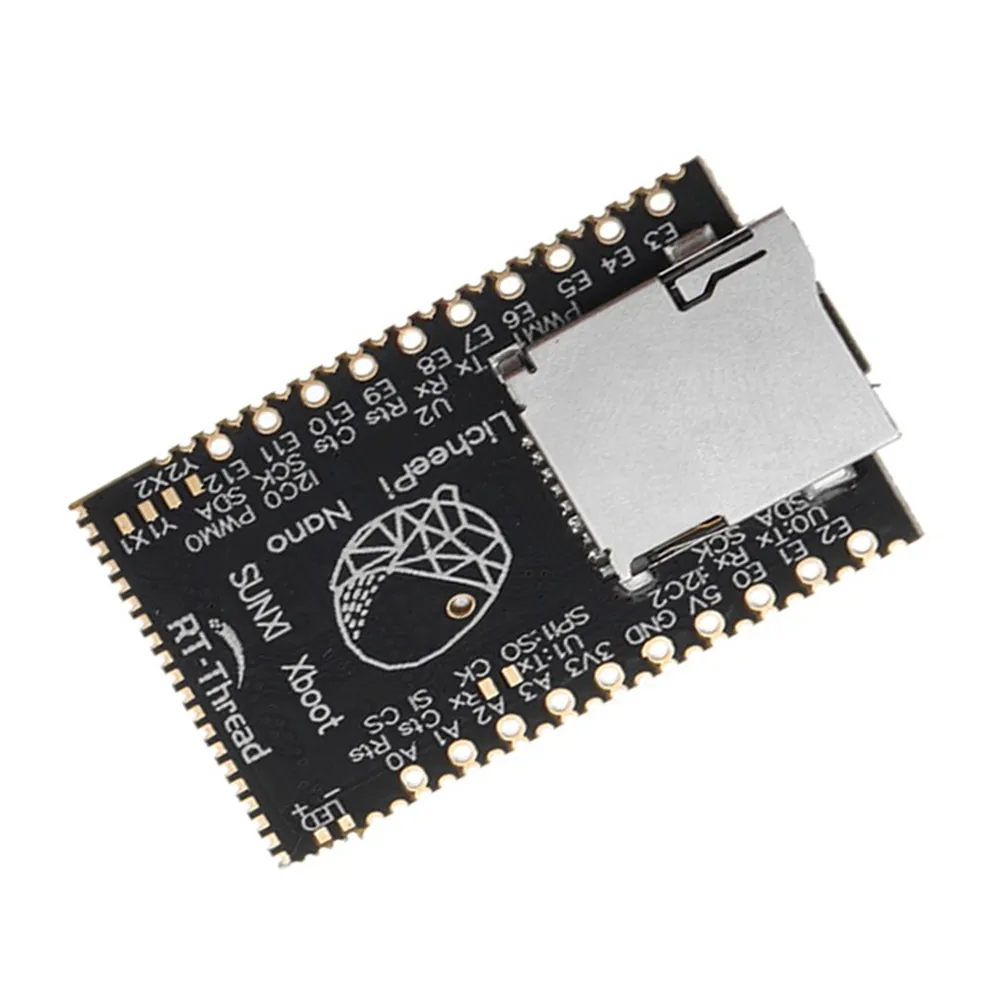
The Sipeed Lichee Nano is an SD card-sized Linux development board, featuring the Allwinner F1C100s ARM9 processor. This exquisitely small board, measuring only 2.54cm x 3.3cm, delivers robust embedded Linux capabilities in an ultra-compact form factor, making it ideal for a wide range of space-constrained applications from IoT to advanced human-computer interaction.

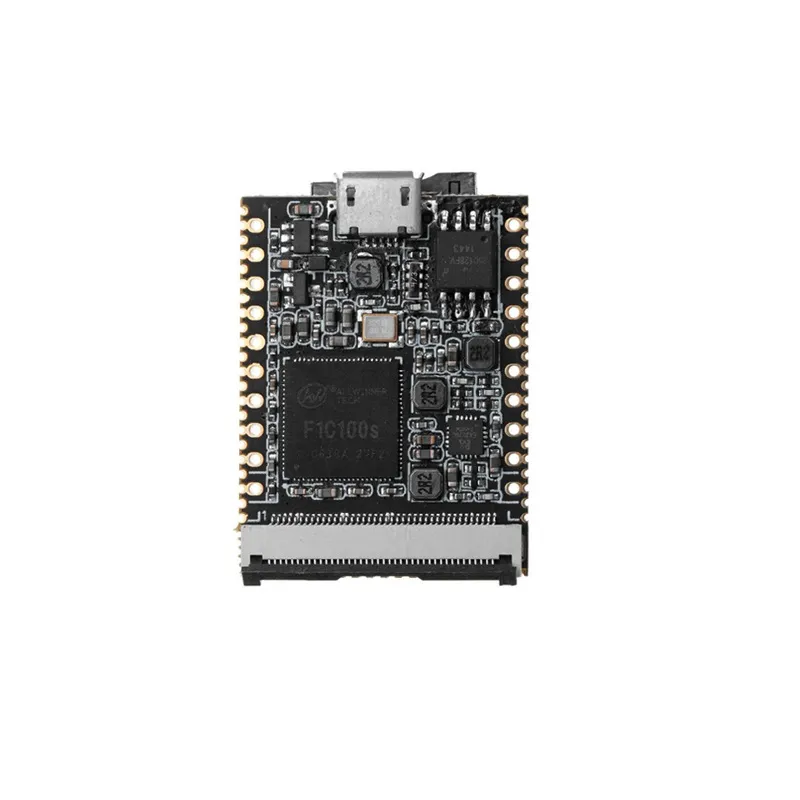
Powered by the Allwinner F1C100s, an ARM9 architecture SoC with 16KB D-cache and 32KB I-Cache, the Lichee Nano supports booting from either SPI Flash or a TF card, alongside USB OTG for loading updates. It boasts comprehensive multimedia support, including a CSI camera interface, a full HD video engine for H.264/MPEG decoding, an RGB LCD interface, and CVBS input/output, all complemented by an integrated audio codec and I2S/PCM support.

Designed for versatility, the Lichee Nano offers flexible connectivity with both 2.54mm common pin welding holes and 1.27mm stamp hole patch designs, facilitating easy DIY prototyping and integration into complex production setups. The board benefits from a mature ecosystem of peripherals and officially supports RT-Thread, enabling developers to leverage extensive resources for rapid and efficient prototyping.

Key Features

  • Powered by Allwinner F1C100s ARM 926EJS processor, clocking up to 900MHz.
  • Features a 40-pin RGB LCD FPC connector, supporting resolutions up to 1024x600.
  • Integrated 32MB DDR memory within the SoC for efficient operation.
  • Onboard 16MB SPI Flash for bootloader and system storage.
  • Supports 720P video output and decoding for H.264 / MPEG streams.
  • Provides CSI camera interface for video input.
  • Equipped with comprehensive I/O: SDIO, SPI, TWI, UART, USB OTG, PWM, LRADC, audio I/O.
  • Supports multiple operating systems including 3.10 BSP Linux, 4.19 mainline Linux, xboot bare metal, and RT-Thread RTOS.
  • Compact dimensions (2.54 x 3.3 cm) with both 2.54mm header and 1.27mm stamp hole options for versatile integration.

Applications

  • IoT applications requiring complex communication interfaces and protocols.
  • Human-computer interaction (HMI) interfaces with advanced graphics and logic.
  • Scenarios demanding more processing operations than typical MCUs.
  • Rapid development using open-source software under Linux environments.
  • High-end geek projects balancing size, performance, and ease of use.
  • Entry-level software and hardware DIY projects for engineers and makers.

Technical Specifications

Item TypeDevelopment Board
Model SeriesSipeed Lichee
ProcessorAllwinner F1C100s ARM 926EJS
CPU SpeedUp to 900MHz
Memory Capacity32MB DDR (integrated into SoC)
SPI Flash16MB
Communication InterfacesSDIO for WiFi module, SPI x2, TWI x3, UART x3, OTG USB x1, TV out
Other InterfacesPWM x2, LRADC x1, Headphone output x2, Mic x1
Input Voltage (V)5V via micro USB, 3.3 to 5V via pin
Output Voltage3.3V
Power Consumption54mA (idle with Linux), 250mA (with display)
Storage Temperature (°C)-40 ~ 125
Operating Temperature (°C)-20 to 70
Length (mm)25.4
Width (mm)33
Weight (g)4.2

Frequently Asked Questions

What operating systems does the Sipeed Lichee Nano support?

The Lichee Nano officially supports 3.10 BSP Linux, 4.19 mainline Linux, and the xboot bare metal development environment. Additionally, it has official support for the RT-Thread RTOS, enabling developers to leverage its rich ecological resources for efficient prototyping and application development.

Can I use the Lichee Nano for display-intensive projects?

Yes, the Lichee Nano is well-suited for display-intensive projects. It features a 40-pin RGB LCD FPC connector that supports resolutions like 272x480, 480x800, and 1024x600. Its Allwinner F1C100s processor also supports 720P video output and hardware decoding for formats such as H.264 and MPEG.

What are the power requirements for the Sipeed Lichee Nano?

The Lichee Nano can be powered via its micro USB port at 5V, or directly through pins with a 3.3V to 5V input range. Its power consumption is efficient, drawing approximately 54mA at idle with Linux and around 250mA when actively driving a display, making it suitable for low-power embedded applications.

What are the advantages of its compact form factor and pinout?

Measuring only 2.54cm x 3.3cm, the Lichee Nano's SD card-sized form factor is ideal for space-constrained projects. Its flexible pinout combines 2.54mm common welding holes with 1.27mm stamp hole patch design, making it convenient for both DIY prototyping with standard headers and integrated patch production for more complex, compact applications.

Package Includes

  • 1 x Lichee Nano
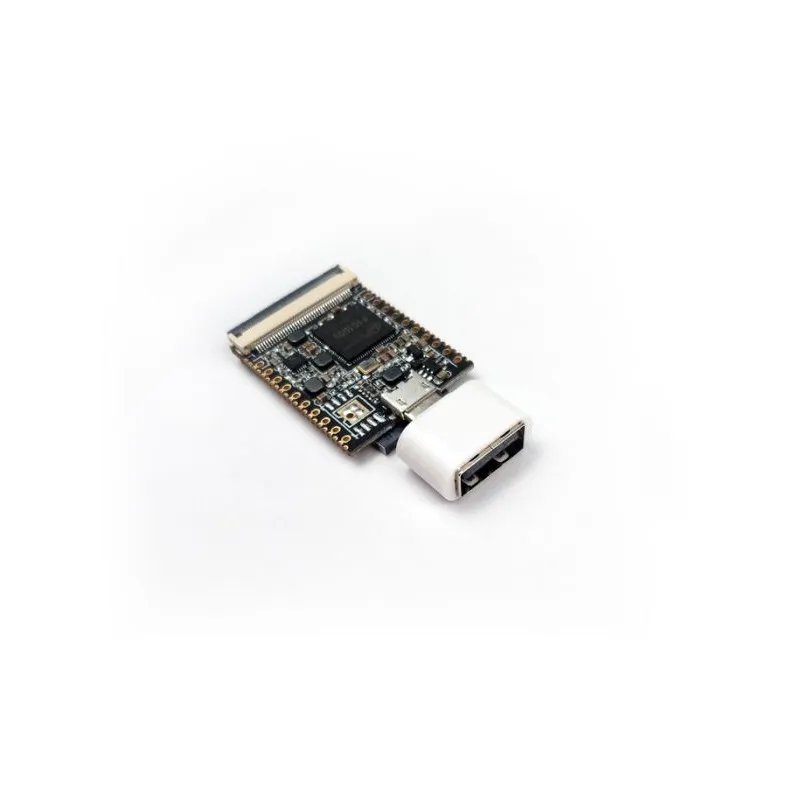
  • 1 x OTG Cable

Additional Information

Weight 0.0042 kg
Dimensions 2.54 × 3.3 cm