SKU: SENS-0669
📋 GST Invoice Available

SOUSHINE SBR Film Pressure Sensor, FSR 406, 780mm Cord - 10g~15kg Range

₹167.00 (Inclusive of all taxes)
Out of Stock

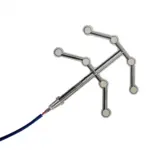
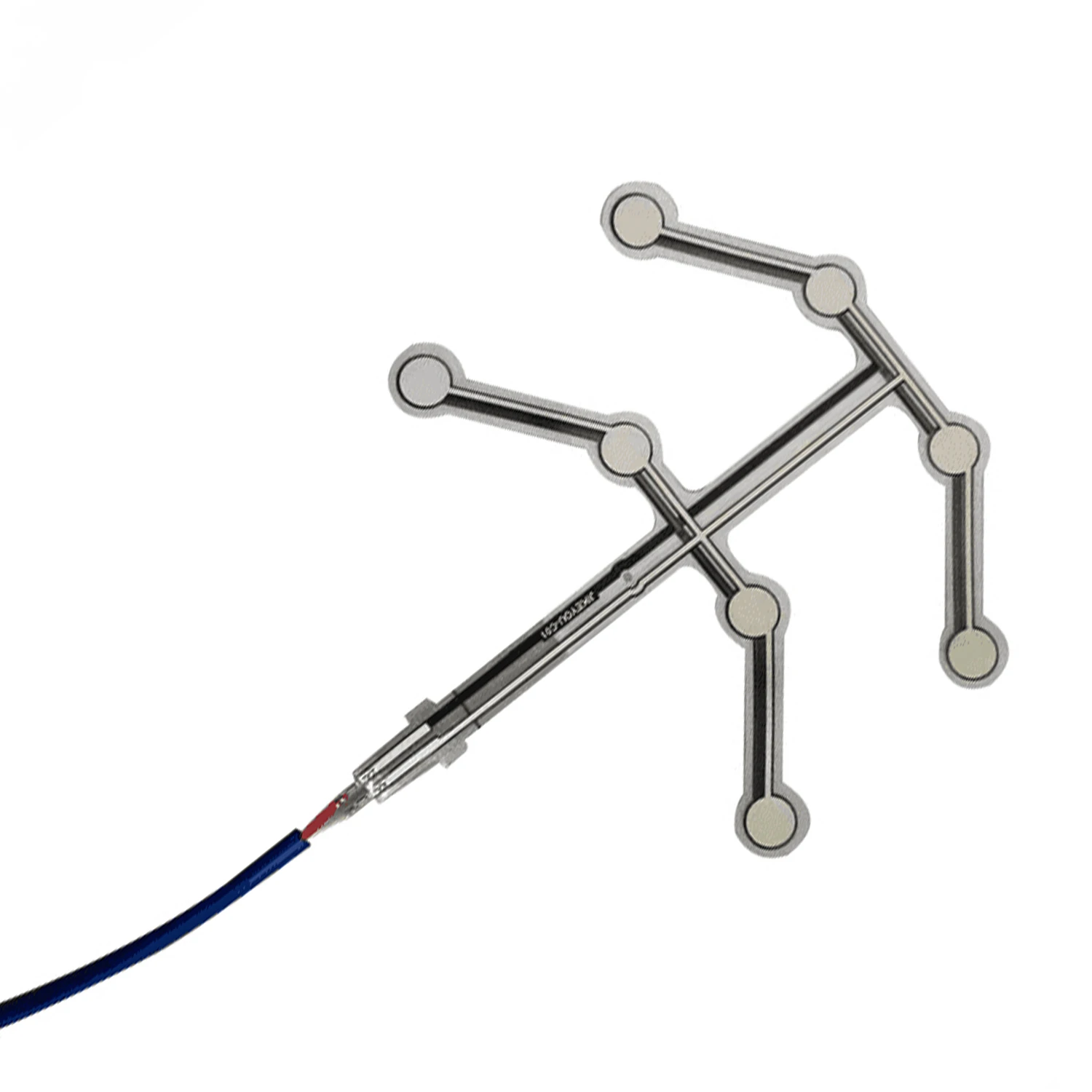
The SOUSHINE SBR Film Pressure Sensor (FSR 406) is a robust, ultra-thin force-sensing resistor designed for precise touch and pressure measurement in human-machine interfaces. With a 780mm cable, it integrates easily into Arduino, Raspberry Pi, and industrial control systems for applications requiring sensitivity from 10g to 15kg.

Features

  • Ultra-thin 0.45mm polymer thick film (PTF) construction for flexible integration.
  • Wide sensing range from 10 grams to 15 kilograms (0.1N to 10N actuation force).
  • High durability rated for up to 10 million actuations with repeatable performance.
  • Simple two-wire interface compatible with TTL logic and standard microcontroller ADCs.
  • 39.6mm square active sensing area for reliable, distributed force detection.

Out of stock

Description

The SOUSHINE SBR Film Pressure Sensor, model FSR 406, utilizes a polymer thick film (PTF) sensing element whose electrical resistance decreases inversely with applied force. This analog, two-wire device provides a variable voltage output that can be read by any microcontroller with an analog-to-digital converter, making it ideal for prototyping and embedded systems.

Engineered for longevity, the sensor’s robust construction withstands up to 10 million actuations while maintaining a low 2% repeatability error in a controlled system. Its 0.45mm profile and 780mm pre-attached cable allow for seamless integration into tight spaces and complex assemblies, from consumer electronics to medical devices.
Key Features

  • High-Resolution Force Sensing: Detects minute force changes from 0.1N (10g) up to 10N (1kg), with a maximum range extending to 15kg.
  • Exceptional Mechanical Endurance: Rated for 10 million actuation cycles, ensuring long-term reliability in high-use applications.
  • Ultra-Thin, Flexible Form Factor: At just 0.45mm thick, the sensor can be mounted on curved surfaces or within slim industrial designs.
  • Stable & Repeatable Output: Provides highly repeatable force readings with minimal hysteresis, crucial for consistent user interface feedback.
  • Simple Integration: Two-wire analog output and TTL-compatible signal levels enable quick connection to Arduino, PLCs, and data acquisition systems.
  • Optimized Performance-to-Cost Ratio: Delivers professional-grade force measurement capabilities in a durable, high-value build.

Applications

  • Touch-Sensitive Human-Machine Interfaces (HMI): Differentiating between light taps and firm presses for intuitive control panels in automotive dashboards or industrial consoles.
  • Patient Monitoring & Medical Device Safety: Detecting patient presence in beds or chairs, and sensing occlusions in infusion pumps by measuring fluid back-pressure.
  • Robotic Gripper Force Feedback: Providing precise grip force measurement for collaborative robots (cobots) to handle delicate objects safely.
  • Tool & Equipment Safety Lockouts: Differentiating a secure grip from an accidental touch to activate or deactivate power tools.
  • Centroid of Force Detection: Using an array of sensors under a surface (e.g., a seat or platform) to determine the precise location and distribution of applied force.

Technical Specifications

Model / SeriesFSR 406 (SBR Film)
Sensing PrinciplePolymer Thick Film (PTF) Force-Sensing Resistor
Force Range10g ~ 15kg (0.1N ~ 10N sensitivity range)
Active Area39.6mm x 39.6mm (Square)
Interface / Pins2-wire Analog Output
Cable Length780mm
Thickness0.45 mm
Durability (Actuations)Up to 10 million
Logic CompatibilityTTL
Output SignalResistance inversely proportional to applied force

Frequently Asked Questions

What is the operating voltage range for this FSR sensor?

The sensor itself is a passive resistive element with no active electronics, so it does not have a fixed operating voltage. For interfacing, you typically apply a voltage (e.g., 3.3V or 5V) across its two wires in a voltage divider circuit with a pull-down resistor. The output voltage read by your microcontroller's ADC will be proportional to the applied force. Ensure your measurement circuit uses a voltage within your microcontroller's logic level limits.

How do I connect and read data from this two-wire FSR with an Arduino?

Connect one FSR wire to your Arduino's 5V (or 3.3V) pin. Connect the other FSR wire to an analog input pin (e.g., A0) and also connect that same analog pin to GND through a fixed resistor (typically 10kΩ acts as a pull-down). This forms a voltage divider. The Arduino will read a varying analog voltage (0-Vcc) based on the force-dependent resistance. You can then map this ADC value to a force using calibration data or a provided force-resistance curve.

Can this sensor be used for measuring weight or as a scale?

While it can detect force in the 10g to 15kg range, it is not a precision load cell and is not ideally suited for accurate weight measurement like a digital scale. Its output is non-linear, especially at the extremes of its range, and it is sensitive to the distribution of force across its active area. It is best used for detecting presence, pressure, relative force changes, or touch interactions rather than providing calibrated weight readings.

How should the sensor be mounted or installed for best performance?

For consistent readings, the sensor's active square area should be mounted flat against a rigid, smooth surface. Use a thin, non-compressible adhesive or a mechanical clamp around the edges to secure it without putting pressure on the sensing zone. Ensure the applied force is distributed evenly across the active area. Avoid Sharp Microelectronics bends or creases in the sensor film or its cable connection point to prevent damage.

Package Includes

  • 1 x SOUSHINE SBR Film Pressure Sensor (FSR 406) with 780mm attached cable