SKU: IOWC-0680
📋 GST Invoice Available

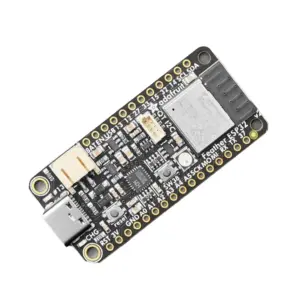
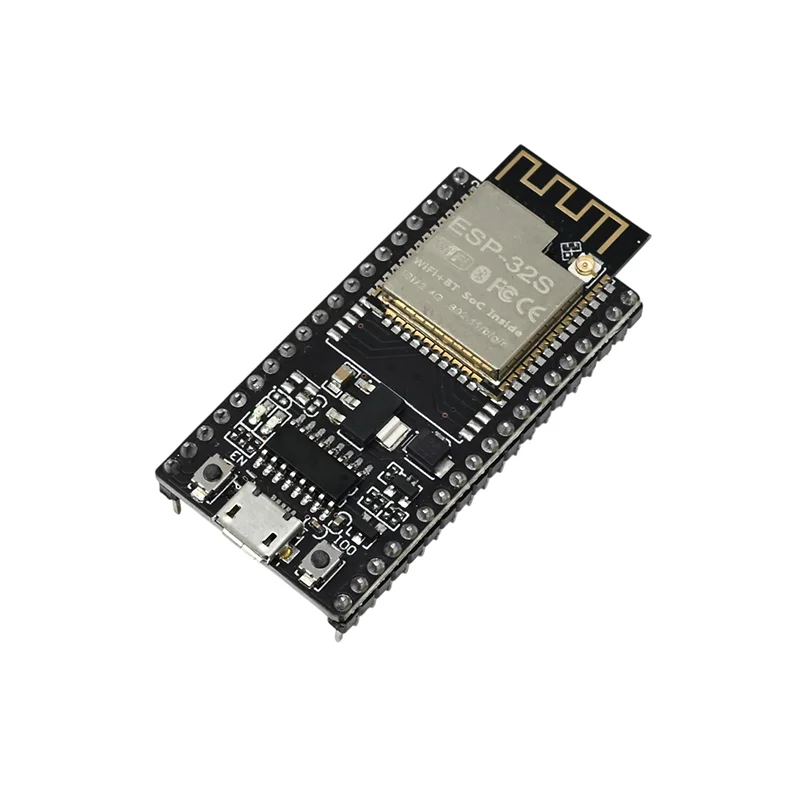
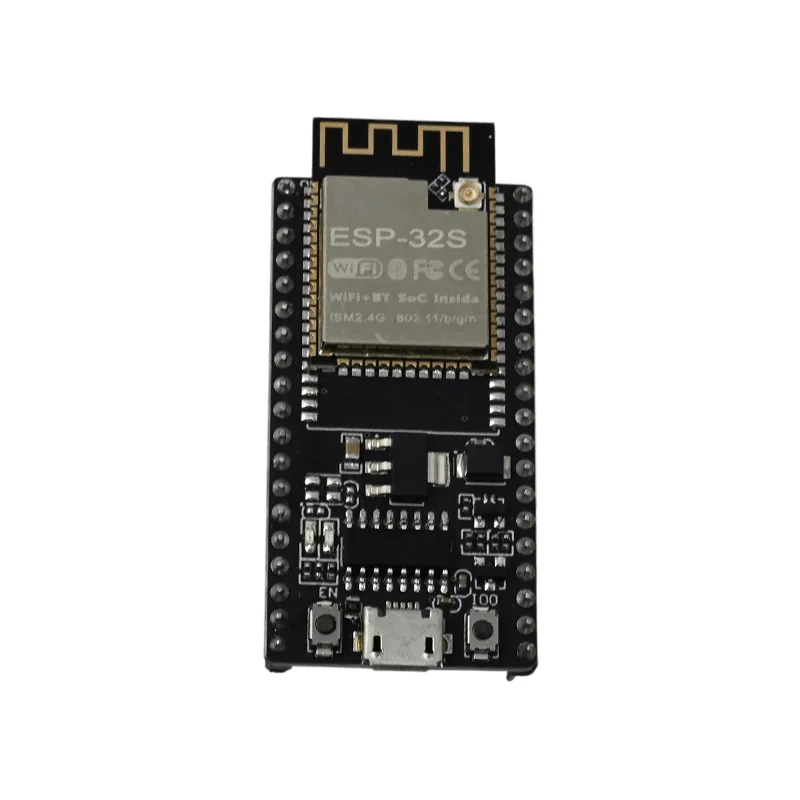
NodeMCU ESP-32S ESP-32E WiFi & Bluetooth Development Board

₹1,609.00 (Inclusive of all taxes)
Out of Stock

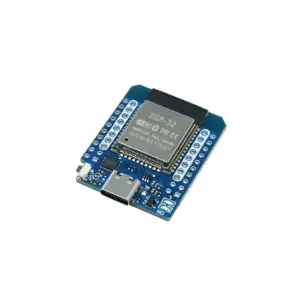
The NodeMCU ESP-32S/ESP-32E Development Board is an open-source IoT platform built around the ESP32 dual-core microcontroller, featuring integrated Wi-Fi and Bluetooth 4.2. It is programmable via Arduino IDE or NodeMCU Lua firmware for rapid prototyping of connected devices and smart automation systems.

Features

  • Powered by the ESP32S dual-core microcontroller for robust processing and wireless connectivity.
  • Integrated 2.4GHz Wi-Fi and Bluetooth 4.2 (BLE) for versatile IoT and smart home applications.
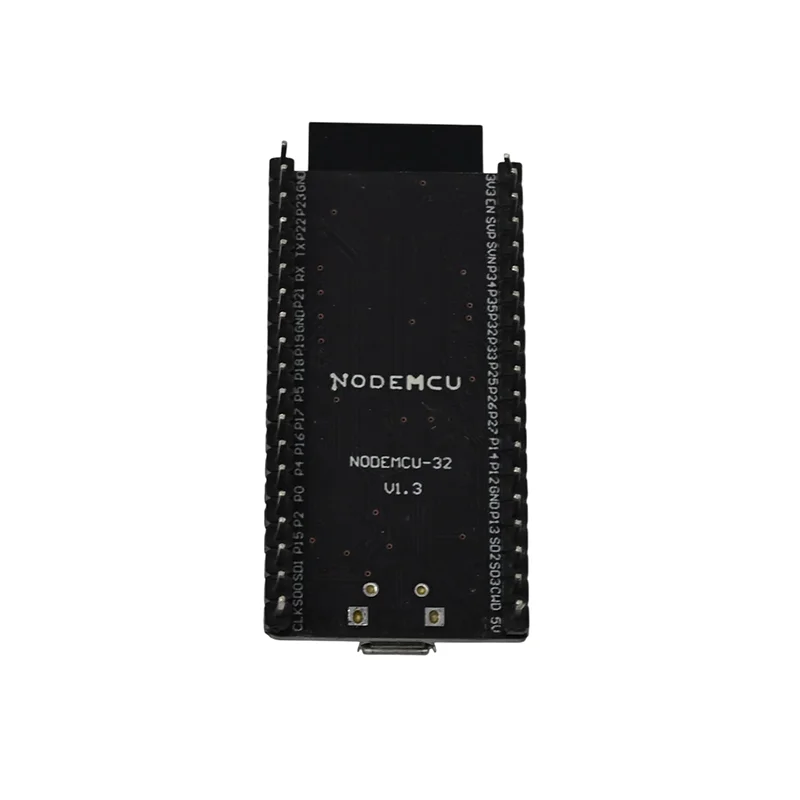
  • 38-pin GPIO header provides extensive I/O including UART, I2C, I2S, SPI, ADC, DAC, and PWM.
  • Onboard USB-to-serial converter and 5V voltage regulator for easy PC connection and power supply.
  • Fully compatible with Arduino IDE and NodeMCU Lua firmware, accelerating development for makers and professionals.

Out of stock

Description

The NodeMCU ESP-32S/ESP-32E Development Board is a feature-rich IoT prototyping platform centered on the Espressif ESP32 microcontroller. Its dual-core Xtensa LX6 processor delivers the computational power needed for complex wireless applications, while the integrated 2.4GHz Wi-Fi and Bluetooth 4.2 radio enable seamless connectivity to local networks and Bluetooth peripherals.

Designed for ease of use, the board includes a built-in CP2102 USB-to-serial chip for straightforward programming and debugging via a micro-USB cable. The comprehensive 38-pin breakout provides access to a wide array of peripherals, including multiple ADC channels, capacitive touch sensors, and hardware communication interfaces, making it suitable for sensor networks, robotics, and home automation projects.

Key Features

  • Dual-core ESP32S microcontroller with integrated 2.4GHz Wi-Fi and Bluetooth 4.2.
  • Extensive 38-pin GPIO header supporting UART, I2C, I2S, SPI, ADC, DAC, PWM, and capacitive touch.
  • Onboard CP2102 USB-to-serial converter for easy programming and serial communication.
  • 5V operating voltage with a stable onboard voltage regulator for flexible power input.
  • Full compatibility with the Arduino IDE and NodeMCU Lua firmware ecosystem.
  • Compact form factor ideal for breadboard prototyping and embedding into final projects.

Applications

  • Smart home automation and wireless sensor nodes.
  • IoT prototyping for data logging and remote monitoring.
  • Bluetooth-enabled devices and beacons.
  • Educational tools for learning embedded systems and wireless communication.
  • Robotics and mechatronics control systems.

Technical Specifications

Microcontroller/SoCESP32S Dual-Core
Wireless ProtocolsWi-Fi 802.11 b/g/n, Bluetooth 4.2 BR/EDR and BLE
Frequency Range2.4GHz ~ 2.5GHz
Operating Voltage5V
GPIO Pins38
InterfacesUART, GPIO, ADC, DAC, SDIO, PWM, I2C, I2S
Mounting StyleThrough Hole
Dimensions (LxW)55mm x 25mm
Weight9g

Frequently Asked Questions

How do I program this NodeMCU ESP-32S board using the Arduino IDE?

First, install the ESP32 board support via the Arduino IDE Board Manager using the URL https://Espressif.github.io/Arduino-esp32/package_esp32_index.json. Select 'NodeMCU-32S' or a Generic ESP32 Dev Module as your board. Connect the board via micro-USB, choose the correct COM port, and upload your sketch. The onboard CP2102 USB-to-serial chip handles the communication, requiring no external programmer.

What is the power supply requirement and typical operating current?

The board operates at 5V, supplied via the micro-USB port or the VIN pin. The onboard regulator steps this down for the ESP32's core. Peak current during Wi-Fi transmission can reach ~240mA, while deep sleep modes can reduce consumption to microamps. For battery-powered projects, utilize the ESP32's low-power sleep modes and power the board through the 3.3V pin if using a regulated 3.3V source to bypass the onboard regulator for higher efficiency.

Can I use both Wi-Fi and Bluetooth simultaneously on this board?

Yes, the ESP32 supports concurrent operation of Wi-Fi and Bluetooth, including BLE. However, as they share the same 2.4GHz radio, throughput and latency may be affected. For robust performance, manage radio time-sharing in your firmware. The ESP-IDF framework provides APIs for co-existence management. For simple Arduino sketches, you can typically run both stacks, but be mindful of memory constraints and potential interference in dense RF environments.

Package Includes

  • 1 x NodeMCU ESP-32S ESP-32E WiFi Development Board

Additional Information

Weight 0.009 kg
Dimensions 5.5 × 2.5 cm