SKU: IOWC-0540
📋 GST Invoice Available

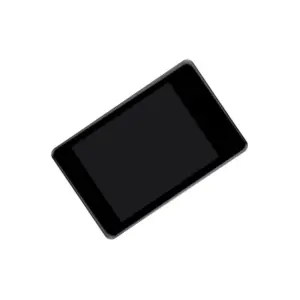
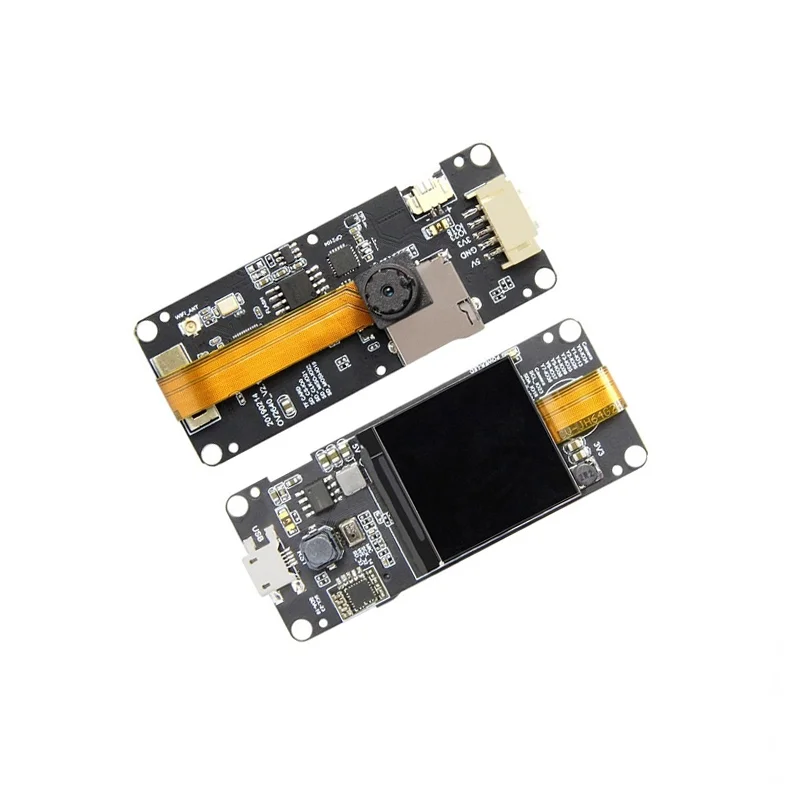
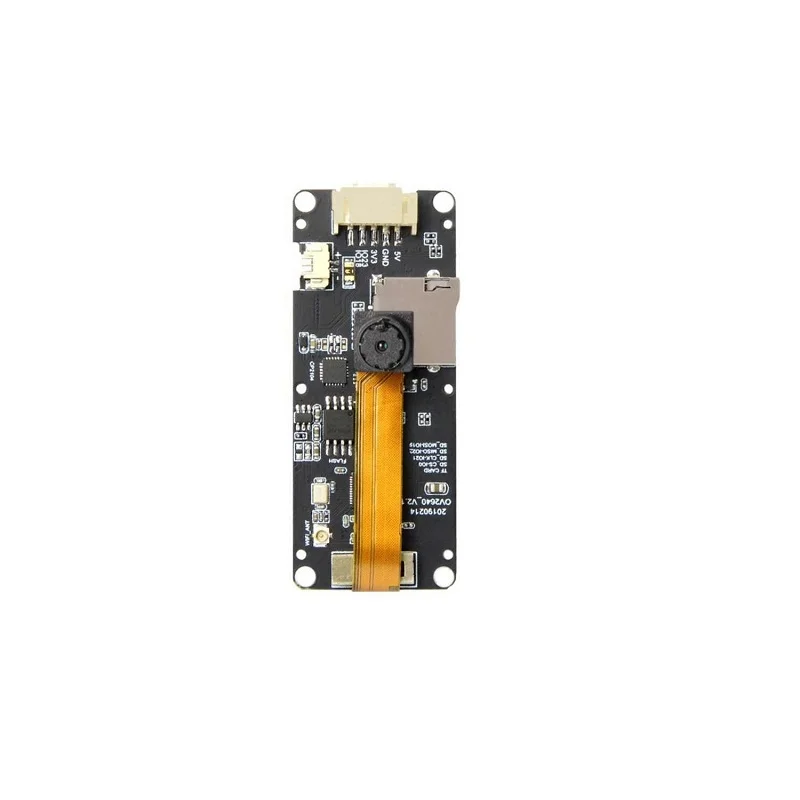
LilyGO T-Plus ESP32 Camera Module w/ 1.3-Inch IPS Display & OV2640

₹2,389.00 (Inclusive of all taxes)
Out of Stock

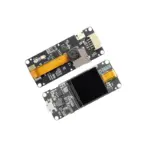
The LilyGO T-Plus is an ESP32-based development board integrating a 2MP OV2640 camera, a 1.3-inch IPS display, and an MPU6050 IMU, designed for Arduino IDE and MicroPython computer vision and motion-sensing projects powered via USB or 3.7V LiPo.

Features

  • ESP32-D0WDQ6 dual-core processor with 8MB external PSRAM for handling 1600×1200 image data and graphics.
  • Integrated 2MP OV2640 camera sensor with a flexible cable for rear-facing or extended mounting configurations.
  • 1.3-inch IPS display (ST7789 driver) for real-time video preview, sensor data, or UI elements without external monitors.
  • Onboard MPU6050 6-axis accelerometer/gyroscope enables motion tracking, gesture control, and IMU-aided applications.
  • CP2104 USB-to-serial bridge for stable firmware uploads and serial debugging via Arduino IDE or ESP-IDF.

Out of stock

Description

The LilyGO T-Plus merges a capable ESP32 microcontroller with a complete vision-sensing subsystem. Its dual-core 240MHz Xtensa LX6 processor, coupled with 8MB of external PSRAM, provides the necessary bandwidth to capture, buffer, and process frames from the OV2640 camera while driving the integrated IPS display. The module supports Wi-Fi and Bluetooth connectivity for wireless image transmission or remote control.

Power management is flexible, accepting 5V via USB or a 3.7V LiPo battery, with an operating voltage range of 2.3V to 3.6V for the core logic. The inclusion of a 40MHz crystal oscillator ensures stable timing for RF and camera operations. The board’s compact form factor and the camera’s extendable FPC cable offer versatility in enclosure design, making it suitable for portable or embedded vision applications where space is constrained.

Key Features

  • All-in-one ESP32 development platform with integrated camera, display, and motion sensor.
  • OV2640 sensor delivers 2-megapixel stills and VGA-resolution video for face detection or object recognition.
  • High-brightness 1.3-inch IPS display provides wide viewing angles for on-device monitoring.
  • MPU6050 IMU adds 3-axis acceleration and 3-axis gyroscope data for motion-based triggering or stabilization.
  • CP2104 USB bridge ensures reliable serial communication and fast firmware flashing.
  • Supports Arduino core for ESP32, ESP-IDF, and MicroPython for rapid prototyping.
  • Designed for low-power operation with deep sleep modes when powered by battery.
  • Extended camera FPC allows for flexible positioning within project enclosures.

Applications

  • Portable wireless camera for remote monitoring or security with live display.
  • Edge AI vision projects for object detection, barcode scanning, or face recognition.
  • Motion-activated IoT devices using the MPU6050 for gesture control or activity sensing.
  • DIY smart gadgets with on-screen interfaces, like handheld game consoles or sensor displays.
  • Educational platform for learning embedded systems, computer vision, and sensor fusion.

Technical Specifications

Microcontroller/SoCEspressif ESP32-D0WDQ6 (240MHz dual-core)
Wireless ProtocolsWi-Fi 802.11 b/g/n, Bluetooth 4.2
Frequency Range2.4–2.5GHz
RF Transmit PowerUp to 22 dBm
Supply Voltage5V USB or 3.7V LiPo (2.3–3.6V operating)
Operating Current~160 mA (typical)
InterfacesUSB-C (CP2104), Camera FPC, Display SPI, I2C (MPU6050)
Camera SensorOV2640 (2MP, 1600x1200)
Display1.3-inch IPS, ST7789 driver
IMUMPU6050 (6-axis)
External Memory8MB PSRAM
Operating Temperature-40°C to +85°C
Dimensions80mm x 50mm (L x W)

Frequently Asked Questions

How do I program the LilyGO T-Plus module using the Arduino IDE?

Install the ESP32 board support via Boards Manager using the Espressif repository URL. Select 'ESP32 Dev Module' as your target. Connect the board via USB, choose the correct CP2104 serial port, and upload your sketch. Ensure you have installed the required libraries for the camera (e.g., ESP32 Camera) and display (TFT_eSPI) with the proper configuration files for the OV2640 and ST7789.

What is the purpose of the external 8MB PSRAM on this board?

The 8MB of external PSRAM (Pseudo Static RAM) is essential for buffering high-resolution image frames from the OV2640 camera. It provides additional volatile memory beyond the ESP32's internal SRAM, preventing heap allocation failures during image capture and processing tasks, which is critical for stable operation in computer vision applications.

Can I power the module with a battery and what is the expected battery life?

Yes, you can power it via the onboard connector using a standard 3.7V LiPo battery. Battery life depends on usage mode. With Wi-Fi active and the camera/display running, current draw is around 160mA. Utilizing the ESP32's deep sleep mode between sensor readings or image captures can extend operation to days or weeks on a single charge.

How do I access the MPU6050 IMU sensor data in my code?

The MPU6050 is connected via the I2C bus. Use a library like 'Adafruit MPU6050' or 'MPU6050_light' in your Arduino sketch. Initialize the sensor with Wire.begin() on the default SDA and SCL pins (typically GPIO21 and GPIO22 for ESP32). The library will provide functions to read raw or filtered acceleration, gyroscope, and temperature values.

What is the maximum frame rate for the OV2640 camera on this board?

The achievable frame rate depends on resolution and processing load. At full 1600x1200 (2MP), the rate is typically below 10 FPS. For higher frame rates (e.g., 30 FPS), you must lower the resolution to VGA (640x480) or QVGA (320x240) in your camera configuration settings within the ESP32 camera library.

Package Includes

  • 1 x LilyGO T-Plus ESP32 Camera Module with 1.3-Inch Display & OV2640

Additional Information

Weight 0.03 kg
Dimensions 8 × 5 cm