SKU: IOWC-0542
📋 GST Invoice Available

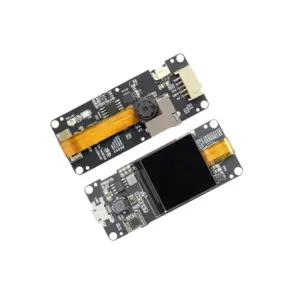
LilyGO T-Camera Plus ESP32 Camera Module w/ 1.3-Inch IPS Display

₹1,849.00 (Inclusive of all taxes)
Out of Stock

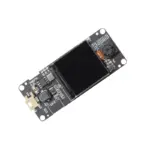
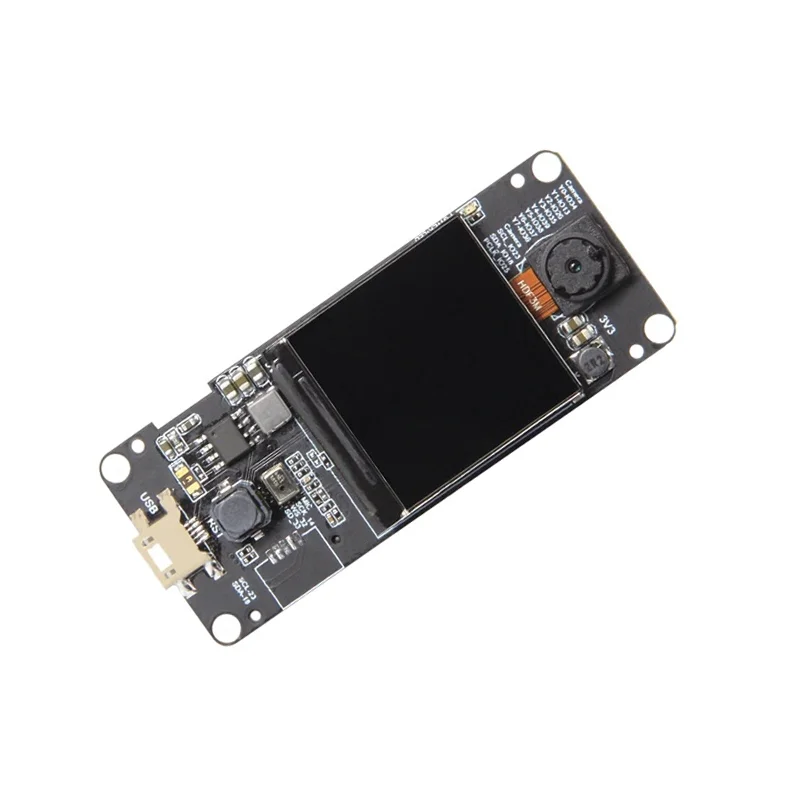
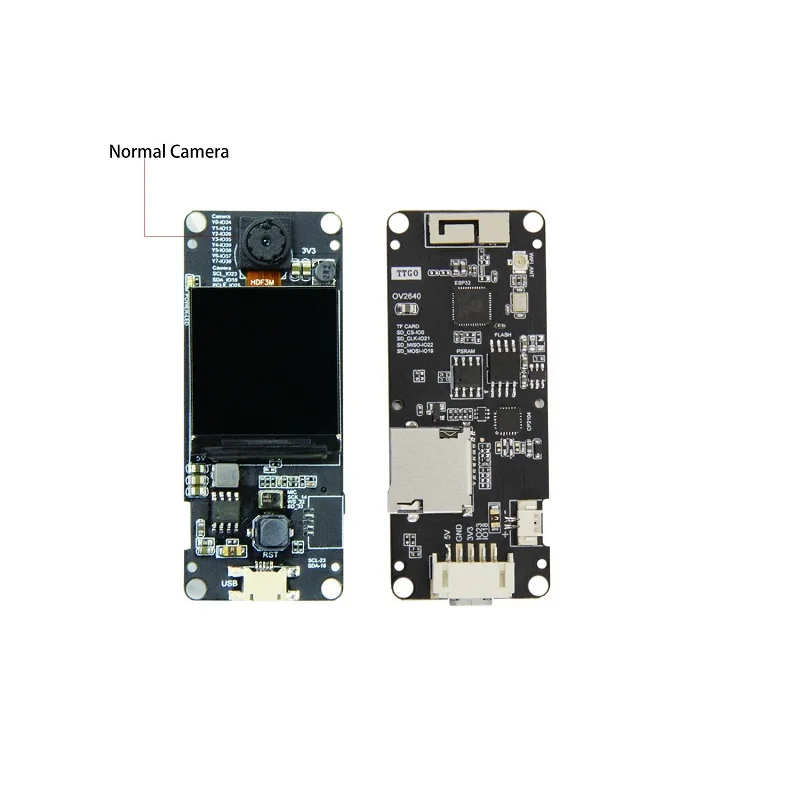
The LilyGO T-Camera Plus is an ESP32-based development board integrating a 2MP OV640 camera sensor and a 1.3-inch IPS display, designed for IoT computer vision projects compatible with Arduino IDE and ESP-IDF.

Features

  • ESP32-D0WDQ6 dual-core processor with Wi-Fi & Bluetooth 4.2 for wireless image streaming and control.
  • Integrated 2MP OV640 camera sensor with fisheye lens for wide-angle image capture in robotics and monitoring.
  • 1.3-inch IPS color display (ST7789 driver) for local image preview and device status without external monitors.
  • Onboard CP2104 USB-to-TTL converter for easy serial programming and debugging via micro-USB port.
  • Compact form factor (70x30mm) with support for a 3.7V LiPo battery, enabling portable, battery-powered vision applications.

Out of stock

Description

The LilyGO T-Camera Plus merges an ESP32 microcontroller, a 2-megapixel OV640 CMOS camera, and a 1.3-inch IPS display into a single, compact development board. Powered by the ESP32-D0WDQ6 chipset featuring dual-core 240MHz Xtensa LX6 processors, it provides robust processing for running computer vision algorithms and handling wireless connectivity via 2.4GHz Wi-Fi and Bluetooth 4.2 BR/EDR.

Its integrated design simplifies prototyping by eliminating external wiring for the camera and display. The board operates from a wide 2.3V to 3.6V logic range, with power typically supplied via the onboard micro-USB port (5V/1A) or an optional 3.7V lithium battery for field deployment. The CP2104 USB-to-serial bridge ensures reliable firmware uploads and serial communication with development environments like Arduino IDE or ESP-IDF.

Key Features

  • All-in-one ESP32 development platform with integrated camera and display for rapid IoT vision prototyping.
  • Wireless image transmission and remote control via built-in 2.4GHz Wi-Fi with up to 22dBm output power.
  • Local image preview and UI rendering on the integrated 1.3-inch IPS screen with ST7789 driver.
  • Supports battery operation with built-in charging circuit for portable and standalone applications.
  • Compact and lightweight design ideal for space-constrained projects like drones, robots, or smart sensors.
  • Direct compatibility with popular frameworks including Arduino, ESP-IDF, and MicroPython for flexible development.

Applications

  • Smart home security cameras and video doorbells with local display feedback.
  • DIY robotics and drone vision systems for object detection and navigation.
  • Portable IoT devices for environmental monitoring with visual data logging.
  • Educational tools for learning embedded systems, computer vision, and wireless IoT.
  • Prototyping edge AI and TinyML vision models on a compact, all-in-one board.

Technical Specifications

Microcontroller/SoCESP32-D0WDQ6 (Dual-core 240MHz Xtensa LX6)
Wireless ProtocolsWi-Fi 802.11 b/g/n, Bluetooth 4.2 BR/EDR
Frequency Range2.4–2.5 GHz
RF Transmit PowerUp to 22 dBm
Supply Voltage2.3–3.6V (Logic), USB 5V
Operating Current~160 mA (typical)
InterfacesMicro-USB (CP2104 UART), Camera Parallel Interface, SPI Display
Display1.3-inch IPS, ST7789 Driver
Camera SensorOV640, 2MP (1600x1200), Fisheye Lens
Operating Temperature-40°C to +85°C
Dimensions70 mm x 30 mm

Frequently Asked Questions

How do I program the LilyGO T-Camera Plus?

Connect the board via its micro-USB port to your PC. Install the ESP32 board package in the Arduino IDE or set up ESP-IDF. Select the correct COM port and upload your sketch. The onboard CP2104 chip handles USB-to-serial conversion. For camera and display examples, use the T-Camera Plus library from the LilyGO GitHub repository to initialize the OV640 sensor and ST7789 screen.

What is the power requirement and can it run on battery?

The core logic operates from 2.3V to 3.6V, typically supplied by the 5V USB input. The board supports an optional 3.7V lithium battery connected via its JST connector for portable use, with an integrated charging circuit. Average operating current is around 160mA, but this increases with wireless transmission and display activity. For extended battery life, utilize the ESP32's deep sleep modes between capture cycles.

How do I access the camera feed and display output?

Use the provided camera library to initialize the OV640 sensor over its parallel interface. Capture frames into a buffer. To display the image, use the ST7789 driver library to write the buffer to the IPS screen via SPI. For wireless streaming, implement a web server on the ESP32 to serve JPEG images over Wi-Fi. Example code typically includes functions for both local display and HTTP streaming to a browser.

Package Includes

  • 1 x LilyGO T-Camera Plus Camera Module

Additional Information

Weight 0.0104 kg
Dimensions 7 × 3 cm