SKU: SENS-2849
📋 GST Invoice Available

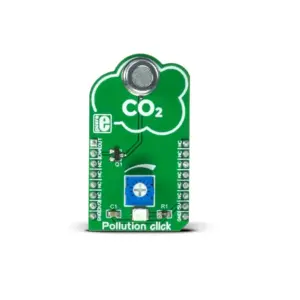
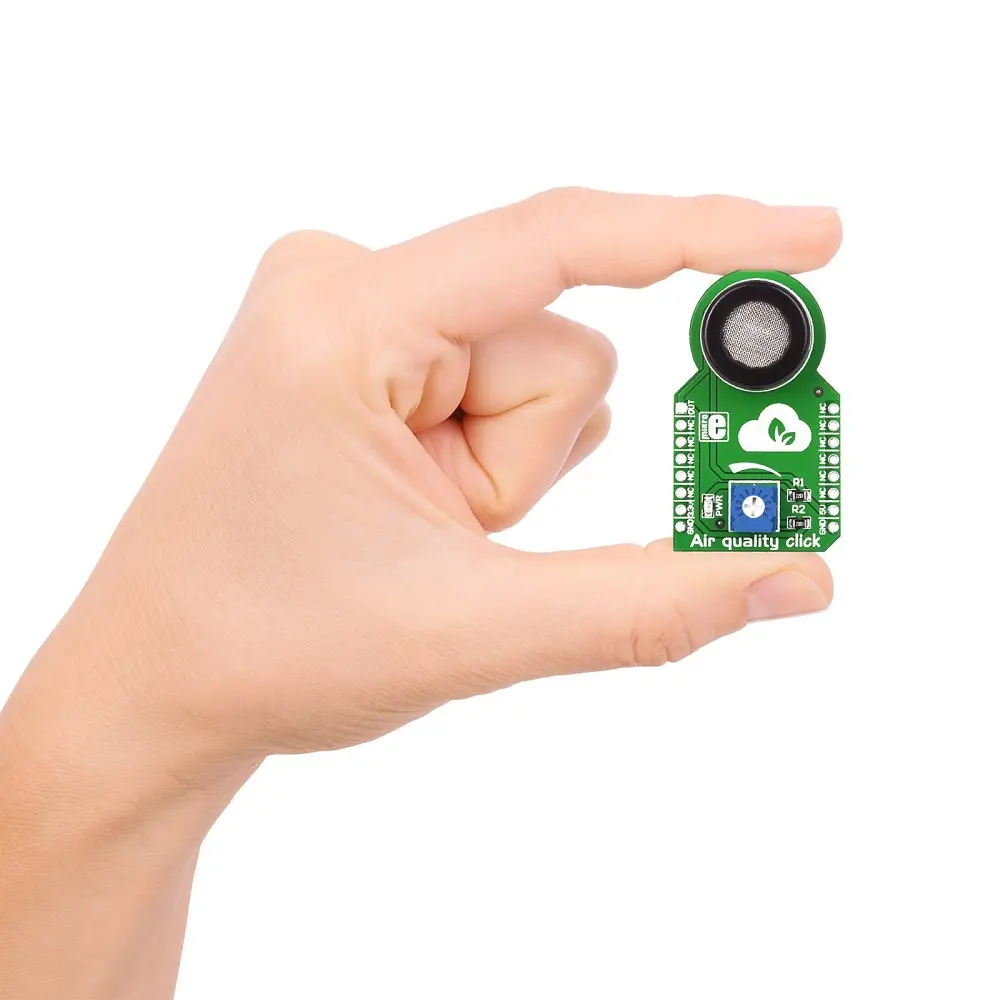
Mikroe Air Quality Click (Mikroe-1630) – MQ-135 Gas Sensor Board, Analog Output, Range: 10 to 1000ppm

₹1,659.00 (Inclusive of all taxes)
Out of Stock

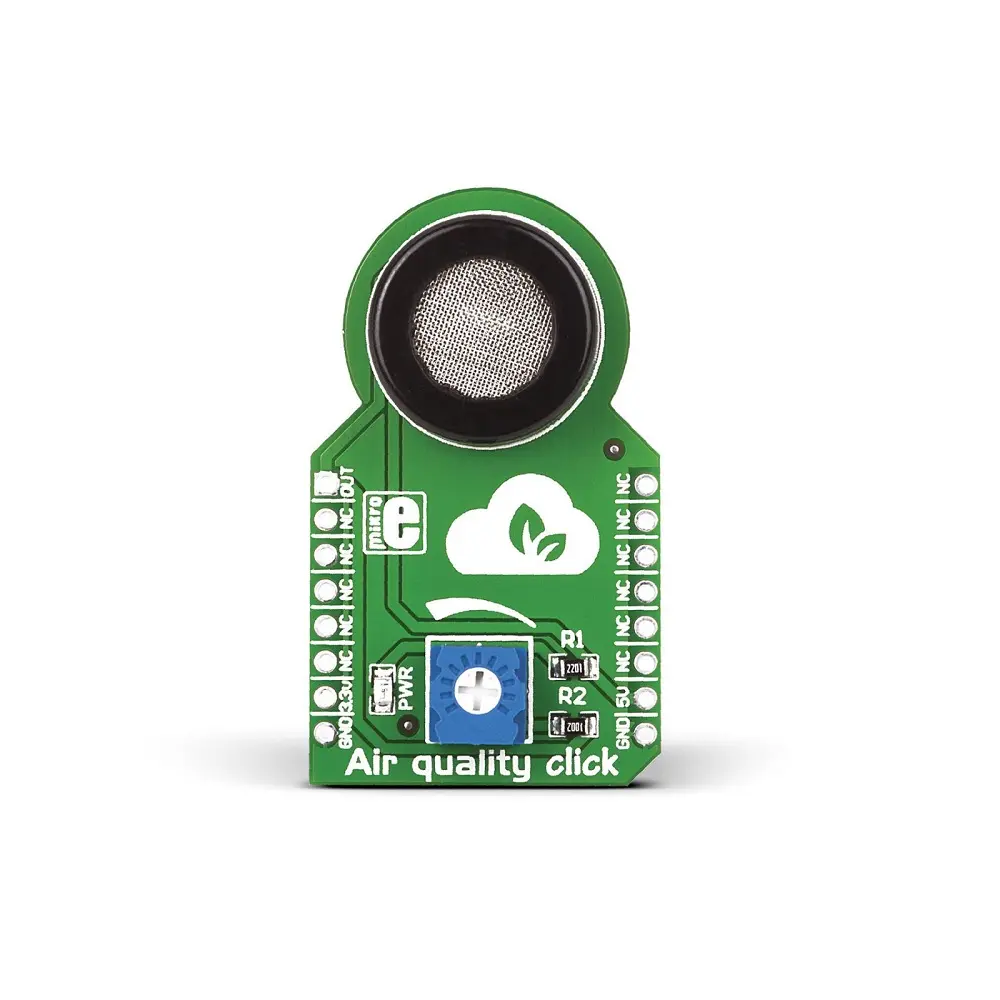
The Mikroe Air Quality Click (Mikroe-1630) is a mikroBUS-compatible sensor board featuring the MQ-135 gas sensor for detecting a wide range of air pollutants. It provides an analog output signal and is powered by a 3.3V or 5V supply, making it suitable for integration with microcontrollers like Arduino, Raspberry Pi, and STM32 platforms.

Features

  • Integrates the MQ-135 semiconductor gas sensor with a tin dioxide (SnO2) sensing layer.
  • Provides a single analog voltage output proportional to gas concentration for easy microcontroller ADC reading.
  • Features an onboard potentiometer for precise calibration of the sensor’s load resistance.
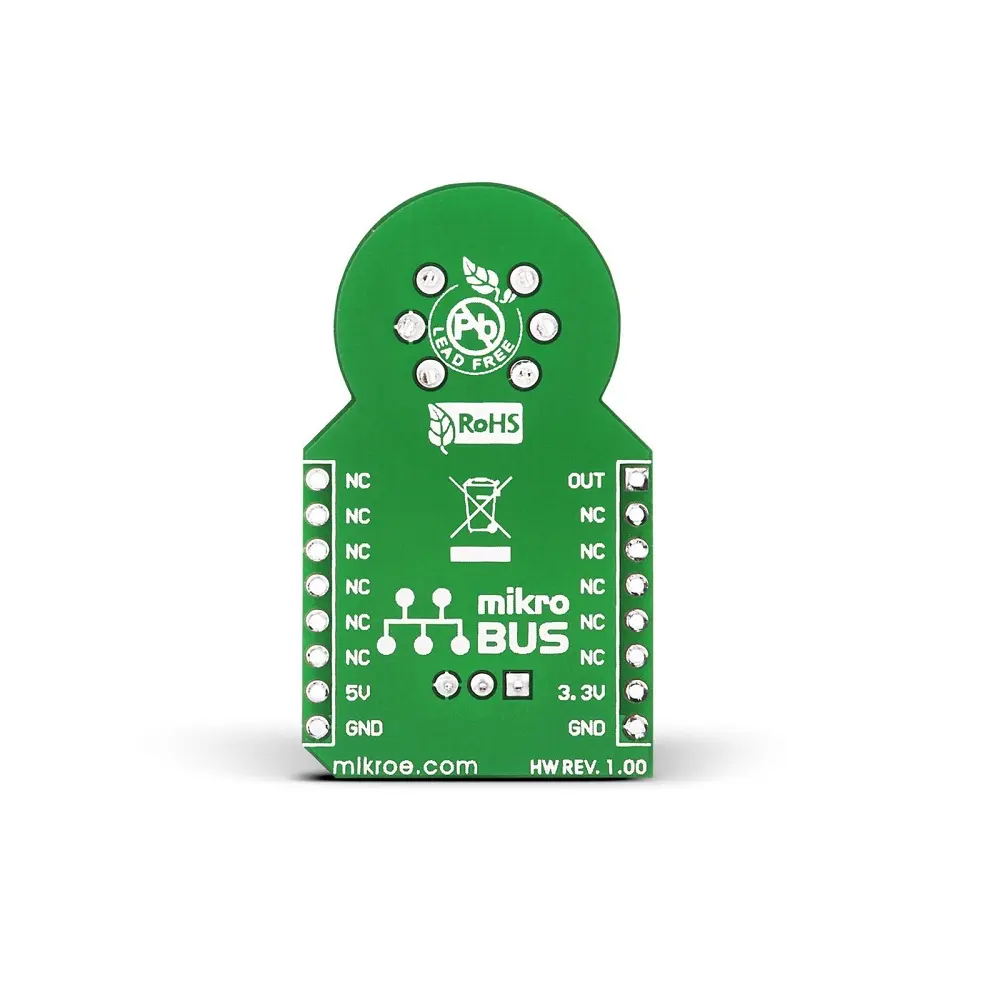
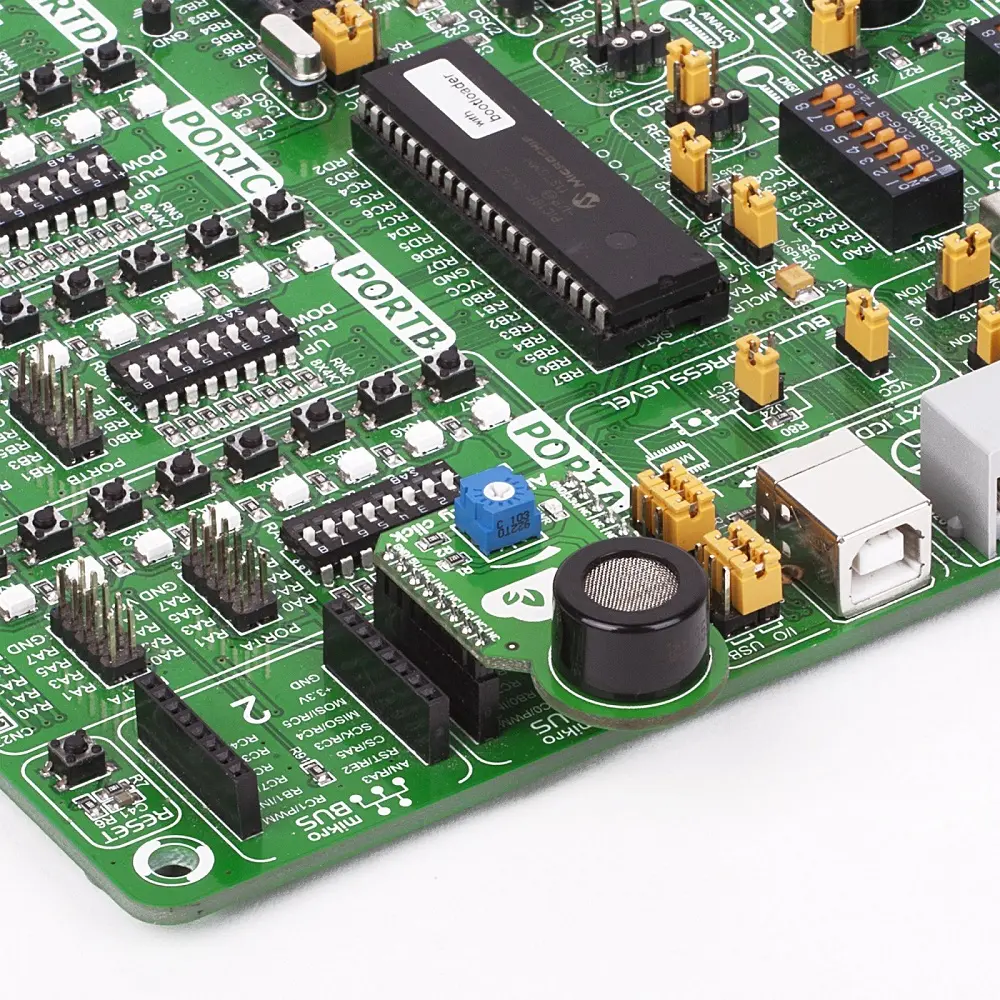
  • Designed for the mikroBUS standard (size M), ensuring plug-and-play compatibility with hundreds of host boards.
  • Dual power supply compatibility, operating from 3.3V or 5V DC sources.

Out of stock

Description

The Mikroe Air Quality Click utilizes the widely adopted MQ-135 gas sensor, which operates on the principle of chemiresistance. Its SnO2 sensing layer exhibits a decrease in electrical resistance in the presence of reducing gases like ammonia (NH3), nitrogen oxides (NOx), benzene, smoke, and CO2. The board conditions the sensor signal, providing a stable analog output that varies with gas concentration.

This Click board is engineered for reliable performance in indoor environmental monitoring. The inclusion of a calibration potentiometer allows users to fine-tune the sensor’s sensitivity for specific applications or to account for sensor aging. Its compact, standardized form factor simplifies prototyping and system integration within the mikroBUS ecosystem.

Key Features

  • High-Sensitivity MQ-135 Sensor: Detects a broad spectrum of gases impacting air quality, including NH3, NOx, benzene, smoke, and CO2.
  • Onboard Signal Conditioning: Provides a clean, ratiometric analog output signal ready for microcontroller ADC input.
  • User-Adjustable Calibration: Integrated potentiometer allows for optimization of load resistance to tailor sensitivity and baseline readings.
  • Standardized mikroBUS Interface: Guarantees mechanical and electrical compatibility with a vast range of development boards for rapid prototyping.
  • Dual Voltage Operation: Supports both 3.3V and 5V logic systems, offering flexibility in power supply design.
  • Compact M-Size Form Factor: Measures 42.9 x 25.4 mm, fitting standard mikroBUS sockets without requiring additional wiring for power and signal.

Applications

  • Indoor Air Quality (IAQ) monitoring systems for smart homes and office buildings.
  • Prototyping and educational kits for environmental sensing and IoT projects.
  • Ventilation control and HVAC system feedback sensors.
  • Portable air quality detectors and safety warning devices.

Technical Specifications

Manufacturer Part NumberMikroe-1630
Sensor ModelMQ-135
Sensing PrincipleTin Dioxide (SnO2) Semiconductor
Detection GasesAmmonia (NH3), Nitrogen Oxides (NOx), Benzene, Smoke, CO2
Detection Range10 - 1000 ppm (typical)
Output InterfaceAnalog Voltage
Operating Voltage3.3V to 5V DC
Board CompatibilitymikroBUS Standard
Board Size42.9 mm x 25.4 mm (M Size)
Key FeatureCalibration Potentiometer

Frequently Asked Questions

What gases can this Mikroe Click board detect?

The board uses an MQ-135 sensor, which is sensitive to a variety of gases that impact air quality. Its primary targets include ammonia (NH3), nitrogen oxides (NOx), benzene, smoke, and carbon dioxide (CO2). It provides a general air quality indicator rather than a precise measurement of a single gas.

How do I interface this sensor with my microcontroller?

The board provides a single analog voltage output. Connect the AN pin from the mikroBUS header to an Analog-to-Digital Converter (ADC) input pin on your microcontroller (e.g., Arduino, Raspberry Pi, STM32). The output voltage will vary with gas concentration, and you can read it using standard ADC libraries. The board also requires 5V (or 3.3V) and GND connections via the mikroBUS socket.

What is the purpose of the onboard potentiometer?

The potentiometer adjusts the load resistance of the sensor circuit, which is crucial for calibration. You can use it to set the sensor's baseline output voltage in clean air or to fine-tune its sensitivity for a specific target gas or application environment, ensuring more reliable and accurate readings.

Is this board compatible with 3.3V systems?

Yes, the board is designed for dual voltage operation. You can power it with either 3.3V or 5V DC. The analog output signal will be ratiometric to the supply voltage, meaning the output range scales with VCC. Ensure your microcontroller's ADC reference matches the supply voltage used for accurate measurements.

Package Includes

  • 1 x Mikroe Air Quality Click (Mikroe-1630) Board

Additional Information

Weight 0.07 kg
Dimensions 7 × 4 × 2 cm