SKU: SENS-2840
📋 GST Invoice Available

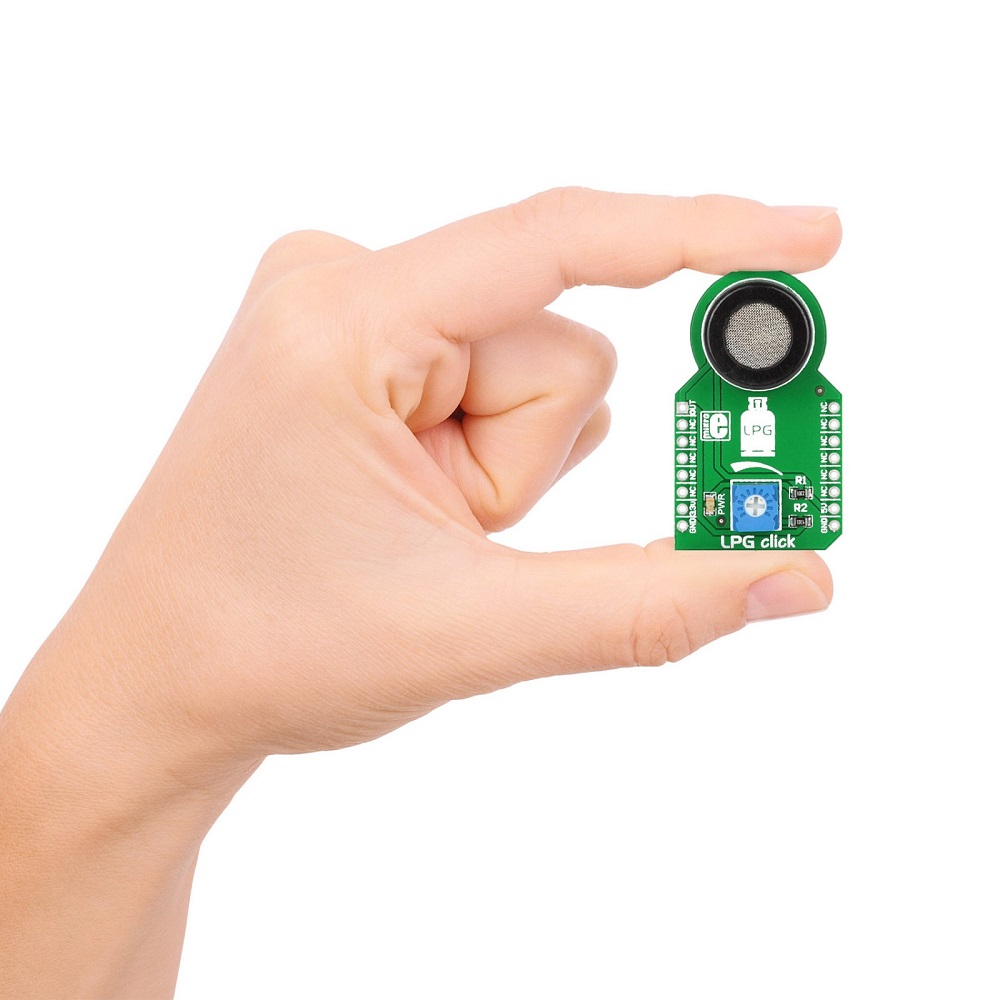
Mikroe LPG Click (Mikroe‑1587) – MQ‑5 LPG Gas Sensor Board, Analog, mikroBUS, Detection Range: 200~10,000 ppm

₹1,179.00 (Inclusive of all taxes)
Out of Stock

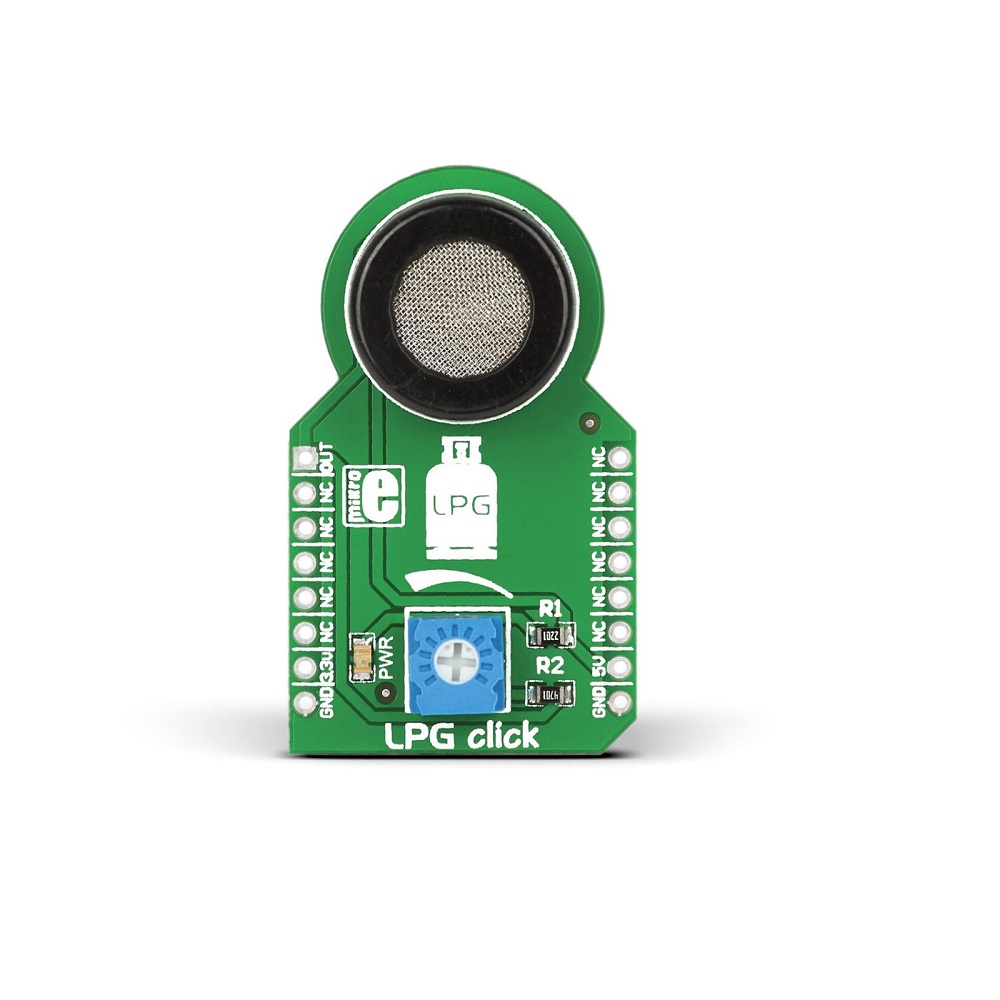
The Mikroe LPG Click (Mikroe‑1587) is a mikroBUS-compatible gas sensor board featuring the MQ-5 sensor for detecting liquefied petroleum gas (LPG) concentrations from 200 to 10,000 ppm. It provides an analog output signal and is designed for easy integration with 3.3V or 5V microcontroller platforms like STM32, PIC, and Arduino via adapter shields.

Features

  • Features the MQ-5 LPG gas sensor with a 200–10,000 ppm detection range.
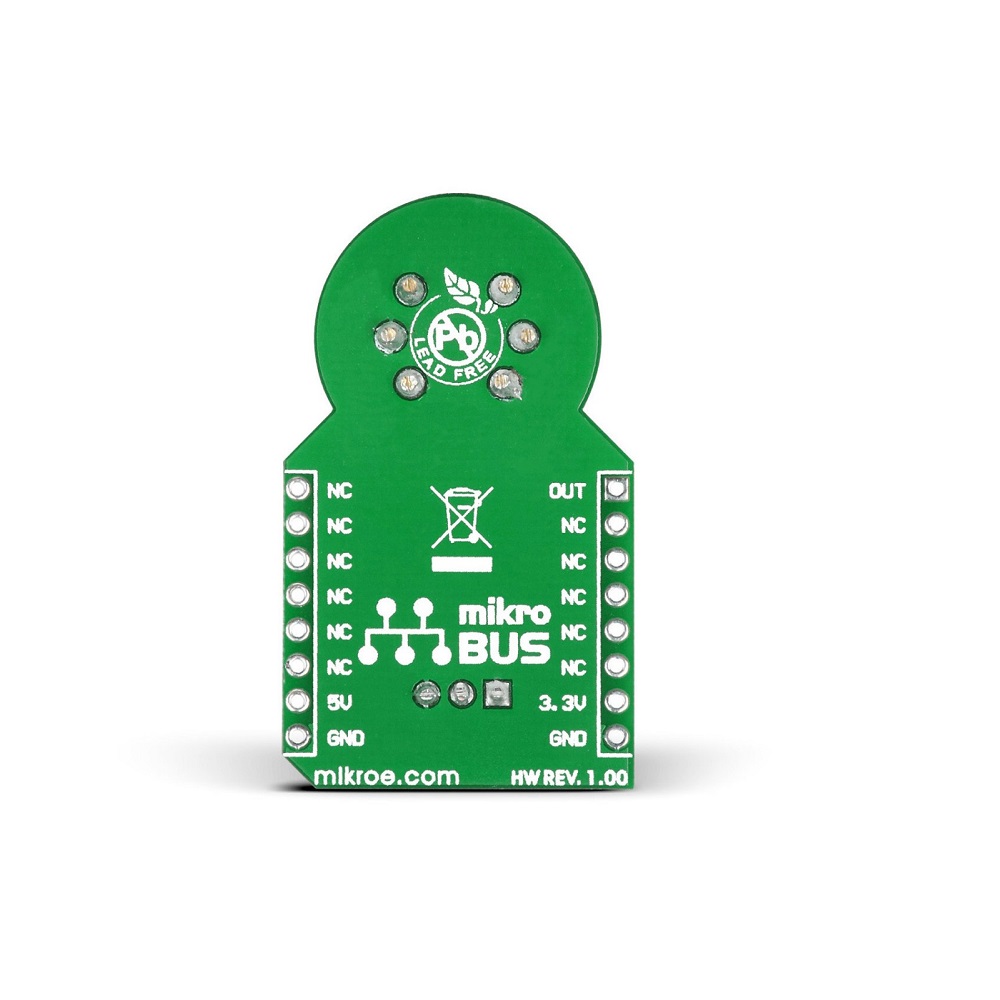
  • Provides analog voltage output via the mikroBUS AN (OUT) line for simple ADC interfacing.
  • Includes an onboard potentiometer for adjusting sensor load resistance and sensitivity calibration.
  • Standard Click board form factor (42.9 x 25.4 mm) for plug-and-play compatibility with mikroBUS host boards.
  • Supports dual power input of 3.3V or 5V DC for flexible system integration.

Out of stock

Description

The LPG Click board utilizes a tin dioxide (SnO2) semiconductor sensing element. In clean air, the sensor’s conductivity is low. When LPG is present, the gas interacts with the sensing surface, causing a measurable increase in conductivity proportional to the gas concentration. This change is converted into an analog voltage signal for processing by a host microcontroller.

The module requires a preheating period for the sensor element to reach optimal operating temperature and stable baseline readings, typically up to 24 hours after initial power-up. The onboard potentiometer allows fine-tuning of the load resistance to calibrate the sensor’s response for specific environmental conditions or alarm thresholds, ensuring reliable performance in safety-critical monitoring applications.

Key Features

  • High-sensitivity MQ-5 gas sensor optimized for LPG (liquefied petroleum gas) detection.
  • Analog output interface for straightforward connection to microcontroller ADC channels.
  • Onboard calibration potentiometer for adjusting sensor sensitivity and output range.
  • Dual-voltage operation compatible with both 3.3V and 5V logic systems.
  • Standardized mikroBUS form factor ensures mechanical and electrical compatibility with a wide range of host development boards.
  • Tin dioxide (SnO2) semiconductor sensing element provides stable and repeatable responses.
  • Pre-heated sensor design requires a burn-in period for optimal accuracy and long-term stability.

Applications

  • Residential and commercial LPG leak detection and safety alarm systems.
  • Portable gas detectors for field safety and environmental monitoring.
  • Industrial safety monitoring in workshops, kitchens, and boiler rooms using LPG.
  • Integration into smart home and IoT platforms for automated gas hazard alerts.
  • Educational projects demonstrating gas sensing principles and analog signal processing.

Technical Specifications

Manufacturer Part NumberMikroe-1587
Sensor TypeLPG Gas Sensor (MQ-5)
Sensing PrincipleTin Dioxide (SnO2) Semiconductor
Detection Range200 – 10,000 ppm LPG
Output InterfaceAnalog Voltage
Host InterfacemikroBUS (AN line)
Input Voltage3.3V, 5V DC
Board Dimensions42.9 x 25.4 mm
CalibrationOnboard Potentiometer
Preheat TimeUp to 24 hours (recommended for calibration)

Frequently Asked Questions

What is the operating voltage range for the LPG Click board?

The LPG Click board is designed to operate from a 3.3V or 5V DC power supply. You must select the appropriate voltage on your host mikroBUS carrier board. The sensor itself is powered through the Click board's regulation circuitry.

How do I interface with the sensor and read its output?

The board provides an analog voltage output on the AN (OUT) pin of the mikroBUS connector. Connect this pin to an ADC input on your microcontroller (e.g., STM32, PIC, Arduino via shield). The output voltage varies with LPG concentration, which your code can correlate to ppm values after calibration.

Is calibration required, and how is it performed?

Yes, calibration is recommended for accurate readings. The board includes a potentiometer to adjust the sensor's load resistance, which sets the sensitivity and output range. For precise calibration, the sensor requires a 24-hour preheat period in the target environment to stabilize, after which the output in clean air and a known gas concentration can be used to set thresholds.

What gases does the MQ-5 sensor detect?

The MQ-5 sensor is primarily sensitive to Liquefied Petroleum Gas (LPG), which includes propane and butane. It may also show cross-sensitivity to other combustible gases like natural gas (methane) and hydrogen, but its calibration is optimized for LPG. Always refer to the sensor datasheet for specific sensitivity curves.

Is this Click board compatible with Arduino?

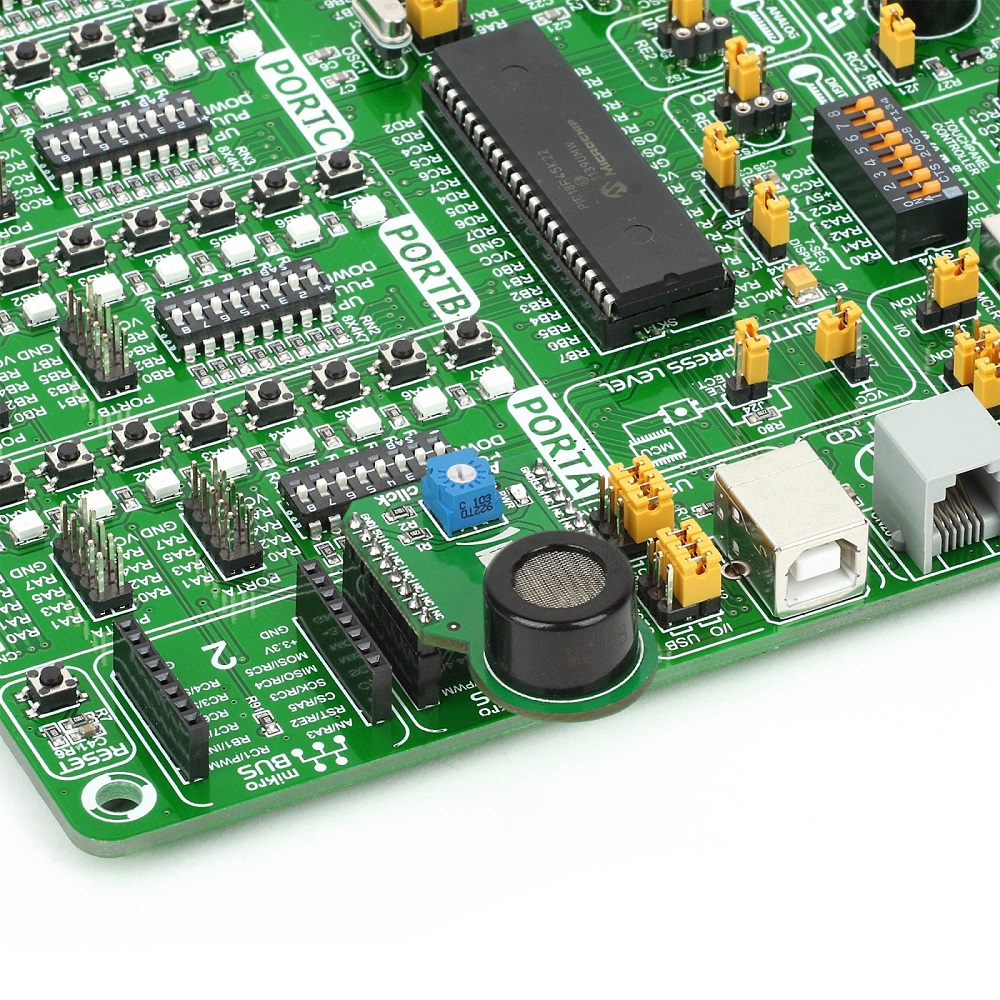
Yes, but not directly. The LPG Click uses the mikroBUS form factor. To use it with an Arduino, you need a mikroBUS shield or carrier board that converts the interface. Several adapters exist that provide mikroBUS sockets and break out the analog and power lines for connection to Arduino pins.

Package Includes

  • 1 x Mikroe LPG Click Board (Mikroe-1587)

Additional Information

Weight 0.05 kg
Dimensions 6 × 4 × 3 cm