SKU: IOWC-1614
📋 GST Invoice Available

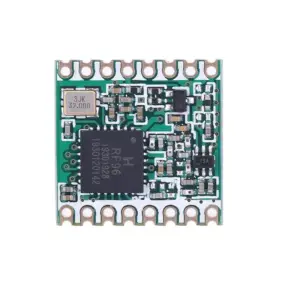
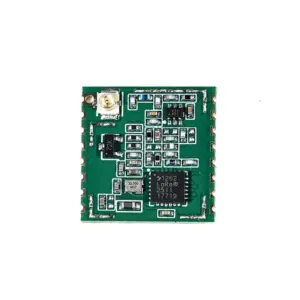
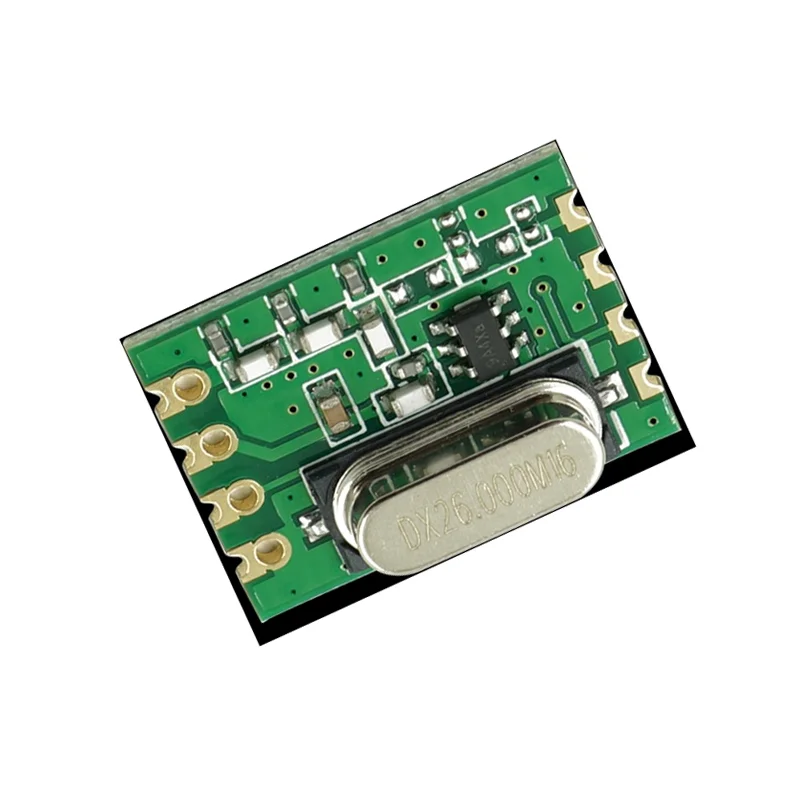
HopeRF RFM119W-915S1 Sub-1GHz FSK/OOK Transmitter Module

₹129.00 (Inclusive of all taxes)
Out of Stock

The HopeRF RFM119W-915S1 is a single-chip (G)FSK/OOK transmitter module for 240-960 MHz wireless applications, offering programmable features via a two-wire interface (TWI) or embedded RFPDK for simplified development.

Features

  • Wideband programmable transmitter covering 240 to 960 MHz frequency range for global ISM band flexibility.
  • Supports FSK, GFSK, and OOK modulation with configurable deviation from 1.0 to 200 kHz for optimized data rates.
  • Ultra-low power consumption with 27.6 mA TX current at +10 dBm and a deep sleep current of only 20 nA.
  • Simple data transmission control via DATA pin level detection or direct TWI command for embedded integration.
  • Embedded EEPROM and easy development with HopeRF’s RFPDK, enabling all-feature programmability.

Out of stock

Description

The RFM119W-915S1 from HopeRF is a high-performance, flexible, and cost-effective single-chip transmitter designed for a broad spectrum of sub-1GHz wireless applications. Part of the Next Gen RFTM family, it simplifies wireless data transmission by initiating on a DATA pin level change and stopping via a timed low signal or a direct two-wire interface command.

Engineered for low-power operation, the module operates from a 1.8V to 3.6V supply, drawing 27.6 mA during transmission at +10 dBm output power while leaking a mere 20 nA in sleep state. Its architecture supports robust RF links when paired with compatible receivers like the CMT2219A, making it ideal for reliable, low-data-rate telemetry.

Key Features

  • Single-chip (G)FSK and OOK transmitter for 240-960 MHz ISM bands.
  • All features programmable via two-wire interface (TWI) or embedded RFPDK for rapid development.
  • Embedded EEPROM for storing configuration parameters and firmware.
  • Ultra-low deep sleep current (20 nA) for battery-powered, always-on sensing applications.
  • Simple transmission control logic triggered by DATA pin or direct TWI command.
  • FCC and ETSI compliant for regulatory approval in commercial deployments.
  • RoHS compliant, lead-free construction for environmental safety.

Applications

  • Low-cost consumer electronics and wireless remote controls.
  • Home and building automation for lighting, fan, and climate control.
  • Industrial monitoring, telemetry, and control systems (IIoT).
  • Wireless alarm, security systems, and remote keyless entry (RKE).
  • Infrared transmitter replacements for longer-range wireless communication.

Technical Specifications

Item TypeRF Module
Model NumberRFM119W-915S1
Operating Frequency915 MHz (Programmable 240-960 MHz)
ModulationFSK, GFSK, OOK
Frequency Deviation1.0 to 200 kHz
Output Power Range-10 to +13 dBm
Supply Voltage1.8 V to 3.6 V DC
Transmit Current27.6 mA (FSK @ 868.35 MHz, +10 dBm)
Sleep Current< 20 nA
InterfaceTwo-Wire Interface (TWI), DATA Pin
ComplianceFCC, ETSI, RoHS
Dimensions (Shipping)5 × 4 × 1 cm

Frequently Asked Questions

How do I program the RFM119W-915S1 module's operating parameters?

The module can be configured in two primary ways. First, you can use the two-wire interface (TWI, similar to I2C) to directly write to its internal configuration registers, setting frequency, output power, and modulation. Second, HopeRF provides the RFPDK (RF Protocol Development Kit), which offers a higher-level, simplified programming environment for setting all features, including embedded EEPROM programming for persistent configuration storage across power cycles.

What is the typical transmission control flow using the DATA pin?

Transmission is automatically controlled by the state of the DATA pin. A transmission sequence begins as soon as a valid logic level transition (high-to-low or low-to-high) is detected on the pin. The transmission will then continue until one of two conditions is met: the DATA pin is held at a logic low level for a pre-configured duration (time window), or a stop command is issued via the two-wire interface (TWI). This allows for simple, pin-driven operation without constant MCU intervention.

What power supply considerations are needed for reliable operation?

The module requires a stable DC supply voltage between 1.8V and 3.6V. Ensure your power source can provide brief peaks of up to approximately 30mA during transmission at higher output power levels (e.g., +10 dBm). For battery-powered designs, leverage the module's ultra-low 20 nA sleep current by putting it into deep sleep mode via TWI commands when not actively transmitting, dramatically extending operational life.

Package Includes

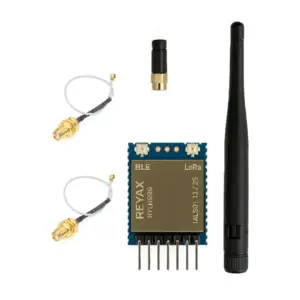
  • 1 x HopeRF RFM119W-915S1 Transmitter Module

Additional Information

Weight 0.01 kg
Dimensions 4 × 5 × 1 cm