SKU: IOWC-1673
📋 GST Invoice Available

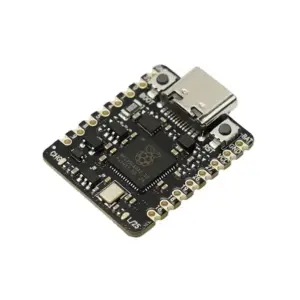
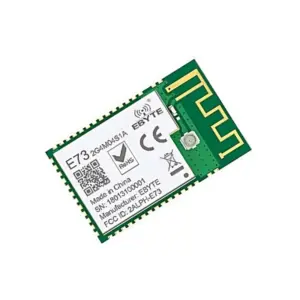
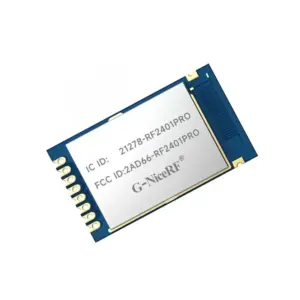
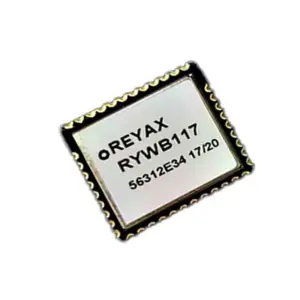
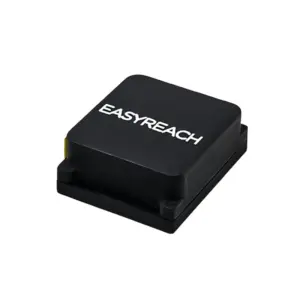
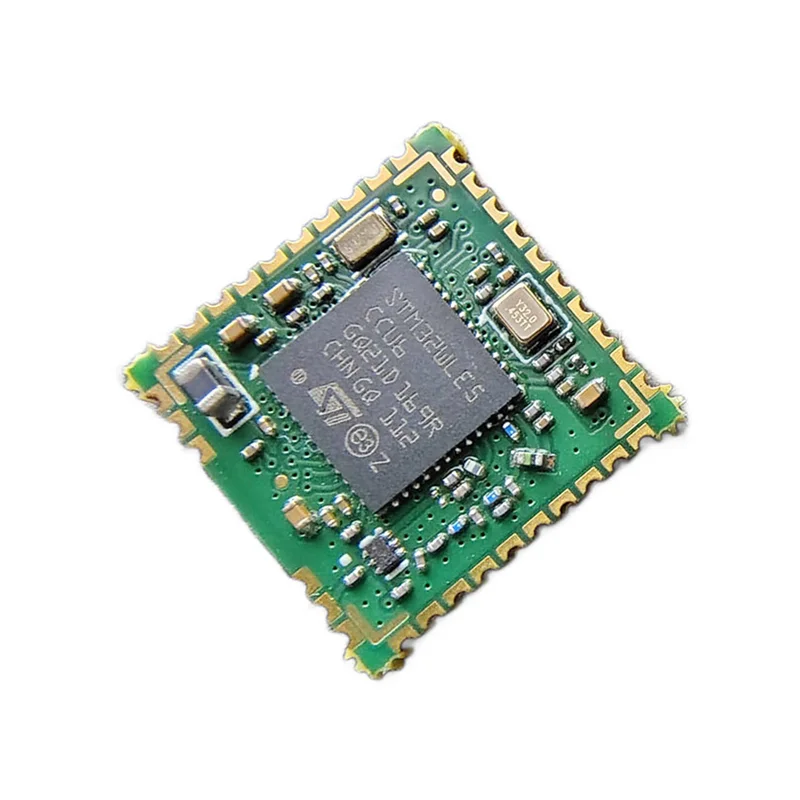
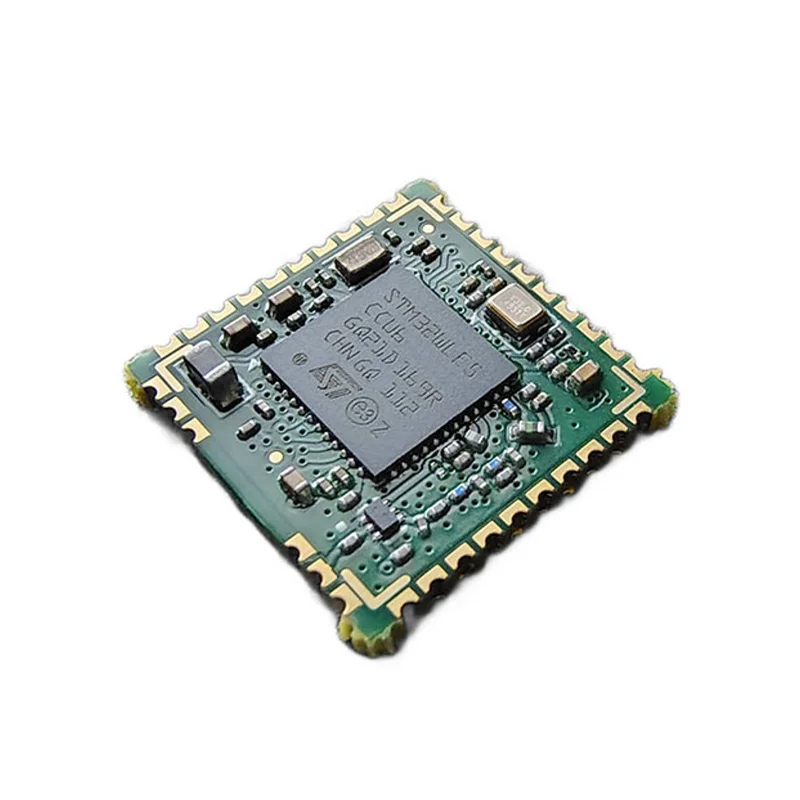
Macnman MAC32WLE5 LoRaWAN Module STM32WL 868/915MHz

₹878.00 (Inclusive of all taxes)
Out of Stock

The Macnman MAC32WLE5 is a compact LoRaWAN module integrating an STM32WL microcontroller with a sub-GHz LoRa transceiver, designed for ultra-low-power, long-range IoT deployments on 868/915 MHz ISM bands.

Features

  • Powered by STM32WL MCU with integrated LoRa transceiver for a complete SoC solution.
  • Dual-band 868/915 MHz operation with up to 23 dBm output power and -148 dBm sensitivity for long-range links.
  • Supports LoRaWAN protocol (OTAA/ABP) and direct P2P communication for flexible network topologies.
  • Ultra-low 2.1 µA standby current enables multi-year battery life in remote sensing applications.
  • Compact 15×15 mm form factor is ideal for space-constrained embedded IoT and industrial telemetry systems.

Out of stock

Description

The Macnman MAC32WLE5 LoRaWAN Module is a fully integrated wireless node built around the STM32WL series microcontroller, which combines an Arm Cortex-M4 core with a Semtech SX126x-compatible sub-GHz LoRa transceiver. This monolithic architecture simplifies design by eliminating external RF components, reducing board space and BOM cost. It operates across the global 868 MHz and 915 MHz ISM bands, providing developers with regional flexibility.

Engineered for extreme power efficiency, the module features advanced sleep modes, including in-air wake-up capability, achieving a standby current of just 2.1 µA. This makes it suitable for battery-powered applications requiring years of autonomous operation, such as environmental sensors and asset trackers. The robust RF front-end delivers adjustable output power up to 23 dBm and a receiver sensitivity of -148 dBm, ensuring reliable communication over distances exceeding 15 km in clear line-of-sight conditions.

Key Features

  • Integrated STM32WL MCU with Arm Cortex-M4 core and Semtech SX126x-compatible LoRa radio.
  • Global frequency support for 868 MHz (EU) and 915 MHz (NA) ISM bands.
  • High-performance RF with configurable output power (5 to 23 dBm) and excellent receiver sensitivity (-148 dBm).
  • Ultra-low power architecture featuring 2.1 µA deep sleep current and in-air wake-up for battery longevity.
  • Full LoRaWAN 1.0.3 protocol stack support with both OTAA (Over-The-Air Activation) and ABP (Activation By Personalization).
  • Also supports raw LoRa modulation for proprietary point-to-point (P2P) or mesh network implementations.
  • Compact, surface-mount module (15x15 mm) with castellated edges for easy PCB integration.
  • Designed for harsh environments, suitable for industrial IoT, smart metering, and remote telemetry.

Applications

  • Smart Agriculture: Soil moisture monitoring, livestock tracking, and automated irrigation control.
  • Industrial IoT (IIoT): Remote equipment monitoring, predictive maintenance sensors, and tank level telemetry.
  • Smart Cities: Waste management bin sensors, smart parking, and environmental noise/air quality monitoring.
  • Utilities & Metering: Automated meter reading (AMR) for water, gas, and electricity.
  • Asset Tracking: Long-range logistics tracking for containers, pallets, and high-value goods.

Technical Specifications

Microcontroller/SoCSTM32WL Series (Arm Cortex-M4)
Wireless ProtocolsLoRa, LoRaWAN
Frequency Range868 MHz, 915 MHz
RF Transmit Power5 dBm to 23 dBm (Adjustable)
Receiver Sensitivity-148 dBm
Supply VoltageNot Specified
Operating Current (Standby)2.1 µA
InterfacesUART, SPI, I2C, GPIO (via MCU)
Antenna ConnectorNot Specified (PCB antenna or external via pad)
Operating TemperatureNot Specified
Dimensions15 mm x 15 mm

Frequently Asked Questions

What development tools and software are required to program the MAC32WLE5 module?

You can develop firmware using STM32CubeIDE or STM32CubeMX with the STM32WL HAL libraries provided by STMicroelectronics. The LoRaWAN stack (e.g., LoRaMac-node) can be integrated into your project. For prototyping, you may use an ST-LINK/V2 programmer/debugger to flash the code via the module's SWD interface. Configuration for frequency band, output power, and LoRaWAN parameters (DevEUI, AppKey) is done within your application code.

How do I configure the module for LoRaWAN network joining (OTAA vs. ABP)?

For Over-The-Air Activation (OTAA), you must program the module with your unique DevEUI, AppEUI, and AppKey, typically provided by your LoRaWAN network server (like The Things Network or ChirpStack). The module will then perform a join request. For Activation By Personalization (ABP), you directly configure the device address (DevAddr) and session keys (NwkSKey, AppSKey). ABP is simpler but less secure, as keys are static. The choice depends on your network server setup and security requirements.

What antenna should I use and how is it connected to the MAC32WLE5?

You need a sub-GHz antenna tuned for either 868 MHz or 915 MHz, depending on your region. The module likely uses a pad for a PCB trace antenna or has provisions for an external antenna via a matching network. Consult the module's datasheet for the exact RF output pin (typically RF_IO) and the recommended matching component values (inductors, capacitors). A properly matched 50-ohm antenna, such as a whip or dipole, is crucial for achieving the specified RF performance and range.

What is the typical power supply requirement and how do I minimize current consumption?

While the exact voltage range isn't specified, STM32WL typically operates from 1.8V to 3.6V. Use a stable LDO regulator for battery-powered designs. To achieve the ultra-low 2.1 µA standby current, your firmware must put the MCU into Stop 2 or Standby mode and configure the LoRa radio into deep sleep. Utilize the module's internal low-power timers or external interrupts (like the in-air wake-up feature) to periodically activate, transmit data, and return to sleep, maximizing battery life.

Package Includes

  • 1 x Macnman MAC32WLE5 LoRaWAN Module

Additional Information

Weight 0.002 kg
Dimensions 1.5 × 1.5 cm