SKU: IOWC-1627
📋 GST Invoice Available

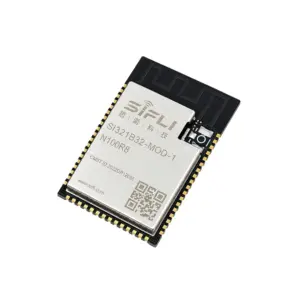
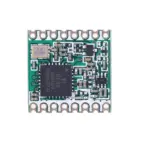
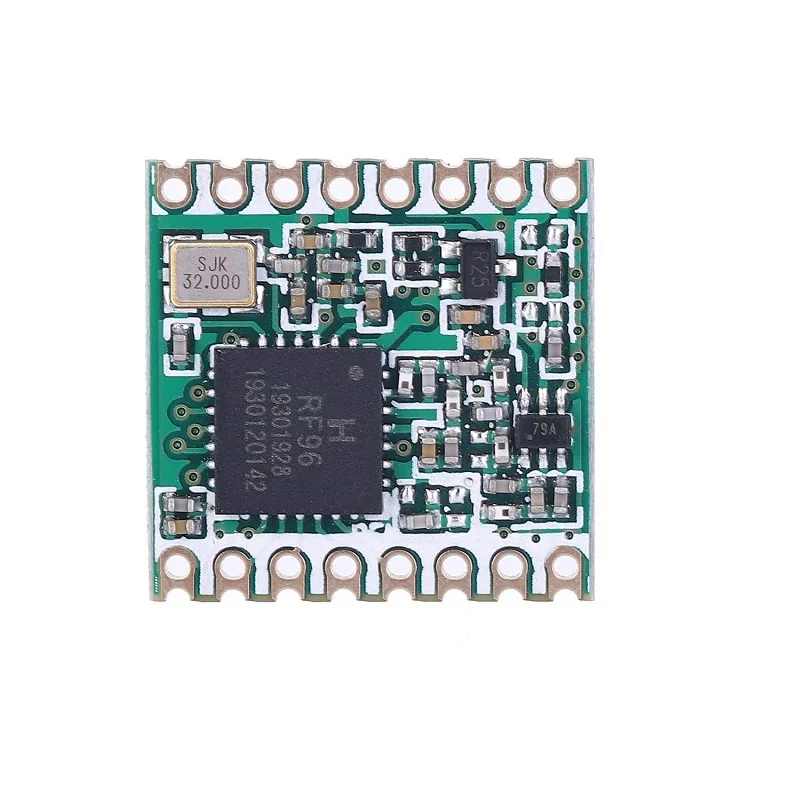
RFM95W LoRa Transceiver Module, 915MHz

₹639.00 (Inclusive of all taxes)
Out of Stock

The RFM95W is a LoRa transceiver module operating at 915MHz, integrating Semtech’s long-range modem for ultra-low power, spread spectrum communication ideal for IoT sensor nodes and LPWAN gateways.

Features

  • Ultra-long range LoRa modem with a maximum link budget of 168 dB for robust communication over kilometers.
  • High sensitivity down to -148 dBm combined with a +20 dBm power amplifier for superior signal penetration and interference immunity.
  • Extremely low power consumption with 10.3 mA RX current and 200 nA register retention sleep mode for battery-operated designs.
  • Supports multiple modulations including LoRa, FSK, GFSK, MSK, GMSK, and OOK with programmable bit rates up to 300 kbps.
  • Compact 16x16x2 mm form factor with a fully integrated frequency synthesizer, enabling easy integration into space-constrained IoT devices.

Out of stock

Description

The RFM95W transceiver module leverages Semtech’s patented LoRa modulation to deliver exceptional range and interference resistance while minimizing power draw, making it a cornerstone for long-range IoT networks. Its high-performance RF front end offers excellent blocking immunity and a programmable bit rate, providing flexibility for various data throughput requirements.

Engineered for low-power operation, the module features minimal receive and sleep currents, which are critical for extending battery life in remote telemetry applications like smart agriculture, asset tracking, and environmental monitoring. The integrated synthesizer and support for multiple modulation schemes allow developers to tailor the communication parameters to their specific network architecture and regional frequency regulations.

Key Features

  • LoRa long-range spread spectrum modem for ultra-reliable communication.
  • Industry-leading +20 dBm RF output power for maximum transmission range.
  • High receiver sensitivity down to -148 dBm for capturing weak signals.
  • Extremely low current consumption in both active receive and sleep modes.
  • Supports FSK, GFSK, MSK, GMSK, LoRa, and OOK modulation for design flexibility.
  • Built-in bit synchronizer for precise clock recovery in noisy environments.
  • Robust front-end with excellent immunity to in-band blocking signals.
  • Fully integrated frequency synthesizer with fine 61 Hz resolution.

Applications

  • Long-range sensor networks for smart agriculture (soil moisture, weather stations).
  • Industrial IoT (IIoT) telemetry and remote equipment monitoring.
  • Asset tracking and logistics management across large areas.
  • Smart city applications like waste management, parking sensors, and street lighting.
  • Home automation and security systems requiring extended wireless range.

Technical Specifications

Wireless ProtocolLoRa, FSK, GFSK, MSK, GMSK, OOK
Operating Frequency915 MHz
RF Output PowerUp to +20 dBm (100 mW)
Receiver SensitivityDown to -148 dBm
Maximum Link Budget168 dB
Bit RateProgrammable up to 300 kbps
Supply Voltage3 V
Operating Current (RX)10.3 mA
Sleep Current200 nA (register retention)
Operating Temperature-20°C to +70°C
Dimensions16 x 16 x 2 mm

Frequently Asked Questions

What microcontroller interfaces are compatible with the RFM95W module?

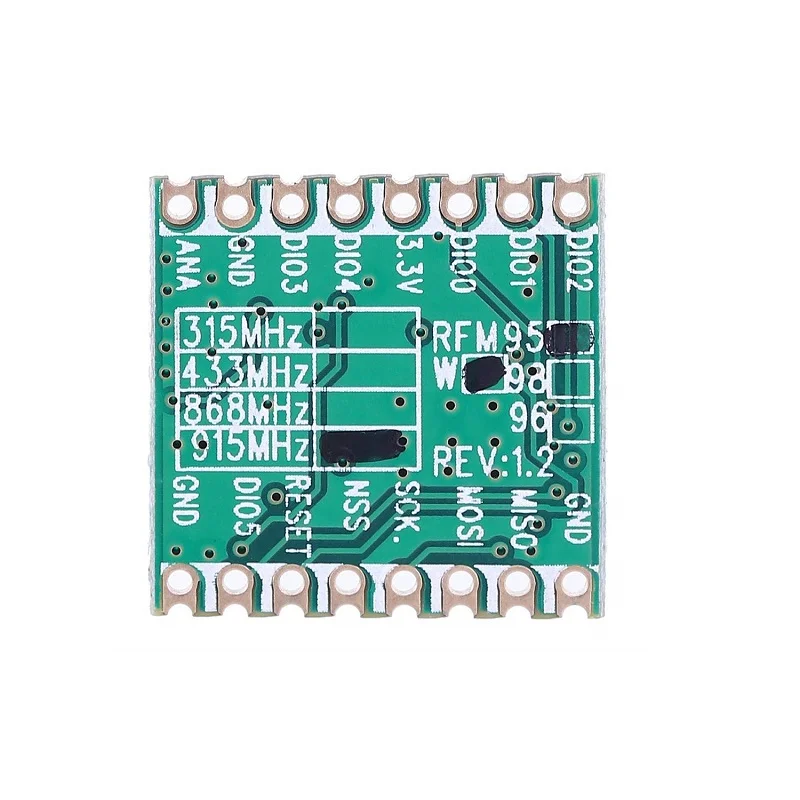
The RFM95W communicates via SPI interface, making it directly compatible with popular microcontrollers like Arduino (using the RadioHead or LoRa libraries), ESP32, STM32, and Raspberry Pi. You will need to connect the module's SCK, MISO, MOSI, NSS, and DIO0 pins to your MCU's corresponding SPI and GPIO pins. The library abstracts the low-level register configurations, allowing you to focus on sending and receiving packets over LoRa or FSK modulation.

How do I configure the RFM95W for LoRaWAN network operation?

To use the RFM95W with a LoRaWAN network like The Things Network (TTN), you must flash a compatible firmware stack such as LMIC or Arduino-LMIC onto your host microcontroller. This firmware handles the LoRaWAN MAC layer, including OTAA/ABP activation, adaptive data rate (ADR), and duty cycle management. You then configure the library with your device's AppEUI, DevEUI, and AppKey. The RFM95W itself acts as the physical radio, which the firmware controls via SPI to set frequency, spreading factor, bandwidth, and transmit power according to the regional parameters.

What is the typical real-world range achievable with this 915MHz module?

The achievable range depends heavily on the environment, antenna gain, and LoRa configuration (spreading factor and bandwidth). In an urban setting with line-of-sight, expect 2-5 km. In suburban or rural areas with fewer obstructions, ranges of 10-15 km are common. Using a high-gain external antenna (e.g., 3dBi) and the maximum +20 dBm transmit power at a low spreading factor (SF7) can extend this further. For maximum range, use a high spreading factor (SF12) which trades data rate for improved sensitivity and link budget, potentially reaching over 20 km in ideal conditions.

What are the power supply requirements and how can I minimize current draw?

The module requires a stable 3.0V to 3.6V supply. During transmission at +20 dBm, peak current can reach ~120 mA, so your power source must be capable of supplying this burst. To minimize average consumption, leverage the module's deep sleep mode (200 nA) by putting it to sleep between communication cycles. Design your firmware to wake the module, quickly send/receive data, and return to sleep. Using a low-dropout regulator (LDO) or a dedicated high-efficiency buck converter for the radio's power rail will help maximize battery life in field deployments.

Package Includes

  • 1 x RFM95W Wireless Module (915MHz)

Additional Information

Weight 0.003 kg
Dimensions 1.6 × 1.6 × 0.2 cm