SKU: IOWC-1727
📋 GST Invoice Available

Heltec Automation Automation LoRa32 V3 ESP32-S3 SX1262 OLED Development Board (433-510MHz)

₹2,519.00 (Inclusive of all taxes)
Out of Stock

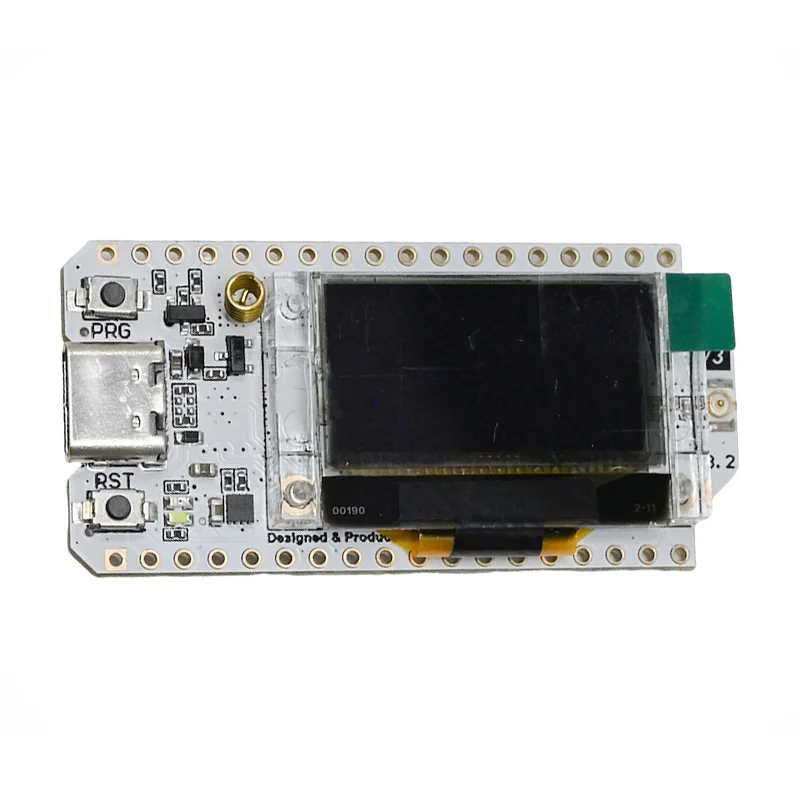
The Heltec Automation LoRa32 V3 is an ESP32-S3FN8-based development board integrating Wi-Fi, BLE 5.1, and a Semtech SX1262 LoRa transceiver for 433-510MHz, featuring a 0.96-inch OLED and lithium battery management for portable IoT node prototyping with Arduino IDE and Meshtastic firmware.

Features

  • Dual-core ESP32-S3FN8 MCU (up to 240 MHz) paired with a Semtech SX1262 LoRa chip for long-range, low-power wireless communication.
  • Integrated tri-radio connectivity: 802.11 b/g/n Wi-Fi, Bluetooth 5.1 (BLE), and LoRa (433-510MHz) with dedicated 2.4GHz and IPEX LoRa antenna interfaces.
  • Onboard 0.96-inch 128×64 OLED display for real-time debugging, sensor data, and battery voltage monitoring.
  • Comprehensive power management with USB/battery auto-switching, Li-Po charging circuit, and low-power design for field deployments.
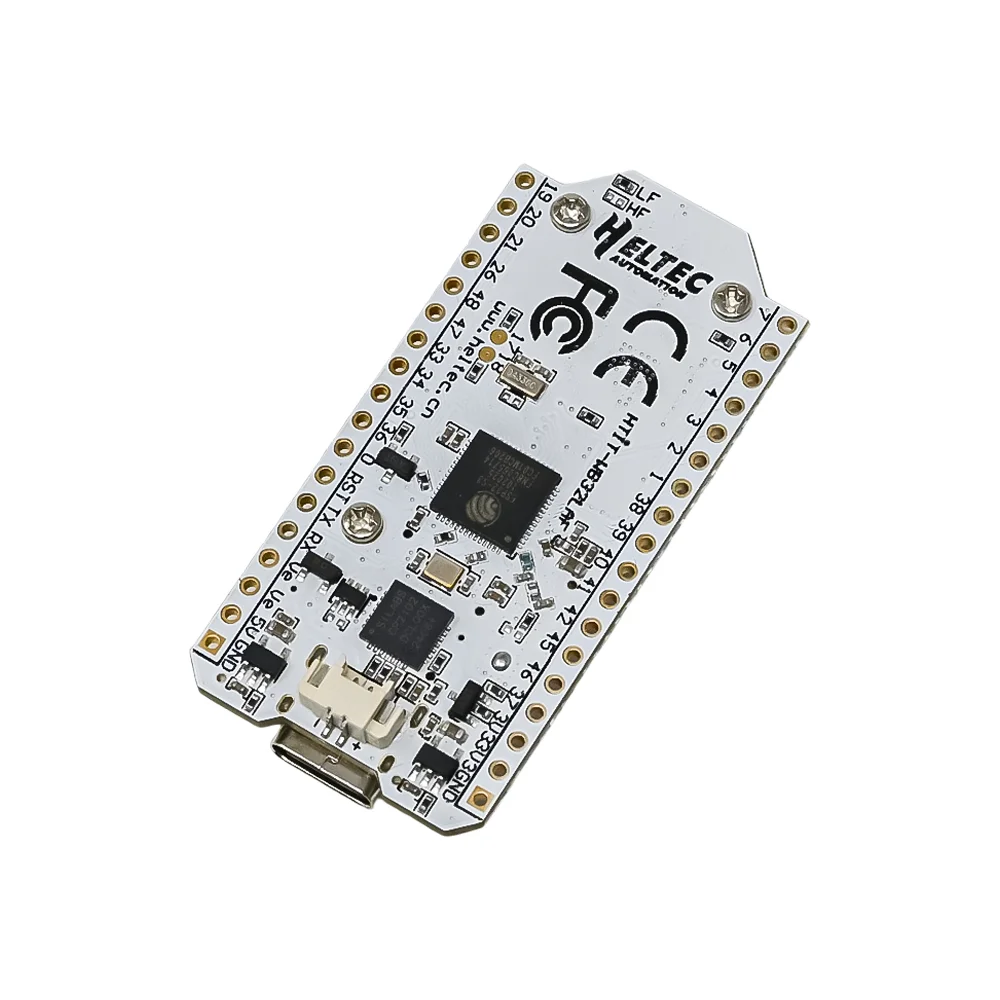
  • Full-featured dev board with CP2102 USB-to-serial, Type-C port, extensive GPIO (ADC, Touch, UART, I2C, SPI), and Arduino/Meshtastic V3 support.

Out of stock

Description

The Heltec Automation Automation LoRa32 V3 is a feature-rich IoT development board built around the powerful ESP32-S3 dual-core processor and the Semtech SX1262 LoRa transceiver. It is engineered for developers creating long-range, low-power wireless sensor networks, asset trackers, or mesh communication nodes. The board’s robust RF design includes a dedicated metal spring antenna for 2.4GHz Wi-Fi/BLE and an IPEX connector for an external LoRa antenna, ensuring optimal signal integrity for both short-range and sub-GHz LPWAN links.

Power management is a core focus, with an integrated lithium battery charge/discharge controller providing overcharge protection and automatic switching between USB and battery power. This makes the board ideal for portable and solar-powered applications. The onboard OLED display offers immediate visual feedback for system status and sensor readings without requiring a serial monitor. With support for the Arduino development environment, ESP-IDF, and popular firmware frameworks like Meshtastic, the V3 provides a versatile platform for rapid prototyping of industrial telemetry, smart agriculture, and smart city solutions.

Key Features

  • ESP32-S3FN8 Xtensa LX7 Dual-Core Processor running at up to 240 MHz with 8MB SiP Flash.
  • Semtech SX1262 LoRa Transceiver for robust, long-range communication in the 433-510MHz frequency band.
  • Triple Network Connectivity: 802.11 b/g/n Wi-Fi, Bluetooth 5.1 (Classic & BLE), and LoRa for flexible IoT architectures.
  • Integrated 0.96-inch 128x64 OLED Display for system diagnostics and data visualization.
  • Advanced Power System with Li-Po battery management, charging circuit, and USB/battery auto-switching.
  • CP2102 USB-to-Serial Converter for reliable programming and serial debug communication.
  • Comprehensive GPIO Expansion including 7x ADC channels, 7x Touch sensors, 3x UART, 2x I2C, and 2x SPI interfaces.
  • Robust Board Design with ESD protection, RF shielding, and a Type-C USB connector.

Applications

  • Long-range IoT Sensor Nodes for environmental monitoring (temperature, humidity, air quality).
  • Smart Agriculture systems for soil moisture sensing, livestock tracking, and irrigation control.
  • Decentralized Mesh Networks using firmware like Meshtastic for off-grid communication.
  • Industrial Telemetry & IIoT for remote equipment monitoring and data logging.
  • Asset Tracking & Fleet Management with combined GPS (via GPIO) and LoRa backhaul.
  • Smart Home Automation and wireless meter reading solutions.

Technical Specifications

Microcontroller / SoCESP32-S3FN8 (Dual-core Xtensa LX7, up to 240MHz)
Wireless ProtocolsWi-Fi 802.11 b/g/n, Bluetooth 5.1 (BLE), LoRa (via SX1262)
LoRa Frequency Range433 - 510 MHz
RF Transmit Power / SensitivitySX1262 LoRa Chip (Typical +22 dBm TX, -137 dBm sensitivity)
Supply Voltage3.3V (Regulated), 3.7V Li-Po Battery Input
Operating Current / Sleep CurrentVaries with mode; LoRa sleep currents in the µA range
InterfacesType-C USB, CP2102 UART, GPIO (ADC, Touch, UART, I2C, SPI), SH1.25 Battery Connector
Antenna ConnectorOnboard 2.4GHz Spring Antenna (Wi-Fi/BLE), IPEX (U.FL) for LoRa
Operating Temperature-20°C to 70°C
Dimensions50.2mm (L) x 25.5mm (W)

Frequently Asked Questions

How do I program the Heltec Automation LoRa32 V3 using the Arduino IDE?

First, install the ESP32 board support via the Arduino Boards Manager. Then, add the Heltec Automation ESP32 library through the Library Manager. Select 'Heltec Automation WiFi LoRa 32 (V3)' as your board. Connect via the Type-C port, choose the correct COM port, and upload your sketch. The onboard CP2102 chip handles USB-to-serial communication. Ensure you have the correct LoRa frequency band (433 or 510MHz) defined in your code for the SX1262 radio. (Word count: 48)

What is the power consumption in deep sleep mode, and how do I enable it?

The board leverages the ESP32-S3's ultra-low-power co-processor (RTC) and the SX1262's sleep modes to achieve deep sleep currents typically below 10µA. To enable it, use the `esp_deep_sleep_start()` function in Arduino or ESP-IDF after configuring GPIO wake-up sources. Ensure the LoRa radio is put to sleep via the SX1262 library commands. Power is drawn from the connected Li-Po battery, and the integrated power management IC automatically handles the switch. (Word count: 50)

Can I use both the onboard Wi-Fi and LoRa simultaneously?

Yes, the ESP32-S3 can manage both radios concurrently. You can run a Wi-Fi client or access point for local network connectivity or cloud MQTT while using the SX1262 for periodic long-range LoRa transmissions. This is ideal for gateways or nodes that need dual connectivity. In your firmware, manage radio states to avoid RF interference, as both share the same MCU resources. Use non-blocking code or RTOS tasks for optimal performance. (Word count: 45)

How do I connect an external antenna and what is the gain recommendation?

The board has an IPEX (U.FL) connector for the LoRa SX1262 radio. Unscrew the included stub antenna and attach a compatible IPEX-to-SMA pigtail cable, then connect a 433MHz or 510MHz LoRa antenna with SMA female. For optimal range, use a 3-5 dBi gain dipole or fiberglass antenna. Ensure the antenna's frequency band matches your configured LoRa frequency. The onboard spring antenna is fixed for Wi-Fi/BLE and cannot be replaced. (Word count: 44)

Package Includes

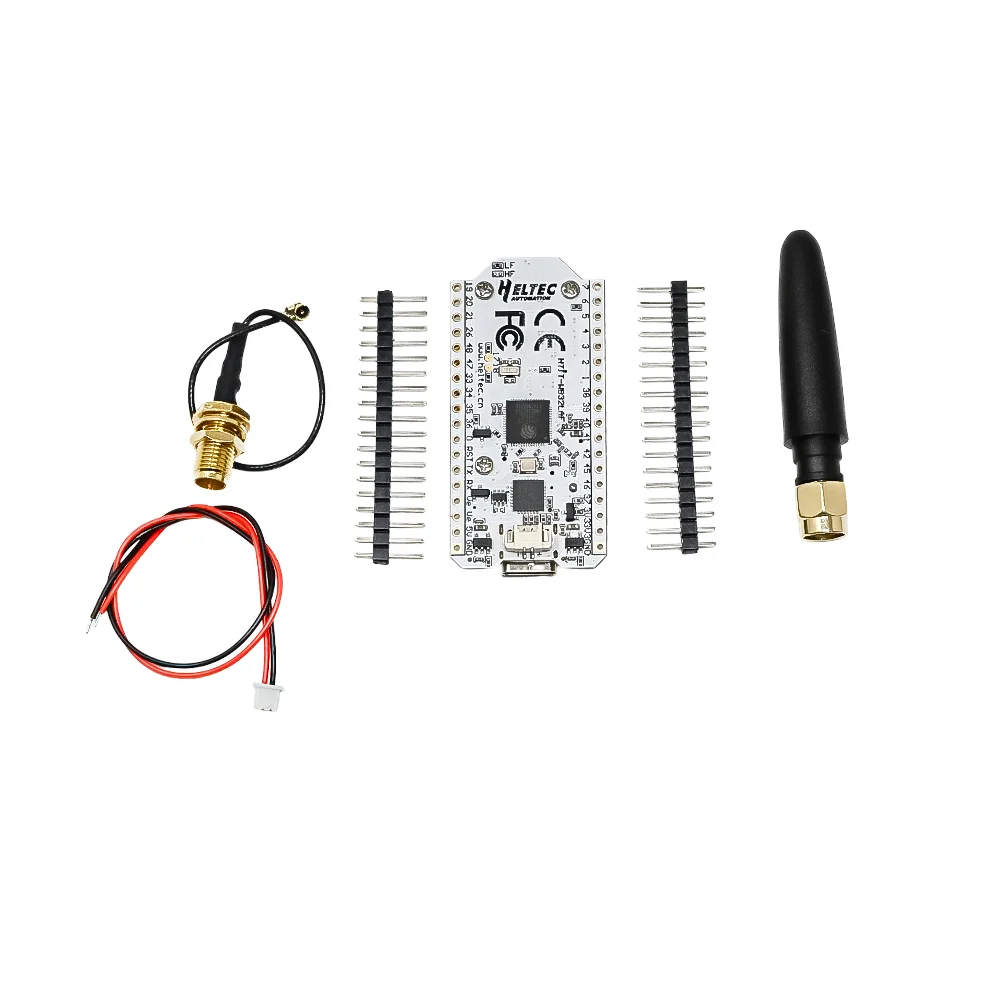
  • 1 x Heltec Automation WiFi LoRa 32 (V3) Development Board
  • 1 x LoRa Antenna (for IPEX connector)
  • 1 x SH1.25×2 Battery Connector Cable

Additional Information

Weight 0.025 kg
Dimensions 5.02 × 2.55 cm