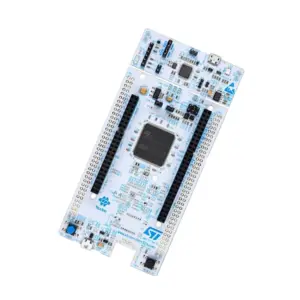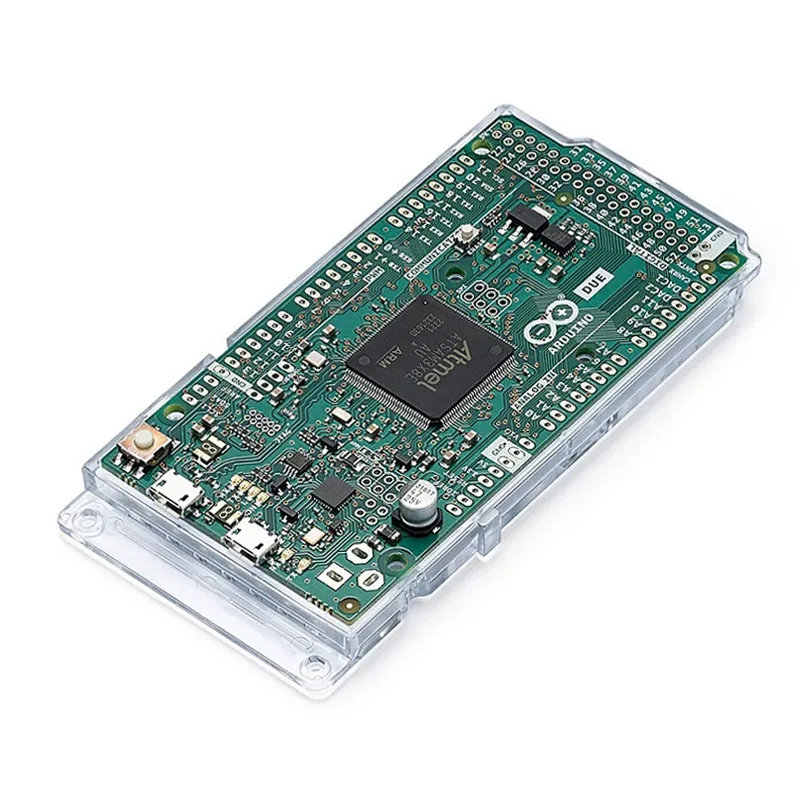
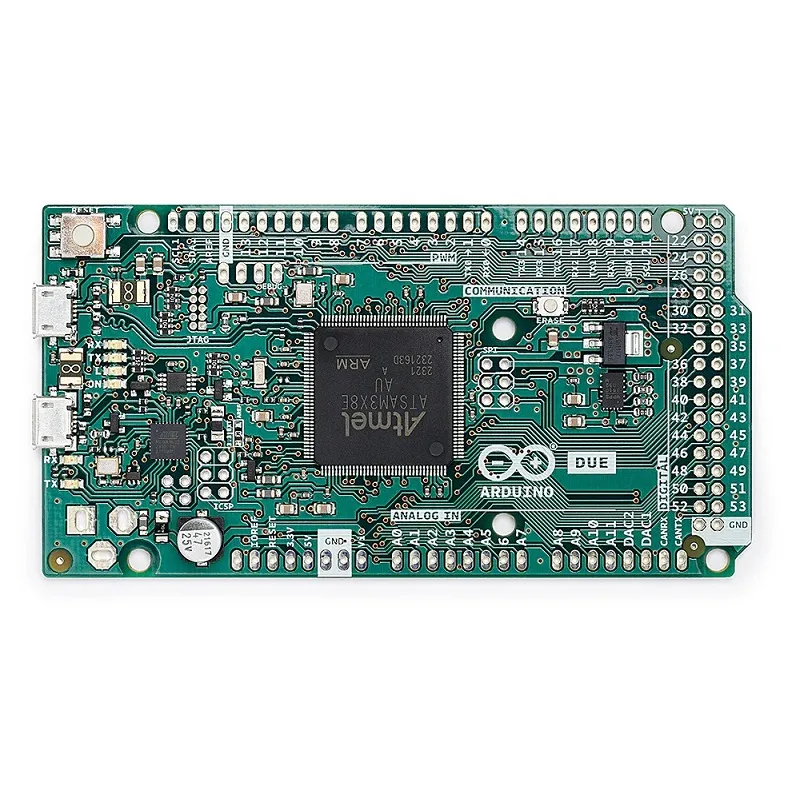
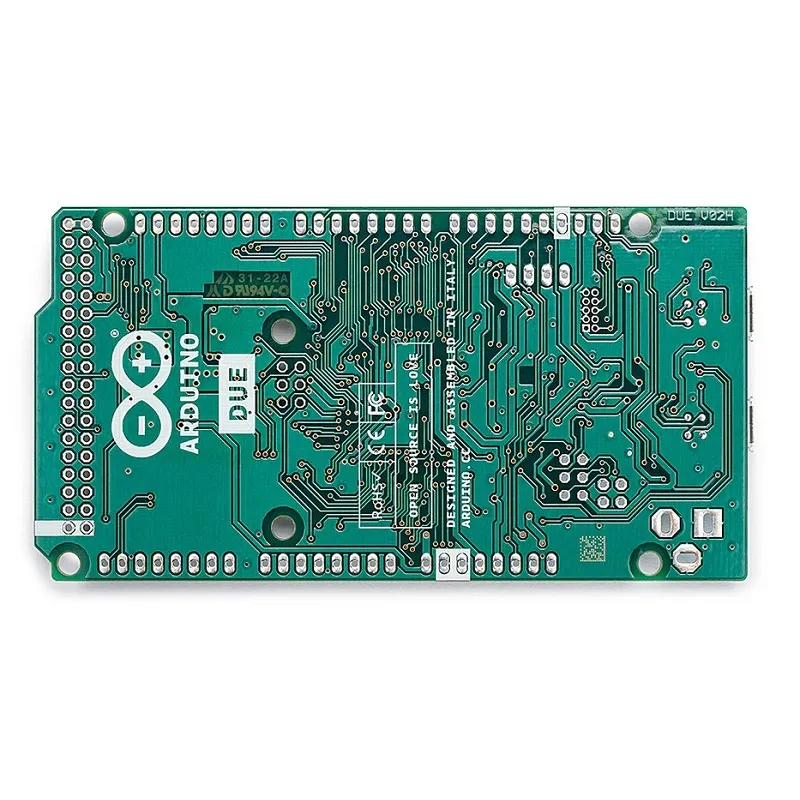
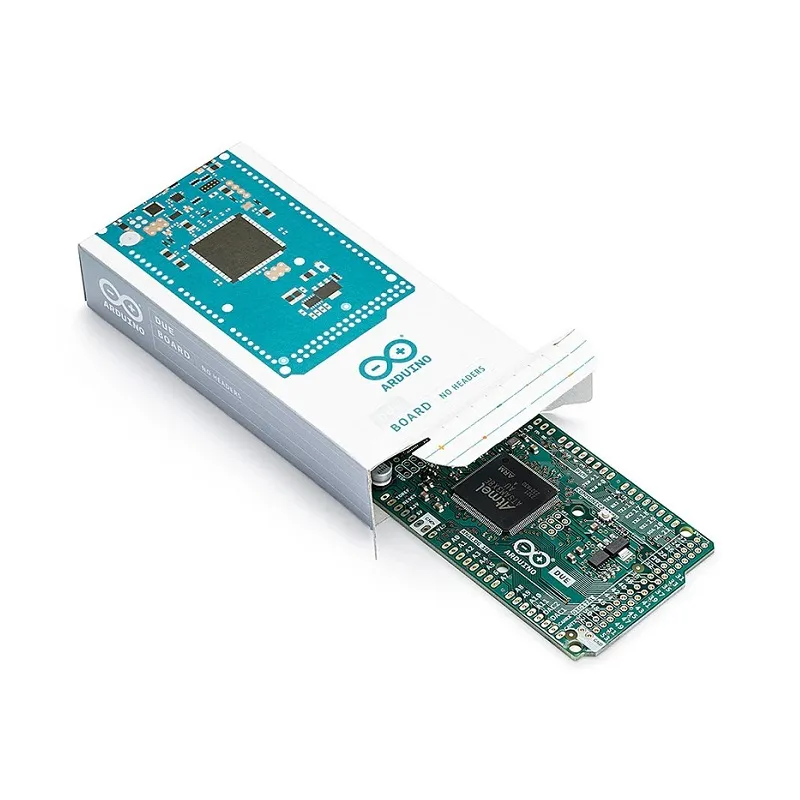
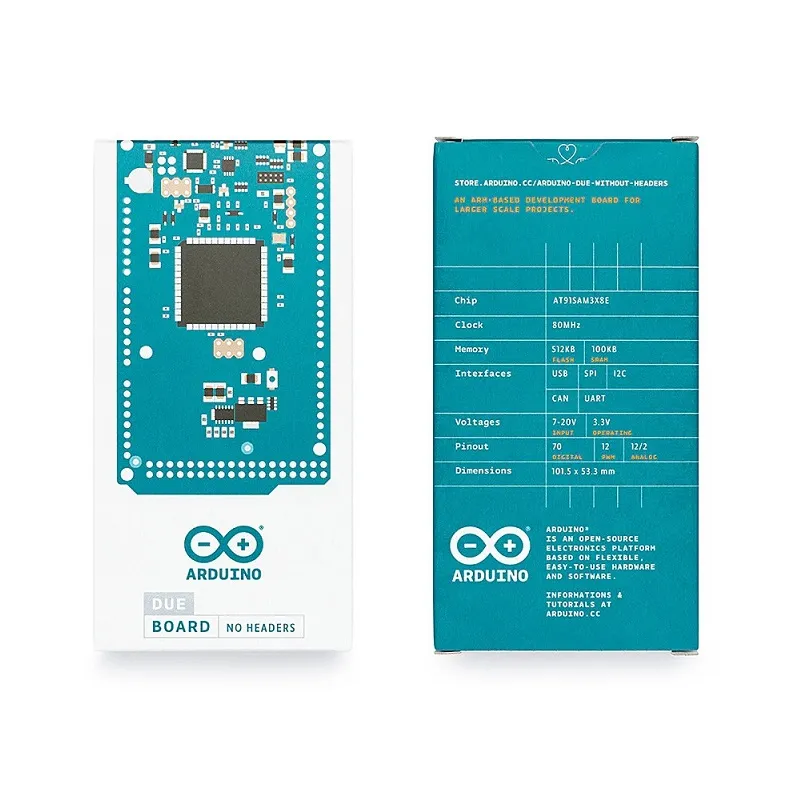
Arduino Due Development Board without Headers
The Official Arduino Due is the first Arduino board featuring a 32-bit ARM core microcontroller, the AT91SAM3X8E. Operating at 3.3V, it offers enhanced processing power, larger memory, and extensive I/O for advanced embedded applications, designed for seamless integration into the Arduino ecosystem.
Features
- Features the powerful AT91SAM3X8E 32-bit ARM Cortex-M3 microcontroller.
- Equipped with 54 digital I/O pins (12 PWM) and 12 analog inputs for versatile connectivity.
- Operates at a high clock speed of 84 MHz with 512 KB Flash and 96 KB SRAM.
- Includes USB OTG capabilities, 2 DACs, and 4 UARTs for advanced interfacing.
- Designed for 3.3V operation and compatible with 1.0 Arduino pinout shields.
Out of stock
The Arduino Due stands as a significant advancement in the Arduino platform, being the inaugural board to integrate a 32-bit ARM Cortex-M3 microcontroller, the AT91SAM3X8E. This architecture provides a substantial leap in performance compared to traditional 8-bit AVR-based Arduinos, making it suitable for more complex computations, larger data processing, and demanding embedded system designs. Its robust feature set includes 54 digital input/output pins, with 12 capable of PWM output, and 12 analog input pins, offering extensive flexibility for sensor integration and actuator control.
Beyond its core processing capabilities, the Due incorporates a rich array of peripherals essential for modern embedded development. It features 4 hardware serial ports (UARTs), an 84 MHz clock speed, and a USB OTG capable connection for host or device functionality. Additionally, it includes two Digital-to-Analog Converters (DACs) for audio output or analog signal generation, two Two-Wire Interface (TWI) buses, an SPI header, and a JTAG header for advanced debugging. The board is designed for ease of use, requiring only a micro-USB cable or external power to begin development, and maintains compatibility with most 3.3V Arduino shields compliant with the 1.0 pinout standard.
Its unique IOREF pin ensures shield compatibility across different voltage levels, allowing proper adaptation for shields designed for both 3.3V (like the Due itself) and 5V AVR-based boards. This thoughtful design, combined with its advanced specifications, positions the Arduino Due as a powerful tool for makers, educators, and professional developers venturing into ARM-based embedded systems within the familiar Arduino IDE environment.
Additional Information
| Weight | 0.036 kg |
|---|---|
| Dimensions | 10.152 × 5.33 cm |