SKU: IOWC-0050
📋 GST Invoice Available

AI-Thinker NF-01-S 2.4GHz Wireless Transceiver Module

₹116.00 (Inclusive of all taxes)
Out of Stock

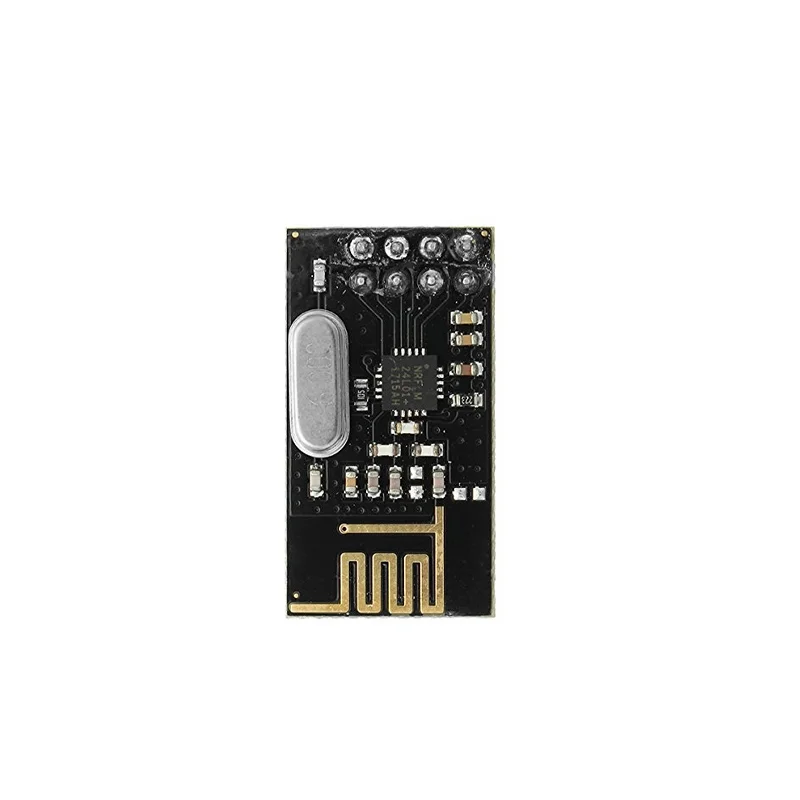
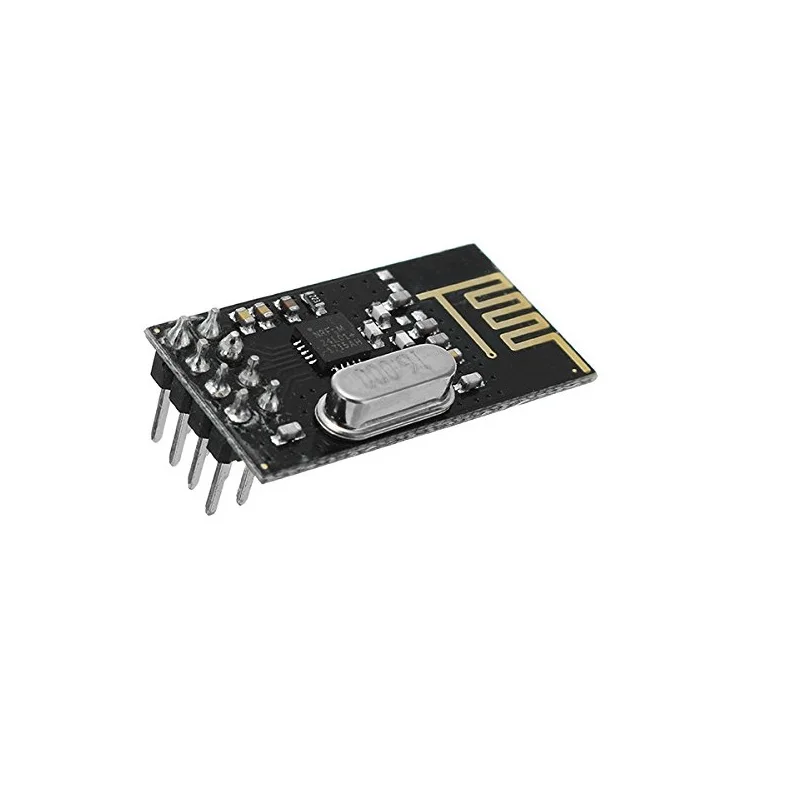
The AI-Thinker NF-01-S is a compact 2.4GHz wireless transceiver module based on the Si24r1 chip, offering SPI interface control and data rates up to 2Mbps for low-power IoT sensor networks and remote control applications.

Features

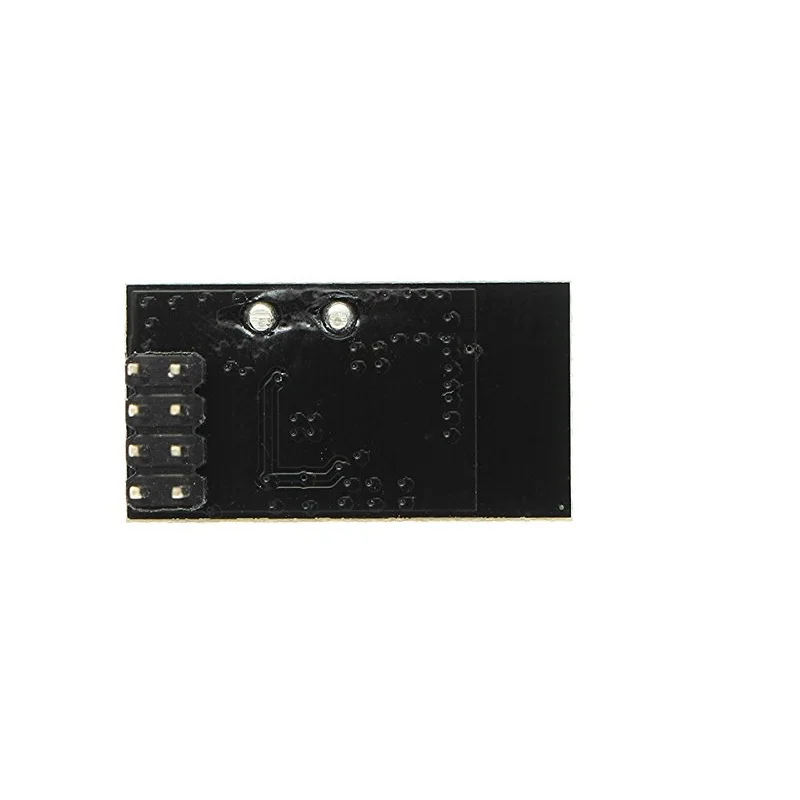
  • Ultra-compact DIP-8 package with integrated 2.4GHz PCB antenna for simplified PCB integration.
  • High-speed SPI interface (up to 10MHz) enables rapid data exchange with host microcontrollers like STM32 or ESP32.
  • Low power consumption with 15mA receive current and a deep shutdown mode drawing only 1.0µA.
  • Robust RF performance with +7dBm max transmit power and -96dBm sensitivity at 250kbps for reliable short-range links.
  • Supports multi-point and frequency-hopping communication across 126 channels to avoid interference.

Out of stock

Description

The AI-Thinker NF-01-S module integrates a Si24r1 RF transceiver into a miniature DIP-8 footprint, providing a pure hardware solution for 2.4GHz ISM band communication. It operates on a wide 1.9V to 3.6V supply, typically 3.3V, making it compatible with most 3.3V microcontroller systems without requiring a level shifter.

Its architecture includes an integrated high PSRR LDO for stable operation and a smart ARQ baseband protocol engine for automatic packet handling, reducing firmware overhead. The module supports GFSK/FSK modulation and three selectable data rates (2Mbps, 1Mbps, 250kbps), allowing developers to balance between throughput and range. With a built-in PCB antenna offering approximately 2dBi gain, it is designed for cost-effective, high-volume IoT deployments like active RFID tags, wireless sensor nodes, and human-interface devices.

Key Features

  • DIP-8 package with onboard 2.4GHz antenna simplifies PCB layout and reduces BOM cost.
  • Integrated Si24r1 transceiver supports six concurrent data reception channels for advanced networking.
  • Hardware ARQ protocol engine automates acknowledgment and retransmission, improving link reliability.
  • Wide operating voltage range (1.9V–3.6V) ensures compatibility with battery-powered and 3.3V logic systems.
  • Low average current consumption (15mA RX, 25mA TX @ +7dBm) extends battery life in wireless sensor nodes.
  • 126 programmable frequency channels enable robust frequency-hopping spread spectrum (FHSS) implementations.
  • Four-wire SPI interface allows direct connection to MCUs for configuration and high-speed data transfer.
  • Hardware interrupt output pin signals successful packet transmission, enabling efficient event-driven firmware.

Applications

  • Wireless human-interface devices (keyboards, mice, game controllers).
  • Active RFID tags and NFC-enabled proximity sensing systems.
  • Low-power wireless sensor networks for home automation and industrial monitoring.
  • Somatosensory and motion control equipment for interactive installations.
  • Wireless remote controls for consumer electronics and DIY IoT projects.

Technical Specifications

Wireless Transceiver ICSi24r1
Operating Frequency2400–2525 MHz
ModulationGFSK / FSK
Max Data Rate2 Mbps
Max Transmit Power+7 dBm
Receiver Sensitivity-96 dBm @ 250 kbps
Supply Voltage1.9 – 3.6 V (Typical 3.3V)
Operating Current (RX)15 mA (2 Mbps)
Operating Current (TX)25 mA (+7 dBm)
Shutdown Current1.0 µA
Host Interface4-wire SPI (up to 10 MHz)
Antenna TypeIntegrated PCB Antenna (~2 dBi)
Operating Temperature-20°C to +85°C
Dimensions (LxWxH)28.6 x 15.3 x 3.2 mm

Frequently Asked Questions

What is the recommended power supply configuration for the NF-01-S module?

Power the module with a stable 3.3V DC supply connected to its VCC pin, ensuring the voltage stays within the 1.9V to 3.6V operational range. Decoupling capacitors (e.g., 100nF and 10µF) should be placed close to the module's power pins to minimize noise, which is critical for stable RF performance, especially during transmission bursts.

How do I interface the NF-01-S with an Arduino or ESP32 development board?

Connect the module's four SPI pins (CSN, SCK, MOSI, MISO) to corresponding GPIOs on your microcontroller. For an ESP32, use standard SPI pins (e.g., GPIO5 for CSN, GPIO18 for SCK). Initialize the SPI bus in your code (Arduino IDE or ESP-IDF) and use the Si24r1 library to configure channels, data rate, and power, then send/receive packets via SPI transactions.

What is the effective outdoor line-of-sight range of this module?

With its +7dBm transmit power and -96dBm sensitivity at 250kbps, the NF-01-S can achieve approximately 100 meters in clear line-of-sight conditions using its integrated PCB antenna. Range decreases significantly with obstacles; for longer distances, reduce the data rate to 250kbps and ensure a clean 3.3V power supply to maximize receiver sensitivity.

Can I use an external antenna with the NF-01-S module?

No, the NF-01-S is designed with a fixed, integrated PCB antenna and lacks an external antenna connector like IPEX or SMA. The antenna pattern is optimized for its compact DIP footprint. For projects requiring an external antenna, consider AI-Thinker modules that feature a compatible IPEX connector for attaching higher-gain antennas.

How do I put the module into its lowest power shutdown mode?

Drive the CSN pin high and issue the shutdown command via the SPI interface to place the Si24r1 IC into its deep sleep mode, where current consumption drops to 1.0µA. Ensure your firmware toggles the CE pin appropriately and manages the SPI sequence as per the Si24r1 datasheet to reliably enter and exit this ultra-low-power state.

Package Includes

  • 1 x AI-Thinker NF-01-S Wireless Transceiver Module

Additional Information

Weight 0.003 kg
Dimensions 2.86 × 1.53 × 0.32 cm