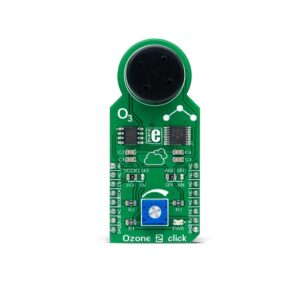
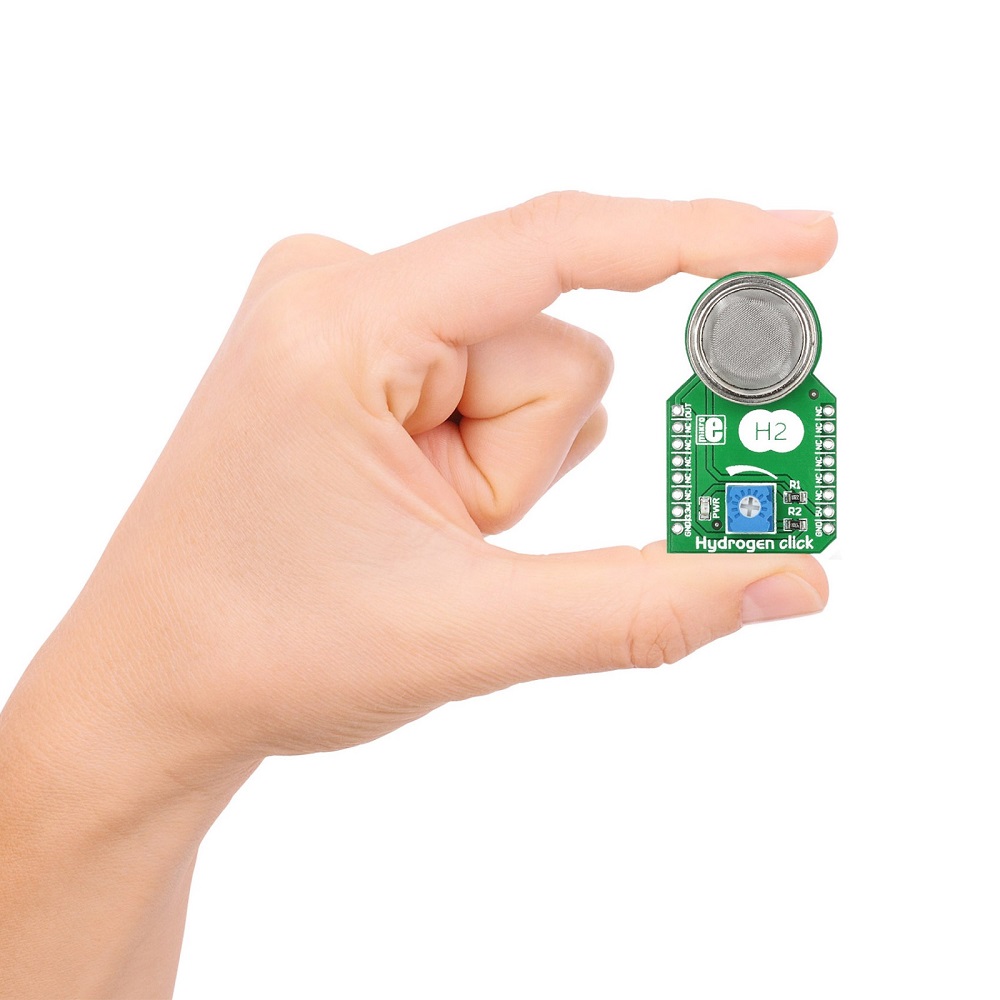
Mikroe HYDROGEN Click (Mikroe‑1629) – MQ‑8 Hydrogen Gas Sensor Board, Analog, mikroBUS
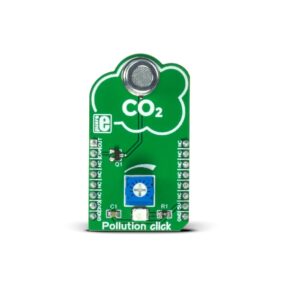
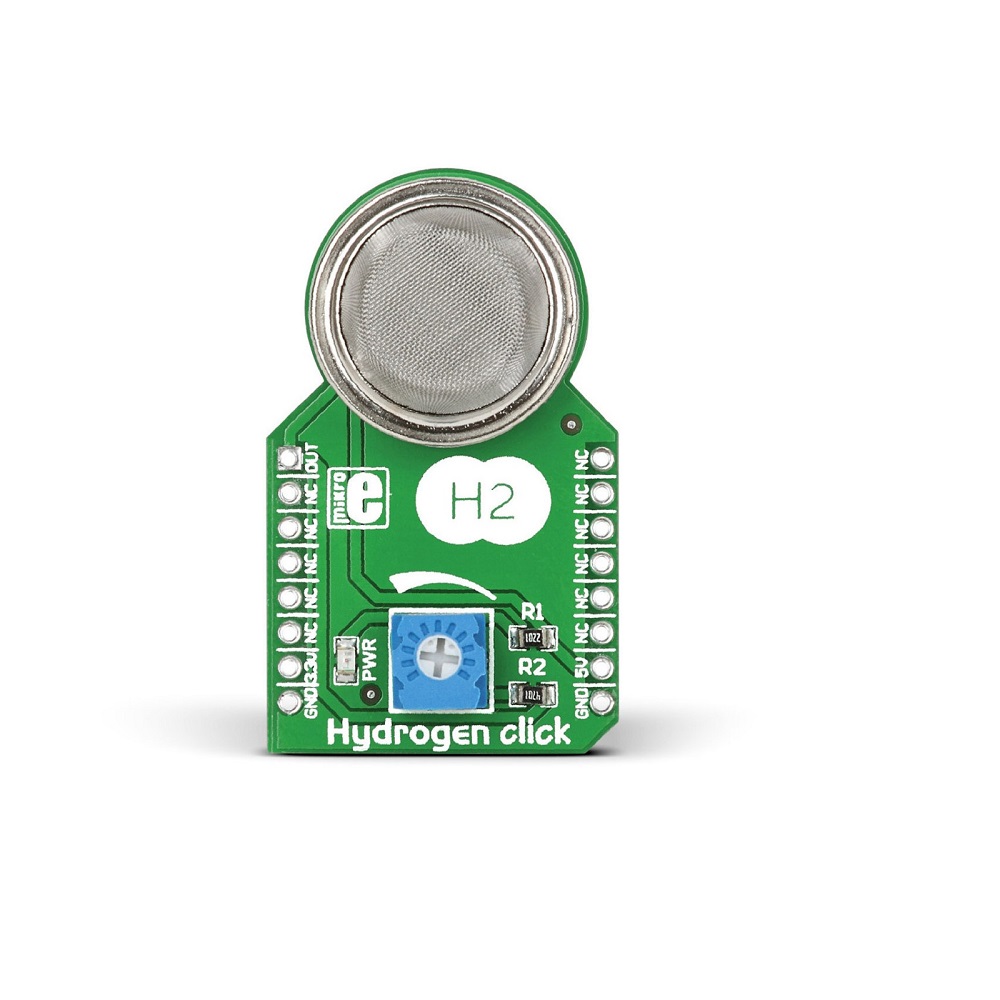
The Mikroe HYDROGEN Click (Mikroe‑1629) is a mikroBUS-compatible sensor board featuring an MQ-8 tin dioxide (SnO2) sensor for detecting hydrogen gas concentrations from 100 to 10,000 ppm. It provides an analog output signal for easy integration with microcontrollers like Arduino, Raspberry Pi, and STM32 development boards.
Features
- MQ-8 Hydrogen Gas Sensor with 100-10,000 ppm detection range
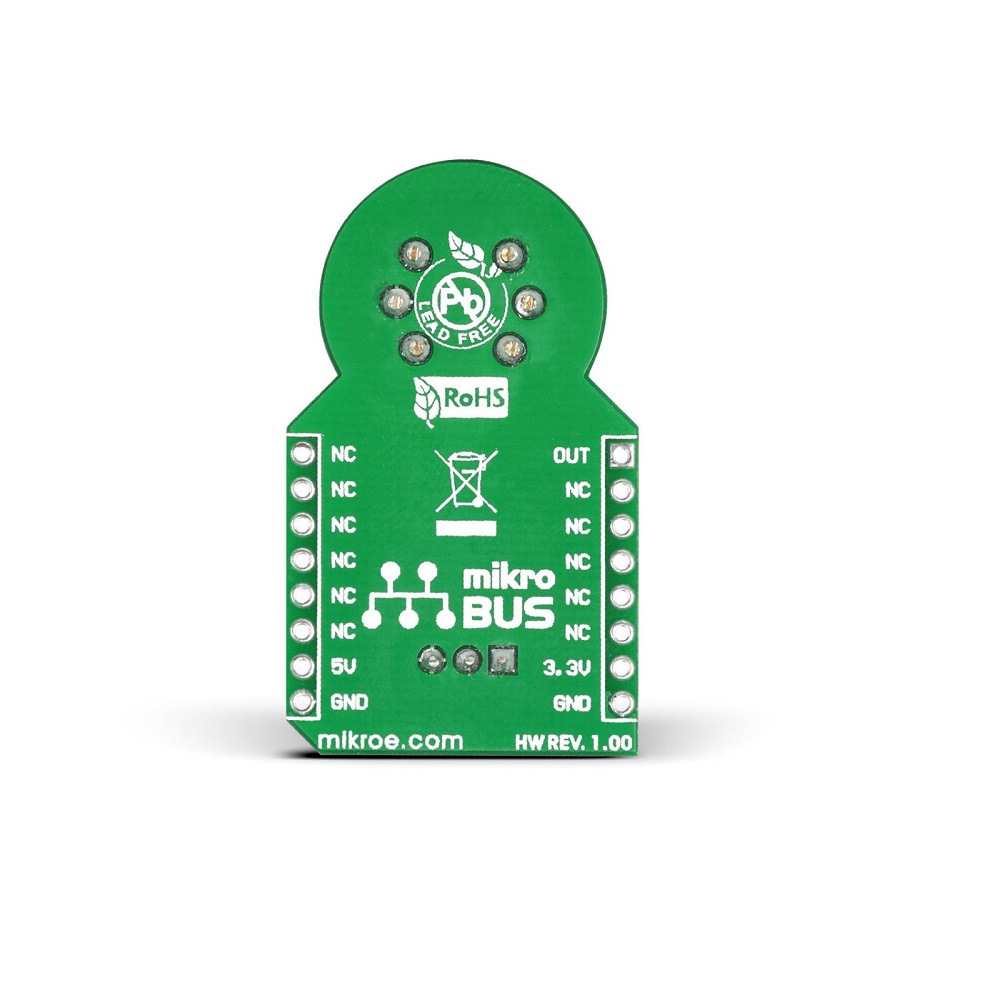
- Analog output interface via mikroBUS AN (OUT) line
- On-board potentiometer for environmental calibration and load resistance adjustment
- Wide 3.3V to 5V DC operating voltage range
- Standard mikroBUS form factor (42.9 x 25.4 mm) for modular prototyping
Out of stock
The HYDROGEN Click utilizes an MQ-8 semiconductor gas sensor with a tin dioxide (SnO2) sensing layer. In clean air, the sensor’s conductivity is low; it increases proportionally with rising hydrogen gas concentration. The board includes a potentiometer to adjust the sensor circuit’s load resistance, allowing calibration for specific environmental conditions and ensuring accurate ppm readings.
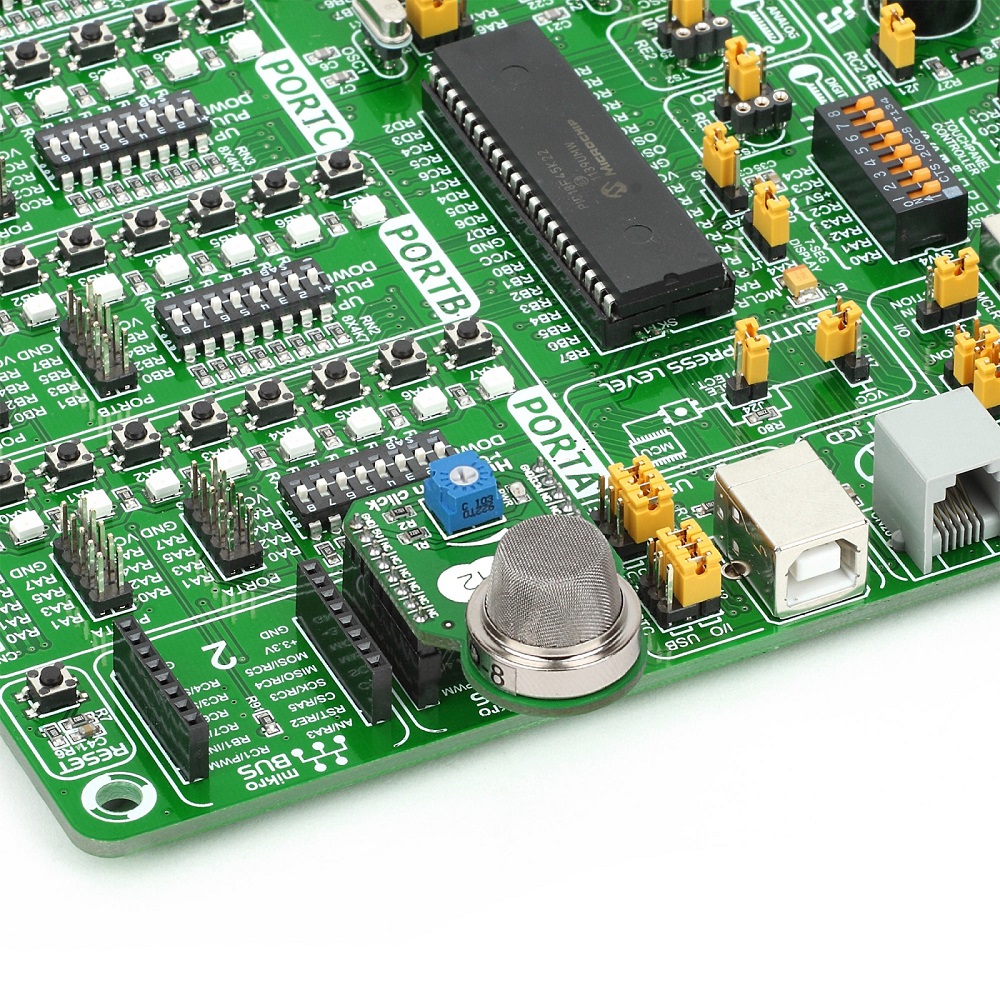
Designed for the mikroBUS standard, this Click board provides a plug-and-play solution for rapid prototyping on compatible host boards. It requires a 5V power supply for optimal sensor heater operation, though the logic is compatible with 3.3V systems. The sensor requires an initial 24-hour preheat period for stabilization before precise measurements can be taken.
Additional Information
| Weight | 0.04 kg |
|---|---|
| Dimensions | 6 × 4 × 2 cm |