SKU: SENS-1595
📋 GST Invoice Available

LFS1305 CLASS C / F0.6 Conductivity Sensor 100 µS/cm–200 mS/cm, 4 Electrode

₹4,499.00 (Inclusive of all taxes)
Out of Stock

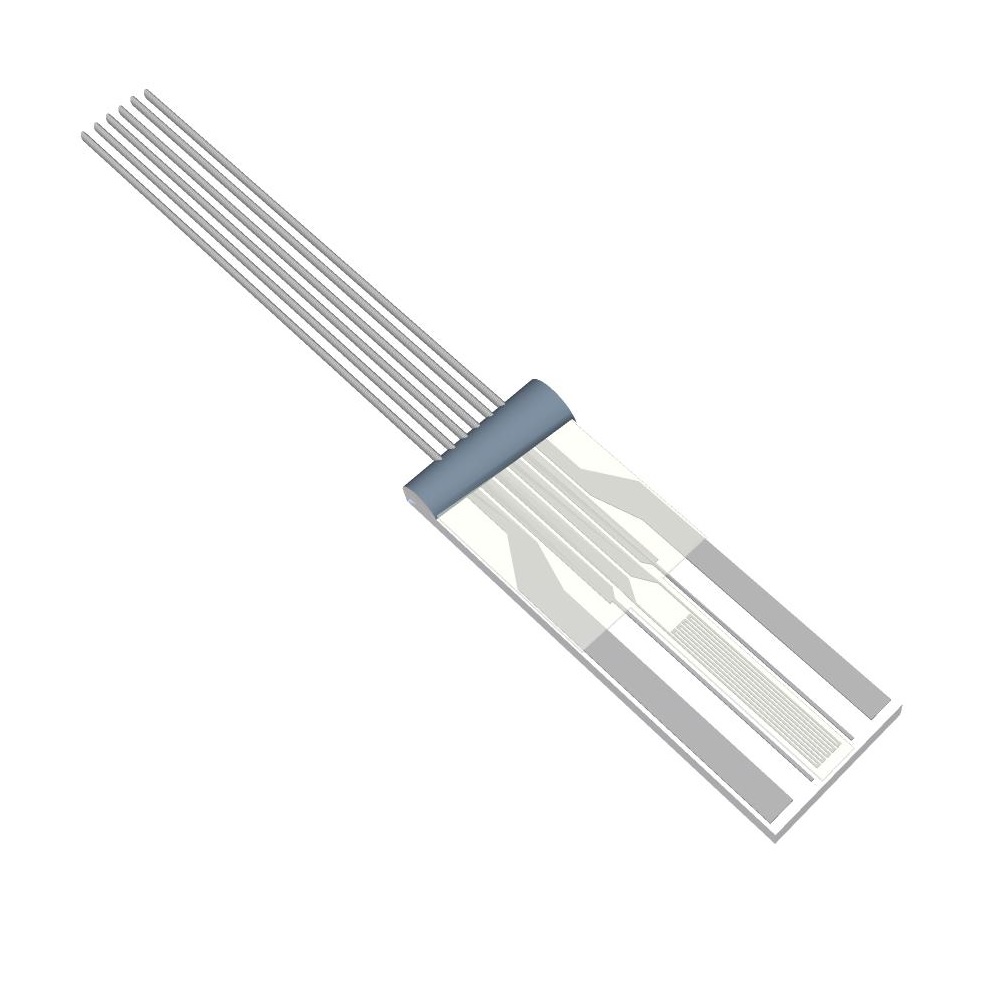
The LFS1305 is a 4-electrode conductivity sensor designed for precise measurement of aqueous solutions from 100 µS/cm to 200 mS/cm, featuring an integrated Pt1000 RTD for temperature compensation. It is compatible with industrial PLCs, data loggers, and process control systems requiring accurate conductivity monitoring.

Features

  • Wide Conductivity Range: Measures from 100 µS/cm to 200 mS/cm.
  • 4-Electrode Measurement: Provides stable readings by minimizing polarization effects.
  • Integrated Pt1000 RTD: Enables accurate temperature measurement and compensation (IEC 60751 F0.6 C).
  • Broad Frequency Range: Operates from 100 Hz to 10 kHz for versatile application.
  • Robust Construction: Suitable for continuous operation in temperatures from -30°C to +100°C.

Out of stock

Description

The LFS1305 conductivity sensor utilizes a 4-electrode measurement principle to deliver high accuracy and long-term stability in aqueous solutions. This design minimizes electrode polarization, ensuring reliable readings across its full conductivity range from ultrapure water to concentrated brines. The integrated Pt1000 temperature sensor provides precise thermal compensation, which is critical for accurate conductivity-to-TDS (Total Dissolved Solids) conversions.

Engineered for industrial environments, the sensor operates within a wide temperature range and is resistant to various chemicals. Its low excitation voltage requirement (<0.7 Vpp) and defined cell constant (typical 0.86 cm⁻¹) simplify integration with standard conductivity meters and transmitters, making it ideal for process control, water quality monitoring, and laboratory analysis.

Key Features

  • Four-Electrode Conductivity Cell: Delivers stable, polarization-free measurements for high accuracy.
  • Integrated Pt1000 RTD (Class F0.6): Provides precise temperature sensing for automatic compensation.
  • Wide Operating Bandwidth: Supports measurement frequencies from 100 Hz to 10 kHz.
  • Excellent Long-Term Stability: Ensures consistent performance and reduces calibration frequency.
  • Broad Chemical Resistance: Constructed with materials suitable for various aqueous solutions.
  • Optimized Cell Constant: Typical value of 0.86 cm⁻¹ for accurate scaling across the measurement range.
  • Low Excitation Current: Pt1000 measurement current of 0.3 mA for minimal self-heating.
  • Extended Temperature Range: Operates from -30°C to +100°C for harsh environment deployment.

Applications

  • Industrial Process Water Monitoring: Conductivity control in cooling towers, boilers, and rinse water systems.
  • Water Quality and TDS Measurement: Monitoring of drinking water, wastewater effluent, and aquaculture systems.
  • Laboratory Analysis: Precise conductivity measurements for chemical solutions and biological media.
  • Hydroponics and Agriculture: Monitoring nutrient concentration in fertigation solutions.
  • Pharmaceutical and Ultrapure Water Production: Monitoring water purity in USP and WFI systems.

Technical Specifications

ModelLFS1305 CLASS C / F0.6
Conductivity Range100 µS/cm to 200 mS/cm
Cell Constant (Typical)0.86 cm⁻¹
Measurement Frequency Range100 Hz to 10 kHz
Nominal Resistance (Pt1000 at 0°C)1000 Ω
Temperature SensorPt1000 RTD (IEC 60751 F0.6 C)
Temperature Coefficient3850 ppm/K
Measuring Current (Pt1000)0.3 mA
Maximum Excitation Voltage< 0.7 Vpp
Operating Temperature-30°C to +100°C
Electrode Configuration4-Electrode

Frequently Asked Questions

What is the purpose of the 4-electrode design in this conductivity sensor?

The 4-electrode design uses two outer electrodes to apply an alternating current and two inner electrodes to measure the voltage drop across the solution. This configuration minimizes errors caused by electrode polarization and fouling, leading to more stable and accurate measurements over a wide conductivity range, especially in high-concentration or dirty solutions.

How do I interface the LFS1305 sensor with my data acquisition system or controller?

The LFS1305 requires an external conductivity meter or transmitter capable of 4-electrode measurement. You must connect the sensor's four leads to the corresponding terminals on the meter. The integrated Pt1000 RTD leads must be connected to a compatible temperature input on the same meter for automatic temperature compensation. Ensure your meter supports the sensor's frequency range (100 Hz to 10 kHz) and excitation voltage (<0.7 Vpp).

What is the cell constant, and why is it important for calibration?

The cell constant (typical 0.86 cm⁻¹ for the LFS1305) is a geometric factor that relates the measured conductance to the actual conductivity of the solution. It is critical for calibration. You must calibrate the sensor using standard conductivity solutions that bracket your expected measurement range. The meter uses the cell constant to convert the raw conductance reading into accurate conductivity values (µS/cm or mS/cm).

Can this sensor be used for continuous immersion in aggressive chemicals?

While the LFS1305 is constructed with materials offering broad chemical resistance, its suitability for continuous immersion in specific aggressive chemicals (e.g., strong acids, bases, solvents) depends on the exact chemical composition and concentration. For such applications, consult the manufacturer's chemical compatibility charts or consider sensors specifically rated for those chemicals. It is rated for operation in aqueous solutions from -30°C to +100°C.

Package Includes

  • 1 x Conductivity Sensor (LFS1305)

Additional Information

Weight 0.005 kg
Dimensions 3 × 2 × 1 cm