SKU: SENS-1549
📋 GST Invoice Available

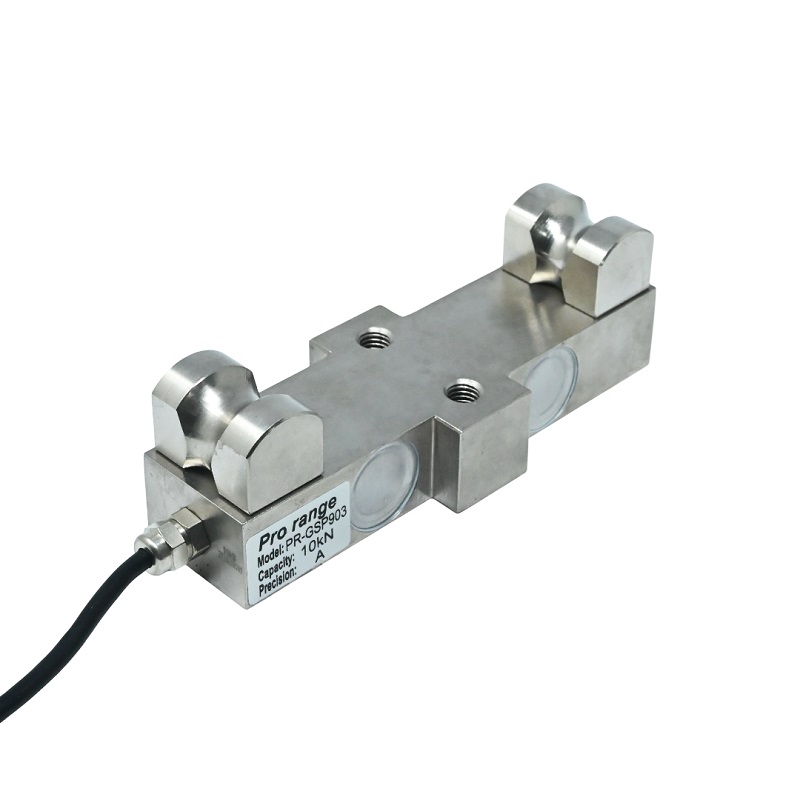
Pro-Range GSP903 10 kN Rope Tension Load Cell Sensor, 0.3%F.S, 1.0-1.5mV/V, 10VDC

₹11,319.00 (Inclusive of all taxes)
Out of Stock

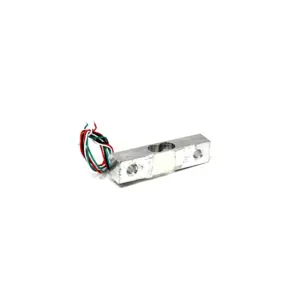
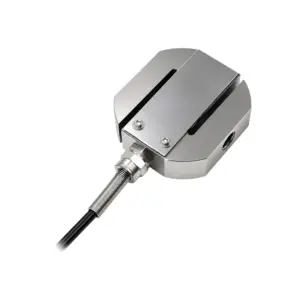
The Pro-Range GSP903 is a 10 kN capacity rope tension load cell designed for precise force measurement in wire rope, cable, and rigging systems. It features a 1.0-1.5 mV/V output signal compatible with standard 10 VDC excitation and is engineered for integration with industrial PLCs, data loggers, and strain gauge amplifiers.

Features

  • 10 kN (approx. 2248 lbf) rated tension capacity with ≤ 0.3% F.S. comprehensive error.
  • Stainless steel alloy construction ensures durability and corrosion resistance in demanding industrial environments.
  • Standard 1.0-1.5 mV/V strain gauge output for easy connection to signal conditioners and data acquisition systems.
  • Wide operating temperature range from -20°C to +65°C with excellent thermal stability and low creep.
  • Compact 160 x 60 mm form factor with integrated mounting points for straightforward installation in rope tension systems.

Out of stock

Description

The GSP903 load cell operates on the principle of bonded metal foil strain gauges. When tension is applied to the central rope groove, the resulting strain alters the electrical resistance of the gauges arranged in a Wheatstone bridge configuration. This change is proportional to the applied force and is output as a millivolt-per-volt (mV/V) signal.

Designed for harsh industrial settings, the sensor features a robust stainless steel housing that protects the internal circuitry. Its high insulation resistance (≥5000 MΩ) ensures signal integrity and minimizes electrical noise interference, making it suitable for long-term monitoring in applications like crane safety systems and hoist load monitoring.

Key Features

  • High-Precision Measurement: Delivers accurate tension readings with a comprehensive error of ≤ 0.3% of Full Scale (F.S.), including nonlinearity, hysteresis, and repeatability.
  • Robust Alloy Steel Construction: Manufactured from durable stainless steel for exceptional strength, fatigue resistance, and long-term reliability under cyclic loading.
  • Stable Electrical Performance: Features a 750 Ω input resistance and 700 Ω output resistance with a high insulation resistance to ensure clean, stable signal transmission.
  • Optimized Thermal Performance: Engineered for stable operation across a -20°C to +65°C range, minimizing temperature-induced drift and ensuring consistent readings.
  • Compact & Functional Design: The 160 mm long body incorporates a central groove for secure rope placement and mounting holes for easy integration into existing hardware.
  • Standardized Output: Provides a industry-standard 1.0-1.5 mV/V output when excited with a 10 VDC supply, ensuring compatibility with a wide range of signal conditioners and amplifiers.

Applications

  • Crane & Hoist Load Monitoring: Critical for overload protection and safety system integration in material handling and construction equipment.
  • Marine & Offshore Rigging Tension Control: Monitors tension in mooring lines, tow cables, and lifting slings to ensure operational safety.
  • Theatrical & Stage Rigging Safety Systems: Provides real-time load data for automated counterweight systems and dynamic load balancing.
  • Industrial Process Control: Used in conveyor systems, cable cars, and zip lines to maintain precise tension for smooth operation.
  • Structural Testing & Monitoring: Measures tensile forces in guy wires, suspension cables, and other structural elements during load tests.

Technical Specifications

ModelPro-Range GSP903
Rated Capacity10 kN (Kilonewtons)
Comprehensive Error≤ 0.3% F.S.
Rated Output (Sensitivity)1.0 – 1.5 mV/V
Recommended Excitation Voltage10 VDC
Input Resistance750 Ω ± 15 Ω
Output Resistance700 Ω ± 5 Ω
Zero Balance≤ ±1% F.S.
Insulation Resistance≥ 5000 MΩ
Operating Temperature Range-20°C to +65°C
Housing MaterialStainless Steel Alloy
Dimensions (L x W)160 mm x 60 mm
Weight1546 g

Frequently Asked Questions

What is the maximum recommended excitation voltage for the GSP903 load cell?

The GSP903 is designed for a nominal 10 VDC excitation voltage. While strain gauge bridges can often tolerate slightly higher voltages (e.g., 12-15 VDC) for increased signal strength, exceeding 10 VDC may increase internal heating and affect long-term stability. For optimal performance and rated accuracy, it is strongly advised to use a stable, regulated 10 VDC power supply.

How do I connect and read the signal from this load cell?

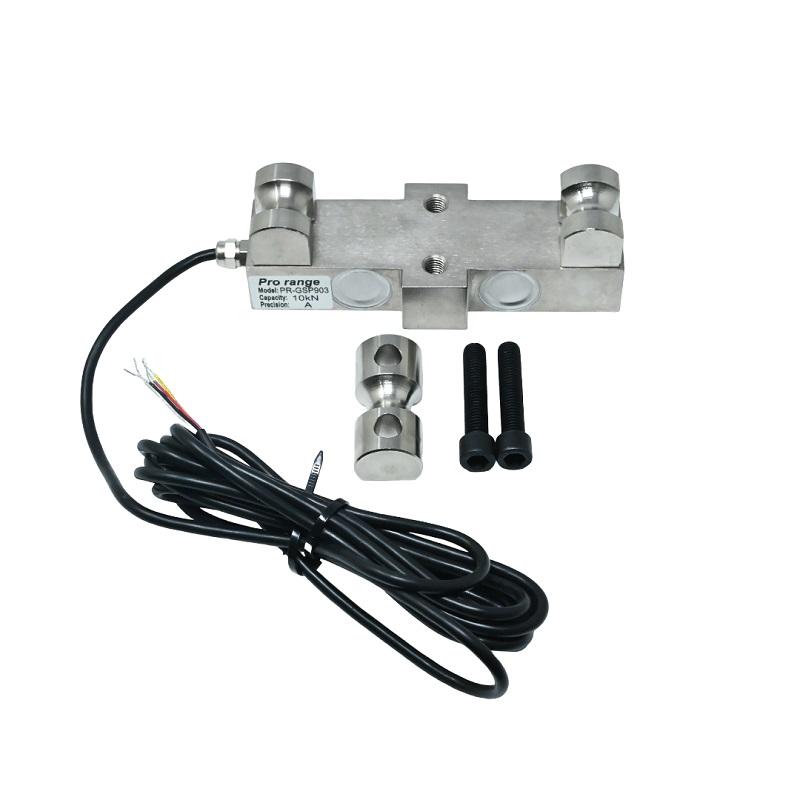
The load cell has a 4-wire connection: Red and Black wires for the excitation voltage (10 VDC), and Green and White wires for the signal output (1.0-1.5 mV/V). This low-level mV signal must be amplified by a dedicated strain gauge amplifier, instrumentation amplifier, or a load cell signal conditioner module before it can be read by a PLC, data logger, or microcontroller. Direct connection to an Arduino or Raspberry Pi analog input is not possible without such signal conditioning.

Can this sensor be used for compression or push/pull force measurement?

No, the GSP903 is specifically designed as a rope tension sensor. Its mechanical structure, featuring a central groove for the rope, is optimized to measure pure tensile forces. Applying compressive or side-loading forces will not provide accurate readings and may damage the internal strain gauges. For compression or universal (tension/compression) measurement, a different load cell model (like an S-type or button load cell) should be selected.

What is the significance of the '1.0-1.5 mV/V' output specification?

This specification denotes the sensor's sensitivity. It means that for every 1 Volt of excitation applied, the sensor will output a signal between 1.0 and 1.5 millivolts at its full rated load (10 kN). For example, with a 10 VDC excitation, the full-scale output will be between 10 mV and 15 mV. This ratiometric output means the signal is proportional to both the applied force and the excitation voltage, providing inherent compensation for supply voltage fluctuations.

Is calibration required, and how is it performed?

Yes, precise calibration is required for accurate measurement. The load cell should be calibrated using known standard weights or a calibrated force gauge in a tension setup matching its final installation. The process involves applying zero load (to set the tare) and then applying the full rated load (10 kN) to establish the span. This calibration data is then programmed into the connected signal conditioner or data acquisition system to convert the raw mV signal into engineering units (kN or lbf).

Package Includes

  • 1 x Pro-Range GSP903 10 kN Rope Tension Load Cell Sensor

Additional Information

Weight 1.546 kg
Dimensions 16 × 6 cm