SKU: IOWC-1995
📋 GST Invoice Available

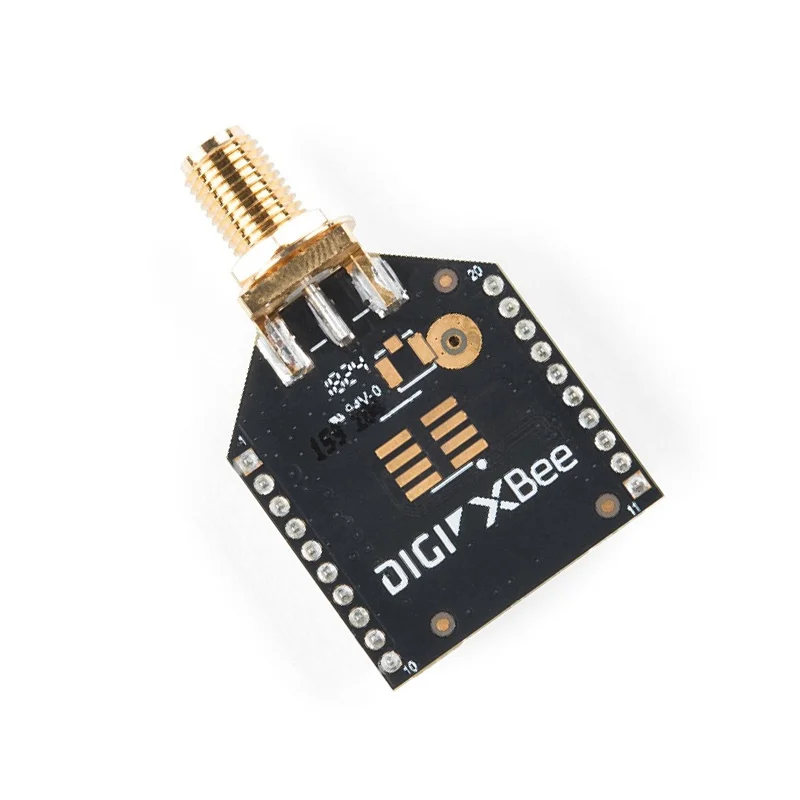
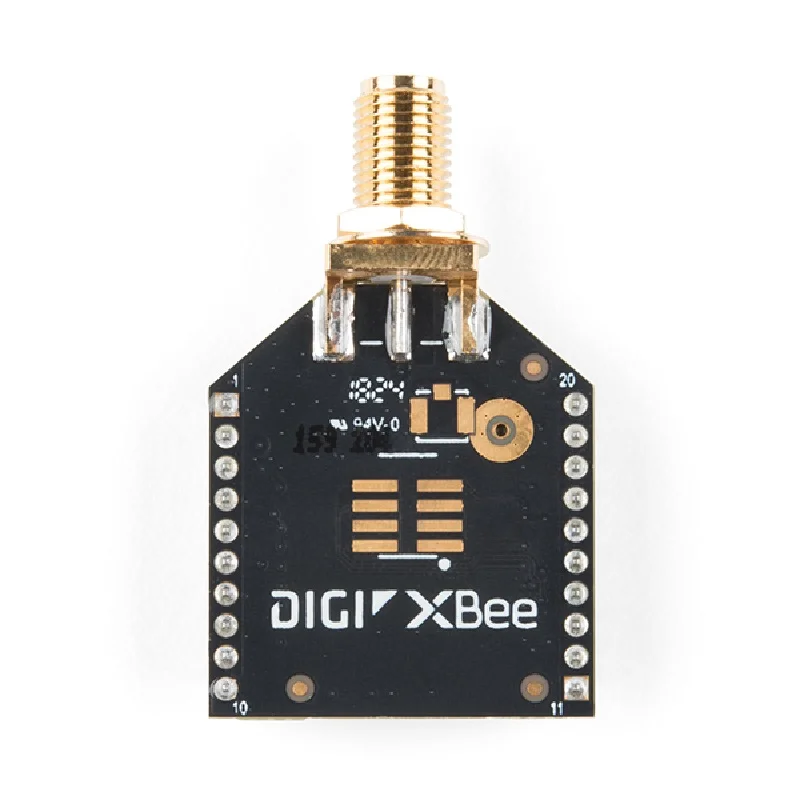
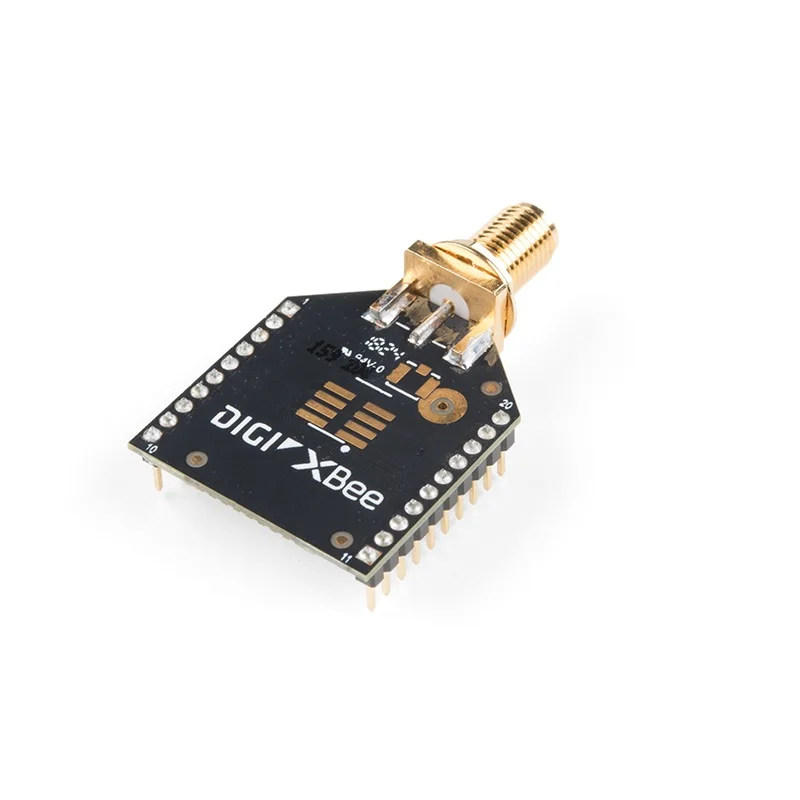
SparkFun XBee 3 Module w/ RP-SMA Antenna

₹2,599.00 (Inclusive of all taxes)
Out of Stock

The SparkFun XBee 3 Module is a versatile 2.4 GHz RF transceiver supporting 802.15.4, Zigbee, and BLE protocols, programmable via MicroPython or AT commands. Operating from 2.1V to 3.6V, it features an integrated RP-SMA antenna connector for extended mesh networking range.

Features

  • Multi-protocol 2.4 GHz RF transceiver supporting 802.15.4, Zigbee, and Bluetooth Low Energy (BLE).
  • Integrated RP-SMA antenna connector for robust signal integrity and extended range (200 ft indoor, 4000 ft outdoor).
  • Programmable via MicroPython or Digi International XCTU software using the onboard HCS08 microcontroller (up to 50.33 MHz).
  • Flexible communication interfaces include UART and SPI, with built-in support for RS-485 serial communication.
  • Low-power operation with a deep sleep current of 1.7 µA and +8 dBm transmit power for efficient wireless sensor networks.

Out of stock

Description

The XBee 3 Module represents a significant evolution in the popular XBee series, consolidating legacy protocol support with modern wireless capabilities. It integrates a powerful HCS08 microcontroller core, enabling standalone embedded applications to be developed directly on the module using MicroPython, eliminating the need for an external host processor in many scenarios. The module’s RF front-end is optimized for reliable mesh networking, offering a balance of +8 dBm transmit power and -103 dBm receiver sensitivity to maximize link budget and network reliability.

Designed for industrial IoT and robust wireless sensor networks, the module features 15 configurable digital I/O pins and four 10-bit ADC inputs for direct sensor interfacing. Its dual communication interfaces—UART for simple serial backhaul and SPI for high-speed data transfer—provide flexibility for integration into various system architectures. The inclusion of hardware-based 128/256-bit AES encryption ensures secure data transmission across public or private wireless networks.

Key Features

  • Multi-protocol RF core supporting IEEE 802.15.4, Zigbee 3.0, and Bluetooth Low Energy 4.2/5.0.
  • Onboard HCS08 microcontroller programmable in MicroPython for edge intelligence and standalone operation.
  • Integrated RP-SMA female connector for attaching external antennas to boost range and signal penetration.
  • Comprehensive I/O suite with 15 digital pins, 4 analog inputs, and hardware support for SPI, UART, and RS-485 interfaces.
  • Advanced power management featuring multiple sleep modes, with a deep sleep current as low as 1.7 microamps.
  • Secure communication with 128/256-bit AES encryption at the hardware level for network and data security.
  • FCC and ETSI certified for commercial deployment, ensuring regulatory compliance in major markets.
  • Backward compatibility mode for integration with existing XBee Series 1 and 2 networks, with noted protocol differences.

Applications

  • Industrial wireless sensor networks for telemetry and machine monitoring.
  • Smart home automation systems creating Zigbee or BLE mesh networks.
  • Agricultural and environmental monitoring with long-range, low-power sensor nodes.
  • Asset tracking and fleet management solutions using wireless location beacons.
  • Prototyping and educational projects for wireless communication and IoT development.

Technical Specifications

Wireless ProtocolsIEEE 802.15.4, Zigbee 3.0, Bluetooth Low Energy (BLE 4.2/5.0)
Frequency Range2.4 GHz ISM Band
RF Transmit Power+8 dBm (Maximum)
Receiver Sensitivity-103 dBm (Typical)
Data Rate (RF)250 kbps (802.15.4)
Supply Voltage2.1 V to 3.6 V DC
Operating Current (Tx)40 mA (at +8 dBm)
Sleep Current1.7 µA (Power-down mode)
MicrocontrollerHCS08 Core, up to 50.33 MHz
Digital I/O15 pins
Analog Inputs4 x 10-bit ADC
Communication InterfacesUART, SPI, RS-485 (built-in)
Antenna ConnectorRP-SMA Female
Operating Temperature-40°C to +85°C
DimensionsApprox. 24 mm x 33 mm (XBee footprint)

Frequently Asked Questions

How do I configure the XBee 3 Module for Zigbee network communication?

Use Digi International's free XCTU software to configure the module via USB-to-serial adapter. Set the CE (Coordinator Enable) parameter, PAN ID, and destination address. The module supports AT commands or API frames for configuration. Ensure all nodes in the network use the same PAN ID and channel for proper mesh formation. You can also write custom MicroPython scripts for advanced network logic.

What is the difference between UART and SPI communication interfaces on this module?

The UART interface is simpler, using standard serial AT commands at configurable baud rates (up to 1 Mbps) for sending data and configuration. The SPI interface offers higher-speed communication for data-intensive applications, acting as an SPI slave. Choose UART for basic serial backhaul to an Arduino or Raspberry Pi. Use SPI when integrating with a host MCU that requires faster, packetized data transfer for sensor networks or gateways.

Can I power the XBee 3 Module directly from a 3.3V Arduino or Raspberry Pi GPIO pin?

Yes, you can power it from a 3.3V source, as its operating range is 2.1V to 3.6V. Ensure your power supply can deliver sufficient current, especially during transmission peaks (~40mA). For battery-powered projects, use a regulated 3.3V LDO. Avoid using a 5V pin, as it will damage the module. Always decouple the power line with a 10µF capacitor placed close to the module's VCC pin for stable operation.

How do I attach an external antenna, and what type should I use?

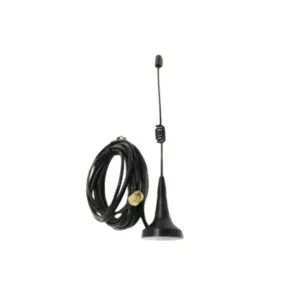
Screw a standard RP-SMA male antenna onto the module's integrated RP-SMA female connector. Use a 2.4GHz antenna with an RP-SMA connector, such as a dipole or rubber duck antenna with 2-5 dBi gain. Ensure the antenna impedance is 50 ohms for optimal RF performance. For best range, orient the antenna vertically and avoid placing it near large metal objects or other 2.4GHz sources like Wi-Fi routers to minimize interference.

What software and tools are needed to program the onboard microcontroller with MicroPython?

You need Digi International's XCTU software (version 6.5.0 or higher) to flash the MicroPython firmware onto the module. Connect the XBee 3 to your computer via a USB-to-serial adapter supporting 3.3V logic. After flashing, you can use a serial terminal or the XCTU Python editor to write and upload .py scripts. The module's file system allows you to store multiple scripts and run them on boot, enabling standalone sensor logging or control logic.

Package Includes

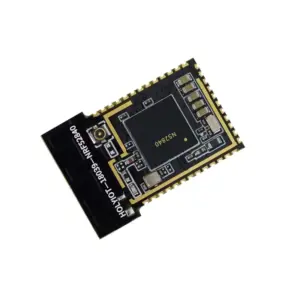
  • 1 x XBee 3 Module with integrated RP-SMA antenna connector.

Additional Information

Weight 0.02 kg
Dimensions 4 × 3 × 3 cm