SKU: IOWC-1876
📋 GST Invoice Available

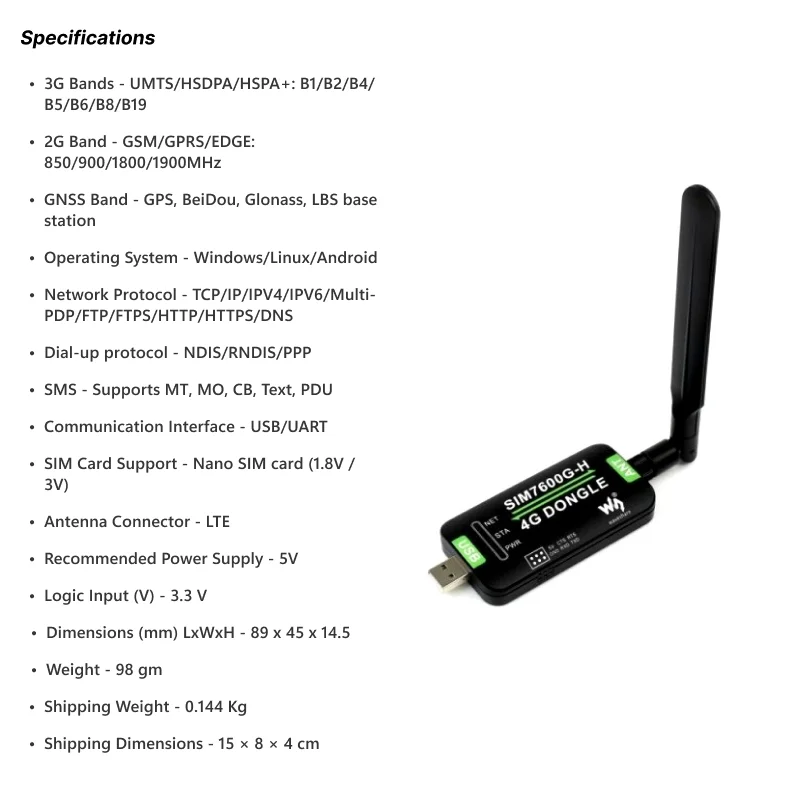
Waveshare SIM7600G-H 4G Dongle w/ GNSS & Global Band

₹6,809.00 (Inclusive of all taxes)
Out of Stock

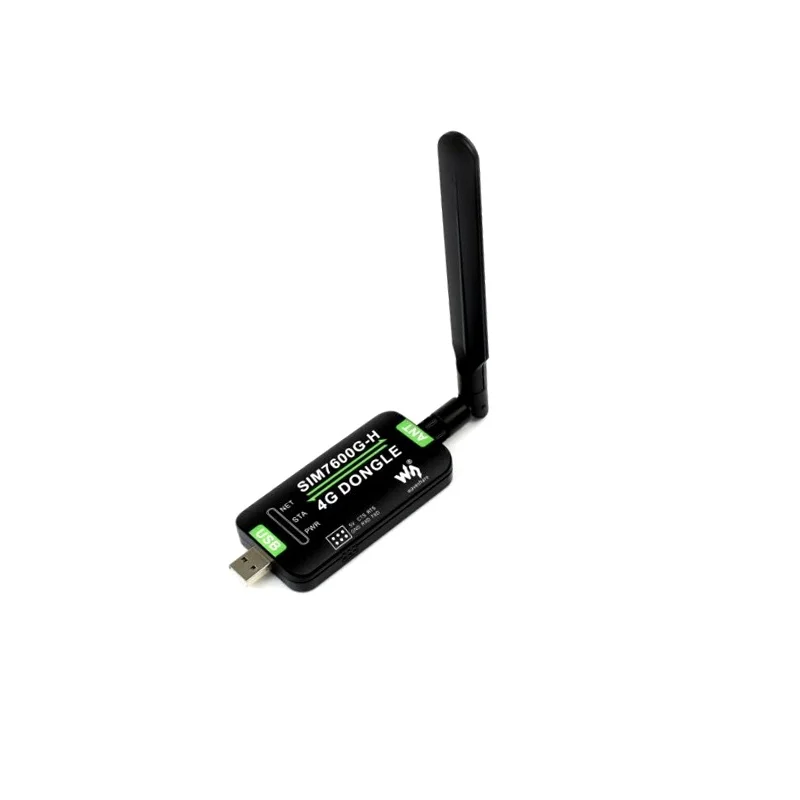
The Waveshare SIM7600G-H 4G Dongle is a global-band cellular modem providing LTE Cat-4 connectivity up to 150 Mbps downlink. It integrates GNSS (GPS/BeiDou/Glonass) for positioning and connects via USB or UART to hosts like Raspberry Pi, PCs, or embedded controllers for mobile IoT deployments.

Features

  • Global LTE Cat-4 Modem: Supports 2G, 3G, and 4G bands worldwide with downlink speeds up to 150 Mbps for reliable mobile data connectivity.
  • Integrated Multi-GNSS Receiver: Features GPS, BeiDou, and Glonass support for accurate global positioning (external GNSS antenna required).
  • Flexible Host Interfaces: Offers both USB (for plug-and-play with Windows/Linux/Android) and hardware flow-controlled UART for direct connection to MCUs like Arduino or STM32.
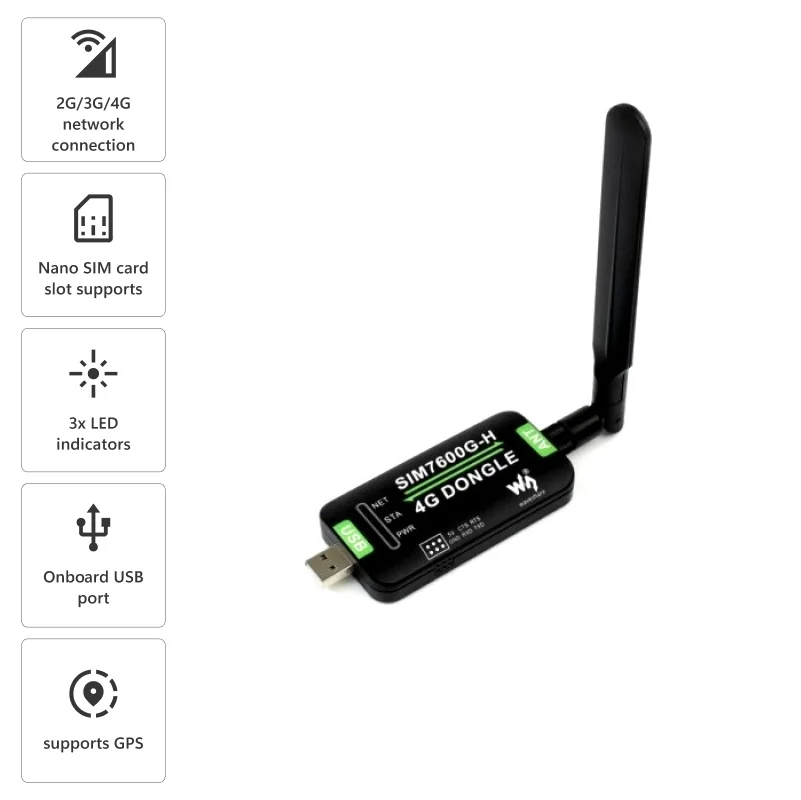
  • Industrial-Grade Design: Includes a 360-degree rotating LTE antenna connector, three status LEDs, and a nano-SIM slot supporting 1.8V/3V cards for robust field deployment.
  • Comprehensive Protocol Stack: Supports TCP/IP, IPv4/IPv6, FTP/FTPS, HTTP/HTTPS, and DNS, enabling secure cloud communication for IoT applications.

Out of stock

Description

The Waveshare SIM7600G-H 4G Dongle is an industrial-grade cellular communication module designed for global IoT deployments requiring high-speed mobile data and positioning capabilities. Based on the SIM7600G-H chipset, it delivers LTE Cat-4 performance with theoretical peak rates of 150 Mbps downlink and 50 Mbps uplink, alongside backward compatibility with 3G HSPA+ and 2G GSM networks for fallback in areas with limited coverage. Its integrated multi-constellation GNSS engine supports GPS, BeiDou, and Glonass, providing precise location data for tracking and telemetry applications.

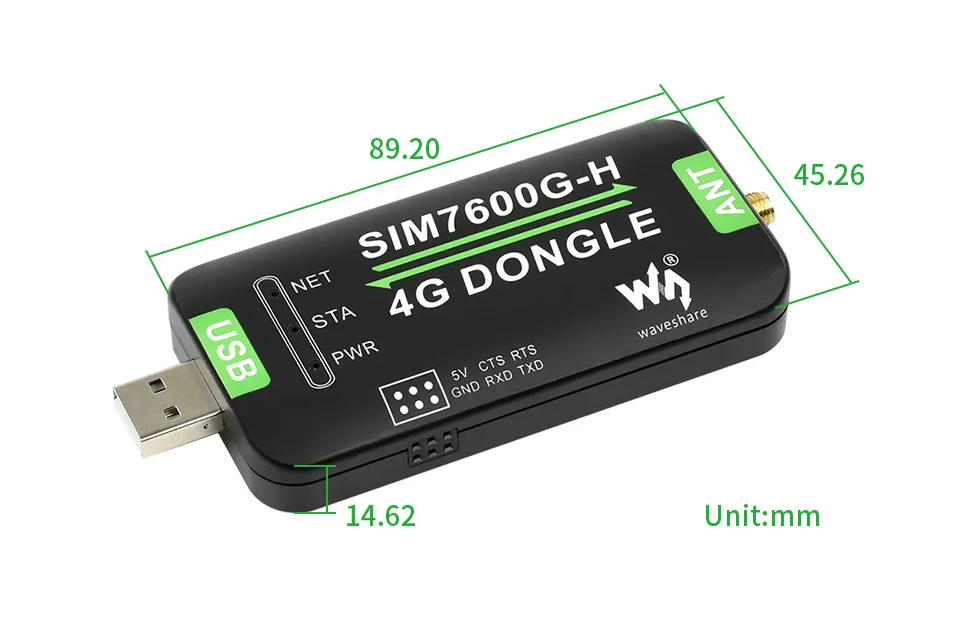
Architecturally, the module provides dual communication interfaces: a standard USB port for direct connection to ARM or x86 hosts (like Raspberry Pi, laptops, or industrial PCs) and a UART serial port with hardware flow control for low-level integration with microcontroller units. This flexibility allows developers to implement the dongle in both plug-and-play scenarios with full driver support for Windows, Linux, and Android, as well as in embedded systems using AT command sets over serial. The physical design includes a flexible, multidirectional LTE antenna connector for optimal signal reception, three LED indicators for real-time status monitoring, and a compact, ruggedized enclosure suitable for portable or fixed installations.

Key Features

  • Global Multi-Mode Cellular: Provides seamless 2G/3G/4G LTE connectivity across international frequency bands for worldwide deployment.
  • High-Speed Data & Positioning: Combines LTE Cat-4 data rates with multi-GNSS (GPS/BeiDou/Glonass) and LBS base station positioning for comprehensive location-aware solutions.
  • Dual Host Interface Flexibility: Features both USB (NDIS/RNDIS/PPP dial-up) and hardware flow-controlled UART interfaces for versatile integration with PCs, SBCs, and embedded MCUs.
  • Extensive Network Protocol Support: Built-in stack for TCP/IP, IPv4/IPv6, Multi-PDP, FTP/FTPS, HTTP/HTTPS, and DNS, enabling secure IoT cloud communication.
  • Industrial Reliability Features: Includes a nano-SIM slot (1.8V/3V), configurable UART baud rates from 300 bps to 4 Mbps, status LEDs, and a rugged enclosure.
  • Plug-and-Play Driver Support: Comes with drivers for Windows, Linux, and Android operating systems for quick setup and development.

Applications

  • Mobile IoT Gateways: Provides 4G backhaul for Raspberry Pi, industrial PCs, or drones used in remote monitoring and data logging.
  • Asset & Fleet Tracking: Enables real-time GPS/BeiDou positioning and cellular data transmission for logistics and vehicle telemetry systems.
  • Field Deployable Routers: Serves as a plug-and-play cellular modem for portable networking setups, emergency communications, or temporary site internet.
  • Embedded Telemetry Systems: Integrates via UART with Arduino, STM32, or other MCUs for sensor data upload to cloud platforms over secure HTTP/HTTPS or MQTT.
  • Remote Industrial Monitoring: Facilitates machine-to-machine (M2M) communication for SCADA, IIoT sensors, and remote equipment diagnostics using TCP/IP protocols.

Technical Specifications

Chipset/ModuleSIM7600G-H
Cellular Modes4G LTE Cat-4, 3G HSPA+, 2G GSM/GPRS/EDGE
Frequency BandsGlobal Support (2G: 850/900/1800/1900MHz; 3G: B1/B2/B4/B5/B6/B8/B19)
GNSS SupportGPS, BeiDou, Glonass, LBS Base Station
Peak Data RatesLTE: 150 Mbps DL / 50 Mbps UL; HSPA+: 42 Mbps DL / 5.76 Mbps UL
Host InterfacesUSB 2.0, UART with Hardware Flow Control
UART Baud Rate300 bps – 4 Mbps (Auto-negotiation 9600–115200 bps)
SIM CardNano-SIM (1.8V / 3V)
Antenna ConnectorsLTE Main (SMA compatible, 360° rotating), GNSS (external antenna required)
Power Supply5V via USB
Logic Level3.3V
Operating SystemsWindows, Linux, Android
Dimensions (LxW)89 mm x 45 mm
Weight98 g

Frequently Asked Questions

How do I connect and configure this 4G dongle with a Raspberry Pi for internet access?

Connect the dongle to a Raspberry Pi USB port using the included cable. Install the provided Linux drivers, then configure the network interface typically via PPP or NDIS/RNDIS. Use AT commands over the serial interface (e.g., via minicom) to set the APN for your cellular carrier. The module will establish a connection, and you can route traffic through the newly created network interface (like usb0). Ensure the nano-SIM is activated and the LTE antenna is properly attached for optimal signal strength.

What is the procedure for using the GNSS positioning feature, and is an external antenna required?

To use GNSS, you must connect an external active GNSS antenna (not included) to the dedicated antenna port. Enable positioning via AT commands (e.g., AT+CGPS=1). The module supports GPS, BeiDou, and Glonass. Position data (latitude, longitude, altitude, time) is output over the UART or USB interface in NMEA sentences. For best accuracy, ensure the antenna has a clear view of the sky. LBS base station positioning provides a fallback when satellite signals are weak, using cellular tower triangulation.

Can I communicate with this module using AT commands over the UART interface with an Arduino?

Yes, connect the dongle's UART pins (TXD, RXD, RTS, CTS) to your Arduino's serial pins, ensuring logic level compatibility (3.3V). Use a SoftwareSerial or HardwareSerial library to send AT commands. Common initial commands include AT (check communication), AT+CPIN? (check SIM), and AT+CGDCONT=1,"IP","" to set the data context. Remember to enable hardware flow control (RTS/CTS) for reliable high-speed data transfer. The default baud rate is 115200, but it supports auto-negotiation from 9600 to 115200 bps.

What power supply requirements and current consumption should I consider for embedded use?

The module requires a stable 5V supply provided via the USB port. During active 4G data transmission with maximum RF power, peak current draw can reach several hundred milliamps. Implement proper power budgeting, especially for battery-powered projects. The module supports various power-saving modes controlled via AT commands (e.g., AT+CFUN) to reduce average consumption during idle periods. Always use a capable 5V regulator or power source that can sustain transient current demands, and ensure minimal voltage drop across connecting cables.

Package Includes

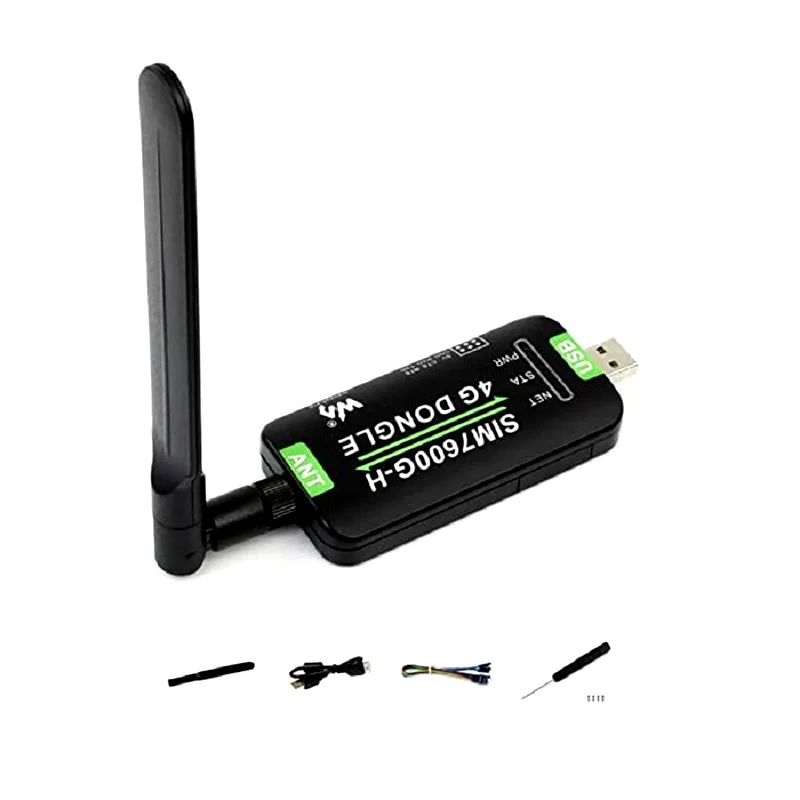
  • 1 x SIM7600G-H 4G Dongle
  • 1 x 360-Degree Foldable LTE Antenna
  • 1 x USB Extension Cable
  • 1 x 6-Pin Jumper Wire
  • 1 x Screws Tool Kit

Additional Information

Weight 0.098 kg
Dimensions 8.9 × 4.5 cm