SKU: IOWC-1337
📋 GST Invoice Available

Waveshare ESP32-S3 Mini Development Board w/ ESP32-S3FH4R2, 240MHz, Wi-Fi & BLE 5

₹609.00 (Inclusive of all taxes)
Out of Stock

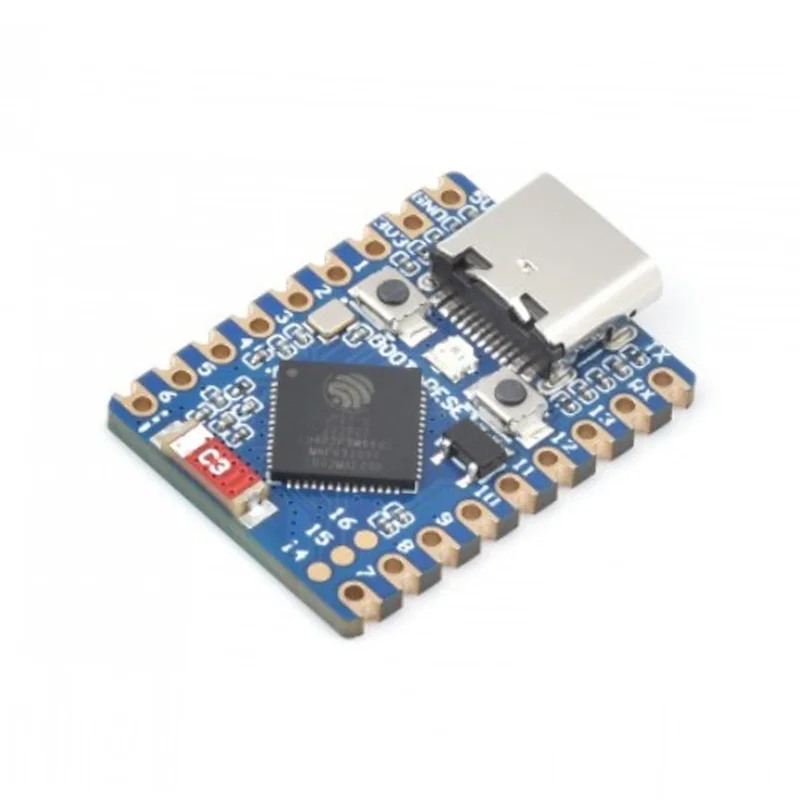
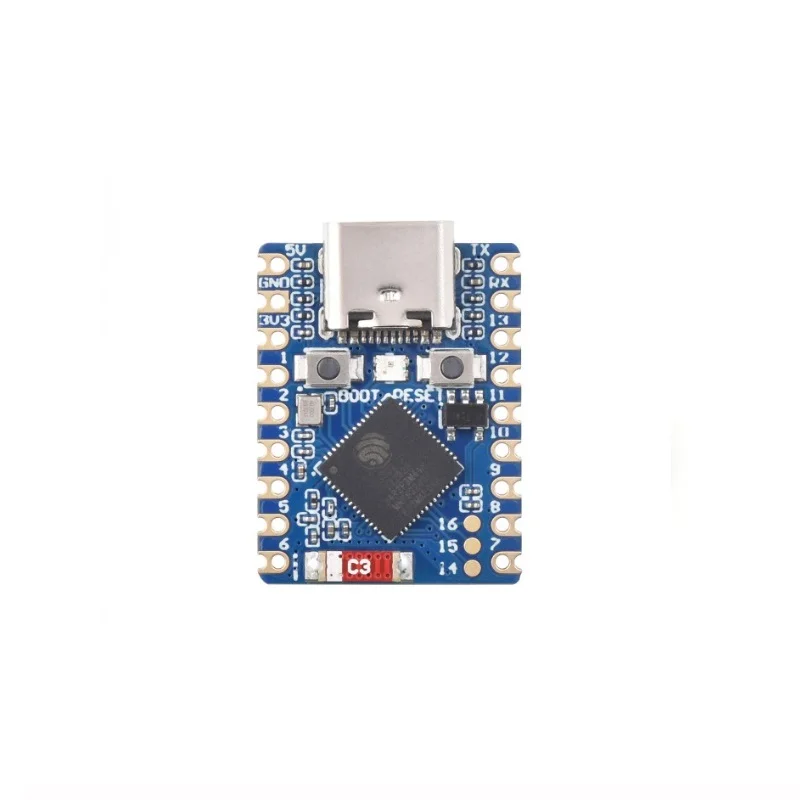
The Waveshare ESP32-S3 Mini is a compact development board based on the ESP32-S3FH4R2 dual-core processor, delivering 240MHz performance with integrated 2.4GHz Wi-Fi and Bluetooth 5 LE connectivity for IoT and embedded wireless projects compatible with ESP-IDF, Arduino IDE, and MicroPython.

Features

  • Powered by ESP32-S3FH4R2 dual-core Xtensa LX7 processor running at up to 240MHz for responsive IoT applications.
  • Integrated 2.4GHz Wi-Fi (802.11 b/g/n) and Bluetooth 5 LE for dual-mode wireless connectivity and mesh networking.
  • Onboard 4MB Flash and 2MB PSRAM with 512KB SRAM for data-intensive tasks and complex firmware.
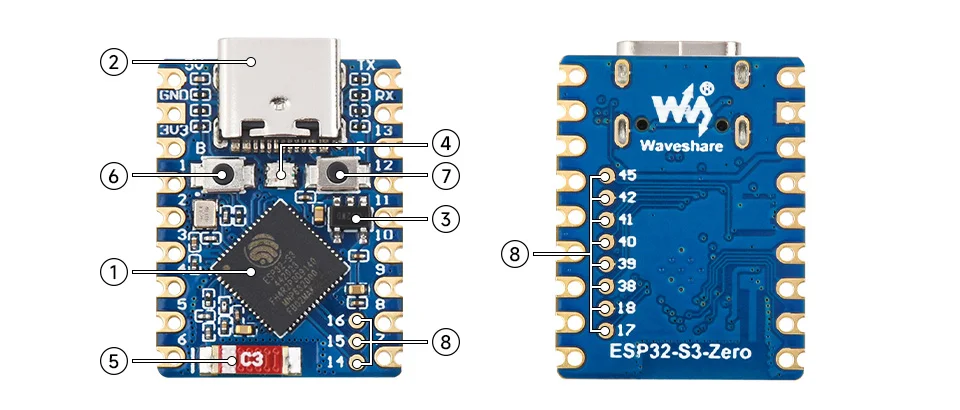
  • Castellated module design with onboard ceramic antenna allows direct soldering to carrier boards for compact end-products.
  • Provides 34 configurable GPIO pins supporting SPI, I2C, UART, I2S, and ADC interfaces for extensive peripheral integration.

Out of stock

Description

The Waveshare ESP32-S3 Mini Development Board integrates Espressif’s ESP32-S3FH4R2, a feature-rich System-on-Chip (SoC) built around a dual-core Xtensa LX7 microprocessor capable of clock speeds up to 240MHz. This processing power is coupled with a fully integrated 2.4GHz radio subsystem supporting IEEE 802.11 b/g/n Wi-Fi and Bluetooth 5 Low Energy (LE), enabling robust wireless communication for smart home devices, sensor networks, and portable gadgets.

Architected for low-power operation, the board supports flexible clock gating and independent power domain controls, allowing developers to optimize energy consumption for battery-powered scenarios. Its castellated edge design facilitates direct soldering onto custom PCBs, transforming the module into a permanent system component, while the integrated ceramic antenna provides a compact, certified RF solution without external components.

With its comprehensive set of 34 multifunction GPIO pins, the board exposes interfaces including four SPI, two I2C, three UART, and two I2S buses, alongside analog-to-digital converters, making it suitable for driving displays, connecting sensors, managing actuators, or handling audio data in embedded IoT systems.

Key Features

  • Dual-core Xtensa LX7 CPU delivers high computational performance for real-time IoT data processing and protocol stacks.
  • Integrated 2.4GHz RF front-end supports concurrent Wi-Fi and Bluetooth LE operation for hybrid network topologies.
  • Onboard memory configuration includes 4MB Flash for firmware, 2MB PSRAM for dynamic data, and 512KB SRAM for low-latency operations.
  • Castellated module form-factor enables direct PCB integration, ideal for volume production and space-constrained designs.
  • Comprehensive peripheral set with multiple SPI, I2C, UART, I2S, and ADC interfaces supports extensive sensor and actuator connectivity.
  • Built-in USB full-speed controller simplifies programming, debugging, and serial communication via a single micro-USB port.
  • Advanced power management unit supports deep sleep modes and independent domain control to minimize operational current draw.

Applications

  • Smart home automation controllers and wireless sensor nodes.
  • IoT gateway devices bridging BLE sensors to Wi-Fi networks.
  • Prototyping and product development for wearable tech and portable gadgets.
  • Industrial telemetry units for wireless data acquisition and control.
  • Educational platforms for learning embedded systems, wireless protocols, and IoT.

Technical Specifications

Microcontroller/SoCEspressif ESP32-S3FH4R2 (Xtensa® 32-bit LX7 Dual-Core)
Wireless Protocols2.4GHz Wi-Fi (802.11 b/g/n), Bluetooth 5 LE
CPU FrequencyUp to 240 MHz
Onboard Memory512KB SRAM, 384KB ROM, 4MB Flash, 2MB PSRAM
GPIO Pins34 (Multifunction)
Interfaces4x SPI, 2x I2C, 3x UART, 2x I2S, 2x ADC
AntennaIntegrated Ceramic Antenna
Module DesignCastellated for Direct Soldering
Programming InterfaceUSB Serial (Full-Speed)
DimensionsApprox. 5 x 5 x 1 cm

Frequently Asked Questions

How do I program the Waveshare ESP32-S3 Mini board?

The board is programmable via the Arduino IDE, ESP-IDF, or MicroPython. Connect it to your computer using a micro-USB cable. Install the ESP32-S3 board support package in Arduino IDE or set up the ESP-IDF toolchain. The onboard USB serial chip handles communication and firmware uploading. Select the correct COM port and board target (e.g., ESP32-S3 Dev Module) before compiling and uploading your code.

What is the purpose of the castellated edges on this module?

The castellated (half-hole) edges allow you to solder the entire module directly onto a custom carrier PCB, integrating it as a permanent system-on-module. This is ideal for moving from a prototype to a final product, saving space and simplifying RF design as the onboard ceramic antenna is already certified. Ensure your PCB footprint matches the pinout and provides stable 3.3V power to the module's VCC pins.

Can I use an external antenna with this ESP32-S3 Mini board?

This specific variant uses an integrated ceramic antenna and does not have an external antenna connector like an IPEX or SMA. The RF performance is optimized for the onboard antenna. For projects requiring an external antenna, you would need a module version with a connector or carefully solder a wire antenna to the designated RF pad, which requires impedance matching knowledge to avoid signal degradation.

What are the power supply requirements and sleep current for battery operation?

The module operates at a nominal voltage of 3.3V, supplied via the VCC pin or the USB port. For low-power battery applications, utilize the ESP32-S3's advanced sleep modes. Deep sleep current can drop to microamps, significantly extending battery life. You must configure the GPIO states and disable unnecessary peripherals in firmware to achieve the lowest possible sleep current consumption.

Package Includes

  • 1 x Waveshare ESP32-S3 Mini Development Board

Additional Information

Weight 0.003 kg
Dimensions 5 × 5 × 1 cm