SKU: IOWC-0618
📋 GST Invoice Available

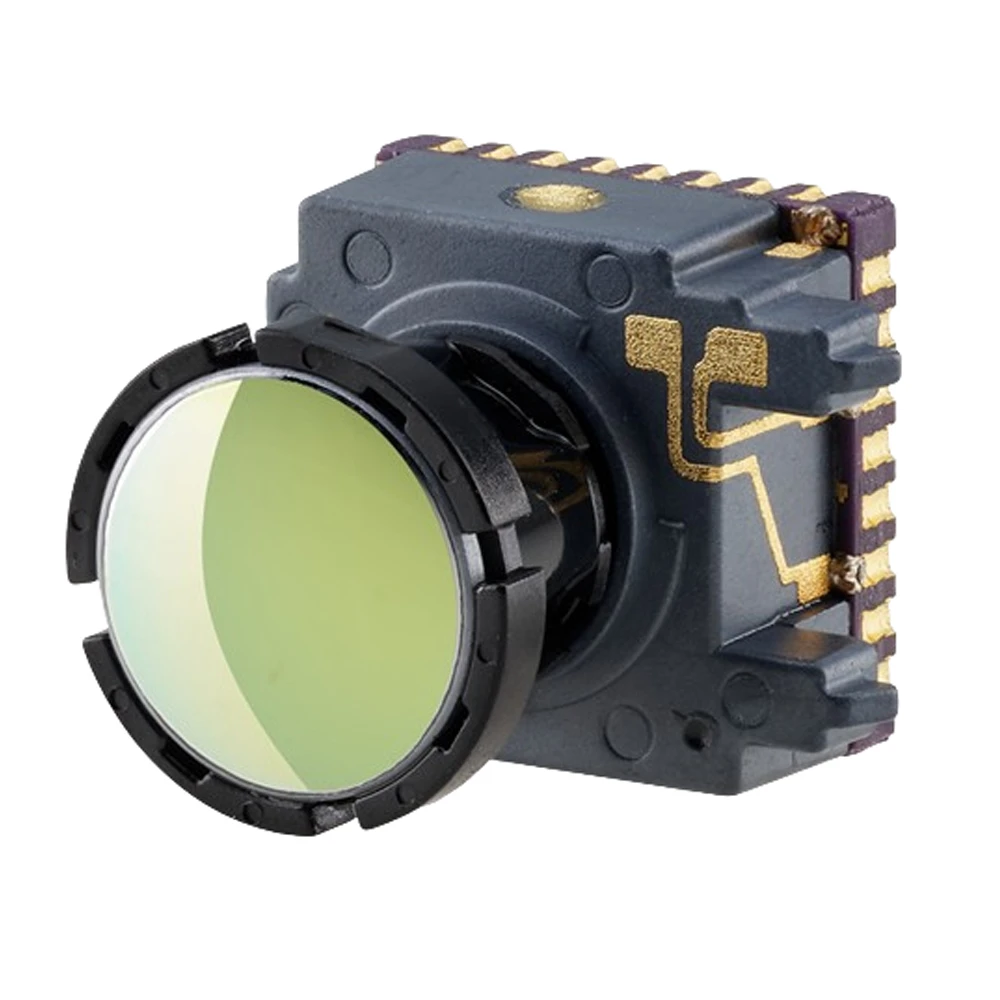
Teledyne Teledyne FLIR Lepton UWFOV (500-1387-00) Thermal Camera Module, 160×120 LWIR, 160° HFOV, Radiometric, SPI

₹25,309.00 (Inclusive of all taxes)
Out of Stock

The Teledyne Teledyne FLIR Lepton UWFOV thermal camera module is a compact, uncooled microbolometer-based LWIR sensor with a 160×120 resolution and an ultra-wide 160° horizontal field of view. It features a low-power design, SPI video output, and I2C control, making it ideal for integration with Raspberry Pi, BeagleBoard, and embedded IoT systems for advanced thermal imaging.

Features

  • Ultra-Wide 160° HFOV: Captures expansive thermal scenes for comprehensive monitoring and detection in smart devices and automation systems.
  • High-Sensitivity LWIR Imaging: 160×120 uncooled microbolometer detector with <50 mK NEdT sensitivity for detailed thermal data in the 8-14µm spectral range.
  • Low-Power Embedded Design: Consumes only 150 mW active and 5 mW standby, perfect for battery-powered IoT devices and mobile electronics.
  • Standard Digital Interfaces: SPI video output (14/8-bit/RGB selectable) and I2C-like CCI control port for seamless integration with common development platforms.
  • Compact & Lightweight: Measures just 12.7 x 11.52 x 11.44 mm and weighs 0.7g, enabling integration into space-constrained applications.

Out of stock

Description

The Teledyne Teledyne FLIR Lepton UWFOV (500-1387-00) is a professional-grade longwave infrared thermal imaging module engineered for embedded vision applications. Its uncooled microbolometer technology provides reliable thermal detection across a -10°C to +400°C range without the need for bulky cooling systems, ensuring low power draw and long operational life in field deployments.

Designed for system integrators and developers, the module outputs radiometric data via a flexible SPI interface, allowing for direct connection to microcontrollers and single-board computers. The accompanying I2C-like CCI port provides precise control over configuration parameters, frame rate (8.6 Hz), and operational modes, facilitating deep integration into custom firmware for industrial monitoring, smart home automation, and predictive maintenance solutions.
Key Features

  • Ultra-wide 160-degree horizontal field of view for maximum scene coverage and situational awareness.
  • Uncooled VOx microbolometer detector delivering high thermal sensitivity and stability.
  • Low power consumption architecture ideal for portable, battery-operated IoT devices.
  • Standard SPI video interface with selectable 14-bit, 8-bit, or RGB output formats.
  • I2C-like CCI (Camera Control Interface) for easy configuration and control.
  • Compact, lightweight form factor designed for direct integration into embedded systems.
  • Radiometric capability for temperature measurement and analysis.
  • NDAA compliant, suitable for a wide range of commercial and industrial applications.

Applications

  • Smart Home & Building Automation: Occupancy detection, HVAC monitoring, and energy management systems.
  • Industrial Predictive Maintenance: Early fault detection in electrical panels, motors, and machinery through thermal anomalies.
  • IoT Environmental Sensing: Integration into drones or fixed sensors for wildlife monitoring, fire detection, and agricultural surveys.
  • Mobile & Wearable Electronics: Thermal imaging for smartphones, augmented reality devices, and personal safety gear.
  • Automotive & Transportation: Enhanced vision systems for driver assistance, pedestrian detection, and cabin comfort control.

Technical Specifications

Detector TypeUncooled microbolometer (VOx)
Resolution160 x 120 pixels
Spectral Range8 µm to 14 µm (LWIR)
Sensitivity (NEdT)< 50 mK
Horizontal Field of View (HFOV)160°
Frame Rate8.6 Hz
Video InterfaceSPI (14-bit / 8-bit / RGB selectable)
Control InterfaceI2C-like CCI
Power Consumption (Active)150 mW
Power Consumption (Standby)5 mW
Operating VoltageCore: 2.8V, 1.2V; I/O: 2.5–3.1V
Pixel Pitch12 µm
Dimensions (L x W x H)12.7 × 11.52 × 11.44 mm
Weight0.7 g
Operating Temperature Range-10°C to +400°C (mode dependent)

Frequently Asked Questions

What development platforms is the Teledyne FLIR Lepton UWFOV module compatible with?

The module is designed for seamless integration with popular embedded platforms. It connects directly to Raspberry Pi and BeagleBoard boards using its SPI video port and I2C-like CCI control interface. For microcontroller projects, you can use it with Arduino (via compatible shields) or STM32 using provided driver libraries. Official Teledyne FLIR software development kits (SDKs) and communication protocols are available to streamline image capture and temperature data extraction on your chosen system.

How do I power and interface the Lepton module in my project?

Power the module using its specified voltage rails: 2.8V and 1.2V for the core, and 2.5-3.1V for I/O. A typical setup involves a regulated power supply or LDO. For interfacing, connect the SPI lines (MISO, MOSI, SCLK, CS) to your host controller for video data. The I2C-like CCI port (SDA, SCL) is used for sending configuration commands and reading telemetry. Ensure proper signal level translation if your host operates at 5V logic. Refer to the Teledyne FLIR Lepton Engineering Datasheet for detailed pinout and timing diagrams.

What is the difference between radiometric and non-radiometric output modes?

In radiometric mode, the Lepton outputs calibrated data where each pixel value corresponds to a precise temperature, enabling accurate thermal measurement and analysis. Non-radiometric mode provides standard video imagery optimized for display without the computational overhead of temperature calibration. You select the mode via the CCI interface. For applications requiring temperature readings, such as fault detection or environmental monitoring, you must configure and process the module in radiometric mode using Teledyne FLIR's provided algorithms.

What is the operational temperature range and how does it affect measurements?

The module's housing operates from -10°C to +80°C, while the detector can image scenes from -10°C to +400°C in high-gain mode. Extreme ambient temperatures can affect the sensor's calibration and noise floor. For accurate measurements, allow the module to thermally stabilize after power-on. Teledyne FLIR provides calibration data and software tools to perform periodic non-uniformity corrections (NUC) to maintain accuracy, especially if the housing temperature fluctuates significantly during operation in harsh environments.

Package Includes

  • 1 x Teledyne Teledyne FLIR Lepton UWFOV (500-1387-00) Thermal Camera Module