SKU: IOWC-1172
📋 GST Invoice Available

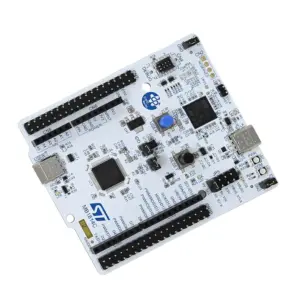
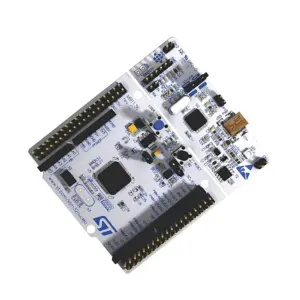
STMicroelectronics NUCLEO-L4R5ZI-P STM32 Nucleo-144 Dev Board

₹2,909.00 (Inclusive of all taxes)
Out of Stock

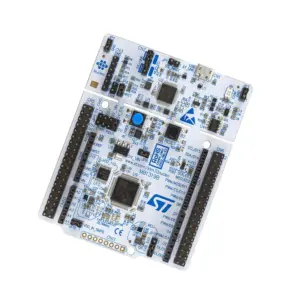
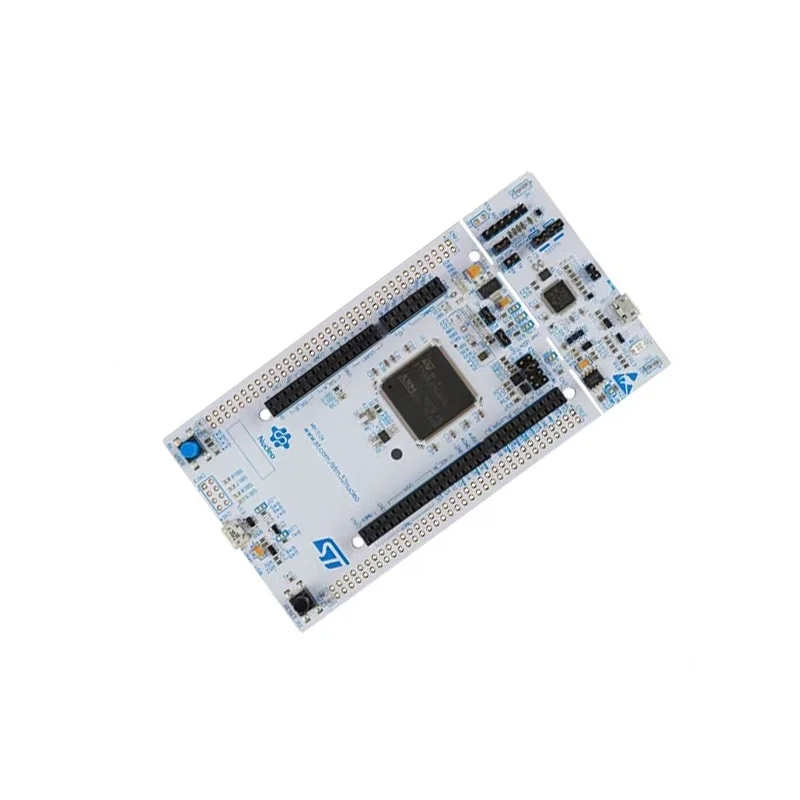
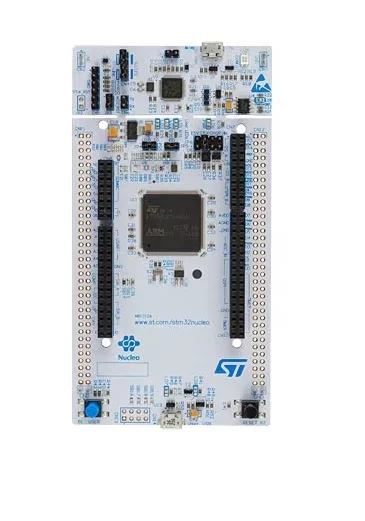
The STMicroelectronics NUCLEO-L4R5ZI-P is an STM32 Nucleo-144 development board featuring the ultra-low-power STM32L4R5ZI-P MCU. It integrates an ST-LINK debugger, supports Arduino Uno V3 connectivity via ST Zio, and offers full I/O access through ST morpho headers for rapid prototyping with STM32Cube software.

Features

  • Features the high-performance, ultra-low-power STM32L4R5ZI-P microcontroller with ARM Cortex-M4 core.
  • Integrated ST-LINK/V2-1 debugger and programmer eliminates the need for an external probe.
  • Arduino Uno V3 compatible ST Zio connector for easy shield expansion.
  • Full ST morpho headers provide complete access to all STM32 I/O pins for advanced prototyping.
  • Powered via USB or external sources with optional internal/external SMPS for optimal power efficiency.

Out of stock

Description

The NUCLEO-L4R5ZI-P is a versatile Nucleo-144 development board designed to unlock the capabilities of the STM32L4+ series microcontrollers. It serves as a complete evaluation and prototyping platform, integrating the debug interface and power supply to get developers started immediately. The board’s dual expansion ecosystem—combining Arduino Uno V3 compatibility with the comprehensive ST morpho headers—enables seamless connection to a vast array of sensors, actuators, and communication modules.

Engineered for low-power IoT applications, the board leverages the STM32L4R5ZI-P’s dynamic voltage scaling and multiple low-power modes. Developers can program it using industry-standard IDEs like STM32CubeIDE, IAR EWARM, or Keil MDK, supported by the extensive STM32Cube software suite including HAL libraries, middleware, and code examples. This makes it an ideal foundation for battery-operated devices, wearable tech, and industrial control systems requiring a balance of performance and energy efficiency.

Key Features

  • Comprehensive development platform centered on the ARM Cortex-M4 based STM32L4R5ZI-P MCU.
  • Onboard ST-LINK/V2-1 debugger/programmer with support for virtual COM port and mass storage.
  • Dual expansion interfaces: Arduino Uno R3-compatible ST Zio connector and full-access ST morpho headers.
  • Flexible power supply options including USB VBUS, external sources, and an optional switch-mode power supply (SMPS) for reduced run-mode consumption.
  • Direct support for the STM32Cube ecosystem, including free HAL libraries, middleware, and project examples.
  • Three user LEDs and two user buttons (including reset) for basic interaction and testing.
  • Compatible with a wide range of professional IDEs and development environments.

Applications

  • Prototyping ultra-low-power IoT sensor nodes and wearable devices.
  • Developing industrial control and monitoring systems with real-time performance.
  • Creating smart home automation controllers and hubs.
  • Building portable medical and fitness monitoring equipment.
  • Academic research and embedded systems education.

Technical Specifications

MicrocontrollerSTM32L4R5ZI-P (ARM Cortex-M4)
Core ArchitectureARM Cortex-M4 with FPU
User Interface3 LEDs, 2 Buttons (1 Reset)
Debug InterfaceIntegrated ST-LINK/V2-1
Expansion ConnectorsST Zio (Arduino Uno V3), ST morpho headers
Power SupplyUSB VBUS, External VIN, Internal/External SMPS
Oscillator32.768 kHz Crystal
Software SupportSTM32CubeMX, STM32CubeIDE, IAR EWARM, Keil MDK
PackageLQFP144 / TFBGA225 compatible footprint

Frequently Asked Questions

How do I program the NUCLEO-L4R5ZI-P development board?

You can program the board using ST's free STM32CubeIDE or other supported IDEs like Keil MDK or IAR Embedded Workbench. Connect the board via USB to your PC; the integrated ST-LINK will be recognized. Use STM32CubeMX to generate initialization code and a project framework, then import it into your chosen IDE to write, compile, and flash your application directly to the microcontroller.

What are the power supply options for this Nucleo board?

The board can be powered via the ST-LINK USB connector (USB VBUS), an external 7-12V supply connected to the VIN pin, or through the E5V pin on the morpho headers. For the STM32L4R5ZI-P, an internal or external Switch-Mode Power Supply (SMPS) feature can be enabled to significantly reduce power consumption during run mode, which is crucial for battery-operated IoT applications.

How do I connect Arduino shields or other expansion boards?

Use the ST Zio connector, which replicates the Arduino Uno V3 pinout, to directly plug in compatible Arduino shields. For more advanced I/O access and custom peripherals, utilize the dual rows of ST morpho headers. These headers expose all available GPIOs, analog inputs, and communication interfaces (I2C, SPI, UART) of the STM32L4R5ZI-P microcontroller for custom wiring and module integration.

Can I use the onboard ST-LINK to debug other STM32 boards?

Yes, the onboard ST-LINK/V2-1 debugger can be used to program and debug external STM32 targets. You need to disconnect the CN2 jumpers on the Nucleo board to isolate the internal MCU. Then, connect the SWD pins (SWDIO, SWCLK, GND) and a 3.3V supply from the morpho headers to your external target board. Configure your IDE to use an external ST-LINK for debugging.

Package Includes

  • 1 x NUCLEO-L4R5ZI-P Development Board

Additional Information

Weight 0.45 kg
Dimensions 22 × 17 × 6 cm