SKU: IOWC-0864
📋 GST Invoice Available

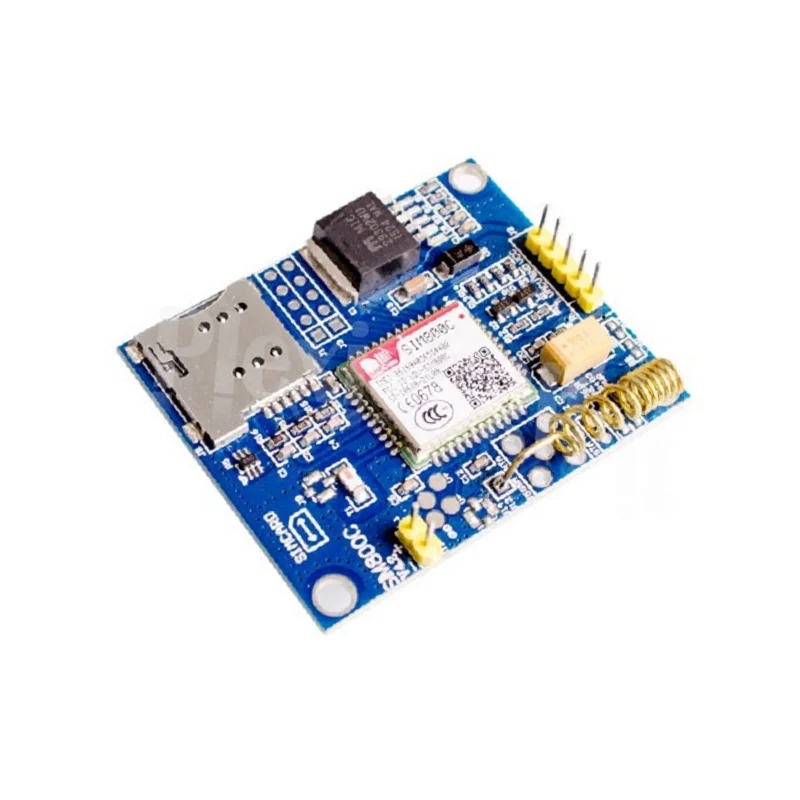
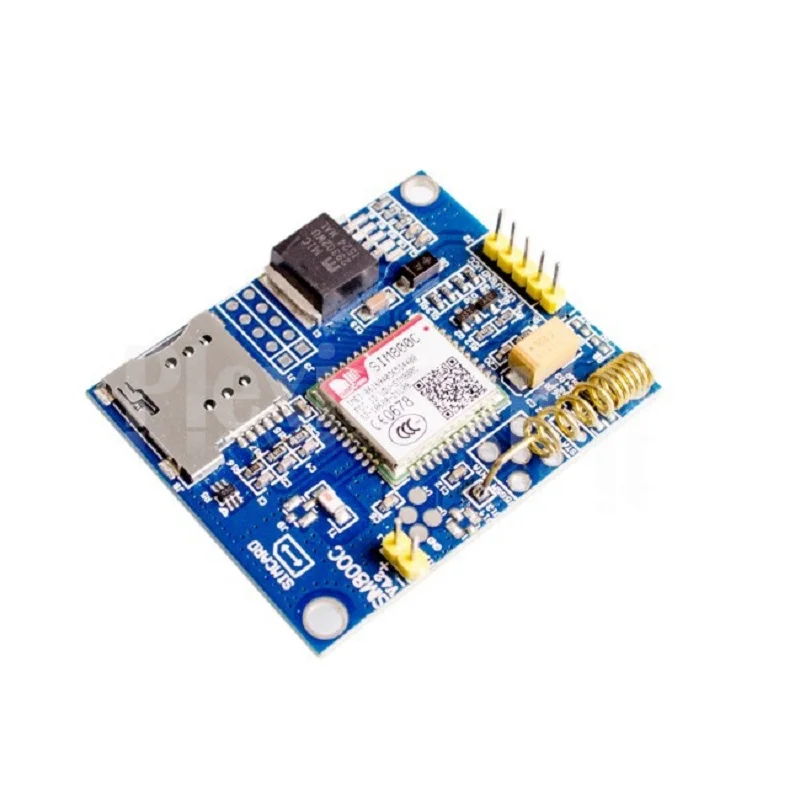
SIM800C GSM/GPRS Quad-Band Module Development Board w/ Spring Antenna

₹1,029.00 (Inclusive of all taxes)
Out of Stock

The SIM800C is a compact GSM/GPRS quad-band (850/900/1800/1900MHz) module on a development board, ideal for adding SMS, voice, and data connectivity to Arduino, MCU, or embedded projects via AT commands.

Features

  • Quad-Band GSM/GPRS (850/900/1800/1900 MHz) for global 2G network compatibility.
  • Integrated development board with spring antenna simplifies prototyping and testing.
  • Communicates via AT commands over serial UART for easy integration with Arduino, ESP32, or other MCUs.
  • Low power operation with ~3mA standby current, suitable for battery-powered IoT devices.
  • Supports voice calls, SMS, and GPRS data transfer (up to 85.6kbps downlink).

Out of stock

Description

The SIM800C GSM/GPRS module provides robust cellular connectivity for IoT and M2M applications, operating across four global frequency bands. Its integrated development board includes a spring antenna and direct serial interfaces, eliminating the need for external level shifters like MAX232. The module communicates via standard AT commands, enabling straightforward firmware development on platforms like Arduino IDE or with direct MCU serial communication.

Engineered for low power consumption, the SIM800C features a standby current of approximately 3mA, making it viable for remote telemetry, tracking, and alarm systems. Its compact form factor and support for digital/analog audio, along with various voice codecs, allow for versatile deployment in compact devices requiring reliable SMS alerts, data transmission, or voice functionality.

Key Features

  • Global quad-band GSM/GPRS coverage (850/900/1800/1900 MHz).
  • Integrated spring antenna and development board for immediate prototyping.
  • Direct serial UART interface compatible with 3.3V/5V MCUs without external ICs.
  • Comprehensive AT command set for controlling SMS, voice calls, and GPRS data.
  • Low standby current (~3mA) supports extended operation in battery-powered nodes.
  • Built-in FM radio support (76-109 MHz) for additional functionality.
  • Robust operating temperature range (-40°C to +85°C) for industrial environments.

Applications

  • Asset tracking and fleet management GPS loggers with SMS alerts.
  • Remote environmental monitoring sensors with GPRS data backhaul.
  • Industrial telemetry and alarm systems for remote equipment.
  • Smart agriculture sensors for soil moisture or weather reporting via SMS.
  • Basic IoT devices requiring low-bandwidth data or notification services.

Technical Specifications

Module ModelSIM800C
Wireless ProtocolGSM/GPRS (2G)
Frequency RangeQuad-Band: 850/900/1800/1900 MHz
RF Transmit PowerClass 4 (2W @ 850/900 MHz), Class 1 (1W @ 1800/1900 MHz)
RF Sensitivity< -105 dB
Supply Voltage3.4V to 4.4V
Standby Current~3 mA
InterfacesUART Serial, Audio, SIM Card Slot
Antenna ConnectorIntegrated Spring Antenna
Operating Temperature-40°C to +85°C
DimensionsBoard approx. 10 x 8 cm (from shipping data)

Frequently Asked Questions

What power supply voltage does the SIM800C module require?

The SIM800C module requires a 3.4V to 4.4V DC power supply, typically provided via the VCC pins on the development board. It is critical to use a stable power source capable of supplying peak currents of up to 2A during transmission bursts to ensure reliable operation and prevent resets.

How do I communicate with the SIM800C module from an Arduino?

Connect the SIM800C board's TX and RX pins to your Arduino's software serial pins (e.g., D8 and D9). Use the Arduino's SoftwareSerial library to send standard AT commands, such as AT for testing, AT+CMGS for sending an SMS, or AT+CGATT for GPRS attachment. Ensure both devices share a common ground and the Arduino provides 3.3V or 5V logic levels compatible with the module's UART.

Can I replace the integrated spring antenna with an external one?

Yes, the SIM800C module typically has a dedicated RF pad or connector for an external antenna. You can carefully desolder the spring antenna and solder a 50-ohm pigtail cable with an SMA or IPEX connector to attach a higher-gain external antenna, which can significantly improve signal strength and range in areas with weak cellular coverage.

What is the typical standby and active current consumption?

The module consumes approximately 3mA in standby mode with network registration active. During a GSM call or GPRS data transmission, the current can surge to over 1A, especially at maximum transmit power. For battery-powered designs, implement the module's sleep modes via AT commands and use a suitable high-capacity Li-Po battery with a robust voltage regulator.

Package Includes

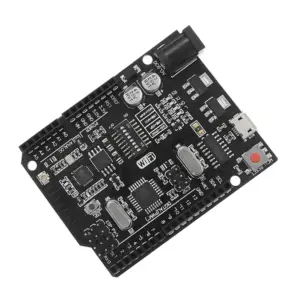
  • 1 x SIM800C GSM/GPRS Module on Development Board with Spring Antenna

Additional Information

Weight 0.025 kg
Dimensions 8 × 10 × 3 cm