SKU: IOWC-0865
📋 GST Invoice Available

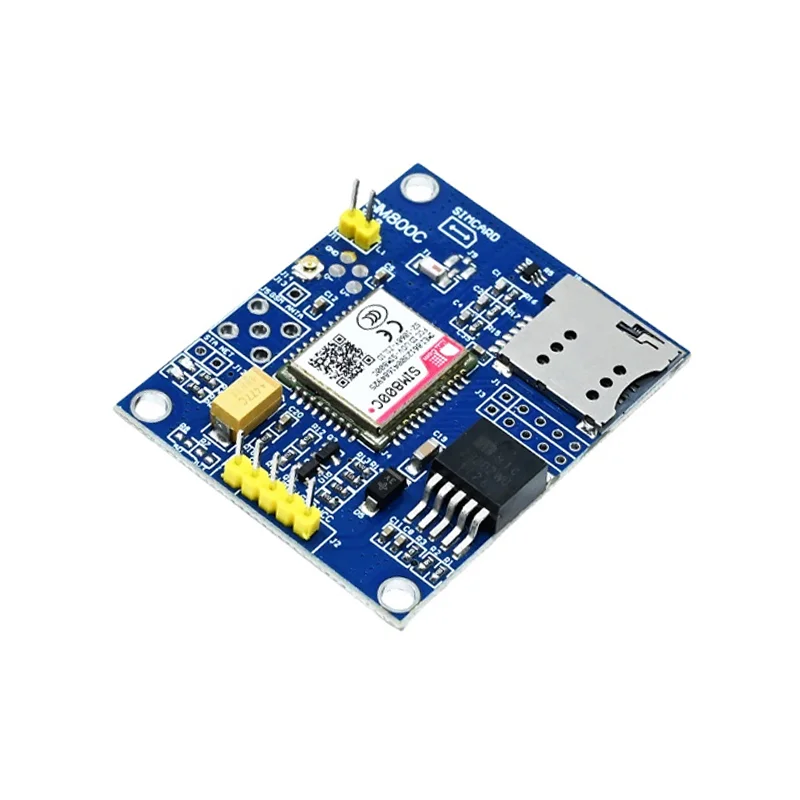
SIM800C GSM/GPRS Quad-Band Module Development Board w/ Antenna

₹839.00 (Inclusive of all taxes)
Out of Stock

The SIM800C is a compact quad-band GSM/GPRS module development board operating on 850/900/1800/1900MHz bands, ideal for global SMS, voice, and data transmission projects. It interfaces directly with MCUs like Arduino via AT commands and features a wide 3-4V power input range for flexible integration.

Features

  • Quad-band GSM/GPRS coverage (850/900/1800/1900MHz) for worldwide deployment in voice, SMS, and data applications.
  • Direct 3.3V TTL serial interface for easy connection to Arduino, Raspberry Pi, or other microcontrollers without level shifters.
  • Low power consumption with a standby current as low as 3mA, suitable for battery-powered IoT devices and trackers.
  • Integrated antenna options include IPEX, SMA, and spring antenna interfaces for flexible RF design.
  • Supports GPRS data transfer (up to 85.6kbps downlink), DTMF, TTS, and Bluetooth 3.0 for enhanced connectivity features.

Out of stock

Description

The SIM800C GSM/GPRS module is engineered for reliable machine-to-machine (M2M) communication in a compact form factor. Its quad-band RF transceiver ensures compatibility with global cellular networks, providing a robust link for remote telemetry, alarm systems, and asset tracking. The module’s architecture is optimized for low-power operation, making it a prime choice for solar-powered or battery-dependent field deployments.

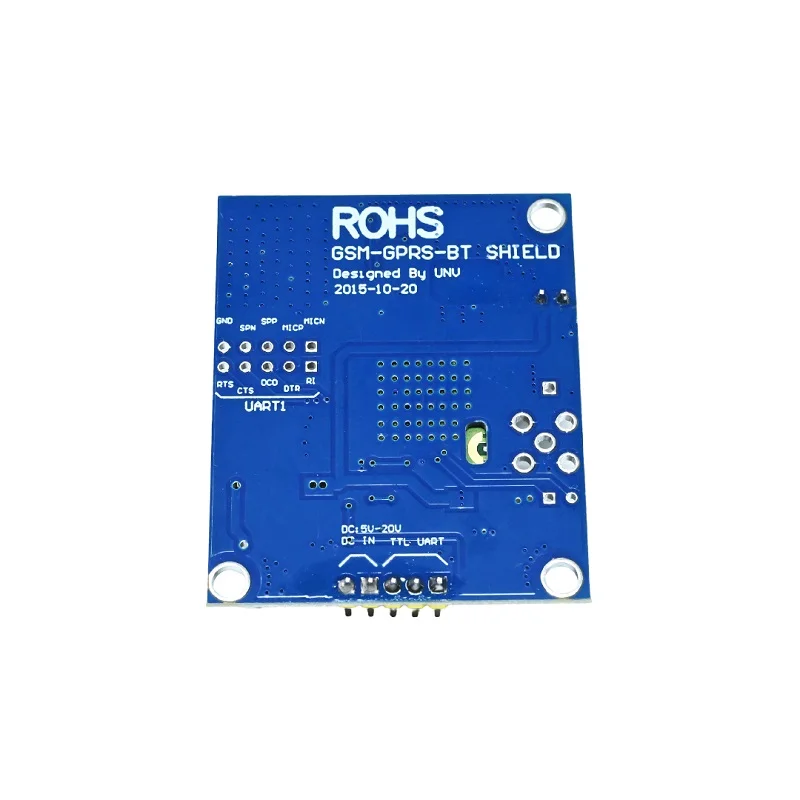
Communication is managed entirely through standard AT commands over a serial UART, allowing seamless integration with embedded firmware on platforms like ESP32, STM32, or Arduino. The development board simplifies prototyping by including voltage regulation, audio jacks for microphone and headphone, and multiple antenna connection points. This design enables developers to rapidly implement GSM-based control, data logging, or notification systems without complex RF layout.

Key Features

  • Global quad-band GSM/GPRS support for voice calls, SMS messaging, and TCP/IP data connectivity via GPRS.
  • Direct TTL serial interface (3.3V logic) eliminates the need for external MAX232 chips, simplifying MCU integration.
  • Comprehensive audio support with HR, FR, EFR, and AMR voice coding, plus DTMF and Text-to-Speech (TTS) functionality.
  • Flexible power management with a wide 3-4V DC input range and dedicated battery (BAT) interface for 3.7V Li-ion or 18650 cells.
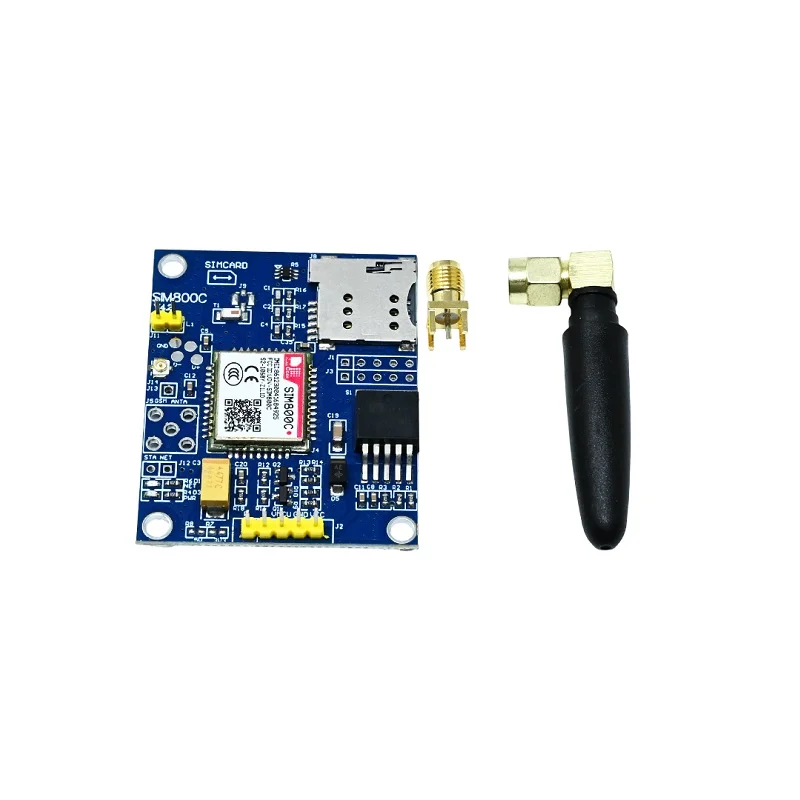
  • Multiple integrated antenna interfaces: IPEX (u.FL), SMA connector, and onboard spring antenna for varied deployment scenarios.
  • Enhanced feature set includes integrated Bluetooth 3.0 supporting SPP and audio profiles for short-range wireless expansion.
  • Robust operating temperature range from -40°C to +85°C ensures reliability in harsh industrial or outdoor environments.

Applications

  • GPS/GNSS asset tracking and fleet management devices with GSM backhaul.
  • Remote environmental monitoring and telemetry for agriculture, weather stations, or industrial IoT (IIoT).
  • Smart home and security systems for SMS-based alarm notifications and remote control.
  • Automated vending machines, payment terminals, or POS systems requiring GPRS data connectivity.
  • Personal safety devices, emergency call buttons, and wearable health monitors with cellular fallback.

Technical Specifications

Wireless ProtocolGSM/GPRS Quad-Band
Frequency Range850 / 900 / 1800 / 1900 MHz
RF Transmit PowerClass 4 (2W @ 850/900MHz), Class 1 (1W @ 1800/1900MHz)
RF Sensitivity< -105 dB
Supply Voltage3V to 4V DC
Standby Current~3 mA
Data Speed (GPRS)85.6 kbps (Downlink), 42.8 kbps (Uplink)
Interfaces2x UART (TTL), Audio In/Out, BAT, Bluetooth, Antenna (IPEX/SMA/Spring)
Antenna ConnectorIPEX (u.FL), SMA, Integrated Spring Antenna
Operating Temperature-40°C to +85°C
DimensionsApprox. 10 cm x 8 cm x 3 cm (Development Board)

Frequently Asked Questions

What is the correct power supply voltage for the SIM800C development board?

The SIM800C module itself typically requires 3.4V to 4.4V. This development board includes a regulator, accepting a wide 3V to 4V DC input via its VCC pin. For reliable operation, especially during transmission peaks, a stable 3.7V to 4V supply is recommended. Avoid exceeding 4.2V to prevent damage. When using a lithium battery, connect it directly to the dedicated BAT pins, which are designed for 3.7V Li-ion or 18650 cells.

How do I send an SMS using this SIM800C board with an Arduino?

Connect the board's TXD pin to Arduino RX (pin 2 for SoftwareSerial) and RXD to Arduino TX (pin 3). Power the board with 3.7V-4V. In your Arduino sketch, initialize a SoftwareSerial object on those pins at 9600 or 115200 baud. Use standard AT commands: 'AT+CMGF=1' to set text mode, 'AT+CMGS="+1234567890"' (replace with number), then send your message followed by Ctrl+Z (ASCII 26). Ensure a valid SIM card and antenna are attached. The board's LED will indicate network registration.

Can I use this module for GPRS internet connectivity and HTTP requests?

Yes. After establishing a network connection ('AT+CREG?' returns 1,1), activate GPRS with 'AT+CGATT=1' and define the APN using 'AT+CSTT="your.apn.here"'. Then bring up the wireless context with 'AT+CIICR' and get an IP address via 'AT+CIFSR'. You can open a TCP connection to a server using 'AT+CIPSTART="TCP","domain.com",80' and send HTTP GET/POST requests with 'AT+CIPSEND'. The module supports GPRS Class 10 (85.6kbps down), suitable for sending sensor data or receiving small commands.

What are the differences between the IPEX, SMA, and onboard spring antenna options?

The IPEX (u.FL) connector is for small, external stub antennas, ideal for compact enclosures. The SMA port allows connection to larger, high-gain external antennas via an SMA pigtail, which can significantly improve range in weak signal areas. The onboard spring antenna is a convenient, integrated solution for prototyping and indoor use but offers the least gain. For final deployments, an external antenna connected via IPEX or SMA is recommended. Always ensure the antenna is tuned for GSM bands (850/900/1800/1900MHz) and has proper 50-ohm impedance matching.

Package Includes

  • 1 x SIM800C GSM/GPRS Development Board
  • 1 x Antenna

Additional Information

Weight 0.025 kg
Dimensions 10 × 8 × 3 cm