SKU: SENS-3151
📋 GST Invoice Available

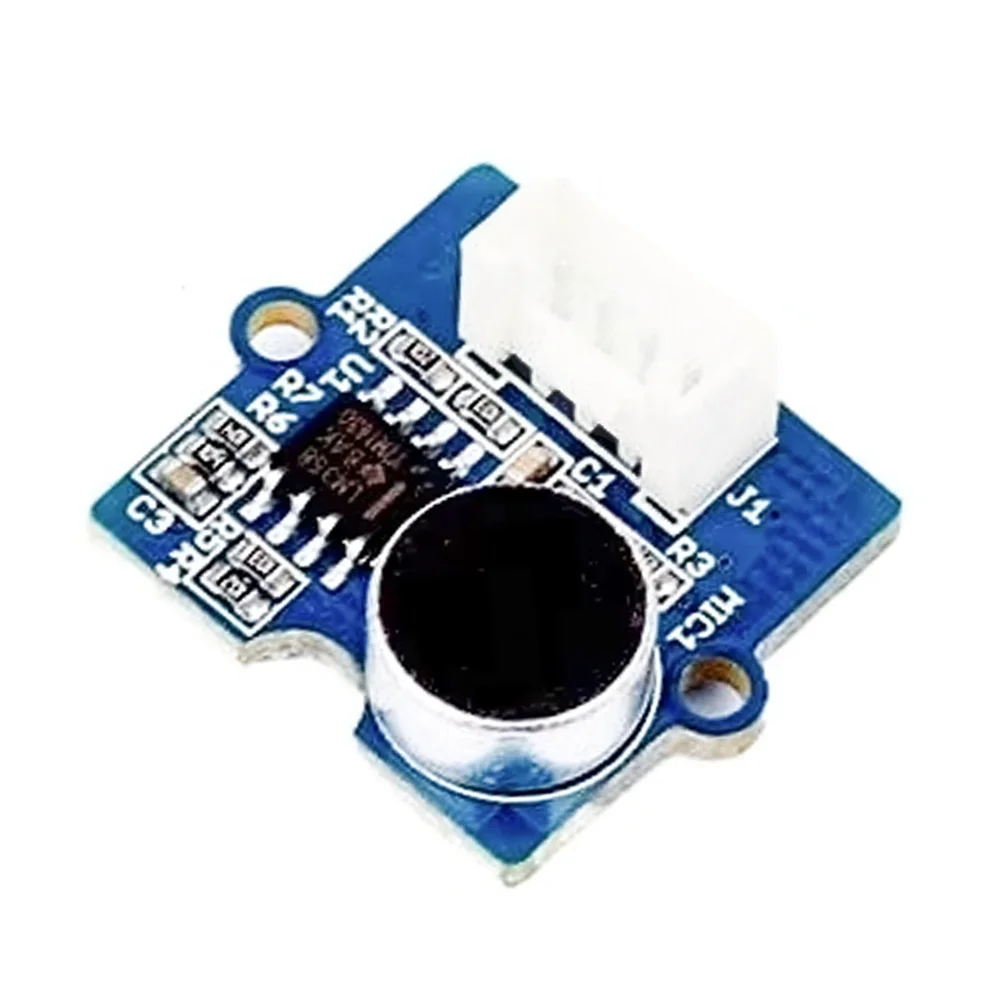
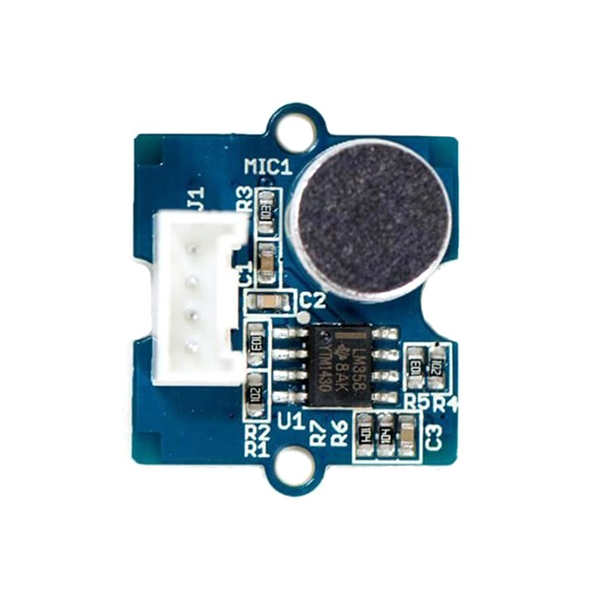
Seeed Studio Studio Grove Sound Sensor - LM386 Amplifier & Electret Microphone Module

₹529.00 (Inclusive of all taxes)
Out of Stock

The Seeed Studio Studio Grove Sound Sensor is an analog-output module featuring an LM386 amplifier and an electret microphone, designed for easy integration with Arduino, Raspberry Pi (via GrovePi), and other 3.3V/5V microcontroller platforms to detect environmental sound intensity.

Features

  • Analog output signal for direct ADC sampling with Arduino or Seeeduino.
  • Integrated LM386 amplifier provides 26 dB voltage gain for enhanced sensitivity.
  • On-board potentiometer for manual adjustment of output signal level and threshold.
  • Grove 4-pin standardized connector for plug-and-play compatibility with Seeed Studio’s ecosystem.
  • Wide operating voltage range from 3.3V to 5V DC, drawing only 4-5 mA.

Out of stock

Description

The Grove Sound Sensor is a fundamental audio detection module built around a high-sensitivity electret microphone and an LM386 low-voltage audio power amplifier. This combination converts acoustic pressure waves into a corresponding analog voltage signal, which can be directly read by a microcontroller’s analog-to-digital converter (ADC). The module’s output varies proportionally with the sound intensity of its environment.

An integrated trimming potentiometer allows for fine-tuning of the signal gain and output baseline, enabling customization for different ambient noise levels and application-specific thresholds. The sensor operates across a standard 3.3V to 5V logic range, making it compatible with most development boards without requiring additional signal conditioning circuitry.

Key Features

  • Electret condenser microphone with 52-48 dB sensitivity and 16-20 kHz frequency response.
  • LM386 amplifier IC configured for 26 dB gain, providing a robust analog output signal.
  • On-board gain/sensitivity adjustment via a user-accessible potentiometer.
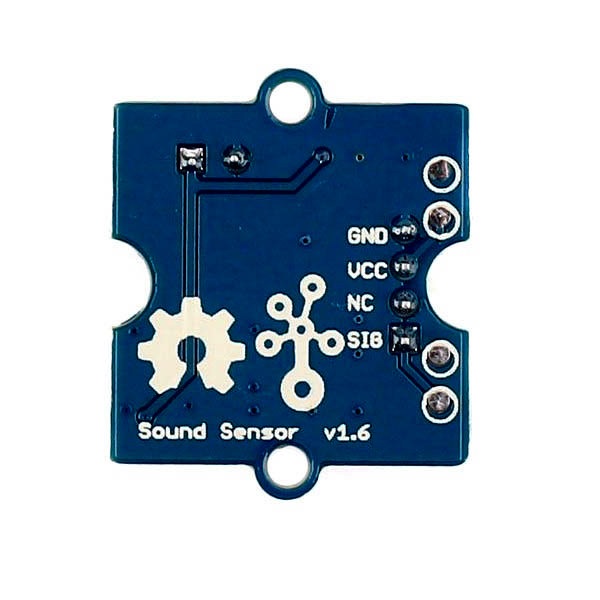
  • Grove 4-pin interface (VCC, GND, NC, SIG) ensures quick, solderless connection to base shields.
  • Compact PCB footprint (24mm x 20mm) with a 2mm mounting hole for secure installation.
  • Low power consumption, typically 4-5 mA at 5V, suitable for battery-powered projects.
  • High signal-to-noise ratio (54 dB) for clearer audio detection and reduced false triggers.

Applications

  • Sound-activated triggers for smart home automation (e.g., clap-controlled lights).
  • Noise level monitoring and data logging for environmental studies.
  • Interactive robotics and animatronics for sound-reactive behavior.
  • Basic voice command and audio event detection in DIY electronics projects.
  • Educational tool for teaching analog sensor interfacing and signal processing.

Technical Specifications

Operating Voltage3.3 V to 5 V DC
Supply Voltage (LM386)4 V to 12 V
Operating Current4 to 5 mA (at 5V)
Voltage Gain26 dB (at V=6V, f=1kHz)
Microphone Sensitivity52 to 48 dB (at f=1kHz)
Microphone Impedance2.2 kΩ
Frequency Response16 Hz to 20 kHz
Signal-to-Noise Ratio54 dB
Output TypeAnalog Voltage
InterfaceGrove 4-pin
Dimensions (L x W)24 mm x 20 mm
Mounting Hole Diameter2 mm
Weight4 g

Frequently Asked Questions

What is the output signal of this Grove Sound Sensor?

The sensor provides an analog voltage output. The voltage level increases with higher sound intensity, which can be directly read by the ADC pin of a microcontroller like an Arduino or Raspberry Pi (with an ADC hat). The on-board potentiometer allows you to adjust the baseline output and sensitivity.

How do I connect this sensor to an Arduino without a Grove shield?

You can connect it directly using Jumper wires. The Grove connector's four pins are VCC (3.3V/5V), GND, NC (Not Connected), and SIG (Analog Output). Connect VCC to your Arduino's 5V pin, GND to GND, and the SIG pin to an analog input pin (e.g., A0). The NC pin is left unconnected.

What is the purpose of the on-board potentiometer?

The potentiometer adjusts the gain of the internal LM386 amplifier and the DC bias point of the output signal. Turning it allows you to calibrate the sensor for different ambient noise environments, setting a threshold for triggering events or optimizing the analog reading range for your specific application.

Can this sensor detect specific frequencies or words?

No, this is a basic sound intensity (volume) sensor. It outputs a voltage proportional to the overall amplitude of sound in its 16 Hz to 20 kHz frequency range. It cannot discriminate between different frequencies or recognize specific words. For frequency analysis or speech recognition, a digital microphone with a DSP is required.

Package Includes

  • 1 x Grove Sound Sensor Module

Additional Information

Weight 0.004 kg
Dimensions 2.4 × 2 cm