SKU: IOWC-1071
📋 GST Invoice Available

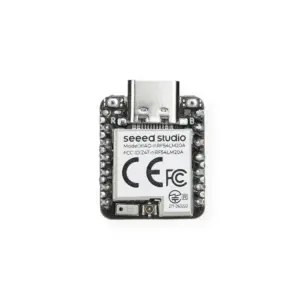
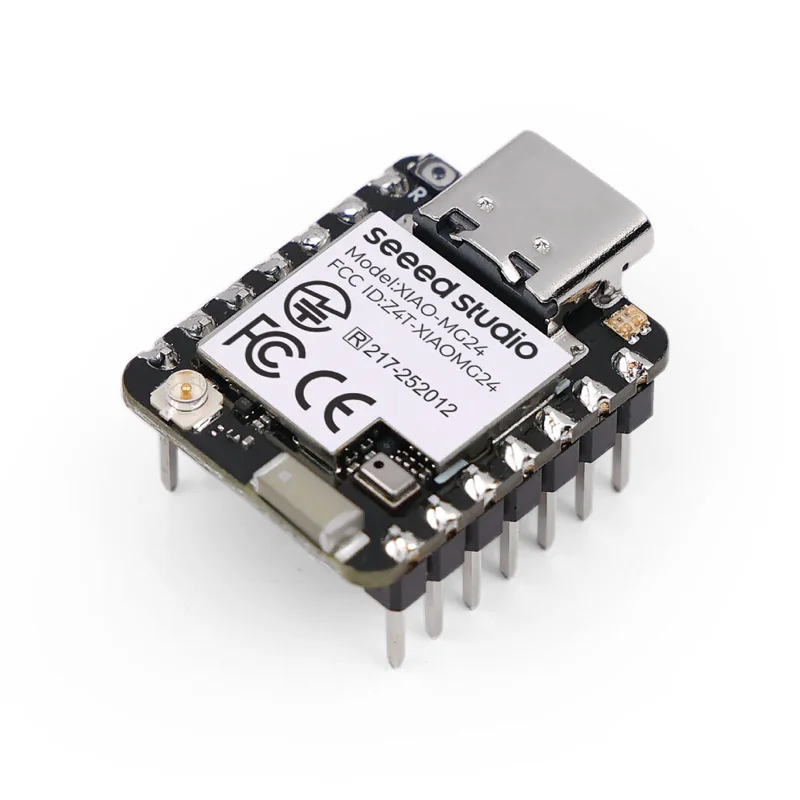
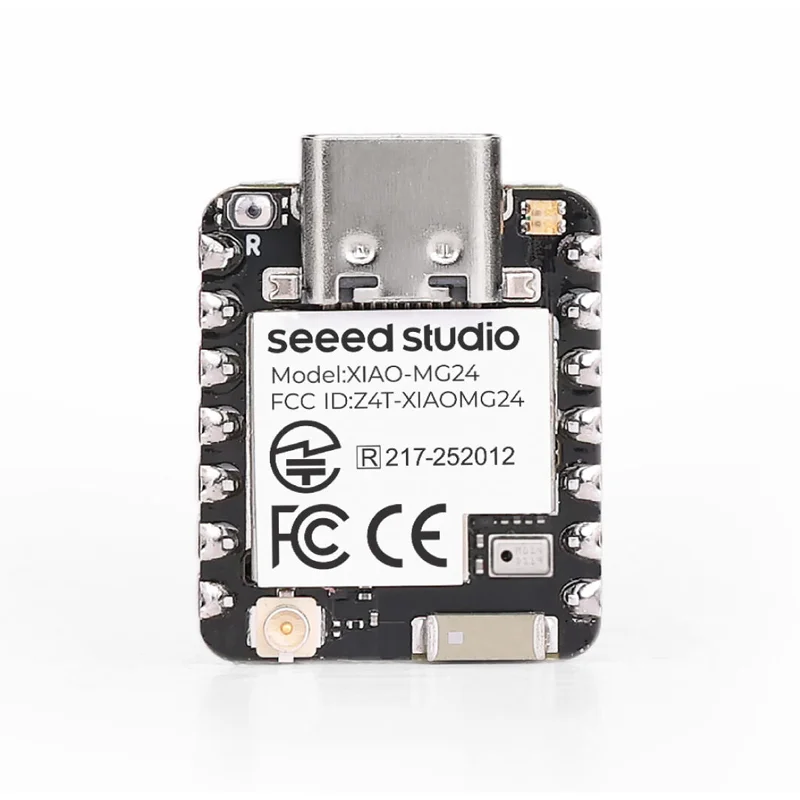
Seeed Studio Studio XIAO MG24 Sense Dev Board Pre-Soldered - EFR32MG24, Matter/Thread/BLE 5.3

₹1,779.00 (Inclusive of all taxes)
Out of Stock

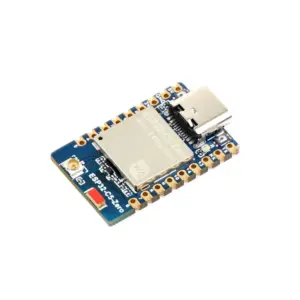
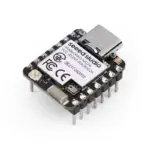
The Seeed Studio Studio XIAO MG24 Sense is a pre-soldered, ultra-low-power development board powered by the Silicon Labs EFR32MG24 SoC, featuring native Matter protocol support over Thread and Bluetooth 5.3. It is Arduino IDE compatible and includes onboard sensors, making it ideal for smart home automation, wearables, and edge AI projects.

Features

  • Matter & Thread Native: The EFR32MG24 SoC provides native support for the Matter protocol over Thread mesh networking and Bluetooth Low Energy 5.3, enabling seamless smart home device integration.
  • Ultra-Low Power MCU: Features a 78MHz ARM Cortex-M33 processor with a deep sleep current as low as 1.95µA, perfect for long-lasting battery-powered IoT sensors and remotes.
  • Onboard Sensing Suite: Equipped with a 6-axis IMU (accelerometer & gyroscope) and an analog microphone for immediate development of gesture control, motion tracking, and TinyML voice applications.
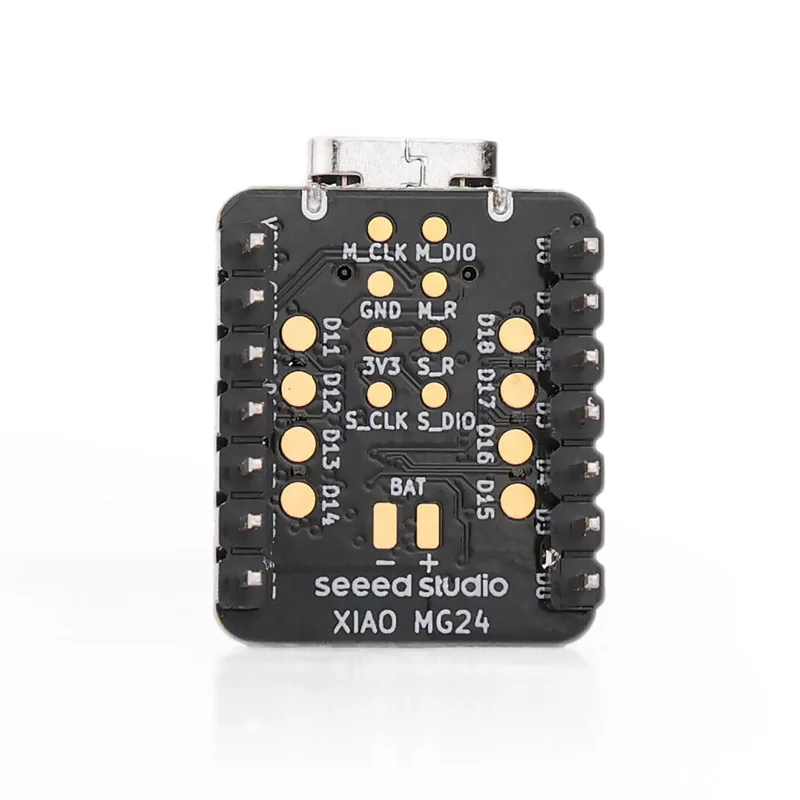
  • Expanded I/O & Storage: Offers 19 configurable GPIOs (UART, SPI, I2C, PWM) and 4 MB of external flash memory for data logging and complex application firmware.
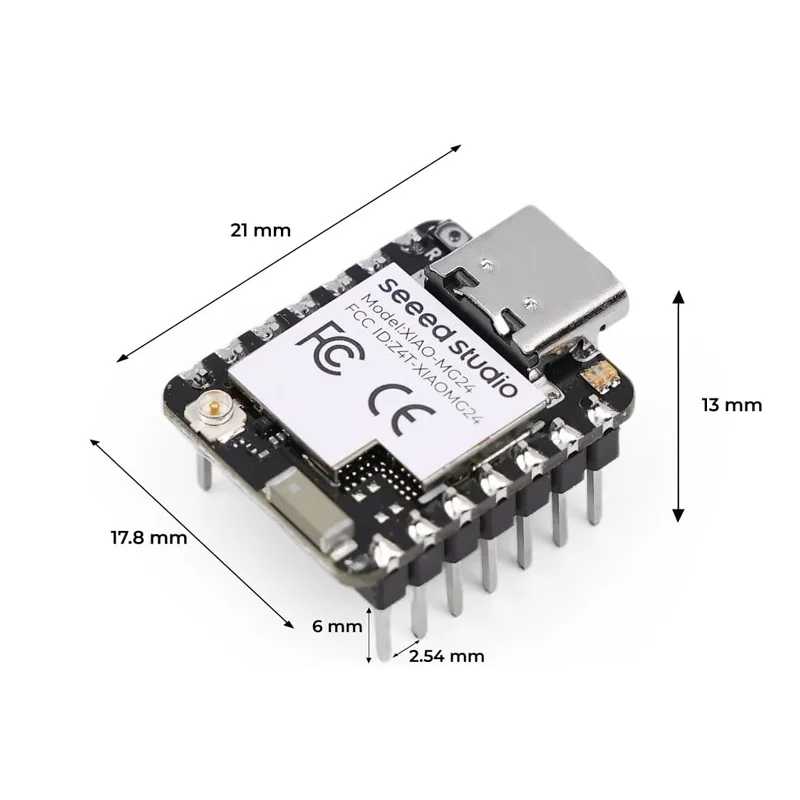
  • Pre-Soldered & Compact: Comes fully assembled in a thumb-sized 21 x 17.8mm form factor with a USB-C interface, enabling rapid prototyping without soldering.

Out of stock

Description

The Seeed Studio Studio XIAO MG24 Sense Development Board is engineered for next-generation IoT devices requiring robust wireless connectivity and ultra-low power consumption. At its core is the Silicon Labs EFR32MG24 wireless SoC, which integrates a high-performance 78MHz ARM Cortex-M33 processor with native support for the Matter standard, Thread mesh networking, and Bluetooth 5.3. This architecture allows developers to create interoperable smart home products that communicate seamlessly within Matter ecosystems.

Designed for energy efficiency, the board features advanced power management with sleep currents down to 1.95µA, making it suitable for years of operation on coin-cell or small LiPo batteries. The integrated 6-axis inertial measurement unit (IMU) and analog microphone provide a ready-made sensor hub for motion-based controls, activity monitoring, and on-device audio processing using frameworks like TensorFlow Lite for Microcontrollers. The pre-soldered version eliminates assembly hurdles, offering a USB-C programming and debugging interface alongside 19 multiplexed GPIO pins for connecting peripherals.

Key Features

  • Native Matter, Thread, and BLE 5.3 wireless protocol stack for interoperable smart home devices.
  • Ultra-low-power ARM Cortex-M33 processor enabling battery-operated applications with sleep currents as low as 1.95µA.
  • Integrated sensor suite including a 6-axis IMU and analog microphone for immediate edge AI and TinyML development.
  • Expanded memory with 256 kB RAM, 1536 kB internal flash, and 4 MB external flash for data storage and complex firmware.
  • Comprehensive I/O with 19 GPIOs supporting UART, SPI, I2C, and PWM interfaces for peripheral connectivity.
  • Hardware security features including Secure Boot, TrustZone, and cryptographic acceleration for device authentication and data protection.
  • Compact, pre-soldered form factor (21x17.8mm) with USB-C for rapid prototyping and integration into wearable and space-constrained designs.
  • Full compatibility with the Arduino IDE and the extensive Seeed Studio Studio XIAO ecosystem of shields and accessories.

Applications

  • Smart Home Devices: Create Matter-certified endpoints like smart locks, lighting controls, and environmental sensors for interoperable home automation.
  • Wearable Tech & Remote Controls: Develop ultra-low-power wearables, fitness trackers, and wireless remotes leveraging BLE 5.3 and the onboard IMU.
  • TinyML & Edge AI: Implement on-device machine learning for gesture recognition, voice command detection, and predictive maintenance using the microphone and motion sensors.
  • Environmental Monitoring: Build battery-powered, long-life sensor nodes for tracking temperature, humidity, air quality, and occupancy in smart buildings.
  • Prototyping & Education: Serve as a compact, feature-rich platform for learning embedded systems, wireless protocols, and IoT application development.

Technical Specifications

Microcontroller/SoCSilicon Labs EFR32MG24
Processor CoreARM Cortex-M33 @ 78 MHz
Wireless ProtocolsMatter over Thread, Bluetooth Low Energy 5.3
RAM256 kB
Flash Memory1536 kB Internal, 4 MB External
Onboard Sensors6-axis IMU (Accelerometer & Gyroscope), Analog Microphone
GPIO & Interfaces19x GPIO, UART, SPI, I2C, PWM
Power SupplyUSB-C (5V)
Operating Current (Active)Data not provided
Sleep CurrentAs low as 1.95 µA
AntennaIntegrated PCB Antenna
Dimensions21 mm (L) x 17.8 mm (W)
Security FeaturesSecure Boot, TrustZone, Random Number Generator (RNG), Crypto Acceleration

Frequently Asked Questions

How do I program the XIAO MG24 Sense board and which development frameworks are supported?

The board is fully compatible with the Arduino IDE using the Seeed Studio Studio XIAO board package. You can also develop using Silicon Labs' Simplicity Studio for advanced configuration of the wireless stacks. For Matter development, you will need to set up the appropriate SDK and toolchain, typically within Simplicity Studio or via VS Code with the Matter environment. The USB-C port is used for both power and programming/debugging via a standard USB cable.

What are the power requirements and how can I run it on battery for a sensor node project?

The board is powered via the USB-C port at 5V. For battery operation, you can supply power through the 3.3V and GND pins. Its ultra-low-power design is key, with a deep sleep current as low as 1.95µA. To maximize battery life, utilize the EFR32MG24's low-power sleep modes in your firmware, waking periodically for sensor readings and wireless transmission. A small LiPo or coin cell battery connected to these pins can power the device for months or even years depending on the duty cycle.

How do I utilize the onboard IMU and microphone for gesture or voice control applications?

The 6-axis IMU (ICM-42670-P) and analog microphone are connected to the MCU via I2C and an ADC pin, respectively. In Arduino, use libraries like 'Seeed_Arduino_LSM6DS3' for the IMU and the built-in ADC functions for the mic. For advanced applications like gesture recognition or keyword spotting, you can process sensor data on-device using TinyML frameworks like TensorFlow Lite for Microcontrollers. Example sketches from Seeed Studio Studio provide a starting point for reading raw sensor data and implementing basic motion detection or sound triggering logic.

Package Includes

  • 1 x Seeed Studio Studio XIAO MG24 Sense Development Board (Pre-Soldered)

Additional Information

Weight 0.005 kg
Dimensions 2.1 × 1.78 cm