SKU: IOWC-1770
📋 GST Invoice Available

Seeed Studio Studio Grove LoRa Radio 868MHz Module (RFM95)

₹2,119.00 (Inclusive of all taxes)
Out of Stock

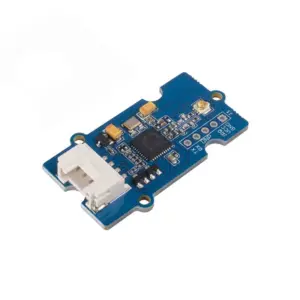
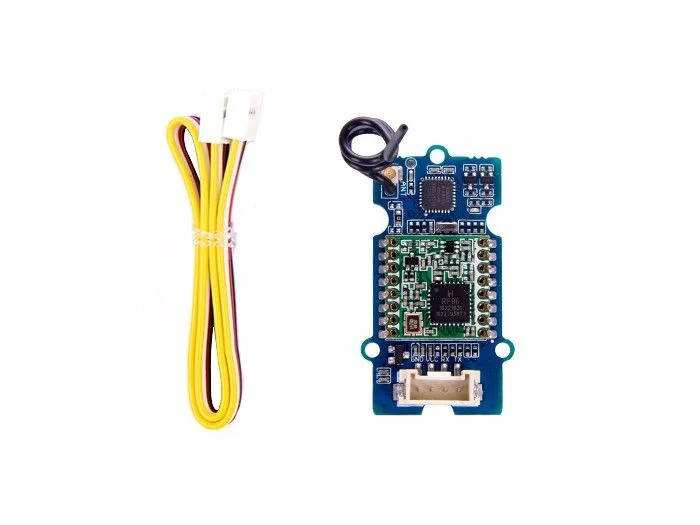
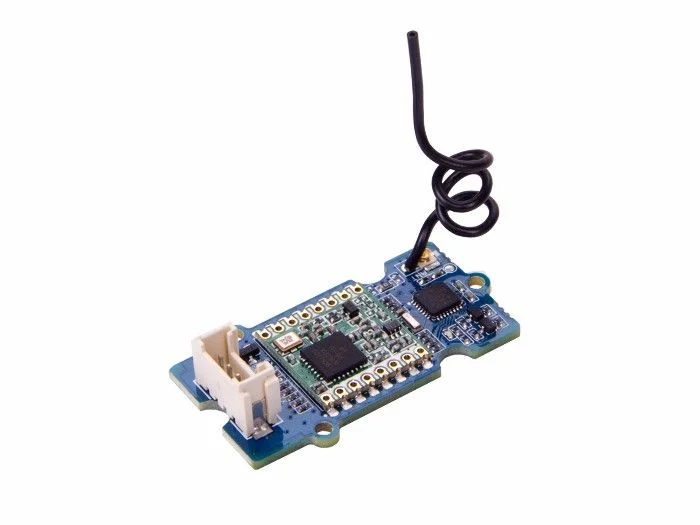
The Seeed Studio Studio Grove LoRa Radio 868MHz is a plug-and-play UART module featuring the RFM95/SX1276 LoRa transceiver, designed for ultra-long-range, low-power IoT deployments. It integrates an ATmega168 microcontroller and supports both an onboard wire antenna and an external MHF connector for enhanced signal gain.

Features

  • RFM95/SX1276 LoRa transceiver enables long-range, spread-spectrum communication up to +20dBm (100mW) output power.
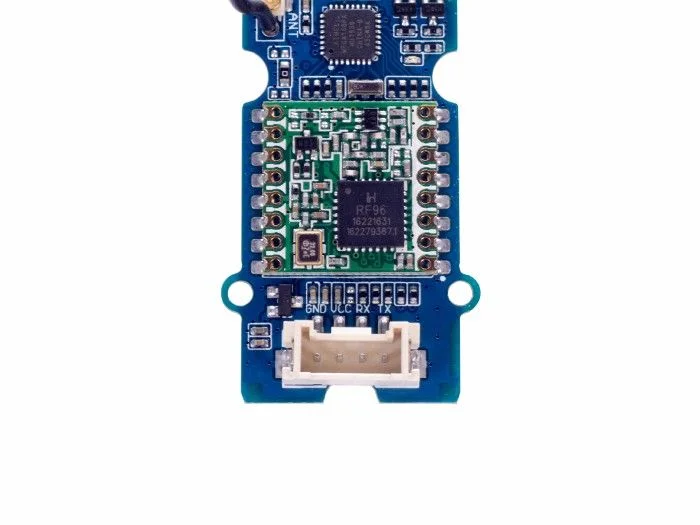
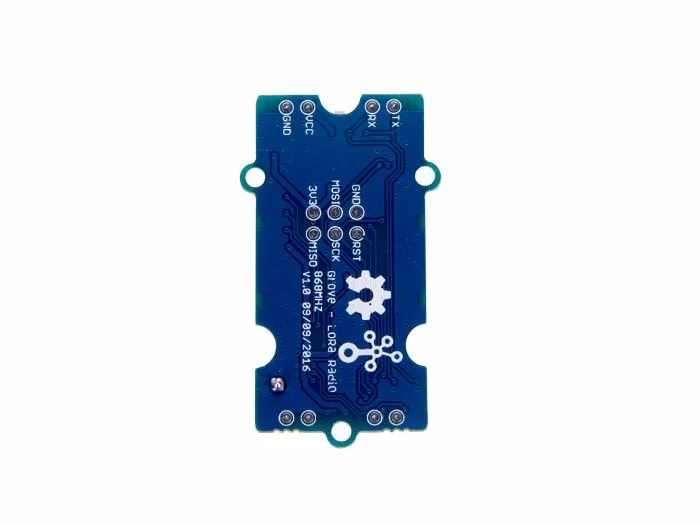
  • Standard Grove UART interface (RX, TX, VCC, GND) simplifies wiring and integration with Arduino, Raspberry Pi, and other Grove ecosystem boards.
  • Onboard ATmega168 microcontroller handles protocol processing, offering a ready-to-use serial-to-LoRa gateway.
  • Dual antenna options: integrated simple wire antenna and an MHF connector for attaching an external high-gain antenna.
  • Operates on the 868MHz ISM band, ideal for European LoRaWAN networks and long-range sensor telemetry.

Out of stock

Description

The Grove LoRa Radio 868MHz module encapsulates a complete LoRa communication node into the user-friendly Grove form factor. At its core is the Semtech SX1276-based RFM95 transceiver, renowned for its exceptional link budget and interference resilience, making it perfect for deploying sensor networks in challenging RF environments. The integrated ATmega168 microcontroller manages the UART-to-LoRa protocol conversion, allowing developers to send and receive data via simple serial AT commands without deep embedded programming.

Power management is flexible, supporting both 3.3V and 5V operation, which aligns with most development platforms. The module includes a basic wire antenna for immediate use and features an MHF connector, enabling the attachment of a dedicated external antenna to significantly boost range and reception sensitivity in field deployments. This combination of ready-to-use hardware, the Grove connectivity standard, and robust LoRa technology provides a rapid prototyping solution for smart agriculture, environmental monitoring, and asset tracking applications.

Key Features

  • Plug-and-play Grove UART interface for rapid prototyping and system integration.
  • High-performance RFM95 module based on the Semtech SX1276 LoRa long-range modem.
  • Integrated ATmega168 microcontroller handles LoRa packetization and serial communication.
  • Dual antenna support: onboard wire antenna and MHF connector for external antenna.
  • High +20dBm transmit power capability for maximum communication range.
  • Operates on the 868MHz frequency band, compliant with European LoRaWAN regulations.
  • Low current consumption architecture, suitable for battery-powered IoT nodes.
  • Robust spread spectrum modulation offers high interference immunity.

Applications

  • Smart agriculture and environmental monitoring (soil moisture, weather stations).
  • Industrial IoT (IIoT) for remote telemetry and equipment condition monitoring.
  • Asset tracking and logistics management across wide areas.
  • Building and home automation with long-range, low-power sensor networks.
  • Community or private LoRaWAN gateway end-node deployments.

Technical Specifications

Microcontroller/SoCATmega168
Wireless ProtocolLoRa (Semtech SX1276)
Frequency Range868MHz
RF Transmit PowerUp to +20 dBm (100 mW)
Supply Voltage3.3V or 5V
Communication InterfaceUART (RX, TX, VCC, GND)
Antenna ConnectorIntegrated Wire Antenna & MHF Connector
Operating Temperature-20°C to +70°C
Dimensions (L x W)135mm x 85mm
Bandwidth500 kHz

Frequently Asked Questions

How do I communicate with this Grove LoRa module from an Arduino?

Connect the module to your Arduino using the supplied Grove cable, linking it to a UART-enabled Grove port or digital pins configured for SoftwareSerial. The module operates on standard AT commands over serial. Set your serial monitor to the correct baud rate (typically 9600 or 115200 bps, as defined in the firmware) and send commands like 'AT+JOIN' to connect to a LoRaWAN network or 'AT+SEND' to transmit data packets to a gateway or another node.

Can I use this module with a Raspberry Pi or a PC?

Yes, you can interface it with a Raspberry Pi or PC using a USB-to-serial adapter or a Grove base hat for the Pi. Connect the module's UART pins (TX, RX, GND, and VCC) to the serial adapter, ensuring voltage levels are compatible (3.3V is safe). On your PC or Pi, use a serial terminal application (like PuTTY or screen) to open the corresponding COM or /dev/ttyUSB port. You can then send and receive the same AT commands to control the LoRa radio for sending data or joining networks.

What is the purpose of the MHF connector, and what antenna should I use?

The MHF connector allows you to attach an external antenna to improve range and signal reception, especially useful when the onboard wire antenna's performance is insufficient. For the 868MHz band, select a dedicated 868MHz LoRa antenna with an MHF (I-PEX) plug, matching 50-ohm impedance. Common choices are a 3dBi rubber duck antenna or a higher-gain directional antenna. Ensure the antenna is positioned vertically and away from large metal objects to maximize radiation efficiency and link budget.

What is the power consumption, and can it run on batteries?

The module is designed for low-power operation, making it suitable for battery-powered nodes. Current consumption varies with mode: during transmission at +20dBm, it can draw around 120mA; during reception, it's approximately 10-15mA; and in deep sleep mode (if supported by the firmware), it can drop to microamps. For long battery life, implement a duty-cycling routine in your code, putting the module to sleep between transmission intervals. Power it with a 3.3V or 5V source, ensuring your battery regulator can supply the necessary peak current.

Package Includes

  • 1 x Grove - LoRa Radio 868MHz Module
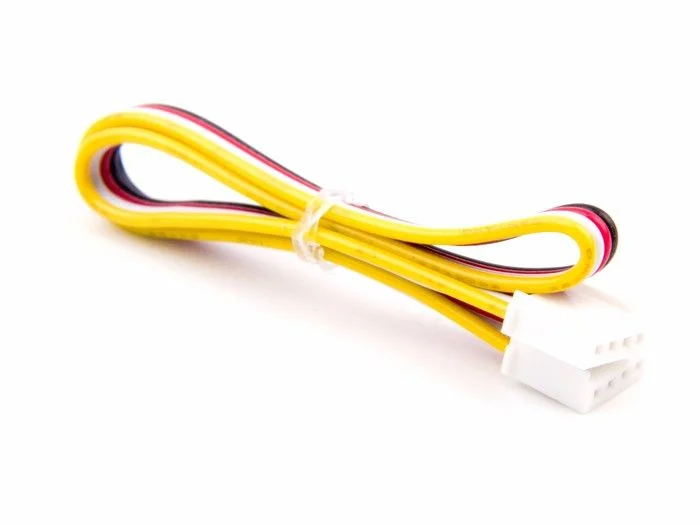
  • 1 x Grove Cable

Additional Information

Weight 0.011 kg
Dimensions 13.5 × 8.5 cm