SKU: IOWC-0836
📋 GST Invoice Available

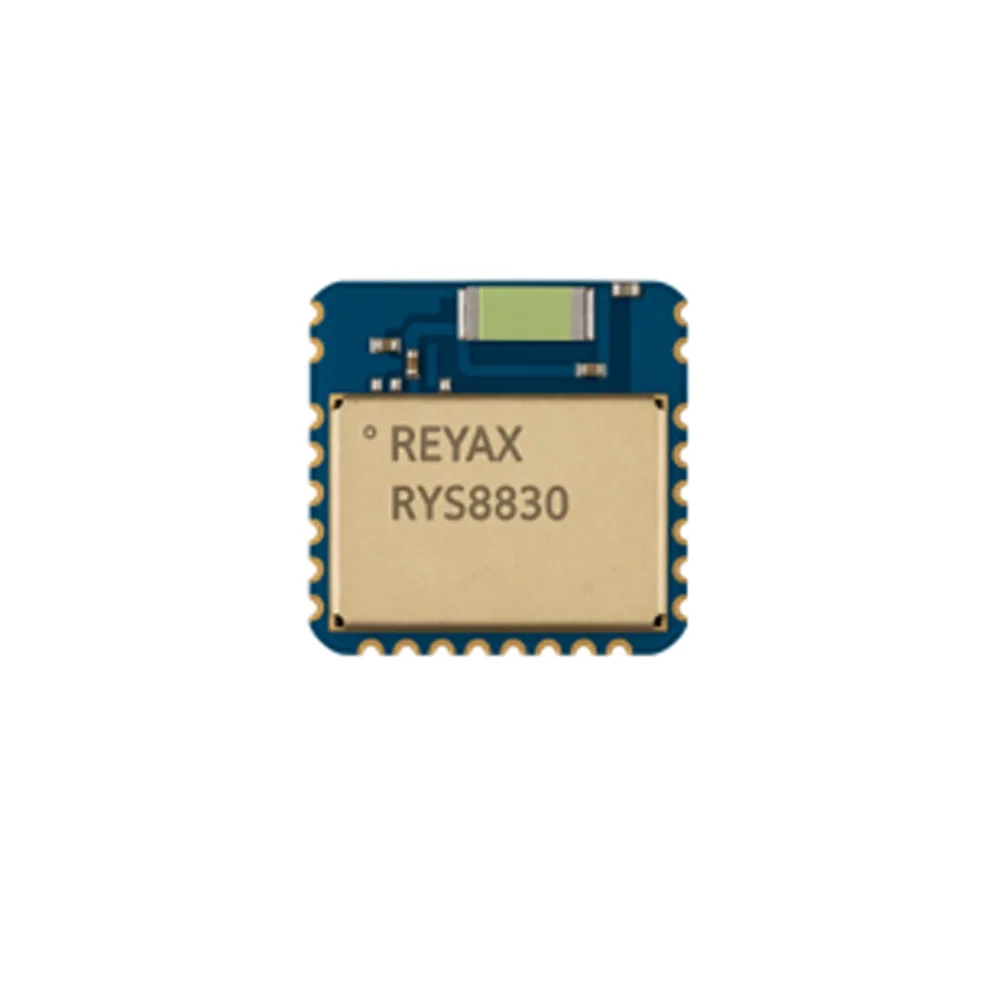
Reyax RYS8830 Ultra-Low Power GNSS Module w/ Embedded Antenna

₹1,819.00 (Inclusive of all taxes)
Out of Stock

The Reyax RYS8830 is a compact, ultra-low power GNSS antenna module powered by the Sony CXD5605AGF engine, supporting GPS, GLONASS, Galileo, BeiDou, QZSS, and SBAS for high-accuracy positioning in IoT, wearables, and portable devices.

Features

  • Sony CXD5605AGF GNSS engine with multi-constellation support (GPS, GLONASS, Galileo, BeiDou, QZSS, SBAS).
  • Ultra-low power operation with 1.71V–1.89V supply voltage and high tracking sensitivity of -161 dBm.
  • Compact SMD form factor (11×11×2.2mm) with integrated embedded antenna for space-constrained designs.
  • Flexible UART (115200 bps) and I2C (400 kHz, 0x24 address) interfaces for easy microcontroller integration.
  • Integrated SAW filter, LNA, and TCXO ensure stable signal processing and improved noise immunity.

Out of stock

Description

The Reyax RYS8830 GNSS module is engineered for high-performance positioning in power-sensitive and size-constrained applications. Its core is the Sony CXD5605AGF engine, which concurrently tracks multiple satellite constellations including GPS, GLONASS, Galileo, BeiDou, QZSS, and SBAS, delivering enhanced accuracy and reliability even in challenging urban or weak-signal environments.

Designed with an ultra-low power architecture, the module operates on a 1.8V nominal supply, making it ideal for battery-powered IoT devices, wearables, and portable trackers. The integrated embedded antenna, SAW filter, low-noise amplifier (LNA), and temperature-compensated crystal oscillator (TCXO) provide a complete RF front-end solution, simplifying system integration and ensuring robust signal reception with a tracking sensitivity up to -161 dBm.

Key Features

  • High-performance Sony CXD5605AGF GNSS engine with multi-constellation support.
  • Ultra-low power design optimized for battery-operated IoT and wearable devices.
  • Compact 11x11x2.2mm SMD footprint with integrated embedded patch antenna.
  • Dual communication interfaces: UART (default 115200 bps) and I2C (400 kHz).
  • High tracking sensitivity of -161 dBm for reliable positioning in weak signal areas.
  • Integrated RF components: SAW filter, LNA, and TCXO for improved signal integrity.
  • Fast hot start time of 1 second and cold start time of 35 seconds.
  • Wide operating temperature range from -40°C to +85°C for industrial applications.

Applications

  • Battery-powered IoT asset tracking and personal wearable devices.
  • Portable navigation systems and handheld GPS units.
  • Precision agriculture and environmental monitoring sensors.
  • Fleet management and logistics tracking modules.
  • Smart city infrastructure and micro-mobility vehicle tracking.

Technical Specifications

GNSS EngineSony CXD5605AGF
Supported SystemsGPS, GLONASS, Galileo, BeiDou, QZSS, SBAS
InterfacesUART, I2C
Default Baud Rate115200 bps (8,N,1)
I2C Clock / Address400 kHz, 0x24 (7-bit)
Supply Voltage (VDD)1.71V – 1.89V
Tracking Sensitivity-161 dBm
Cold Start Time35 sec
Hot Start Time1 sec
Position Accuracy1 m (2DRMS)
Update Rate1 Hz
Operating Temperature-40°C to +85°C
Dimensions11 x 11 x 2.2 mm
Weight2 g

Frequently Asked Questions

What are the primary communication interfaces on the RYS8830 and how are they configured?

The module provides both UART and I2C interfaces. The UART interface defaults to 115200 bps, 8 data bits, no parity, and 1 stop bit (8,N,1). The I2C interface operates at a clock speed of 400 kHz with a fixed 7-bit slave address of 0x24. You can select the interface via hardware configuration pins or specific command sets.

How do I power the RYS8830 module and what are its power consumption characteristics?

Power the module's VDD pin with a voltage between 1.71V and 1.89V (nominal 1.8V). An additional VDD_LDO_IN pin requires 1.9V to 1.95V. The module is designed for ultra-low power consumption, with high tracking sensitivity of -161 dBm to maintain performance while minimizing current draw, making it suitable for battery-operated applications.

What is the procedure for obtaining a first fix (cold start) with this GNSS module?

For a cold start, ensure the module has a clear sky view and provide power within the specified voltage range. The module will begin searching for all supported satellite constellations. The typical cold start time is 35 seconds at a sensitivity of -147 dBm. Subsequent hot starts, after a recent valid fix, can be as fast as 1 second.

Package Includes

  • 1 x Reyax RYS8830 GNSS Antenna Module

Additional Information

Weight 0.005 kg
Dimensions 3 × 4 × 2 cm