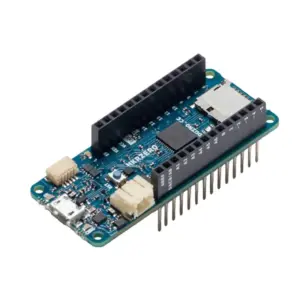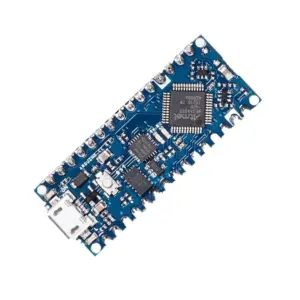
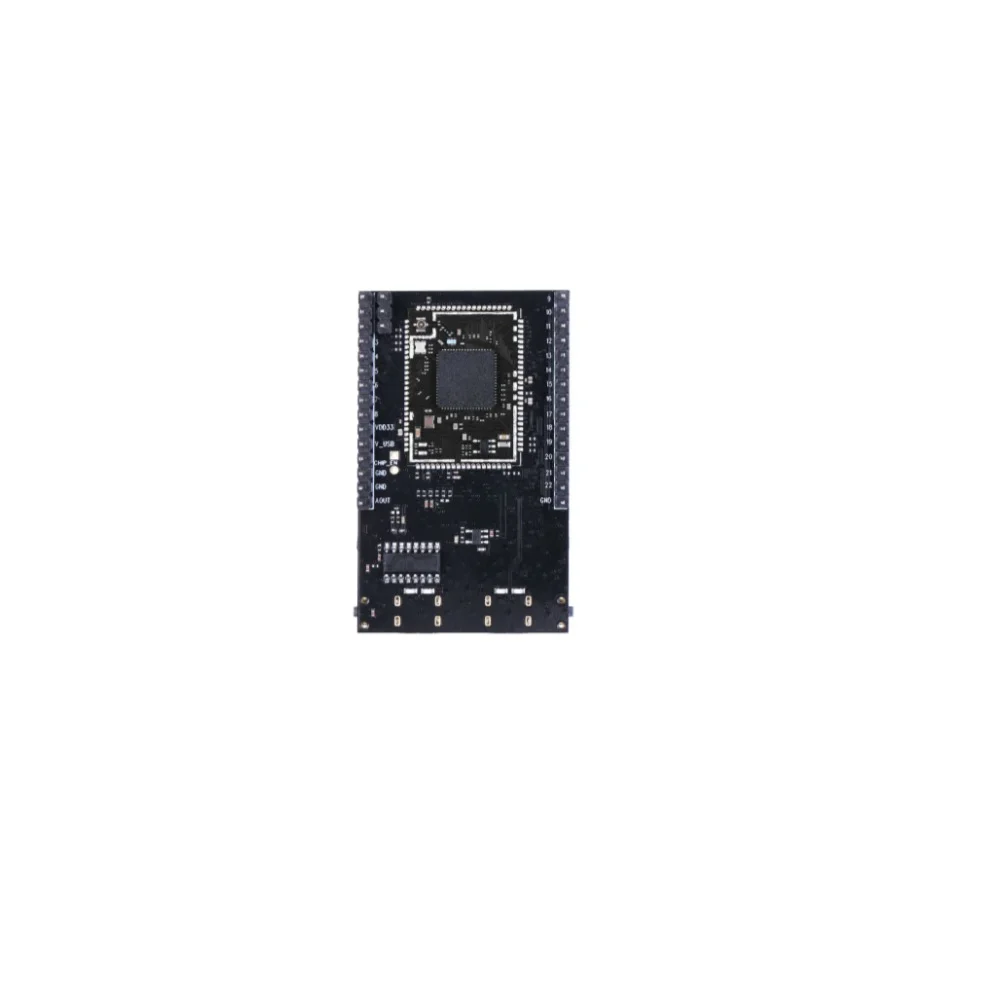
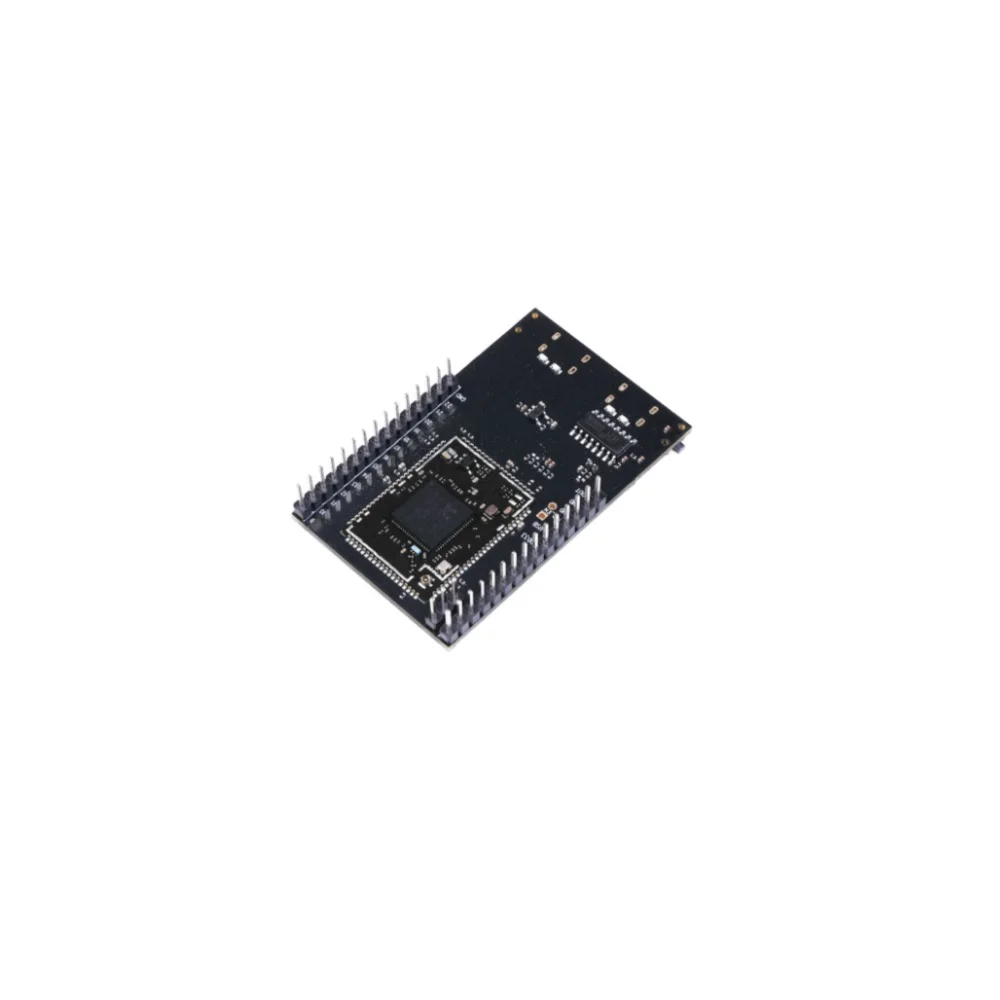
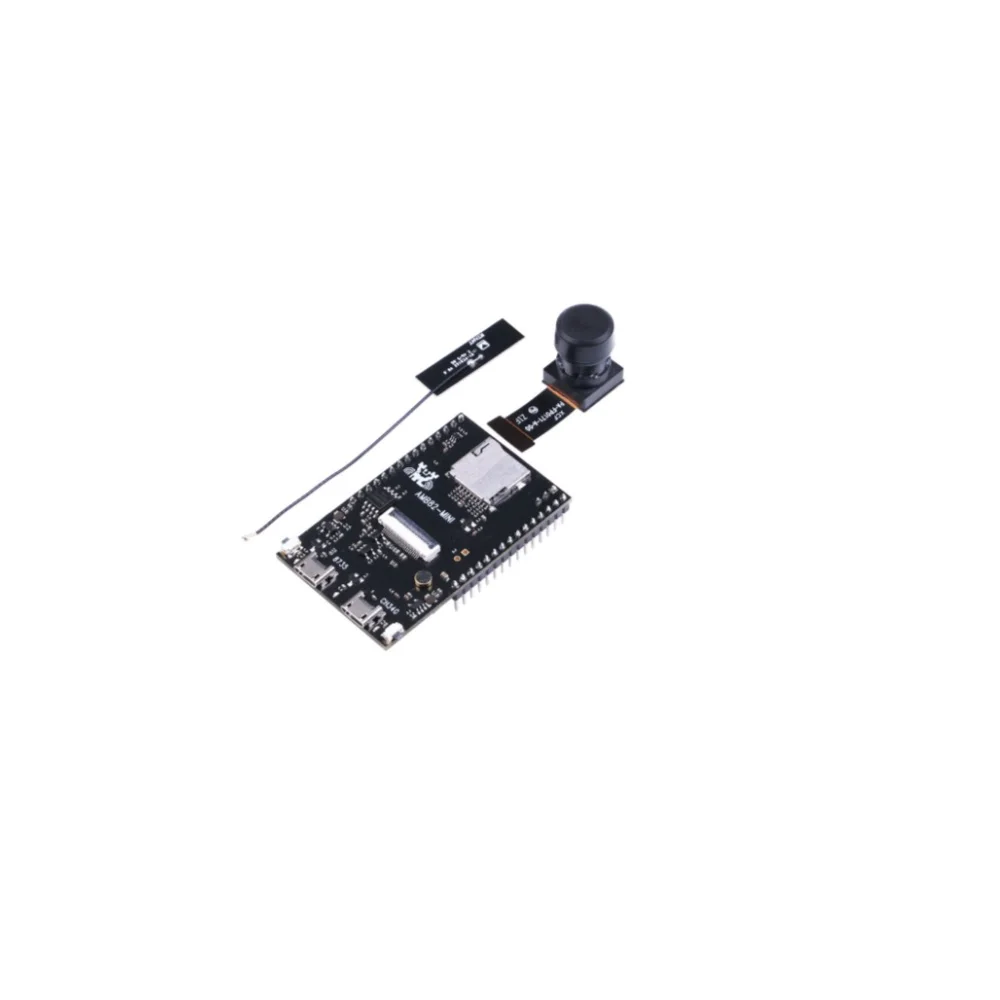
Realtek AMB82-Mini IoT AI Camera Dev Board w/ F37 Camera
The Realtek AMB82-Mini is an ultra-low-power AI camera development board built around the RTL8735BDM SoC, integrating dual-band Wi-Fi, BLE 5.1, an NPU, and a 1080p camera. It supports Arduino IDE, FreeRTOS, and real-time H.265/H.264 encoding for battery-powered computer vision and IoT endpoints.
Features
- Realtek RTL8735BDM SoC integrates an ARMv8M MCU (500MHz), dual-band 802.11 a/b/g/n Wi-Fi, Bluetooth BLE 5.1, an ISP, and a 0.4 TOPS Neural Processing Unit (NPU) for on-device AI.
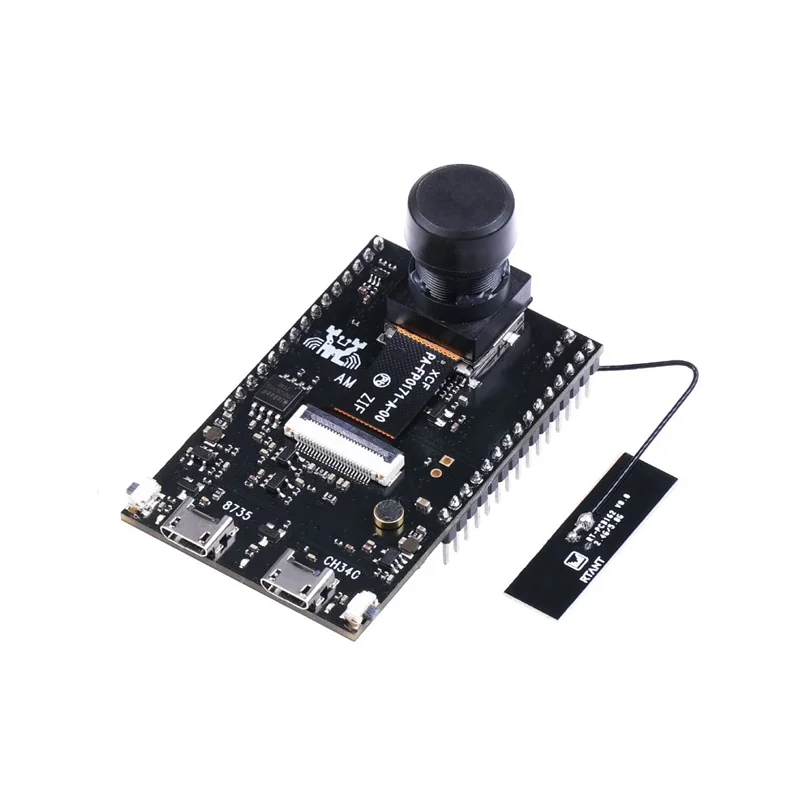
- Includes a pre-attached Taiyee F37 camera module with a 1080p Full HD CMOS sensor and a 130° wide-angle lens, supporting real-time H.265/H.264/JPEG encoding up to 2K resolution.
- Ultra-low-power architecture enables microampere-level sleep currents and millisecond boot times, ideal for battery-powered AI vision applications.
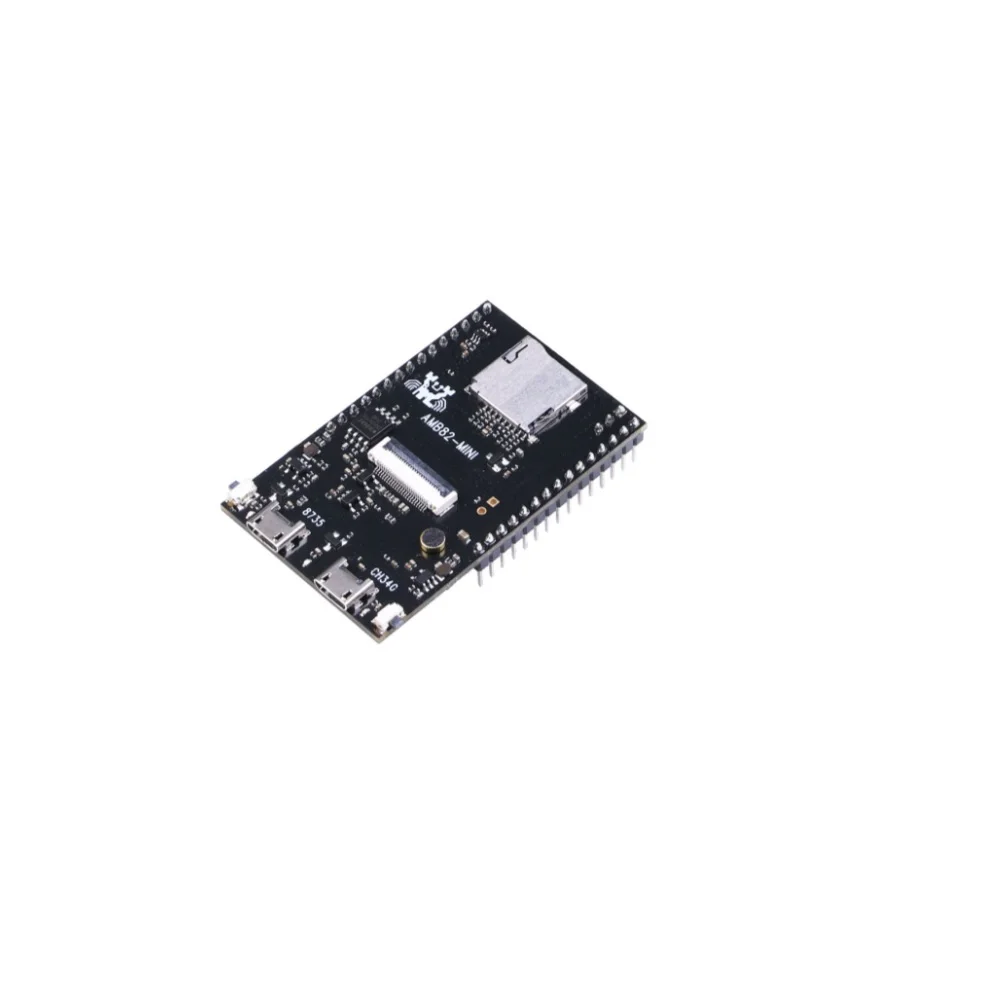
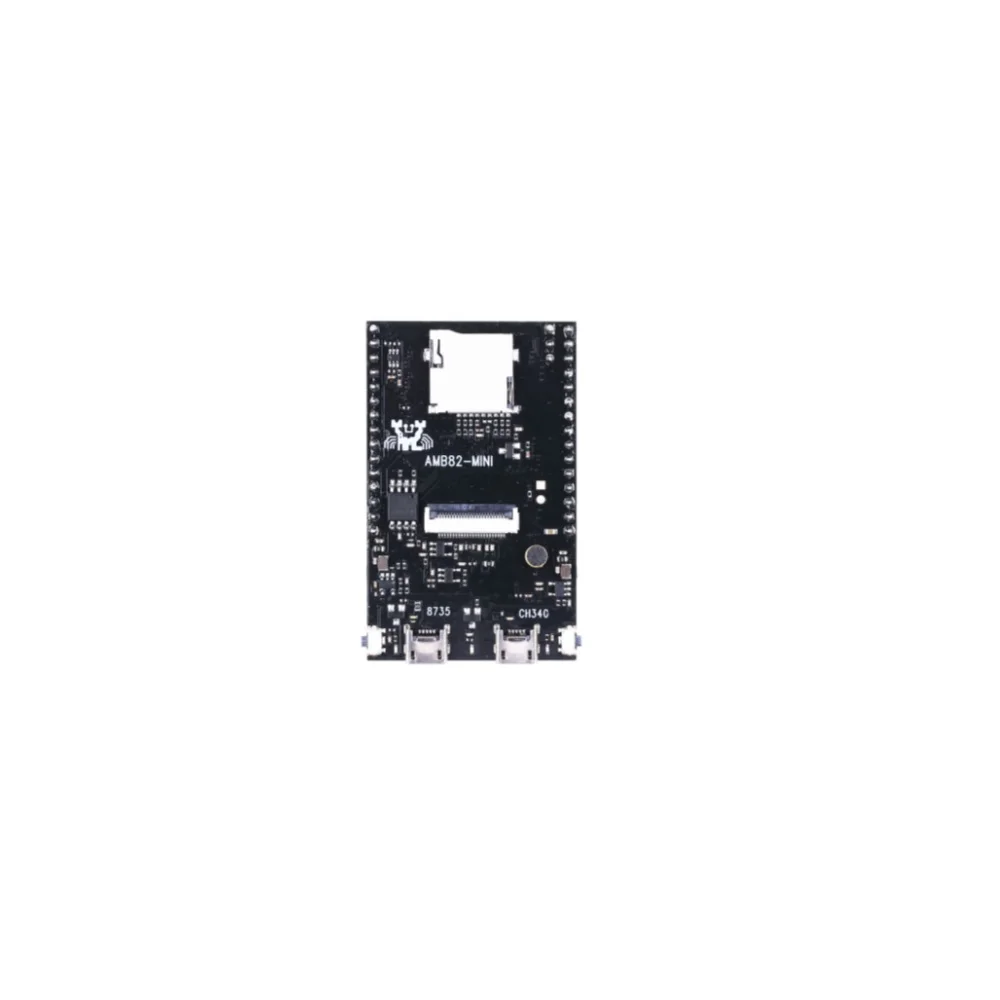
- Comprehensive SDK support for Arduino IDE, FreeRTOS, IAR, and GCC, alongside extensive I/O including USB 2.0 host/device, microSD slot, SPI, I2C, UART, and up to 23 GPIOs.
- Package includes the dev board, a dual-band (2.4GHz/5GHz) IPEX antenna, and the F37 camera module for immediate prototyping.
Out of stock
The AMB82-Mini development board leverages the highly integrated Realtek RTL8735BDM SoC, an 8-in-1 solution designed for power-efficient AI-at-the-edge applications. It combines an ARMv8M microcontroller, dual-band Wi-Fi, Bluetooth 5.1, an audio codec, an Image Signal Processor (ISP), and a dedicated neural network engine capable of 0.4 TOPS. This convergence allows for sophisticated tasks like object detection and classification directly on the device without constant cloud dependency.
Central to its design is the support for real-time, multi-stream video encoding in H.265, H.264, and JPEG formats, handling up to 1080p@30fps. Paired with the included wide-FOV 1080p camera sensor, it forms a complete vision system. The board’s power management is engineered for always-on, battery-operated scenarios, featuring deep sleep modes and fast wake-up times measured in milliseconds.
For developers, it offers a rich set of physical interfaces—including USB host/device, a microSD card slot, multiple serial ports, and programmable GPIOs—facilitating integration with sensors and actuators. Support for Arduino IDE lowers the barrier to entry, while professional SDKs for FreeRTOS, IAR, and GCC cater to advanced firmware development for commercial IoT deployments.
Additional Information
| Weight | 0.037 kg |
|---|---|
| Dimensions | 12 × 8 × 3 cm |