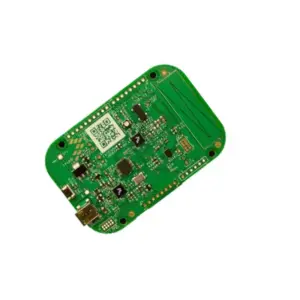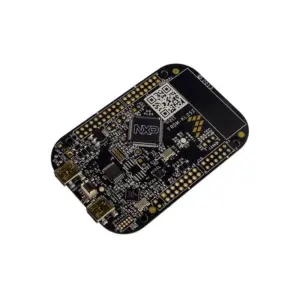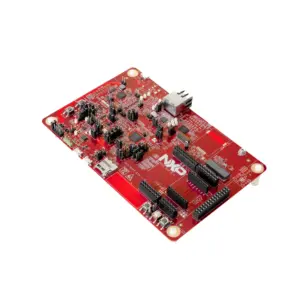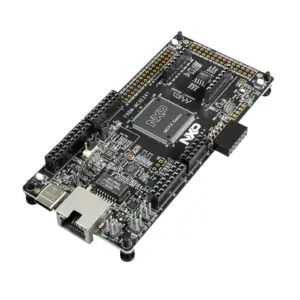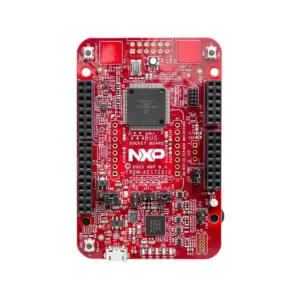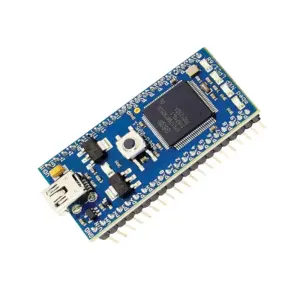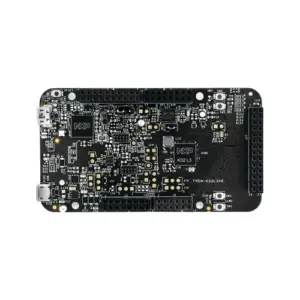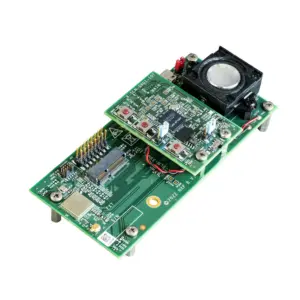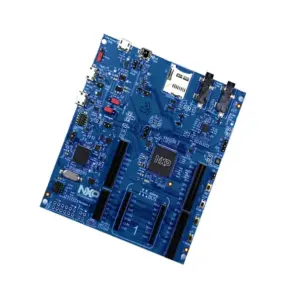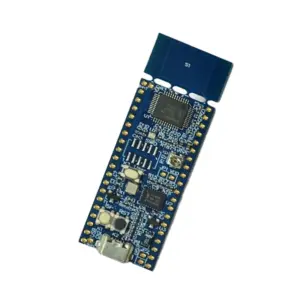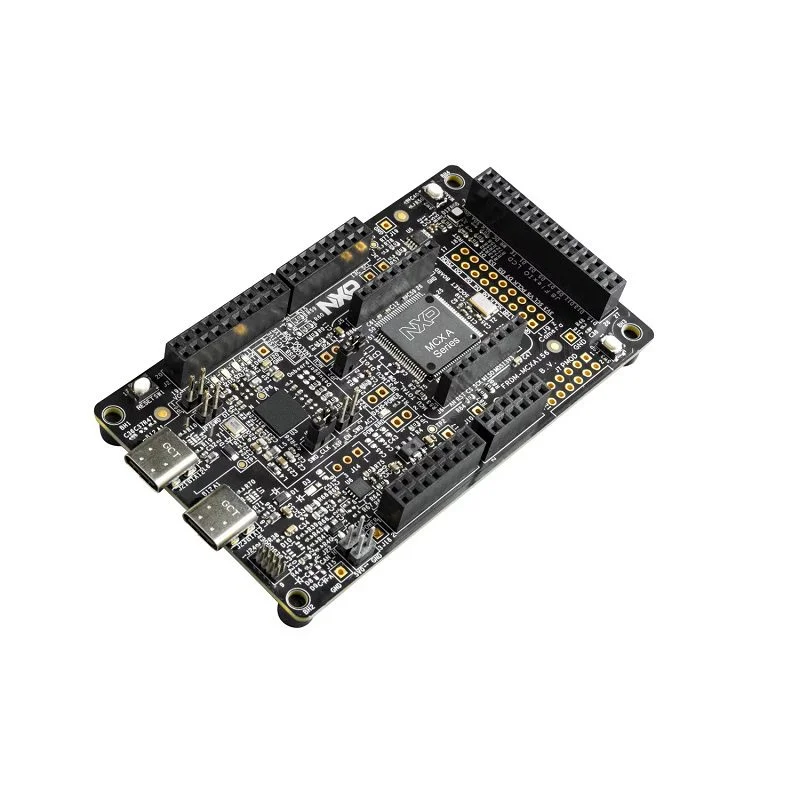
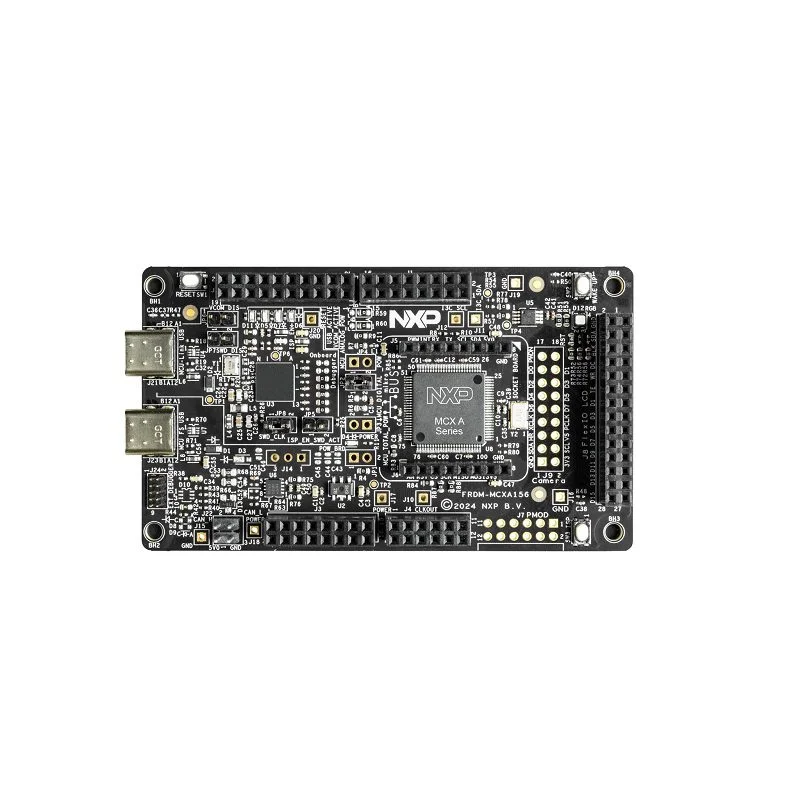
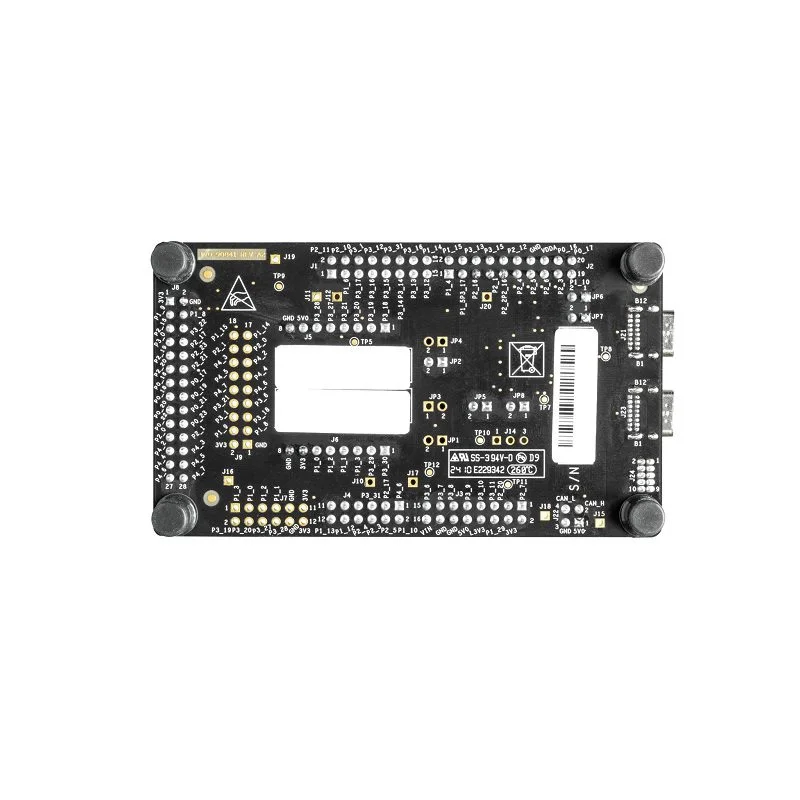
NXP Semiconductors FRDM-MCXA156 Development Board (Cortex-M33, CAN-FD, I3C)
The NXP Semiconductors FRDM-MCXA156 is a scalable development board for rapid prototyping with the MCXA156 MCU, featuring an Arm Cortex-M33 core, 1MB Flash, and extensive connectivity including CAN-FD, I3C, USB-C, and Arduino/mikroBUS headers for sensor and wireless module expansion.
Features
- MCXA156 Cortex-M33 MCU: Features a 32-bit Arm Cortex-M33 core with up to 1 MB of flash memory and 128 KB RAM, ideal for complex IoT edge processing and motor control applications.
- Rich Industrial Connectivity: Equipped with CAN-FD, I3C, FlexIO, FS USB, and multiple serial interfaces (LPSPI, LPI2C, LPLUART) for robust industrial and automotive communication.
- Expansive Header Ecosystem: Provides Arduino R3, PMOD, mikroBUS, and dedicated FlexIO headers for LCDs and cameras, enabling rapid integration of displays, sensors, and wireless modules.
- Integrated Debugging: Includes an on-board MCU-Link debugger with CMSIS-DAP support and JTAG/SWD connector, streamlining firmware development and debugging workflows.
- On-Board Sensor & USB-C: Comes with a P3T1755DPJ I3C/I²C temperature sensor and a USB Type-C connector for both device functionality and debugger communication.
Out of stock
The NXP Semiconductors Freedom FRDM-MCXA156 Development Board is a compact, feature-rich platform designed for evaluating and prototyping with the MCX A-series microcontrollers. It centers on the MCXA156, which integrates an Arm Cortex-M33 core with advanced peripherals like CAN-FD, I3C, FlexIO, and full-speed USB, making it suitable for demanding IoT edge nodes, industrial motor drives, and smart consumer devices.
Its architecture supports low-power operation modes and includes an integrated LDO for flexible power management. The board’s extensive I/O is broken out through industry-standard connectors, including Arduino R3, PMOD, and mikroBUS, facilitating seamless attachment of Wi-Fi/Bluetooth modules, displays, and sensor shields. The on-board MCU-Link debugger eliminates the need for external probes, accelerating the development cycle from code compilation to hardware testing.
Additional Information
| Weight | 0.041 kg |
|---|---|
| Dimensions | 9.5 × 6 cm |