SKU: SENS-0989
📋 GST Invoice Available

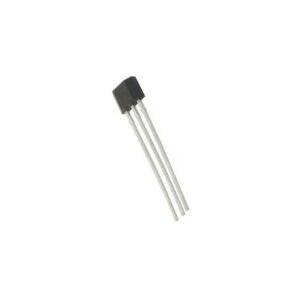
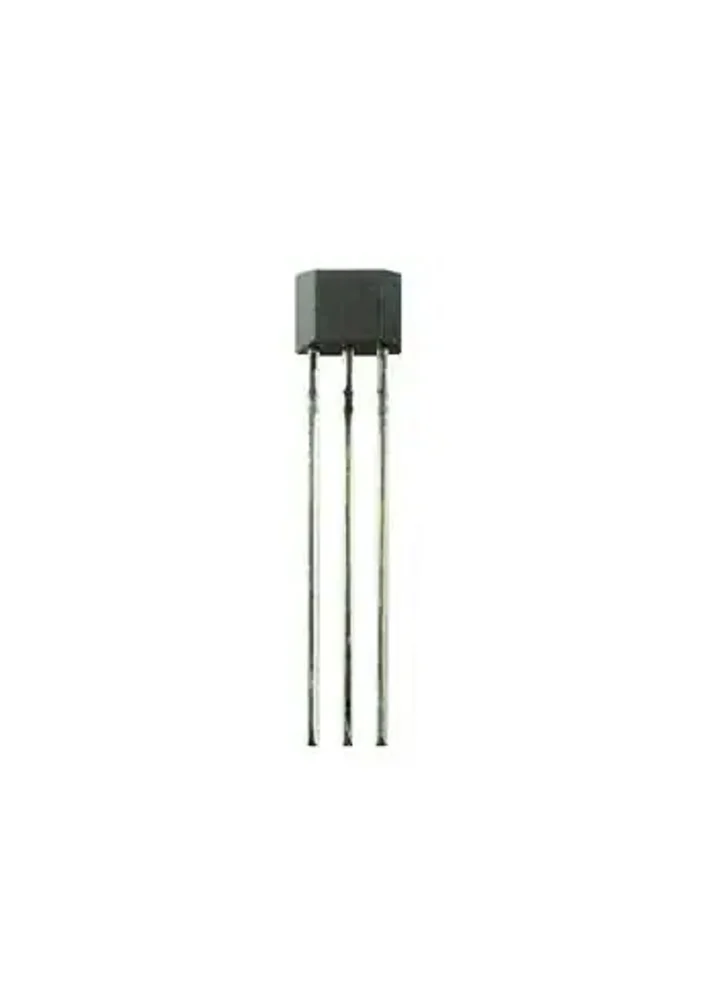
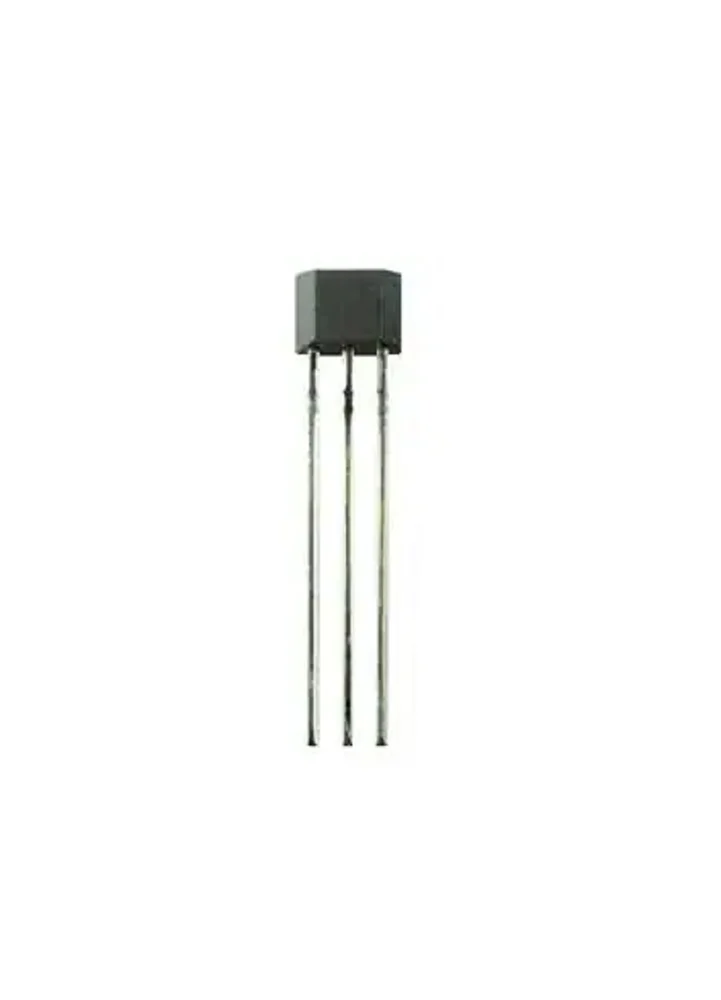
Honeywell SS413A Bipolar Hall Effect Magnetic Sensor - TO-92 Through Hole, 140 G Operating Point

₹138.00 (Inclusive of all taxes)
Out of Stock

The Honeywell SS413A is a bipolar digital Hall-effect sensor in a TO-92 package, designed for board mounting via through-hole technology. It operates from a 3 Vdc supply, making it suitable for low-voltage systems like battery-powered devices, and provides a digital output triggered by a 140 Gauss magnetic field.

Features

  • Bipolar digital Hall-effect sensor with a 140 G operating point.
  • Low-voltage operation from 3 Vdc for energy-efficient designs.
  • Wide operating temperature range from -40°C to +150°C.
  • Through-hole TO-92 package for robust PCB mounting.
  • Maximum output current of 20 mA for direct interface with logic circuits.

Out of stock

Description

The Honeywell SS413A is a solid-state magnetic sensor that utilizes the Hall effect to provide a digital switching output. Its bipolar design requires the magnetic field polarity to reverse (from South to North or vice versa) to switch the output state, making it ideal for sensing rotational movement or alternating magnetic fields. The device is engineered for stable performance across an extensive industrial temperature range.

Internal signal conditioning provides a clean, digital output signal, simplifying integration into control systems. The through-hole TO-92 package facilitates automated assembly and offers reliable mechanical mounting for applications subject to vibration or thermal stress.

Key Features

  • Bipolar magnetic response for direction-aware sensing.
  • Optimized for low-voltage operation down to 3 Vdc, reducing overall system power consumption.
  • Robust construction rated for operation from -40°C to +150°C.
  • TO-92 through-hole package ensures secure PCB attachment and good thermal performance.
  • Digital output simplifies interface with microcontrollers (Arduino, Raspberry Pi, PLCs).
  • High maximum output voltage (30 V) and current (20 mA) capability.

Applications

  • Brushless DC (BLDC) motor commutation for speed and position control.
  • Lid, door, or cover closure detection in appliances and security systems.
  • Rotary encoder and tachometer feedback in industrial machinery.
  • Proximity and position sensing in automotive and consumer electronics.
  • Flow meter and valve position sensing in fluid control systems.

Technical Specifications

Manufacturer Part NumberSS413A
Sensor TypeBipolar Digital Hall-Effect
Operating Point140 Gauss
Supply Voltage3 Vdc (Typical)
Operating Supply Current10 mA
Maximum Output Current20 mA
Output Voltage30 V (Max)
Operating Temperature-40°C to +150°C
Mounting TypeThrough Hole
Package / CaseTO-92-Flat-3

Frequently Asked Questions

What does 'bipolar' mean for this Hall-effect sensor?

A bipolar Hall-effect sensor requires the magnetic field polarity to reverse to change its output state. The SS413A will switch when exposed to a sufficient magnetic field of one polarity (e.g., South) and will switch back only when a field of the opposite polarity (North) of sufficient strength is applied. This makes it ideal for sensing alternating magnetic fields, such as those from a rotating magnet.

What is the minimum operating voltage for the SS413A?

The SS413A is designed for low-voltage operation, with a typical supply voltage of 3 Vdc. This allows it to be used directly in battery-powered systems or other low-power designs. Always ensure the supply voltage remains within the manufacturer's specified absolute maximum ratings to prevent damage.

How do I connect and use the SS413A sensor with an Arduino?

Connect the sensor's Vcc pin to a 3V or 5V Arduino pin (check datasheet for 5V tolerance), GND to ground, and the output pin to a digital input pin on the Arduino. The output is digital; it will be either high or low depending on the applied magnetic field. Use the Arduino's `digitalRead()` function to monitor the state. A pull-up resistor may be required on the output line depending on your circuit configuration.

What is the difference between operating point and release point?

The operating point (140 G for the SS413A) is the magnetic field strength required to switch the sensor's output. The release point is the lower field strength at which the output switches back. Bipolar sensors have hysteresis; the release point is typically lower than the operating point, which prevents output chatter when the magnetic field is near the switching threshold.

Package Includes

  • 1 x Honeywell SS413A Bipolar Hall Effect Sensor

Additional Information

Weight 0.11 kg
Dimensions 6 × 8 × 3 cm