SKU: IOWC-1758
📋 GST Invoice Available

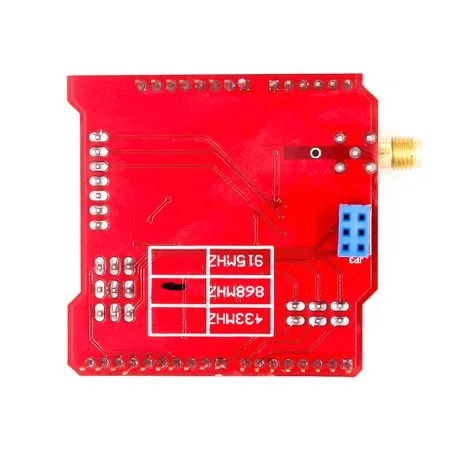
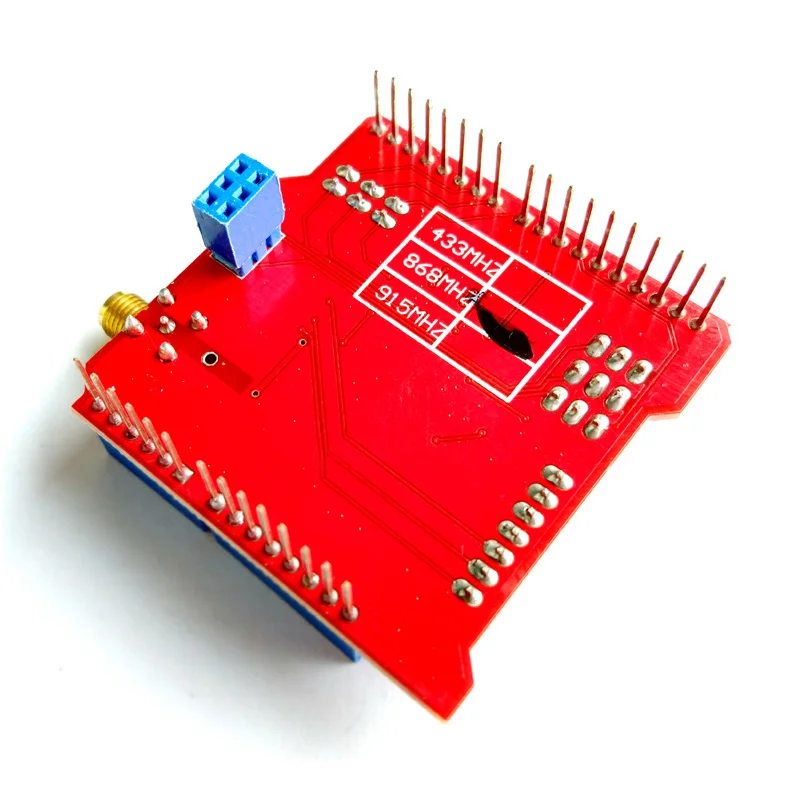
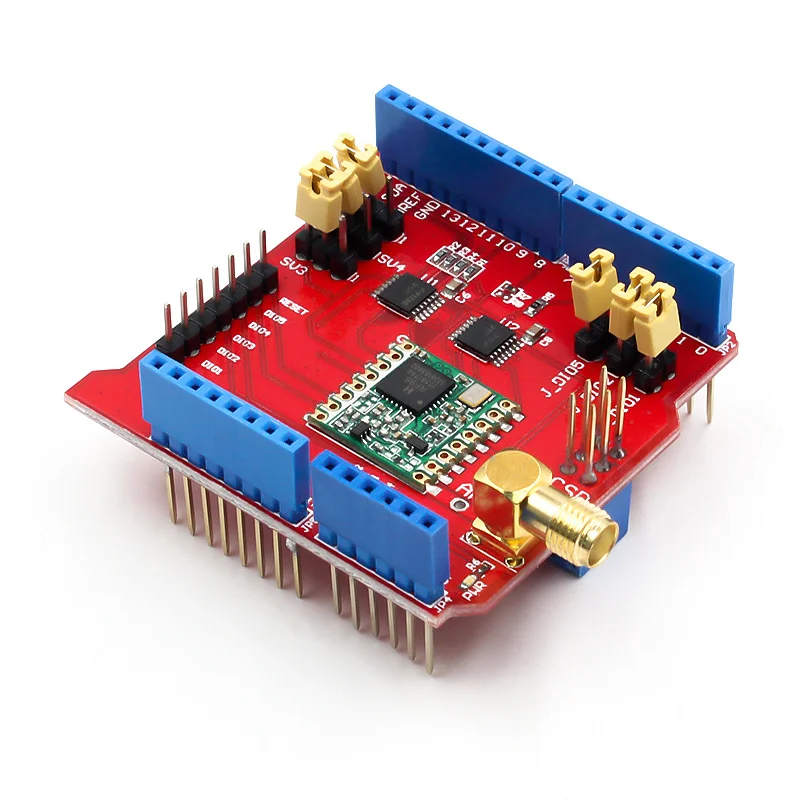
Generic LoRa Shield for Arduino (915MHz, RFM95W/RFM98W)

₹2,329.00 (Inclusive of all taxes)
Out of Stock

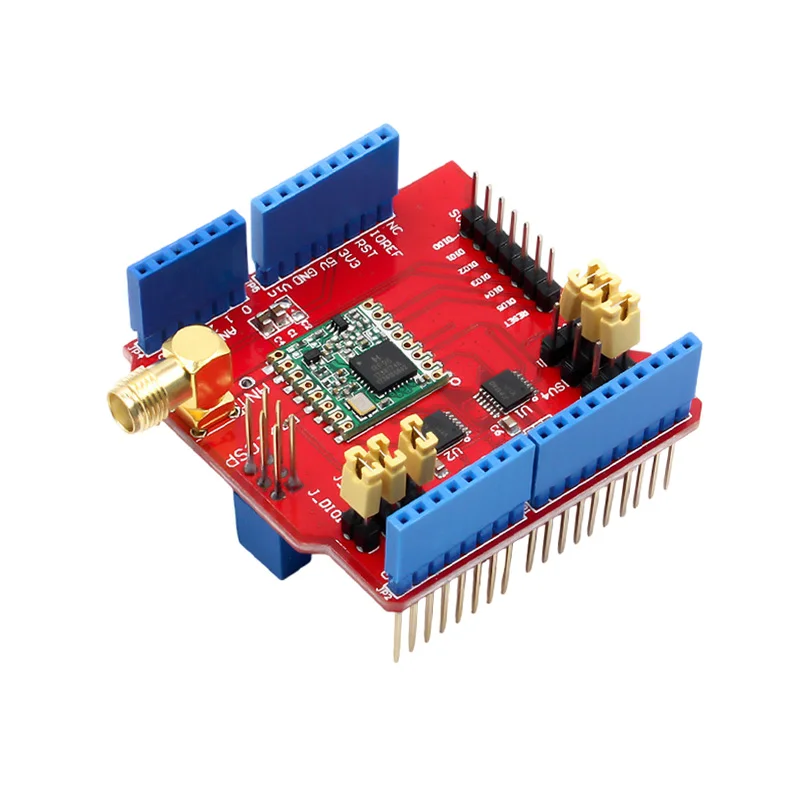
This 915MHz LoRa shield, based on the RFM95W/RFM98W transceiver, provides long-range, low-power wireless communication for Arduino Leonardo, Uno, Mega2560, and Due boards. It operates on 3.3V or 5V logic and is ideal for creating robust IoT sensor networks using the Arduino IDE and open-source LoRa libraries.

Features

  • 915MHz LoRa Transceiver Shield based on RFM95W/RFM98W for Arduino Leonardo, Uno, Mega2560, and Due.
  • +20 dBm (100 mW) RF output power and -148 dBm high sensitivity for an industry-leading 168 dB link budget.
  • Ultra-low power consumption with 10.3 mA RX current and 200 nA register retention sleep mode for battery-operated nodes.
  • Supports LoRa, FSK, GFSK, MSK, GMSK, and OOK modulations with a programmable bit rate up to 300 kbps.
  • Features an external SMA antenna connector, built-in packet engine with CRC, temperature sensor, and automatic RF sensing.

Out of stock

Description

This LoRa Shield provides a professional-grade, long-range wireless communication interface for Arduino development boards. Based on the HopeRF RFM95W/RFM98W transceiver IC, it utilizes patented LoRa modulation to achieve exceptional range and interference immunity at very low data rates, making it perfect for wireless sensor network applications. The shield is factory-configured for the 915MHz ISM band and includes an SMA jack for an external antenna to maximize range.

The module delivers robust performance with a +20 dBm power amplifier and a high-sensitivity receiver down to -148 dBm, creating a maximum link budget of 168 dB. It supports multiple modulation schemes including LoRa, (G)FSK, MSK, GMSK, and OOK, offering flexibility for various protocols. Integrated features like a packet engine with CRC, built-in temperature sensor, and automatic Channel Activity Detection (CAD) simplify firmware development and enhance system reliability for remote telemetry and monitoring projects.

Key Features

  • Arduino Shield form factor compatible with Leonardo, Uno, Mega2560, and Due.
  • Based on the high-performance RFM95W/RFM98W LoRa transceiver IC.
  • Patented LoRa modulation for ultra-long range and high interference immunity.
  • High-efficiency +20 dBm PA and -148 dBm sensitivity for maximum link budget.
  • Ultra-low current consumption ideal for solar or battery-powered IoT nodes.
  • Supports multiple modulations: LoRa, FSK, GFSK, MSK, GMSK, and OOK.
  • External SMA antenna connector for improved range and signal strength.
  • Built-in packet engine (up to 256 bytes), temperature sensor, and CAD functionality.

Applications

  • Long-range wireless sensor networks for environmental monitoring (temperature, humidity, air quality).
  • Smart agriculture applications such as irrigation control, soil moisture sensing, and livestock tracking.
  • Smart city and building automation for smart metering, parking sensors, and asset management.
  • Industrial IoT (IIoT) telemetry for remote equipment monitoring and predictive maintenance.
  • DIY LoRaWAN gateways or nodes for community networks using The Things Network (TTN).

Technical Specifications

Wireless TransceiverRFM95W / RFM98W
Wireless ProtocolLoRa, (G)FSK, MSK, GMSK, OOK
Frequency Range915 MHz (Factory Pre-configured)
RF Transmit Power+20 dBm (100 mW)
Receiver Sensitivity-148 dBm
Maximum Link Budget168 dB
Supply Voltage (I/O)3.3V or 5V (Arduino Compatible)
Operating Current (RX)10.3 mA
Sleep Current (Register Retention)200 nA
Data Rate (Programmable)Up to 300 kbps
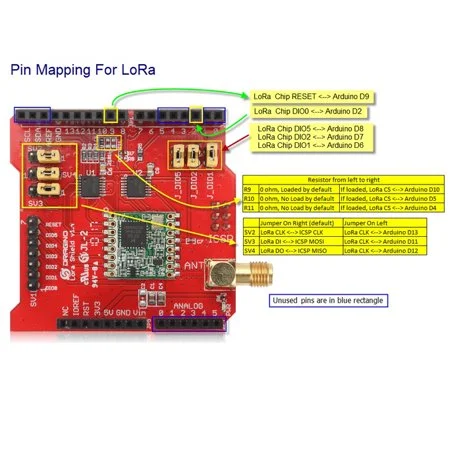
InterfacesSPI (via Arduino Shield Headers)
Antenna ConnectorSMA Jack (External)
Dimensions (Shipping)6 x 4 x 2 cm
Weight (Shipping)0.04 kg

Frequently Asked Questions

How do I connect this LoRa Shield to my Arduino Uno and start transmitting data?

Insert the shield directly onto the Arduino Uno's headers. Connect an SMA antenna to the jack. Install the Arduino LoRa library (e.g., Sandeep Mistry's library) via the Library Manager. Use the provided examples to initialize the RFM95W module via SPI. Set the frequency to 915E6 in your code. The shield handles logic level conversion, making it compatible with both 3.3V and 5V Arduino boards without additional wiring for basic operation.

What is the typical range I can achieve with this 915MHz LoRa Shield using a standard antenna?

Range varies significantly with environment. In an urban area with obstructions, expect 1-2 km. In suburban line-of-sight, ranges of 5-10 km are possible. In ideal rural or over-water conditions, links of 15+ km can be achieved. Using a proper 915MHz antenna (like a 3dBi whip) mounted clear of obstructions is critical. The +20 dBm transmit power and -148 dBm receiver sensitivity provide a robust 168 dB link budget, which is the key determinant for maximum range in any setting.

Can I use this shield to create a LoRaWAN node compatible with The Things Network (TTN)?

Yes, this shield is an excellent hardware base for a LoRaWAN node. You will need to program your Arduino with a LoRaWAN stack library, such as the MCCI LMIC library. Configure the library for your region's 915MHz frequency plan (e.g., US915). You must also program your unique DevEUI, AppEUI, and AppKey obtained from your TTN application. The shield's RFM95W chip is fully supported by major LoRaWAN stacks, enabling you to send sensor data to any LoRaWAN network server.

What are the power requirements, and how do I minimize current for a battery-powered sensor node?

The shield draws power from the Arduino's 5V or 3.3V pins. During active reception, current is approximately 10.3 mA. During transmission at +20 dBm, it can draw over 100 mA. For battery life, utilize the module's deep sleep modes. You can put the RFM95W into sleep mode (consuming ~1 µA) between measurements. Structuring your firmware to wake up, transmit data quickly, and return to sleep is essential. For long-term deployment, consider using a low-power Arduino variant or a bare microcontroller to manage the shield's power states efficiently.

Package Includes

  • 1 x 915MHz LoRa Shield for Arduino

Additional Information

Weight 0.04 kg
Dimensions 6 × 4 × 2 cm