
Generic 4×4 Membrane Keypad Module | Digital Matrix Input | Microcontroller Compatible
₹149.00₹250.00 (price_including_tax) (-40%)
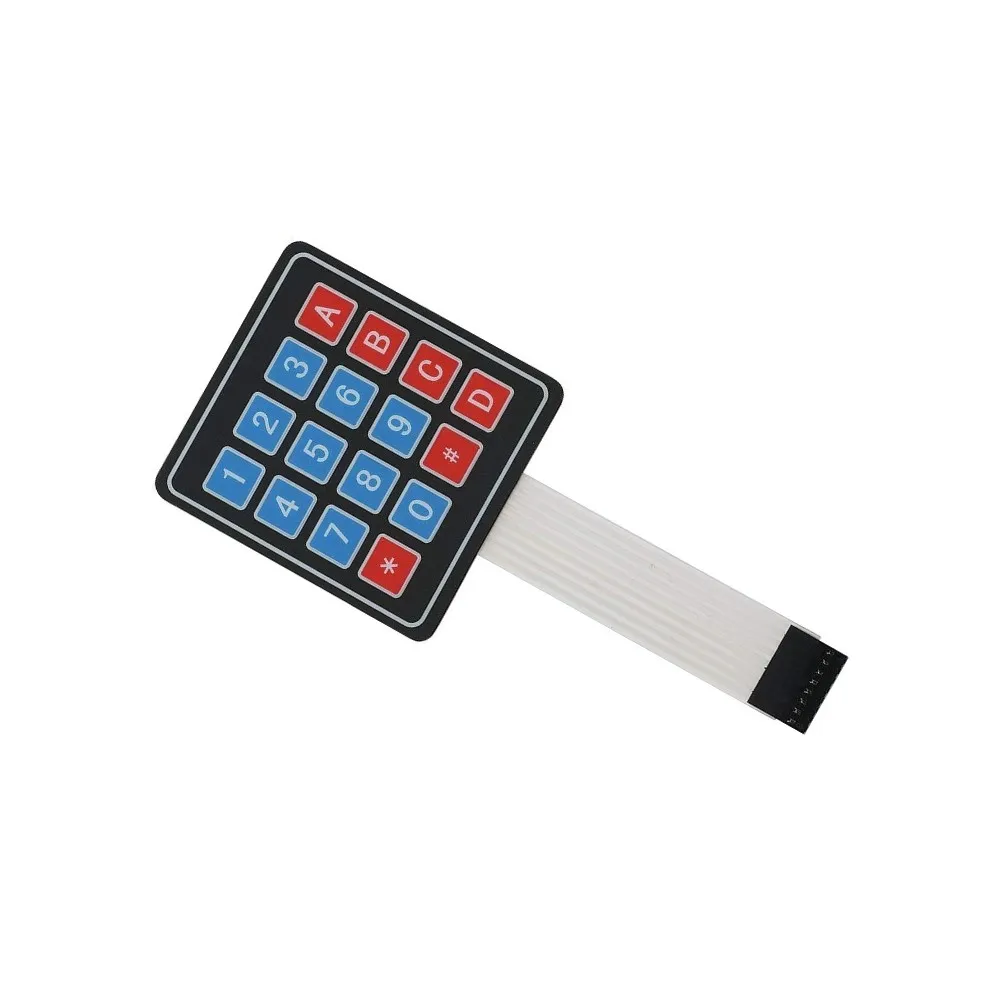
Unlock intuitive user interaction with this 4×4 Membrane Keypad Matrix. Seamlessly integrate digital input into your Arduino, Raspberry Pi, or custom embedded systems for enhanced control. Engineered for durability and consistent performance in demanding applications.
Robust 4×4 membrane keypad offers reliable digital input for diverse microcontroller projects.
Simplifies user interface design, offering reliable digital input for rapid project development.
Requires minimal microcontroller I/O, preserving pins for other critical system functions.
Engineered with durable membrane switches for sustained, consistent performance in diverse environments.
The Engineering Behind 4×4 Keypad Matrix
The 4×4 Keypad Matrix is a fundamental human interface device designed for efficient digital input in embedded systems. It typically comprises 16 tactile membrane switches arranged in a grid, leveraging a matrix scanning technique to minimize required I/O pins on a microcontroller. This architecture, often utilizing 8 pins (4 rows, 4 columns), allows for the detection of individual key presses by sequentially activating rows and reading column states. Its simplicity and effectiveness make it an indispensable component for password entry systems, menu navigation, and numerical data input in DIY electronics and industrial control panels.
Constructed with a durable membrane overlay and robust internal contacts, this keypad module ensures a long operational lifespan and consistent tactile feedback. Its sealed design provides a degree of resistance against dust and spills, making it suitable for a wide array of environments from hobbyist workshops to light industrial applications. The low-profile form factor and adhesive backing facilitate easy integration and secure mounting onto project enclosures or PCBs, reinforcing its utility as a reliable input mechanism.
Matrix Scanning Protocol
The core of the 4×4 Keypad’s functionality lies in its matrix scanning protocol. This method involves cyclically setting each row pin as an output (low) while keeping others high-impedance, then reading the state of the column pins. A detected low signal on a column pin indicates a press within that active row. This technique significantly reduces the number of I/O pins required compared to dedicated pins for each key, optimizing microcontroller resource utilization and simplifying wiring, which is critical for projects with limited I/O availability.
Seamless Digital Integration
Designed for direct interfacing with 5V or 3.3V microcontrollers, the 4×4 Keypad offers straightforward digital integration. Its standard 8-pin connector (often a male header) simplifies prototyping with breadboards or custom PCBs. This direct compatibility eliminates the need for complex external circuitry or dedicated driver ICs, allowing engineers and makers to quickly implement robust human-machine interfaces without adding significant complexity or cost to their designs, streamlining development cycles.
Optimized for Performance & Integration
- Key Arrangement: 4×4 Matrix (16 keys)
- Interface Type: Digital (8-pin row/column output)
- Operating Voltage: 3.3V – 5V DC (Microcontroller dependent)
- Connection: 8-pin male header
- Key Type: Membrane Tactile
- Life Cycle: >1 Million keystrokes
Features & Benefits
- Compact 4×4 Matrix: Provides 16 distinct input buttons in a space-saving footprint, ideal for embedded projects.
- Minimal I/O Pins: Utilizes only 8 microcontroller pins for full functionality, preserving valuable resources.
- Durable Membrane Construction: Ensures long-term reliability and resistance to environmental factors like dust and minor spills.
- Tactile Feedback: Offers a satisfying click for positive key press confirmation, enhancing user experience.
- Adhesive Backing: Facilitates quick and secure mounting onto project enclosures or PCB surfaces.
- Wide Compatibility: Easily interfaces with Arduino, Raspberry Pi, ESP32, and other microcontrollers.
Pro-Grade Advantages
- Cost-effective and widely available input solution.
- Simple wiring and integration with standard microcontroller libraries.
- Durable construction suitable for frequent use.
- Compact footprint ideal for space-constrained projects.
Technical Considerations
- Limited to simple digital input, no analog feedback.
- Requires software debouncing for reliable key press detection.
What is the primary interface method for a 4×4 Keypad Matrix?
The primary interface method is a matrix scanning protocol, where microcontroller pins sequentially scan rows and detect column states to identify key presses.
How many I/O pins does a 4×4 keypad typically require?
A 4×4 keypad typically requires 8 I/O pins: 4 for the rows and 4 for the columns, which is a significant reduction compared to individual key wiring.
Is software debouncing necessary for reliable key press detection?
Yes, software debouncing is highly recommended to prevent false or multiple key press detections due to mechanical switch bounce upon actuation and release.
Can this keypad be used with both 3.3V and 5V microcontrollers?
Yes, the 4×4 membrane keypad is generally compatible with both 3.3V and 5V logic level microcontrollers as it’s a passive switch matrix.
What materials are commonly used in the construction of a membrane keypad?
Membrane keypads typically use polyester or polycarbonate overlays, conductive silver or carbon ink traces, and an adhesive layer for assembly.
| Specification | Value |
|---|---|
| Key Matrix | 4×4 (16 keys) |
| Interface Pins | 8 (4 rows, 4 columns) |
| Key Type | Membrane Tactile |
| Operating Current | Low (mA range, microcontroller dependent) |
| Connection Type | 8-pin (2.54mm pitch) male header |
| Durability | >1 Million Key Presses |
| Operating Temperature | 0°C to 70°C |
| Backing | Self-adhesive |
Additional information
| Weight | 0.01 kg |
|---|---|
| Dimensions | 6.9 × 7.6 × 0.8 cm |
| Brand | Generic |
| Control Interface | Digital Matrix |
| Channels | 16 |
| Operating Voltage | 3.3V – 5V DC |
| Piece Count | 1 |


Reviews
There are no reviews yet.